

Designer Profile Good Design
December 10, 2025

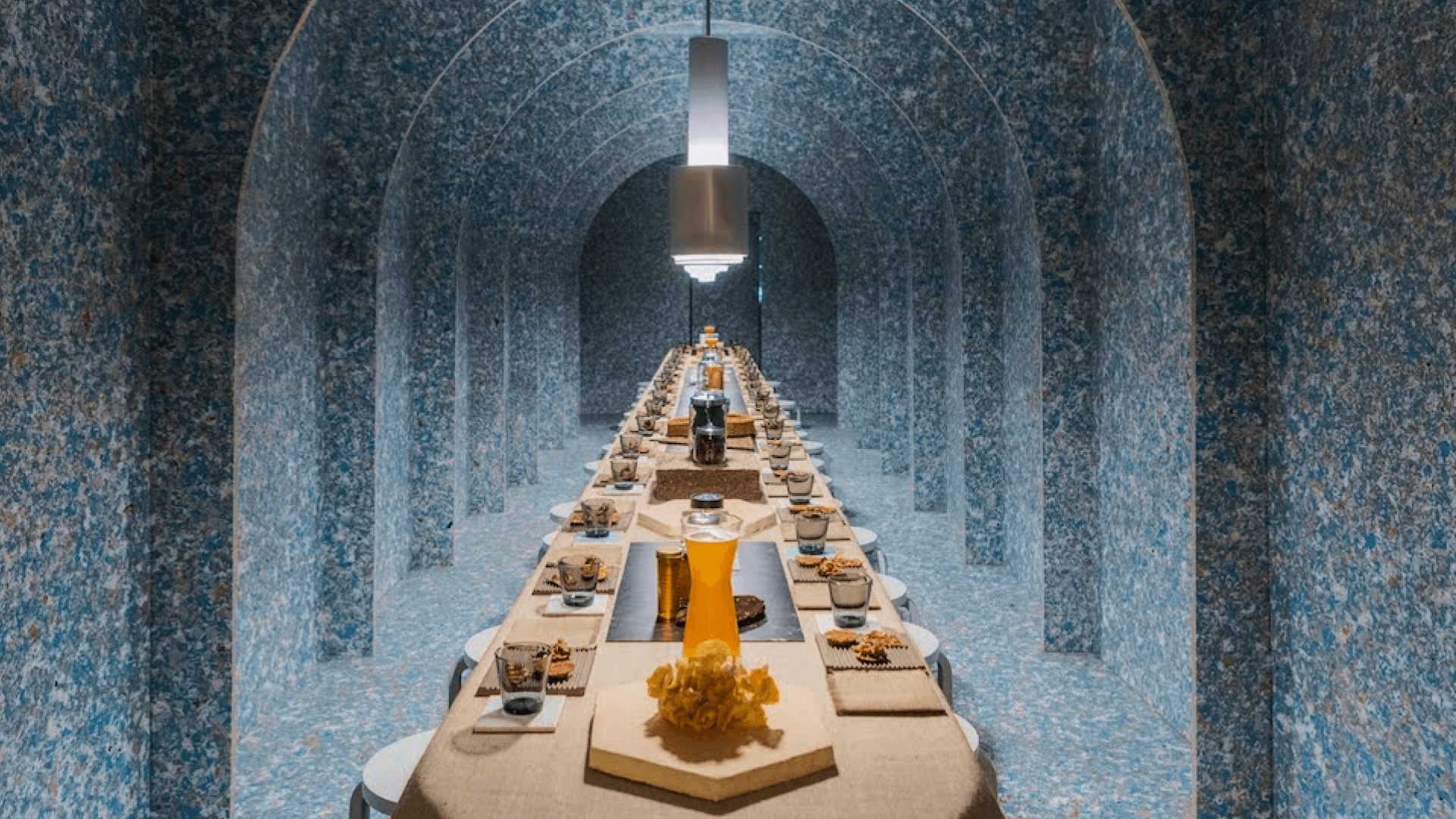
Donghia healthier Materials Library, Parsons School of Design | Photo Credit: Nicholas Calcott
Much of the industry unknowingly continues to introduce harmful substances in various scales of objects and spaces. It was a catalyst to change their own practices and establish Healthy Materials Lab. They’ve been on a quest to better inform themselves, learn how to identify toxicity in various types of materials and now impart the knowledge they’ve amassed for others: their contemporaries and students; designers, manufacturers and a wide range of other specialized stakeholders.
In many ways, they trailblazed the field. “We’re trying to prompt design professionals to transform the work they do from a mission-driven perspective,” says Mears. Operating within the programmatic confines of a university, allows them to assume a research position in the field, which is time that most professionals do not have. “At the same time, we have an independence from industry that can be a corrupting force,” Mears adds. Though they are engaged in conversation with various design sectors, they’re able to remain neutral and keep critical distance from market pressures.
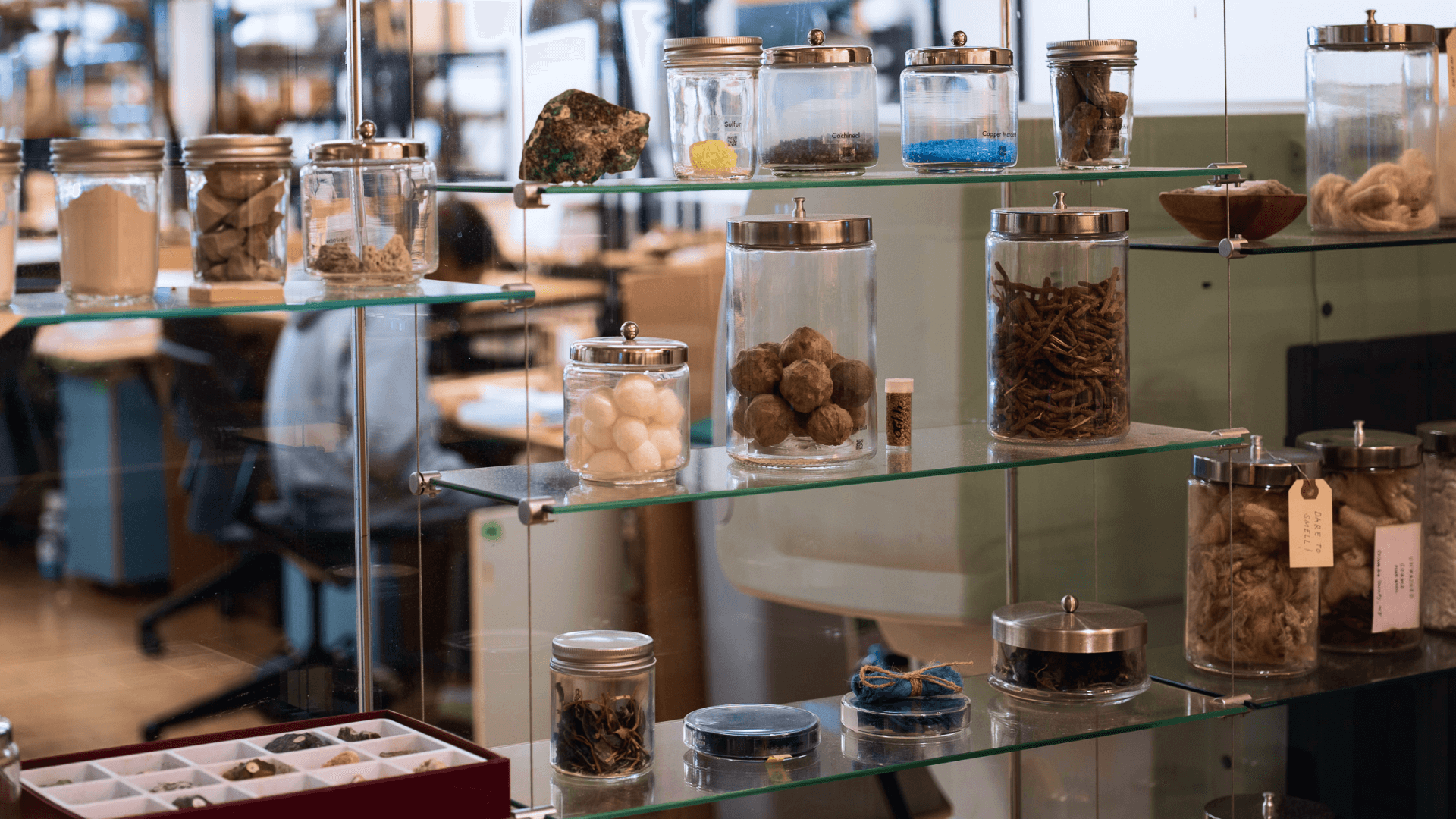
Raw Wall: Origin of Materials, Donghia healthier Materials Library, Parsons School of Design | Photo Credit: Nicholas Calcott.
Their scope goes beyond New York and addresses the domain as a global entity. They reach their diverse audience: through a series of open source educational courses incorporating insights from a wide range of experts. Most are available online. “We’re not scientific experts per se, and toxicologists are often entrenched in their technical know-how that they don’t always communicate their findings to a general audience,” Ruth says. “We realized early on that we needed to bring together an interdisciplinary group of specialists to bring knowledge to others, and so we curated a large group of people, everyone from lawyers to other architects to be able to share the information effectively.” Those who go through the training receive a Healthy Materials Advocate certificate.
In the past eight years, over 20-thousand people have gone through the program.
Continuously refining the various classes, some offered through the Coursera platform, Ruth, Mears and the Healthy Materials Lab team have established an especially strict criteria for identifying harmful materials. Not just looking to call out bad-actors, HML has put together actionable resources, in particular a cumulative list of healthier building products. Each product goes through an extensive evaluation process that can take anywhere from 2 to 24 hours. Wide dissemination is also key, and so the information that is collected is synthesized for a general public, without too much jargon or hyper-technical language.
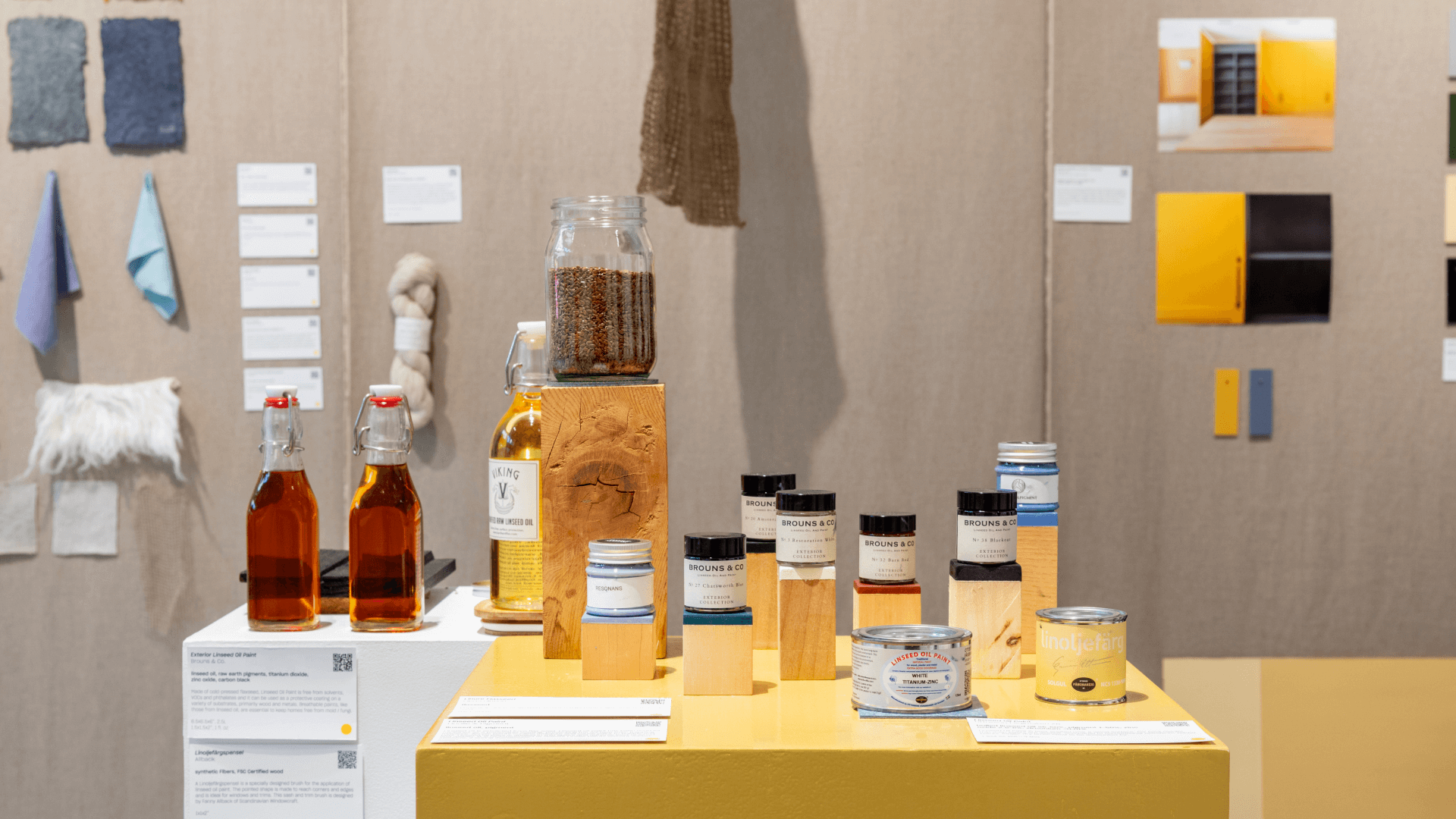
Regeneration of Flax. Exhibition, Parsons School of Design, 2024 | Photo Credit: Michelle Gevint
The Healthy Materials Lab also maintains a physical library on the Parsons campus available to students and faculty. “All together, this offering helps interior designers and architects transition into choosing better products,” Mears says. Access to material that is readily available for practitioners going through the sometimes convoluted process of specification, goes a long way in pushing forward a significant change across the domain.
Over the past decade, HML has made some seismic discoveries. “There are paints with lower VOC’s that are obviously better than those with a higher VOC count,” Ruth says. “But what if the paints available to us weren’t acrylic or plastic-based at all?. What if there could be durable mineral-based alternatives that are both better for our health and also the environment?.” There’s no question that lime paints have recently become popular. With house paint being so ubiquitous, it’s clear that the change in its chemical make-up could have a large impact. Ruth, Mears and HML are careful to focus almost exclusively on accessible healthy materials, not those that are too luxurious or niche. A growing majority of what they offer is bio-based and regenerative.
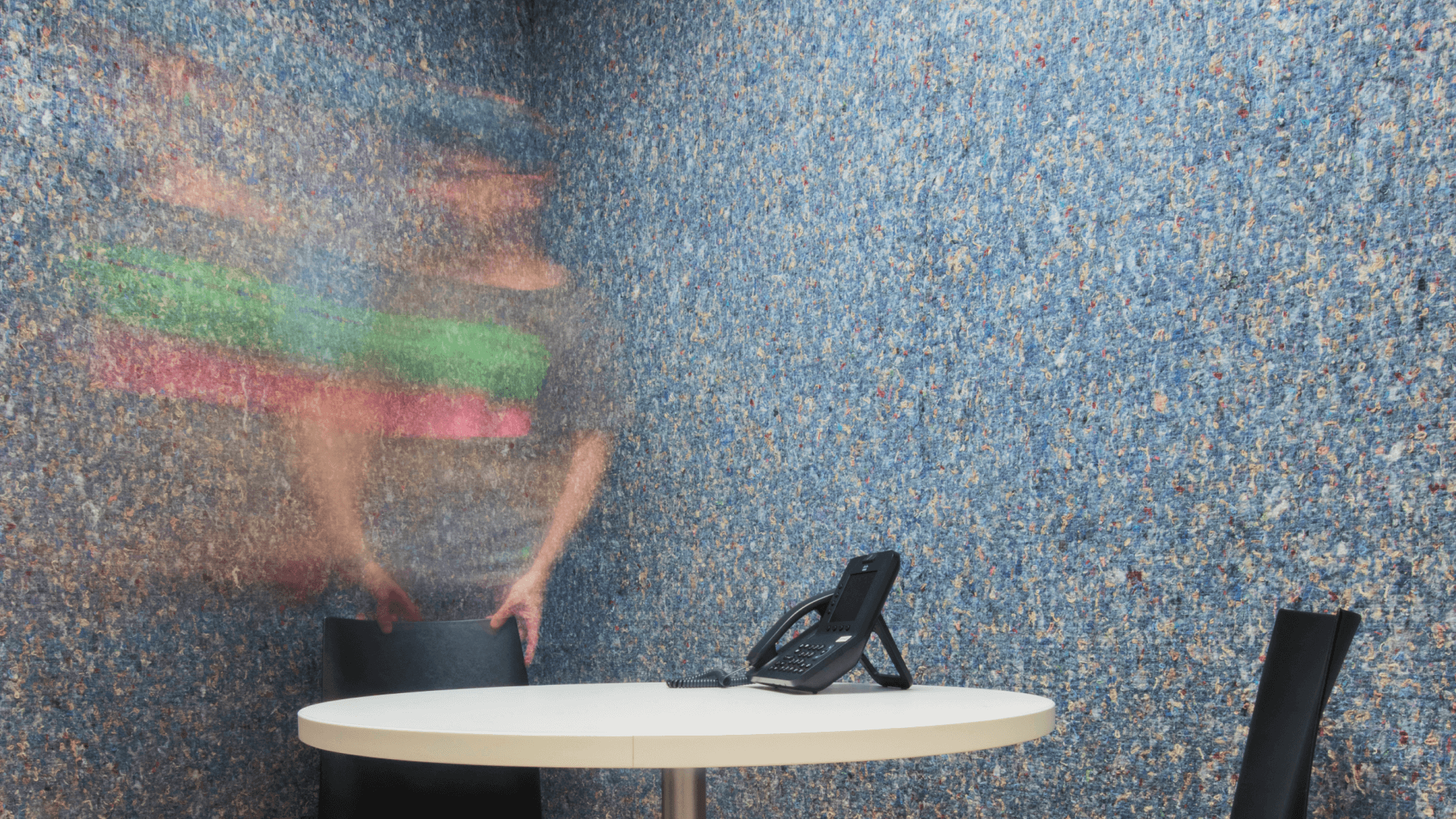
CarpetCycle Hush Room, School of Constructed Environments, Parsons School of Design, 2017 | Photo Credit: Martin Seck
They acknowledge that the shift to using healthier materials is incremental but that change has already occurred; that there’s a growing awareness and desire to act upon it.
Visit The Healthy Materials Lab’s website here >>>
More from ICFF:
Stefano Giussani
ICFF 2026 International Preview
You May Also Like
-
 Designer Profile Portrait
Stefano Giussani
Stefano Giussani, Partner and COO at Lissoni Architecture D.P.C., brings a quietly powerful vision to the global design landscape. Based in New York City, he leads the firm’s...
 Read Now
 -
 Designer Profile Portrait
Vanessa Deleon
New York and New Jersey based designer Vanessa Deleon, founder of Vanessa Deleon Associates, brings a distinctive, expressive, and lifestyle-driven approach to contemporary interior design. Her career has...
Read Now -
 Designer Profile Portrait
Mario Blásquez
Monterrey-based designer Mario Alberto Blásquez Villaseñor, founder of B-V Home, brings an intuitive, fluid, and client-centered approach to contemporary interior design. After years in real estate development, he...
Read Now