The seventh edition of ICFF’s Emerging Designers Spotlight Online is here. We’re excited to feature the emerging talent discovered through ICFF’s global network, whose creative voices are shaping the future of contemporary design.
Presented in partnership with CLEVER, this online editorial series offers emerging designers a platform for sustained media exposure and industry visibility. In our latest feature, we spotlight three designers whose fresh perspectives on materiality and function offer a glimpse into where contemporary design is headed next.
If you’d like the chance to be featured in the next Emerging Designers Spotlight, apply HERE!
(Image above courtesy of Ocuo Studio)
This past May at ICFF 2026, Noémie received a Special Student Honor for the Best of Students.
What inspires you as a young designer?
As an aspiring designer, I am driven by the belief that thoughtfully designed spaces and objects can support people, complement their state of mind, and enhance human experience. Too often, I encounter environments and products that prioritize trends over intention, lacking the care and attention that meaningful design requires. My work seeks to challenge this culture by creating designs rooted in empathy, craftsmanship, and purpose. I am driven by the idea that the things that surround us have the power to inspire beauty, foster connectivity, and provide a deep sense of interaction through intentional details and thoughtful design.
What are you working on right now?
I am a Senior Product Design BFA student at the University of Oregon, graduating in June 2027. Through my final year in the program, I will continue developing the concepts behind the Lève portable lamp through my thesis project, exploring how these ideas can be applied across different contexts and user experiences. My research will examine the tactile and psychological relationship between people and lighting in classrooms, offices, and other workspaces, while expanding my understanding of cognitive design, material exploration, innovative craftsmanship, and global perspectives. Moving forward, I am eager to carry these qualities into my professional career and to continue to use my passion for designing with intentionality.
What is a specific project you would like to share?
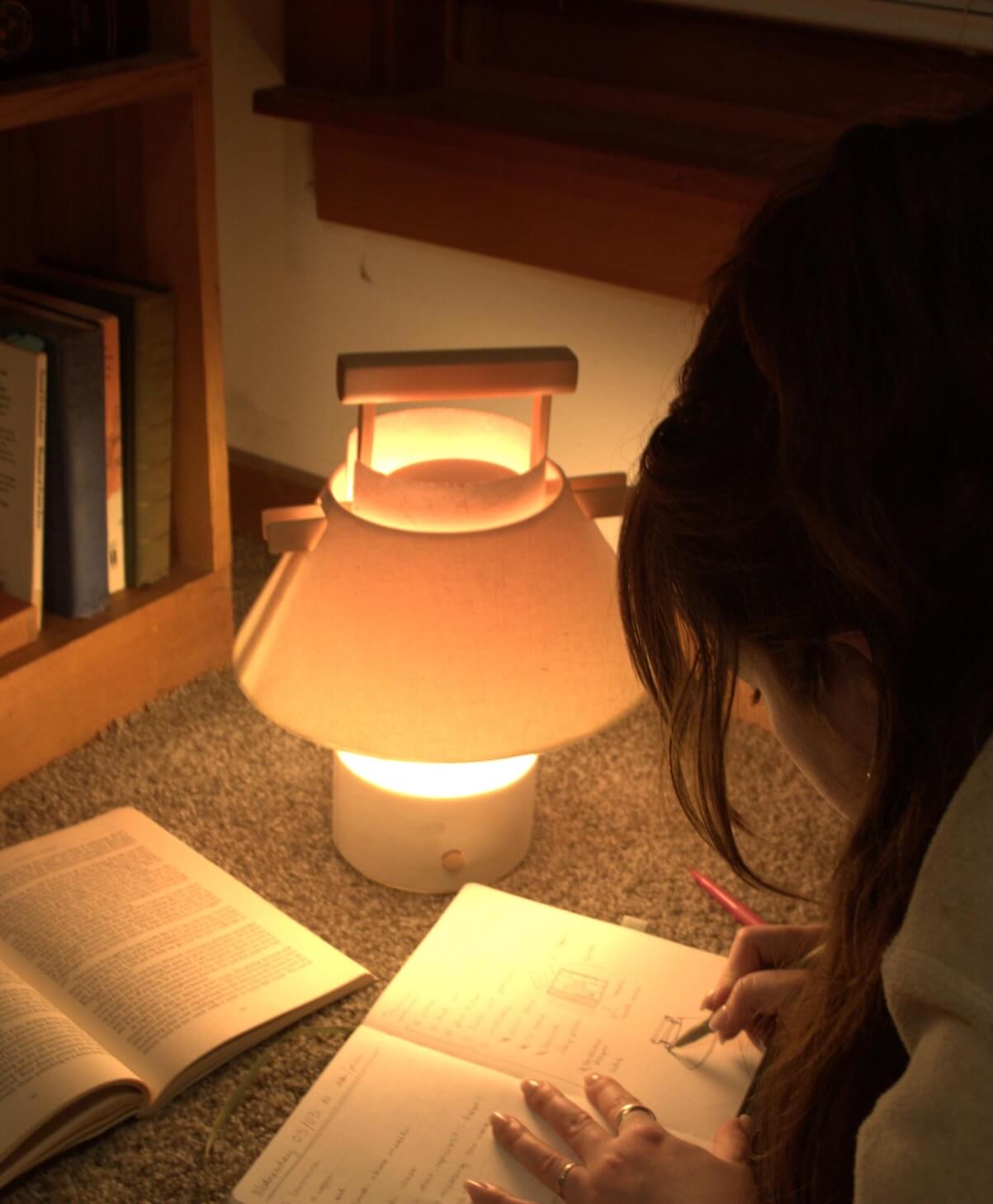
The Lève portable lamp invites a tactile relationship between people and their environments. Supported by a simple mechanical tension pin system, the lamp shade and color diffuser can be easily raised and lowered, producing a physical dimming and color diffusion feature as it moves. This allows users to physically transform the atmosphere of a space and feel greater control over how lighting influences their focus, rest, and daily rhythms. Lève embraces individual modularity, encouraging objects to evolve alongside our changing needs throughout everyday life.
What do you hope to contribute to the world?
Through my creativity, I hope to contribute designs with a profound analysis of the users’ needs first. I strive to create thoughtful, design-forward solutions that feel intuitive, meaningful, and accessible while enhancing the way people interact and perceive the world around them. I aim to explore innovative applications of materials to expand the possibilities of both emerging and traditional innovations, while recognizing that true innovation does not always require something entirely new; it can also come from reimagining existing materials and tools with intent and purpose.
Discover more of Noémie Debrun-Sittler’s work: Instagram.
What inspires you as young designers?
We are inspired by natural materials — especially stone, where no two pieces are ever alike. There is something essential in taking a material and, rather than erasing it, guiding it into a new form while honoring what it already is. We feel the same about blown glass: a material shaped by breath and high heat, where every piece carries its own irregularities, its own reflections and distortions, and can never be perfectly repeated. We are drawn to making objects by hand, outside large factories and industrial processes, where every piece is resolved by human hands. That human experience stays in the object; you can feel it. Beyond the material itself, our work comes from an ongoing exploration of light and heat — not only as physical phenomena, but as tools capable of transforming perception and creating states of contemplation. What ultimately drives us is the conviction that light and design are never neutral: every material and every luminous decision shapes how a person inhabits, perceives and remembers a space.
What are you working on right now?
Right now we are developing a new collection that follows the same philosophy — entirely handmade and manufactured in Mexico — but this time focused on architectural lighting: a series of wall and ceiling lamps. We are working with Mexican national stones, treating each one with the respect it deserves and letting its individual character lead the design. As always, the object steps back so that the true protagonist can take over: the light.
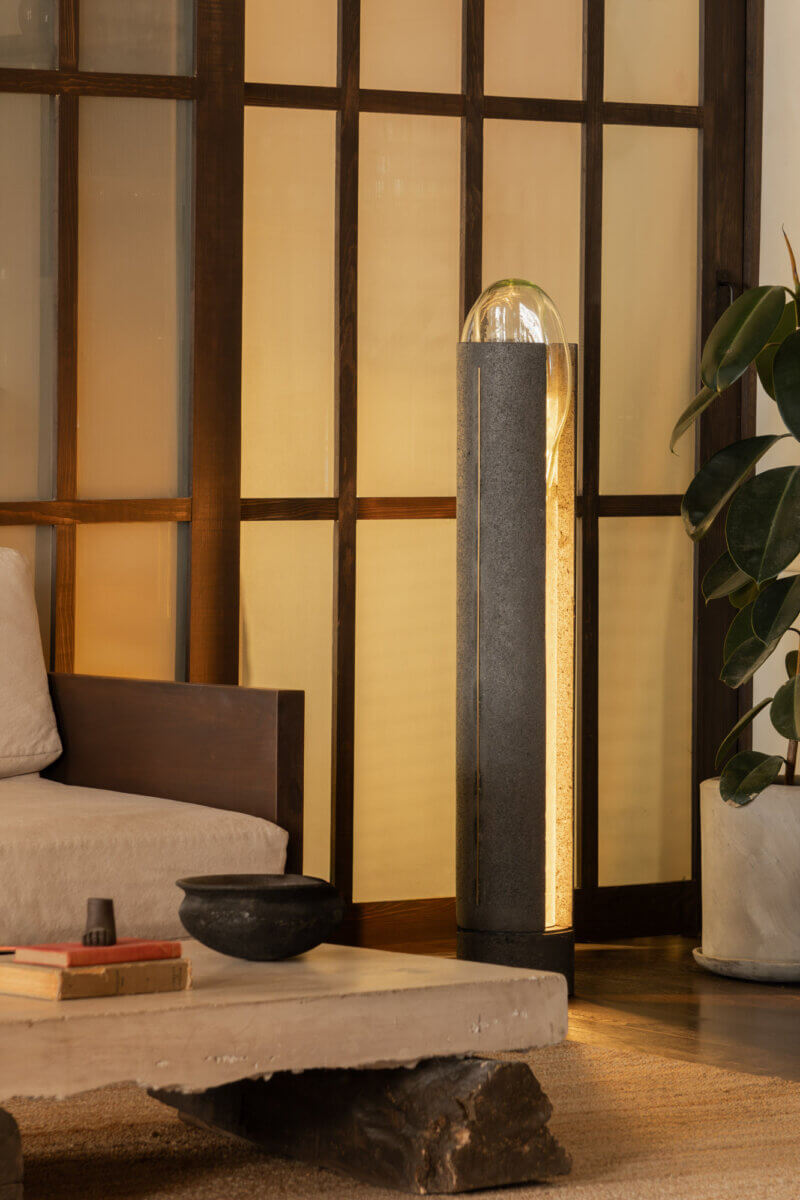
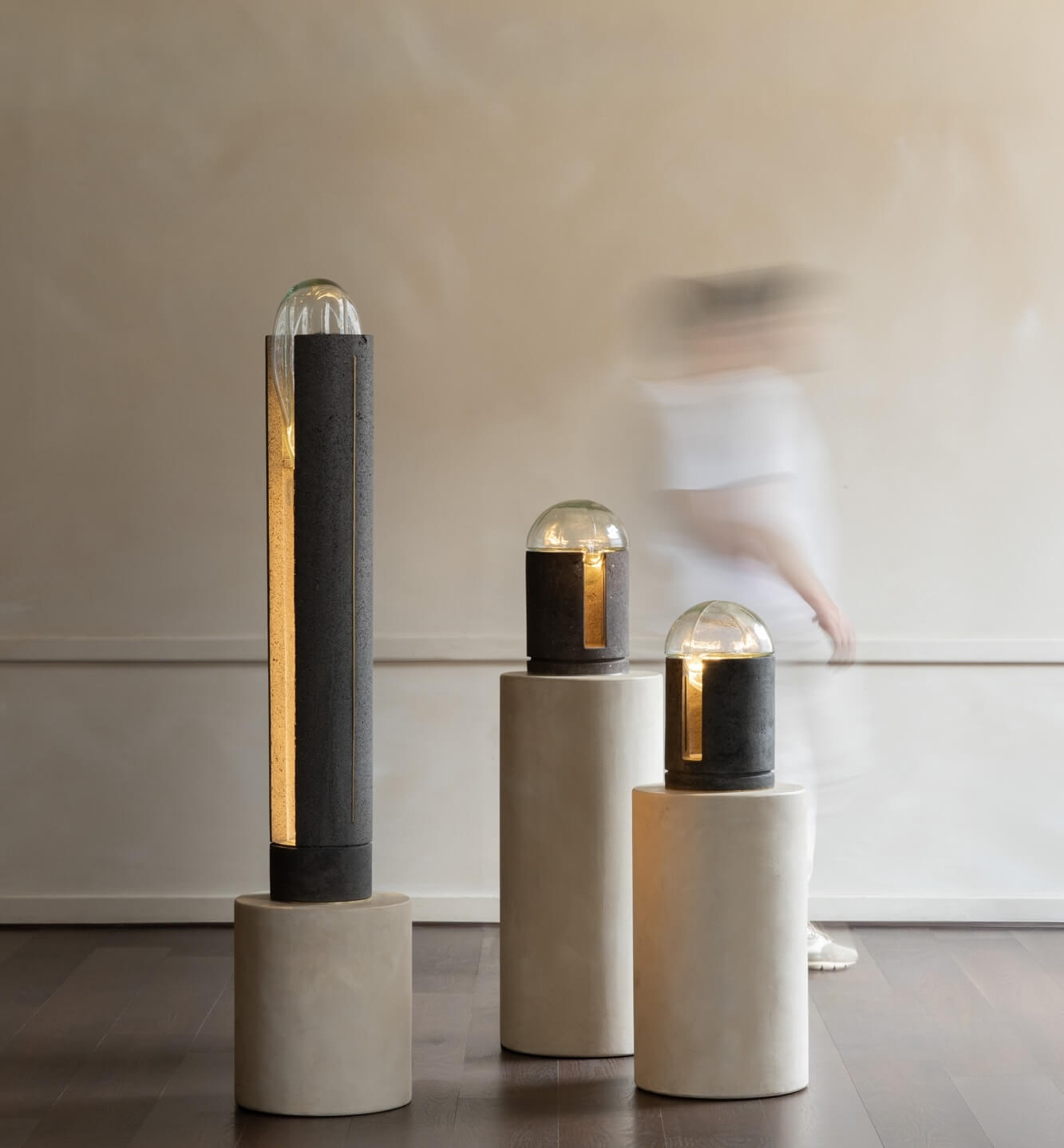
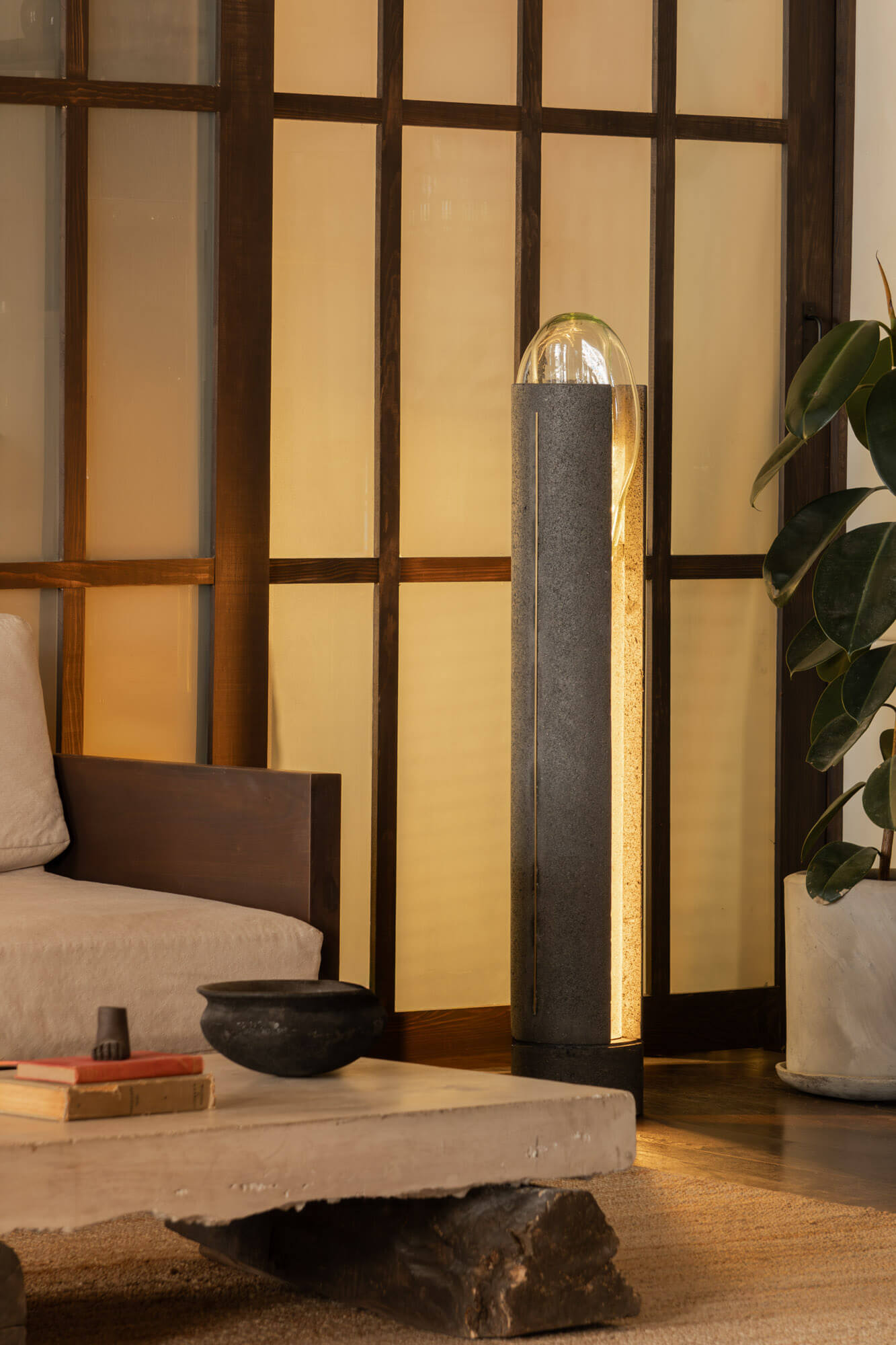
Ermita Floor Lamp (Image courtesy of Ocuo Studio, photographed by Emilio Torres)
What is a specific project you would like to share?
The project is Ermita, a series of table and floor lamps. These pieces are not conceived only as lamps, but as luminous objects made for contemplation — almost as a ritual. You turn them on by touching the center of the piece; the blown glass can be removed and put back; and the stone, with its imperfections and its solidity, is meant to be touched. Our dream goal with this project is to go beyond designing a light source wrapped in a beautiful shell. We want to create a moment of contemplation — a piece that makes you think: think about what light really is, about the distortion of a reflection through blown glass, about what a ritual means, about stepping out of an accelerated world, about the history of stone within the history of the earth — and to take a second of pause and presence. If Ermita gives someone that instant of stillness, it has done its work.
What do you hope to contribute to the world?
We hope to share our ideals and our way of thinking. We want people to understand the importance of translating an idea into an object that is not merely utilitarian, but that transcends into the world of ideas — an object that gives meaning to the space it inhabits and honors the hands that made it. If our work helps someone value both the thought behind a piece and the human craft that brought it to life, that is our contribution
Discover more of Ocuo Studio’s work: Website & Instagram.
What inspires you as a young designer?
I’m driven by the question of how design can shape the way we move, interact, and experience the spaces around us — at home, at work, and everywhere in between. What excites me most is that, as designers, we can quite literally build the world around us. I find that incredibly motivating. Why shouldn’t the objects and spaces we live with be playful, surprising, and exciting, while still being functional?
What are you working on right now?
What I’m working on right now is a stool made from a single aluminium plate. I really like the resourceful thinking behind trying to create an entire object from as little material and as few processes as possible. Aluminium is also highly recyclable, which makes that approach even more interesting to me. The stool should come together entirely through interlocking connections — no welding, no screws, no additional fixings. I really enjoy that constraint and the challenge of letting the construction itself create the object.
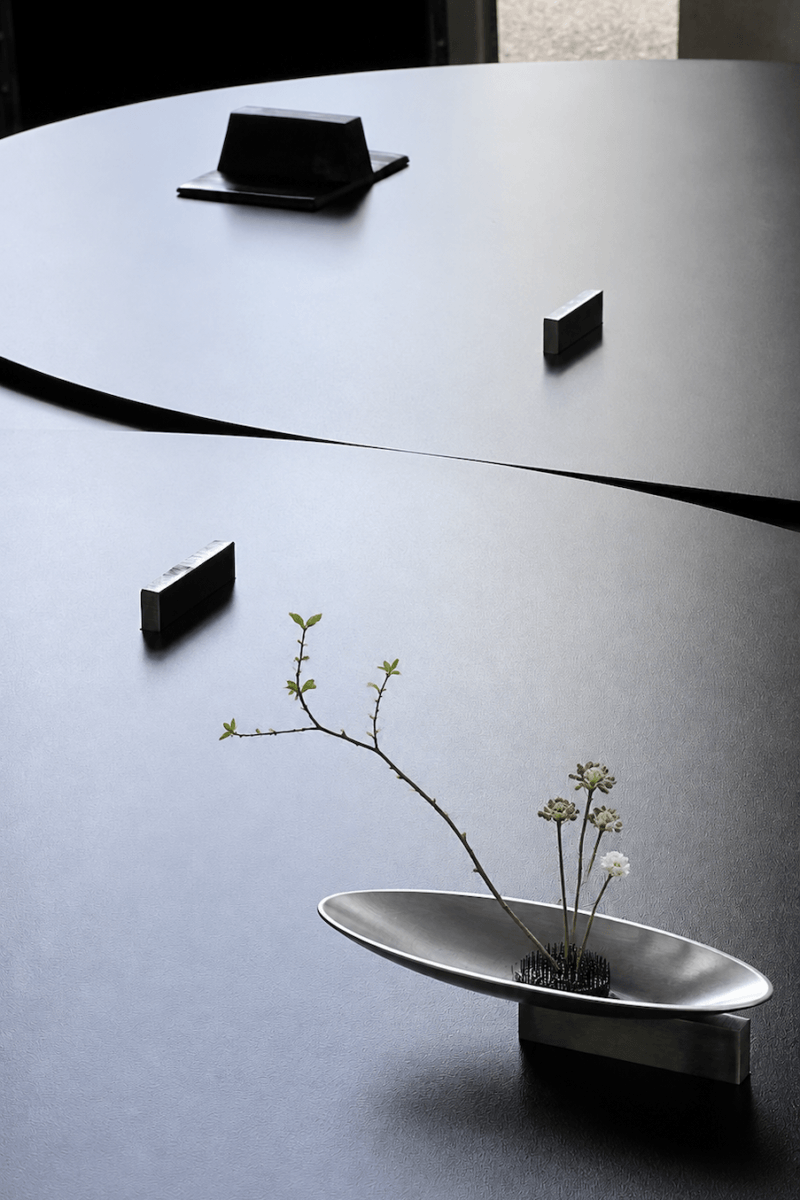
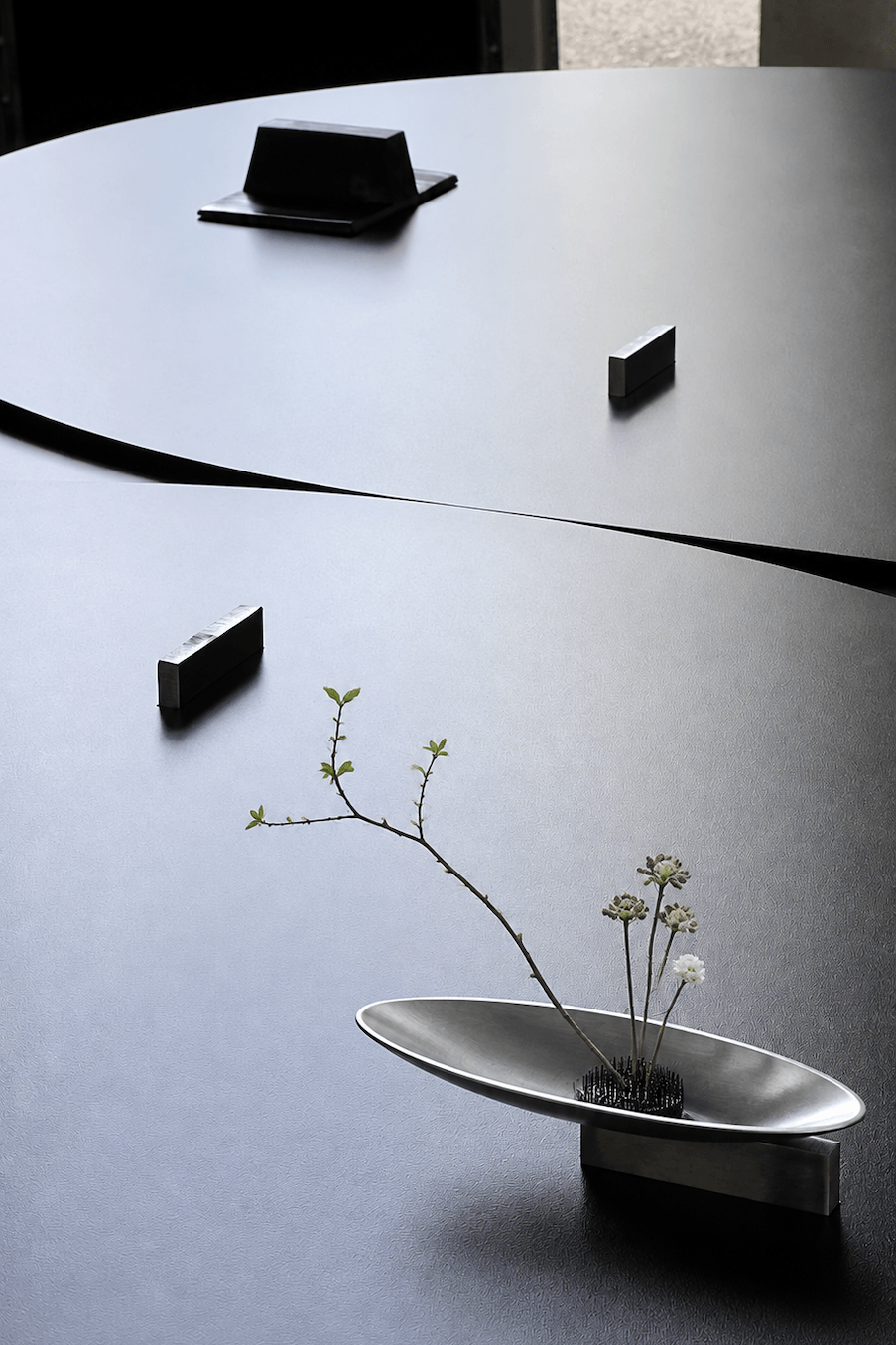
ALTA Table (Image courtesy of Intra-Intra)
What is a specific project you would like to share?
The specific project I want to share is ALTA, our modular aluminium table system. ALTA is built around a simple structural idea: two aluminium elements interlock to create the base, while the tabletop is placed directly onto the structure. There are no hidden connections—the construction itself becomes the visual language of the object. What makes ALTA especially interesting to me is that it is not conceived as one fixed table shape, but as a system. The legs pass through the tabletop and create a field of possibilities within the surface itself. Rather than being only a formal gesture, these connection points open up opportunities for additional elements and top-level solutions, such as ikebanas, candleholders, or other objects that can be inserted and sit slightly elevated above the tabletop. For us, ALTA is about seeing furniture less as a static object and more as a small piece of architecture: something that can organize space, invite interaction, and continuously expand through new uses and attachments.
What do you hope to contribute to the world?
I hope to contribute objects that make everyday spaces more open, adaptable and engaging. I’m interested in design that does more than solve a single function — furniture can create new ways of using a room, bring people together and leave space for people to appropriate it in their own way. At the same time, I want to work as resourcefully as possible: using materials intelligently, reducing unnecessary parts and letting construction become part of the idea. For me, creativity is about showing that responsible design does not have to feel restrictive. It can create more possibilities, more freedom and, ideally, a little more excitement in the environments we live in.
Discover more of Intra-Intra’s work: Instagram.