The ninth edition of ICFF’s Emerging Designers Spotlight Online is here.
Presented in partnership with CLEVER, this online editorial series offers emerging designers a platform for sustained media exposure and industry visibility. We’re excited to feature the emerging talent discovered through ICFF’s global network, whose creative voices are shaping the future of contemporary design. From a solid white oak stool defined by exposed joinery to a limited-edition aluminum and plywood side table inspired by erosion, and a 3D-printed chair reinforced for everyday durability, this round of designers proves that the next generation draws as much from instinct and material honesty as from technical innovation.
If you’d like the chance to be featured in the next Emerging Designers Spotlight, apply HERE!
(Image above courtesy of aelo.design)
What inspires you as a young designer?
I have always been drawn to design and have always sketched ideas for furniture, objects and spaces. After more than 15 years working in civil engineering, I decided to explore that instinct more seriously. A short course in furniture design in London became the catalyst for turning a long-standing interest into a new creative practice and ultimately led me to establish Studio Carnelos. Having lived in Brazil and Australia, with Italian heritage, I have been shaped by different cultures, landscapes and approaches to design and making. These experiences influence how I think about place, memory and identity. My engineering background brings an understanding of structure, construction and detail, while design gives me the freedom to explore material, proportion and emotion. I am drawn to honest materials and simple forms, creating objects that reveal their construction, craftsmanship and character over time.
What are you working on right now?
I am currently developing the first collection for Studio Carnelos, an emerging furniture and objects practice based between St. Louis and Melbourne. The collection brings together furniture and lighting in solid timber, stainless steel, hand-blown glass and upholstery. I work closely with local craftspeople and fabricators to develop each piece, allowing the making process, material and craftsmanship to influence the final design.
What is a specific project you would like to share?
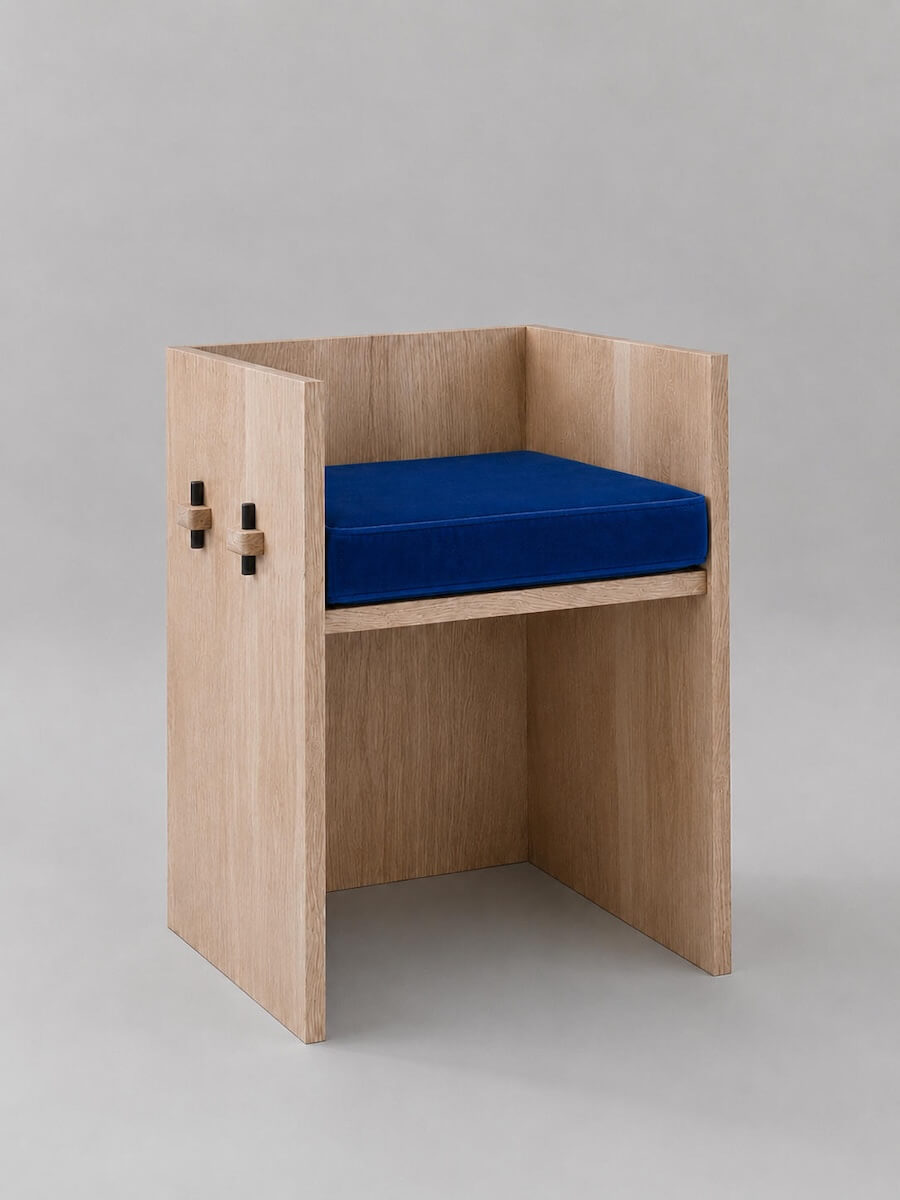
Dois, 2026 is a solid white oak stool and occasional table named after the Portuguese word for “two.” The piece is defined by two timber planes that support and enclose the seat, creating an object that feels both monolithic and carefully balanced. Exposed joinery is celebrated rather than concealed, becoming part of the identity of the piece. A removable mohair cushion introduces softness, colour and texture against the precision of the timber. My goal is to develop Dois into a production-ready piece and introduce it as part of the first Studio Carnelos collection, while preserving the craftsmanship and material honesty of the original piece.
What do you hope to contribute to the world?
I hope to create objects that people form lasting relationships with. Rather than designing around trends or disposability, I am interested in furniture and objects that are materially honest, thoughtfully made and designed to age with their owners. I also want my work to reflect the different experiences that have shaped me – from Brazil and Australia to my Italian heritage, and from engineering to design. Through Studio Carnelos, I hope to bring together the precision of engineering with craft, emotion and storytelling to create objects that feel both familiar and distinctive.
Discover more of Roberto Carnelos Pinheiro’s work: Instagram.
What inspires you as a young designer?
I’m driven by exploring how a story can transform into a piece of furniture through geometry and material. Growing up in Mexico with its vibrant culture and deep artisanal heritage inspires me to design with clear intention. Beyond pure function, I want to create pieces that live naturally in a space and establish a genuine dialogue with the user.
What are you working on right now?
Right now, I’m developing new signature pieces and limited editions for ASUL-STUDIO, working closely with artisans across different regions of Mexico. I’m focused on refining scale, craftsmanship, and clean geometric lines that bring warmth, allowing the natural materials to guide the outcome
What is a specific project you would like to share?
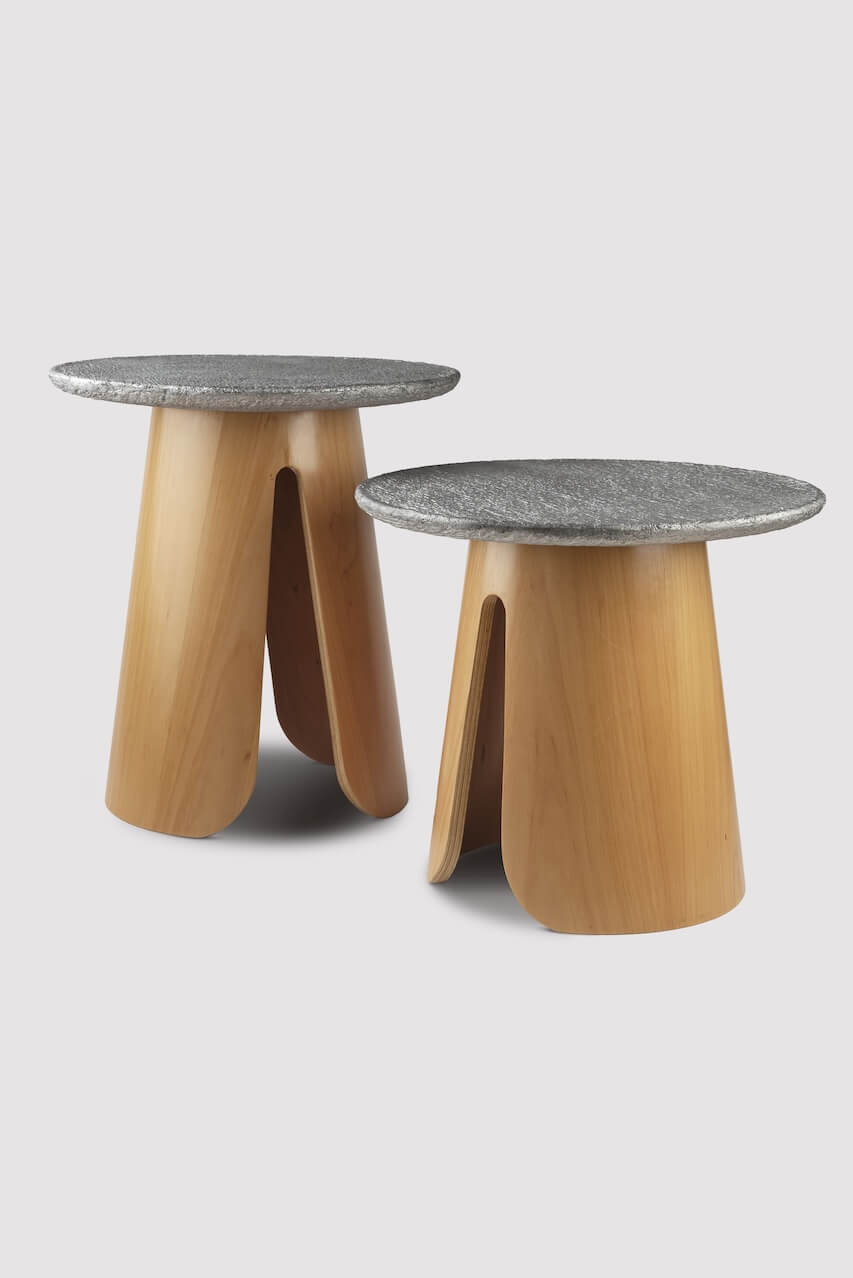
I want to share EROSIA (along with its smaller version, EROSIA ERGATE), a limited-edition side table series of 18 pieces crafted from white cedar plywood and cast aluminum. The project explores the concept of petrifying time and erosion: taking the organic trace left by termites in wood and converting it into a relief of aluminum that halts that decay, turning absence into an invincible armor. My goal with this project is to showcase how a narrative born from natural manifestations can be translated into a sophisticated, collectible design piece through Mexican artisan craftsmanship, connecting local stories with international audiences.
What do you hope to contribute to the world?
I hope to contribute honest, character-driven pieces to the design landscape. I want to question our surroundings to build clean, intuitive objects that integrate artisanal processes into contemporary design, letting the raw materials and their origins take center stage in a space.
Discover more of Andres Sulkin’s work: Instagram, Website.
What inspires you as a young designer?
I grew up around my family’s factory in China, so products were part of everyday life long before I studied design. I watched things go from a drawing to a production line to someone’s home, and I picked up a lot without really trying, like how a small change in a curve can change the cost of a whole run, or why some ideas never make it past the sample room. So when I start a design, I’m already thinking about how it will be made. What drives me is the gap between a line that feels drawn and a thing that actually has to work. A sketch can be loose. A chair has to hold someone every day for years. I like staying in that gap until both are true.
What are you working on right now?
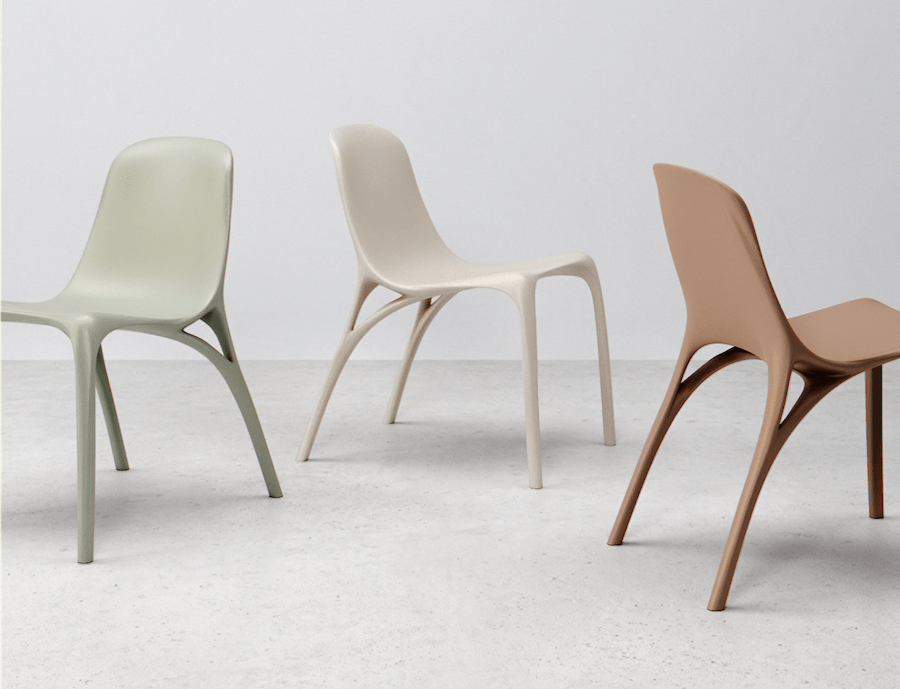
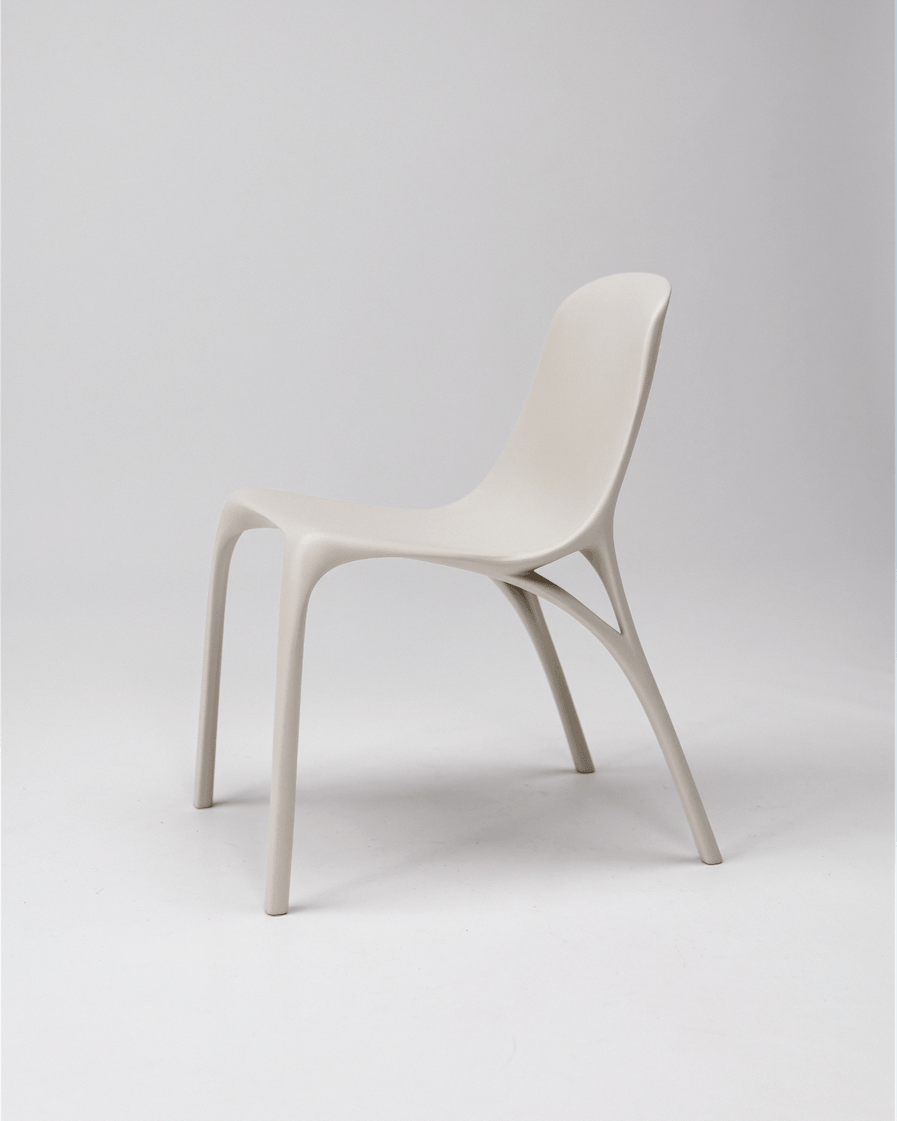
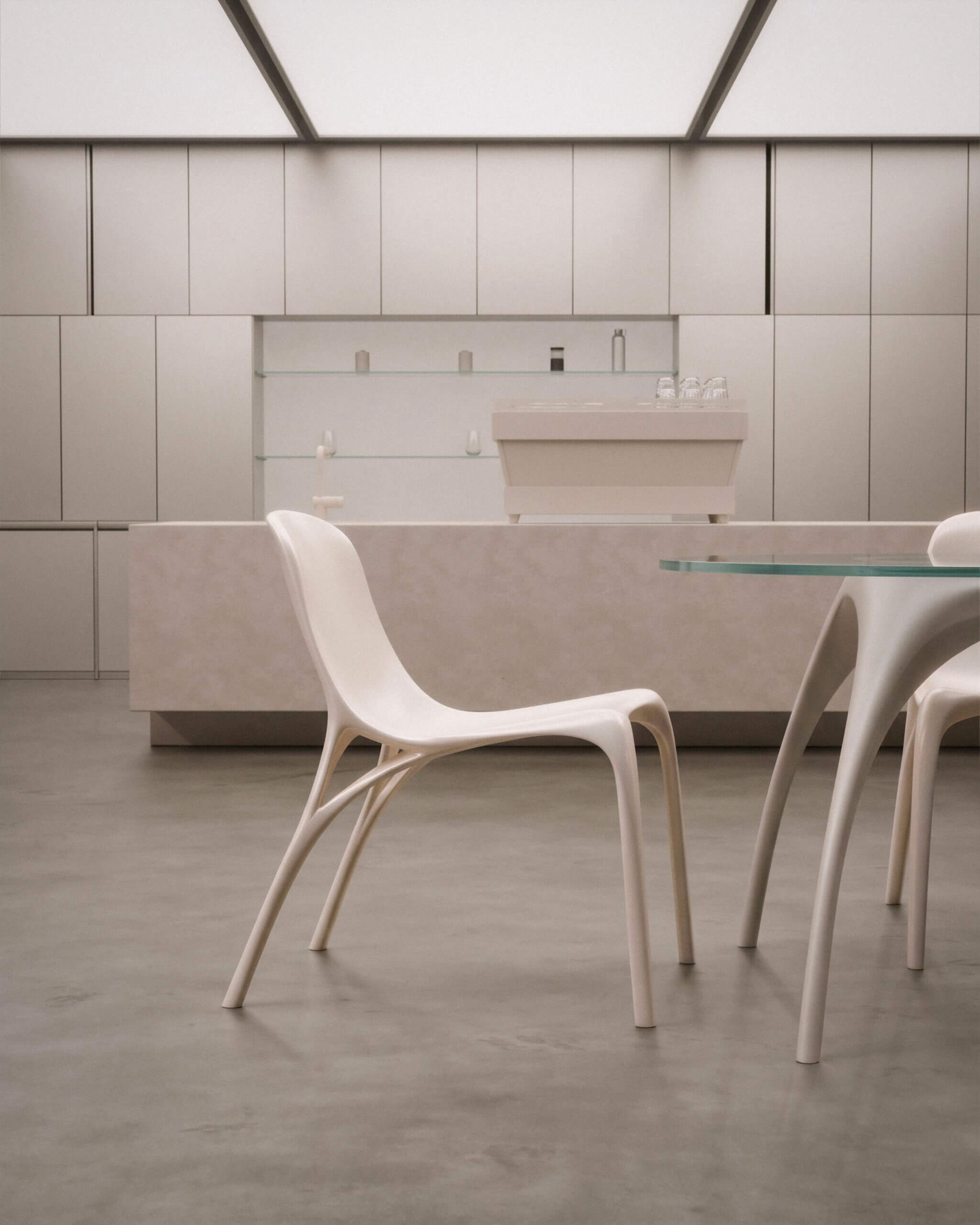
I’m finishing Ixo, my first chair. I printed the first version in resin in 2024. You could sit in it, but it was never going to last. I spent the next two years living with it, testing it and adjusting the details, and the new version is the one I’m ready to stand behind. It’s printed in ABS at full scale in Shenzhen, reinforced with fiberglass and finished in a matte pearl white. I’m also building aelo, a small studio in California that I co-founded with Devin Wu.
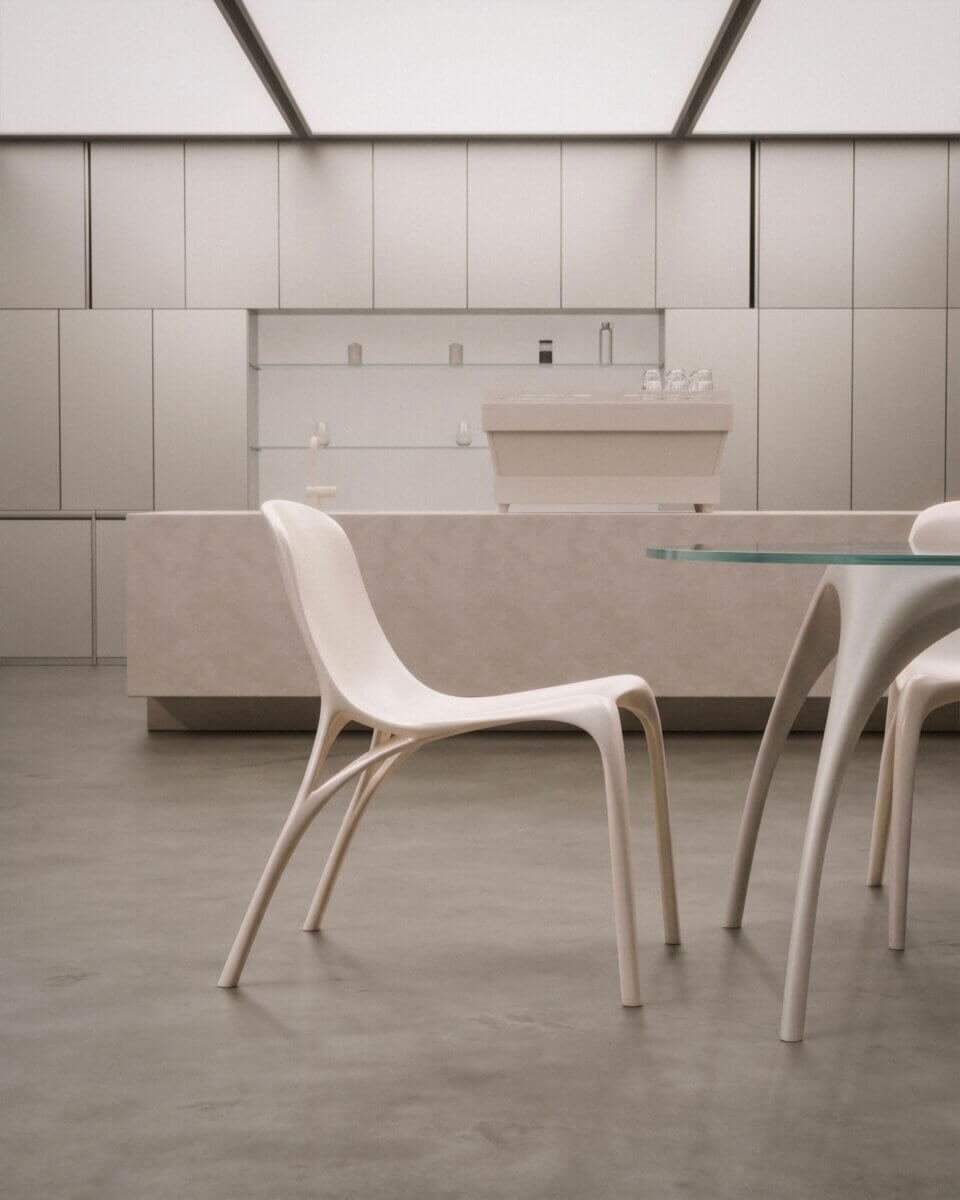
Image courtesy of aelo.design
What is a specific project you would like to share?
The first time I sat in Ixo, it was a resin print, and I could feel [the legs flex a little under me]. It looked exactly the way I had imagined, but it wasn’t ready to hold anyone for long. That chair stayed with me for two years. I kept coming back to it, giving the line more weight where it had to carry someone and letting it thin out where it didn’t. The name comes from the Greek ichnos, a trace, and that’s how I think of it: the mark one line leaves once it has done its work. Under the seat the line splits like a branch, and that’s where it gets its strength. My dream is simple. I want Ixo to end up in real places, pulled up to someone’s kitchen table at home, or in a café or a hotel lobby where people sit down without thinking twice. Small batches first, then a stool and a table, so the line can keep going.
What do you hope to contribute to the world?
Growing up around a factory, I saw how many things get made, and how many of them don’t last. My first Ixo prototype taught me the same lesson on a smaller scale. It looked right, but it couldn’t hold up, and a chair that can’t hold up is just one more thing to throw away. What I want to contribute is the opposite. 3D printing lets a small studio like ours make pieces to order, in small numbers, without molds or warehouses full of stock. I want to use that to make furniture that still carries the feeling of a hand, and that people keep for a long time. If someone sits in Ixo every day for twenty years and it still feels like that one line, that’s the contribution I care about.
Discover more of Yuhan Jin’s work: Instagram, Website.
If you’d like the chance to be featured in the next Emerging Designers Spotlight, apply HERE!