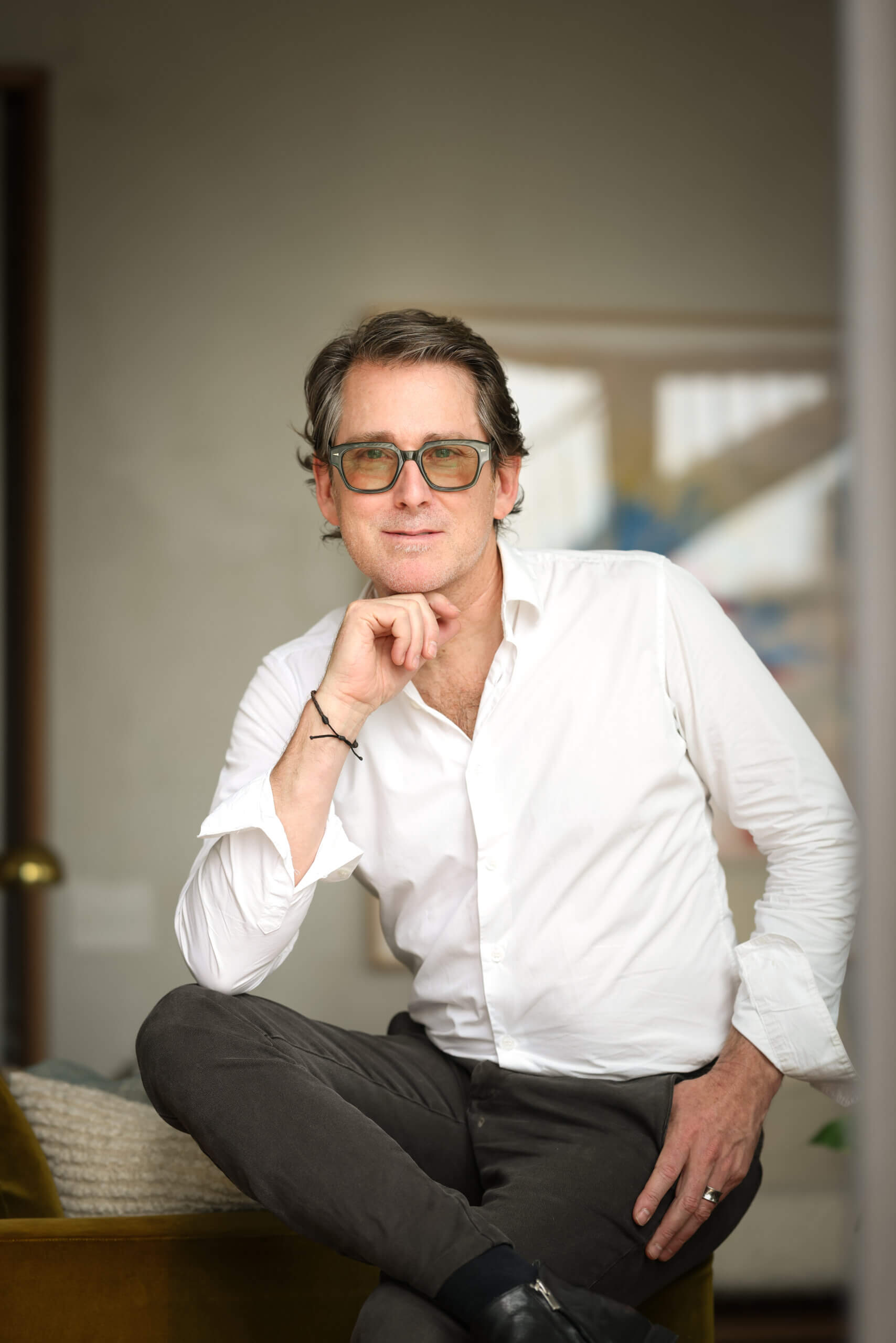
Established in 2003, Andrew Franz Architect is a New York City-based architecture and interior design studio renowned for its seamless integration of architecture and interiors, with a core belief that design should positively impact people, communities, and the environment. The studio is a close-knit team of architects and interior designers whose work spans bespoke residences, hospitality venues, workplaces, and cultural institutions. Andrew’s award-winning projects — including the Fire Island House, the East End House, and the Tribeca Loft — have appeared in Architectural Digest, Elle Décor, Interior Design, and The New York Times. Timeless, human-centered, and deeply connected to place, each project is an exercise in craft, proportion, and purposeful beauty.
(Image above courtesy of Andrew Franz Architect)
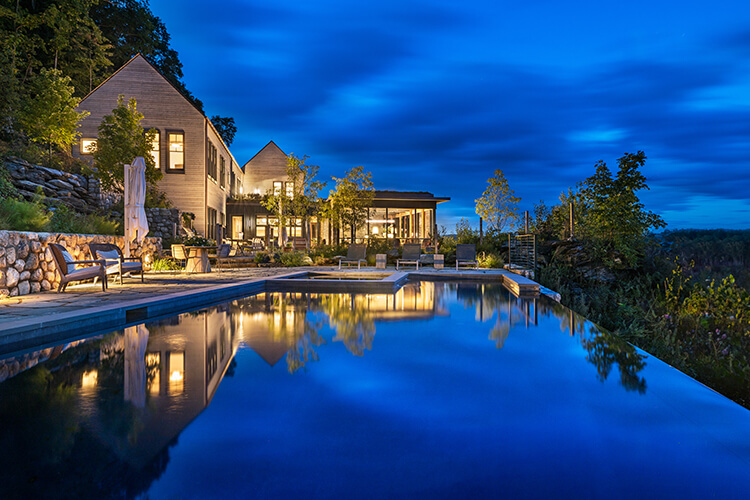
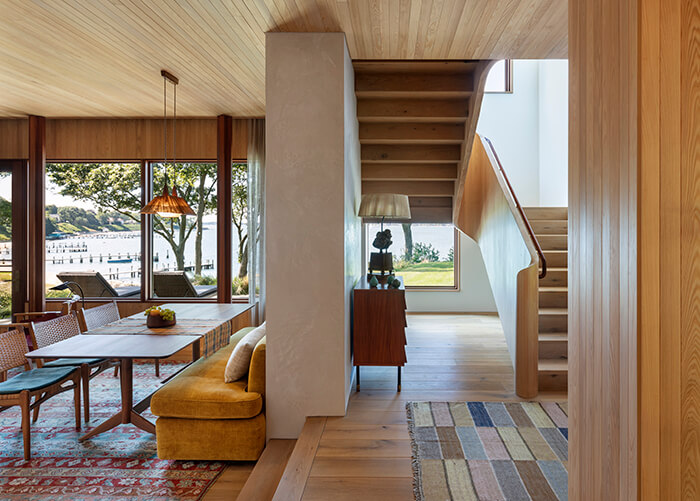
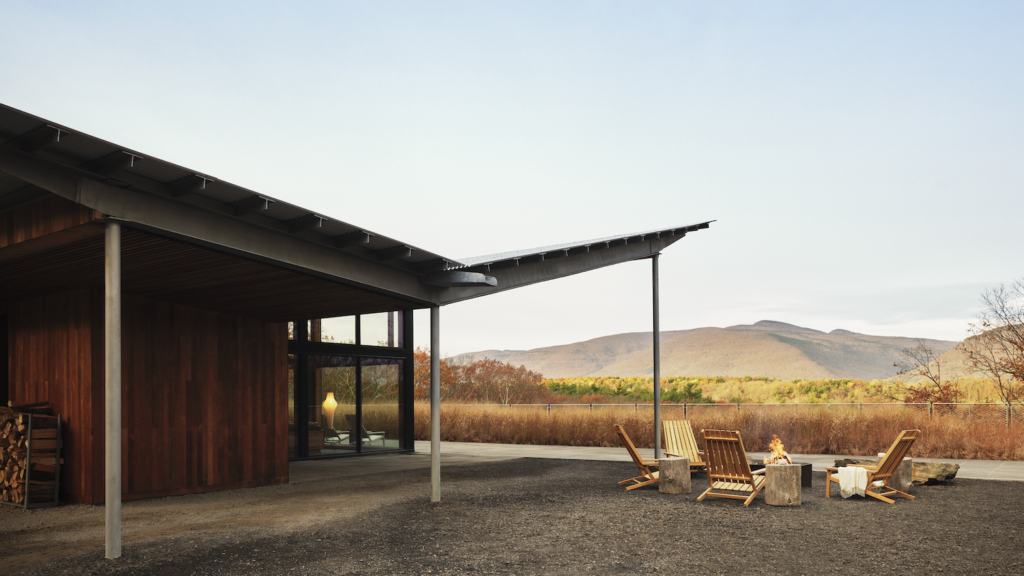
Hillside House (Image courtesy of Andrew Franz Architect)
When you were a kid, what did you dream of becoming? Did any of those childhood ambitions lead you to where you are today?
I don’t know if it was a dream or destiny. I was always aware of how places made me feel, how they elicited emotional responses- whether urban or rural, built or natural, exterior or interior. Certain places felt alive and inspiring, while others felt flat or punishing. I didn’t dream of becoming an architect or designer specifically, but I was obsessed with building things and moving things around. I had Lincoln Logs, Legos, and blocks. I made dioramas. I loved playing with friends’ doll houses and train sets. But, it wasn’t about the dolls or trains; it was always about moving the buildings or furniture around. I was raised in a family of scientists and thought I’d be a doctor. I guess the writing was on the wall. Autopilot.
Where and what did you study?
I studied architecture and architectural (and art) history and attended Carnegie Mellon University and the Cité Universitaire in Paris, and graduated from the University of Wisconsin. I was a bit nomadic, exploring and absorbing as much as I could. Travel is my true education.
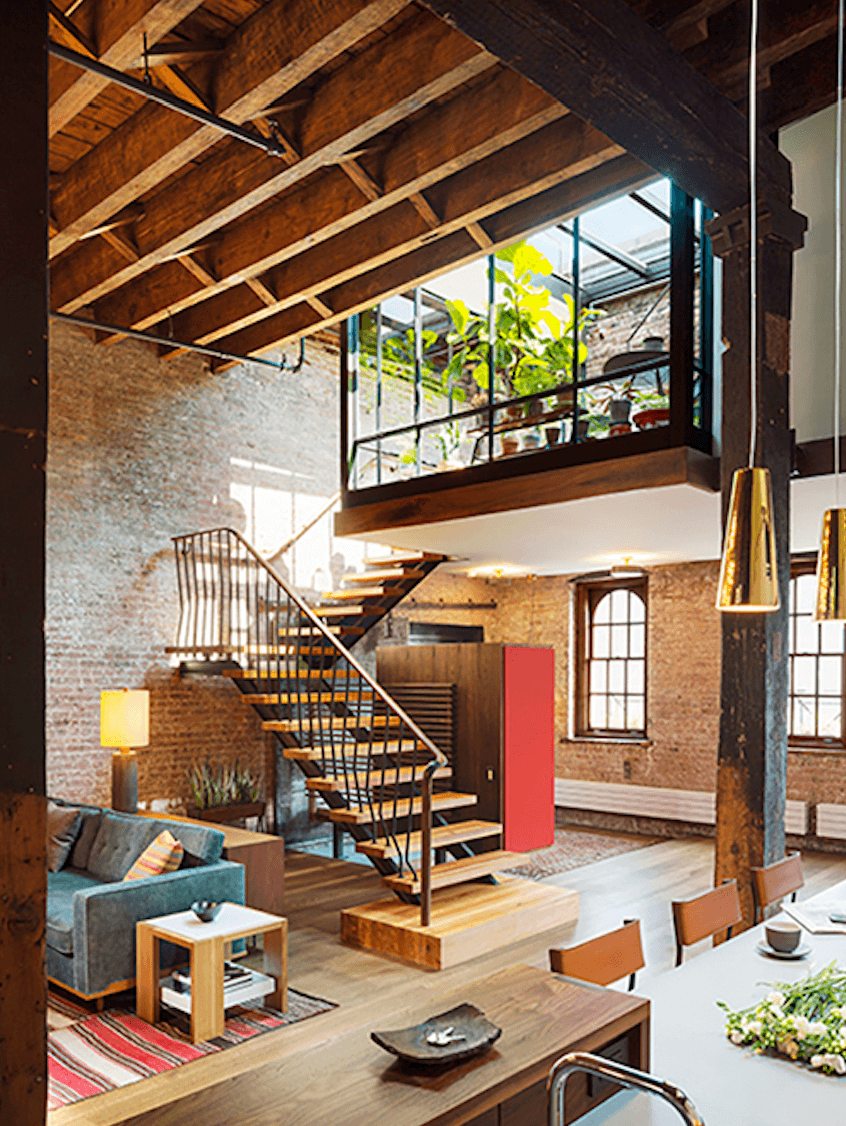
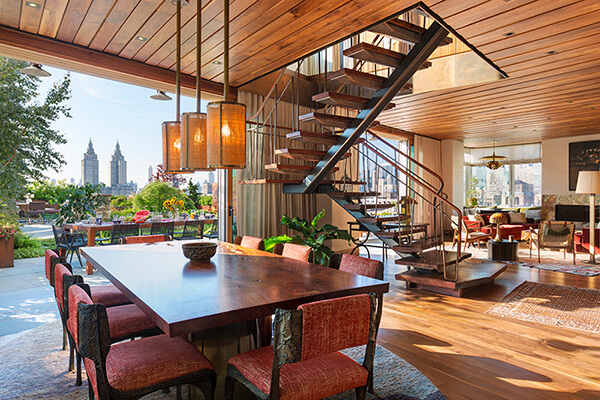
Tribeca Loft (Image courtesy of Andrew Franz Architect)
Was there a specific turning point or experience when you realized that design was your true calling?
There are a few, but the biggest was probably when I was about to leave architecture and design. I happened to have an amazing (young) client, and we were working on a large project together. It was a journey for both of us, one in which we allowed each other a lot of leeway to explore our own potential and ideas and to grow without external forces or judgments of what the project “should” look like. She granted me the freedom that perhaps I would not grant myself and changed my trajectory. I’ve never quite thought about it so succinctly, but it’s true. That liberty to have my own voice and that others would follow was a turning point. It lit a flame. I remain grateful for her patronage and friendship.
Is there a particular designer, artwork, or design movement that deeply inspires you? How has it influenced your own style or philosophy?
There are so many. I’m drawn to both exquisitely detailed and crafted design and also to design that feels more primitive, intuitive, and casual. For the prior, I’m obsessed with the high craft and design restraint of Danish furniture and woodworking, with its complex joinery and construction from single bent pieces of wood. The chairs or objects are much more complex than they appear. This is legacy art. But my passionate side loves the modern movements that break historic norms, whether the Wiener Werkstatte or more critically Louis Kahn, Corbusier and Pierre Jeanneret in India, where modernism was expressed in a more sensual and primitive way. The rustic craft is as fresh, rich, human, and vibrant today as it was then in both the architecture and furniture. It’s warm and organic. Conversely, my favorite chairs are green plastic by Vico Magistretti. The evolution of design could stop there, and I’d be happy. There are some things only Italians can do. Freshness + craft.
Which designers do you love following on social media? What draws you to their work?
Oh, that’s a loaded question… many, but fewer than I should, as I try to LIMIT social media. Most are friends, some are inspirations. Many are both. I’d rather be experiencing things live.
How would you describe your design philosophy? Has it evolved over time, and if so, how?
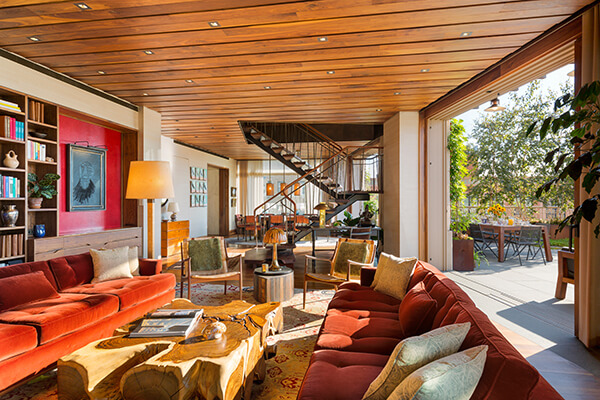
At the core of everything we do is the belief that interiors and architecture should be integrated as one — curating a cohesive experience and narrative rather than treating them as separate disciplines. Our designs are specific to their site and purpose — neither a statement of current trends, nor seeking to recreate the past. Over the years, that philosophy hasn’t changed so much as it has deepened. Early on, it was more intuitive; now it’s more deliberate. We ask harder questions about sustainability, about longevity, about what a space will mean to the people inside it twenty years from now. On a more nuanced level, I’m obsessed with how materials come together, how they connect. It’s less about the material selection than how they relate to each other. And, finally, but not least, we emphasize connecting to nature, whether it be the sky, the rooftop, or the sea.
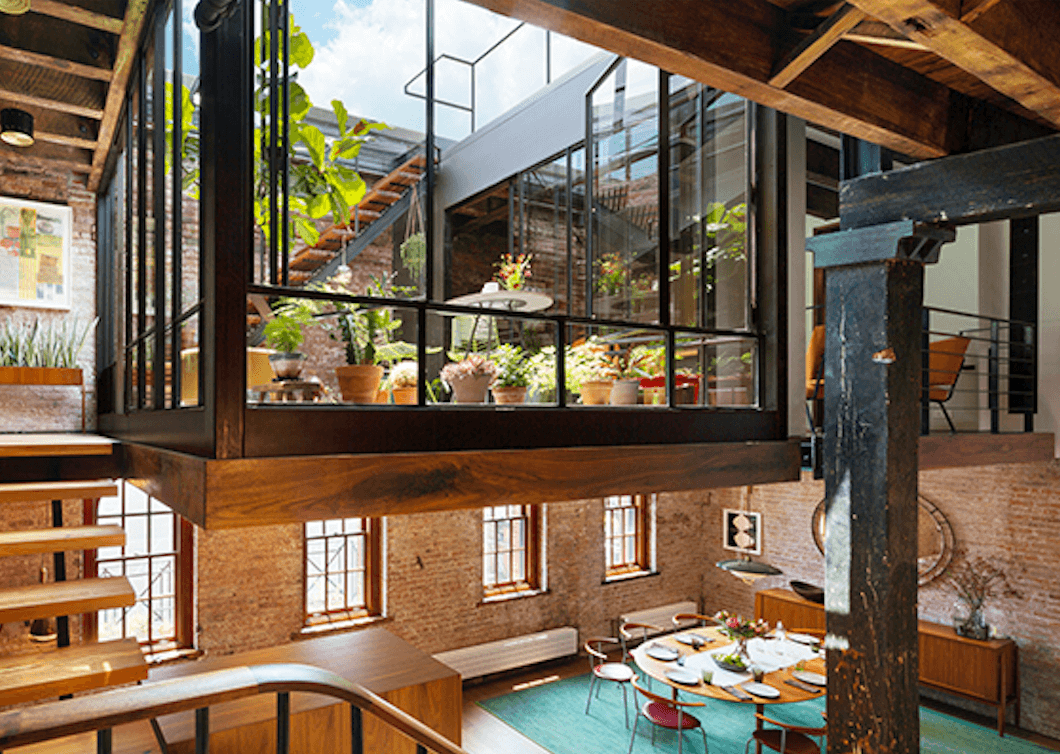
Tribeca Loft (Image courtesy of Andrew Franz Architect)
Tell us a bit about where you live: How long have you been there, and how does your environment shape your creative process?
I’m a native New Yorker — I grew up in Brooklyn and spent childhood summers on Long Island beaches and in Maine and the islands of Massachusetts. That combination of urban density and open, natural landscape shaped the way I see everything. I still live in New York, in NOHO and the city continues to be an endless source of creative energy — the layering of history, the scale, the texture of street life. But I find that my best thinking often happens when I step away from it, often by the sea, but more importantly, through travel. Travel is a constant source of inspiration, whether skiing or exploring cities. Inspiration is everywhere and has to be experienced, whether it is the compressed ceiling of the Rifugio at lunch or the colors of the Condesa buildings shadowed by the lush foliage. Sometimes it’s the colors of a tidal pool on a barrier island.
Which of your projects are you most proud of, and what makes them stand out for you?
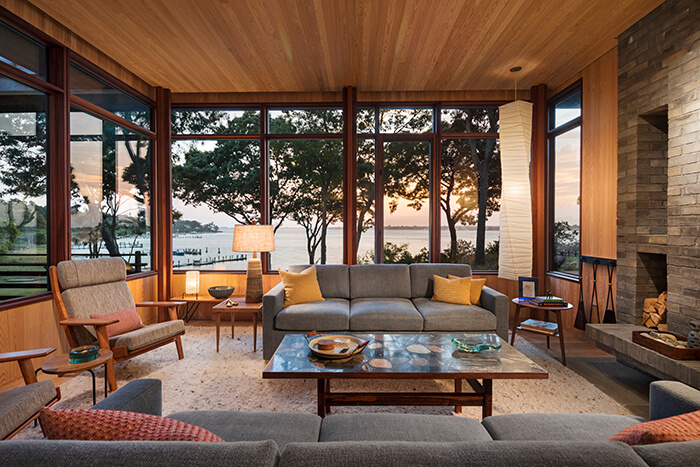
Each project carries its own story. The Tribeca Loft is by far our most popular; our one hit wonder. It’s still reposted online regularly 15 years later. But Meadow Beach House holds a special place in my heart. The photos are unfortunately from when it was newly planted, but the landscape, now fully grown in, is heroic. It envelops the house, which is broken up into a few volumes like old agrarian buildings. The interiors, clad in a soft pine, glow in the light reflected off the meadow. It’s not a small house, but we take proportions very seriously, so it still feels intimate and like a legacy cottage, as we were instructed. The house is full of surprise spaces and connections. It’s the only project I’m envious of. I develop relationships with a lot of projects, but this one was hard to leave at the end. It was love at first sight.
In your opinion, what is the most significant challenge facing the design world today? How do you think designers should respond to it?
The tension between speed and thoughtfulness. We live in a culture that rewards the instant and the shareable — and design and construction, at their best, require patience. We’ve never been ones for trends, instead pursuing timeless and personal work that genuinely serves people and endures. But, people are used to things immediately now, and quality takes time. Construction is not created in data centers by chips. It’s still “fatto a mano”, made by hand.
What are you currently working on?
We’re working on a few houses, one is quite a large compound that is taking a long time to construct… Remote island living… we all appreciate it for its slow pace and must embrace that character during construction too. In addition, we’re working on some lofts in Tribeca and other NYC projects and looking at some projects in Florida and upstate.
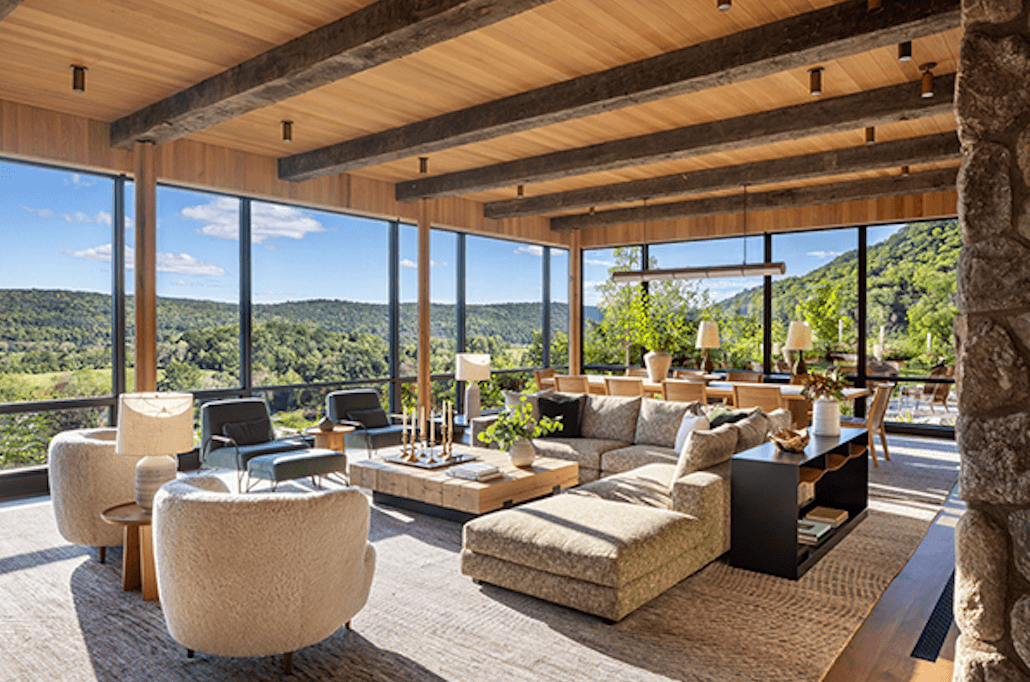
Hillside House (Image courtesy of Andrew Franz Architect)
What’s on the horizon for you? Any upcoming projects, events, or goals you’re particularly looking forward to?
We’re planning a monograph in a few years once two current projects are completed AND the landscape is grown in for at least one season.
What’s a favorite movie, band, or song that inspired or shaped your creative mind?
Ha. Something better will surely come to mind later, but I’m from Brooklyn and Lincoln Center ranks as one of my top 10 places in the world- Moonstruck! I could recite ½ of the lines by heart and I haven’t seen it in 10+ years.
Visit Andrew Franz Architect’s Website >>>