The eighth edition of ICFF’s Emerging Designers Spotlight Online is here.
Presented in partnership with CLEVER, this online editorial series offers emerging designers a platform for sustained media exposure and industry visibility. We’re excited to feature the emerging talent discovered through ICFF’s global network, whose creative voices are shaping the future of contemporary design. From a stainless steel chair born out of creative risk-taking to hand-tied wooden sculptures and a bone-inspired lounge chair pushing the boundaries of 3D printing, this round of honorees proves that the next generation of designers draws as much from instinct and material honesty as from technical innovation. Each approaches their craft differently, but all three share a common thread: a refusal to settle for the expected, choosing instead to let emotion, craftsmanship and structural intelligence guide their work.
If you’d like the chance to be featured in the next Emerging Designers Spotlight, apply HERE!
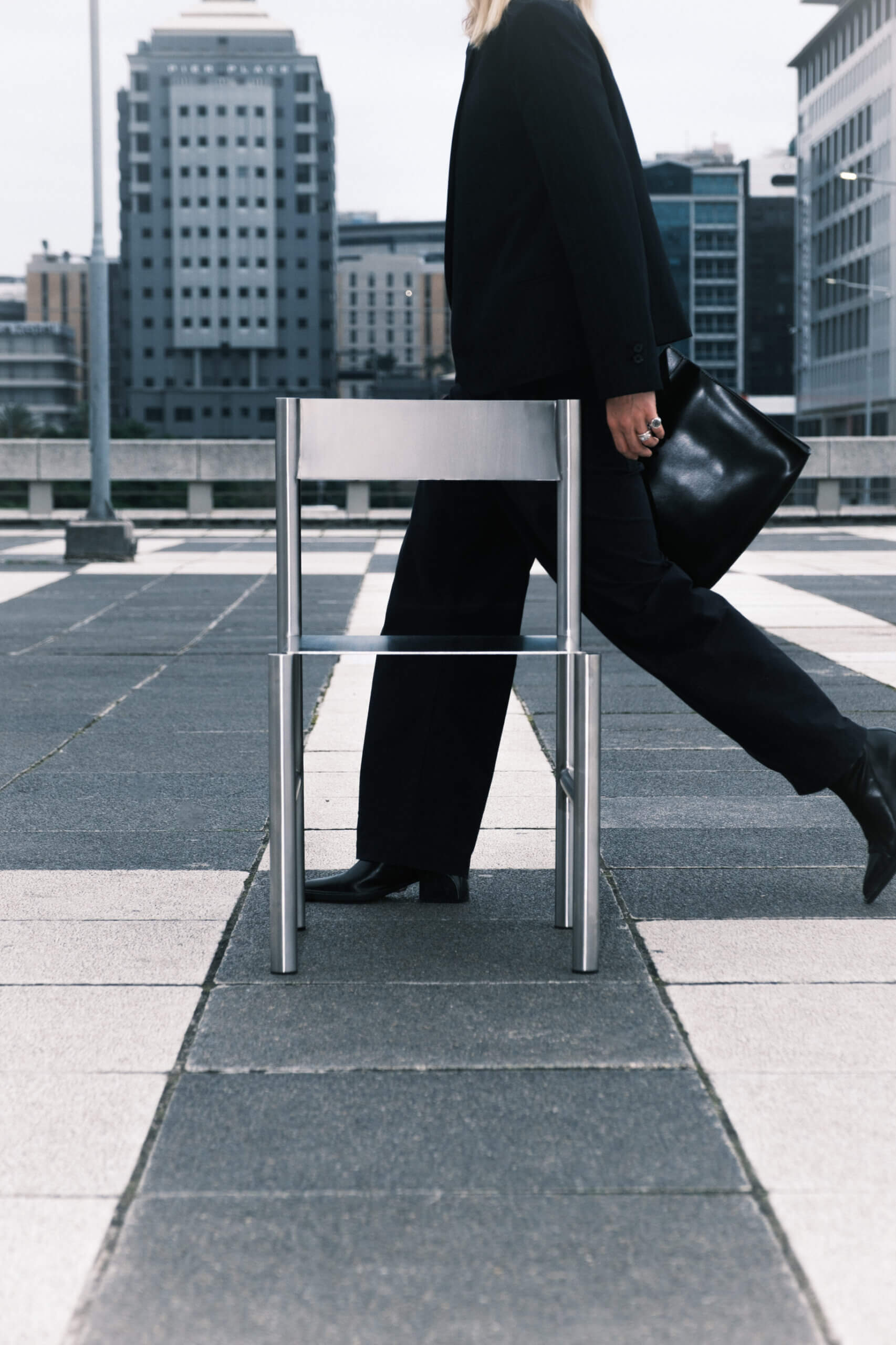
(Image above courtesy of N I S H)
What inspires you as a young designer?
Design should make your soul sing. You dont need to explain why you are drawn to something or why you love it but the reaction towards it is what you must trust fully. Thats what inspires me. The reaction and emotion that design can create in a person.
What are you working on right now?
I am expanding on my J O H N range and looking to combine other materials with stainless steel.
What is a specific project you would like to share?
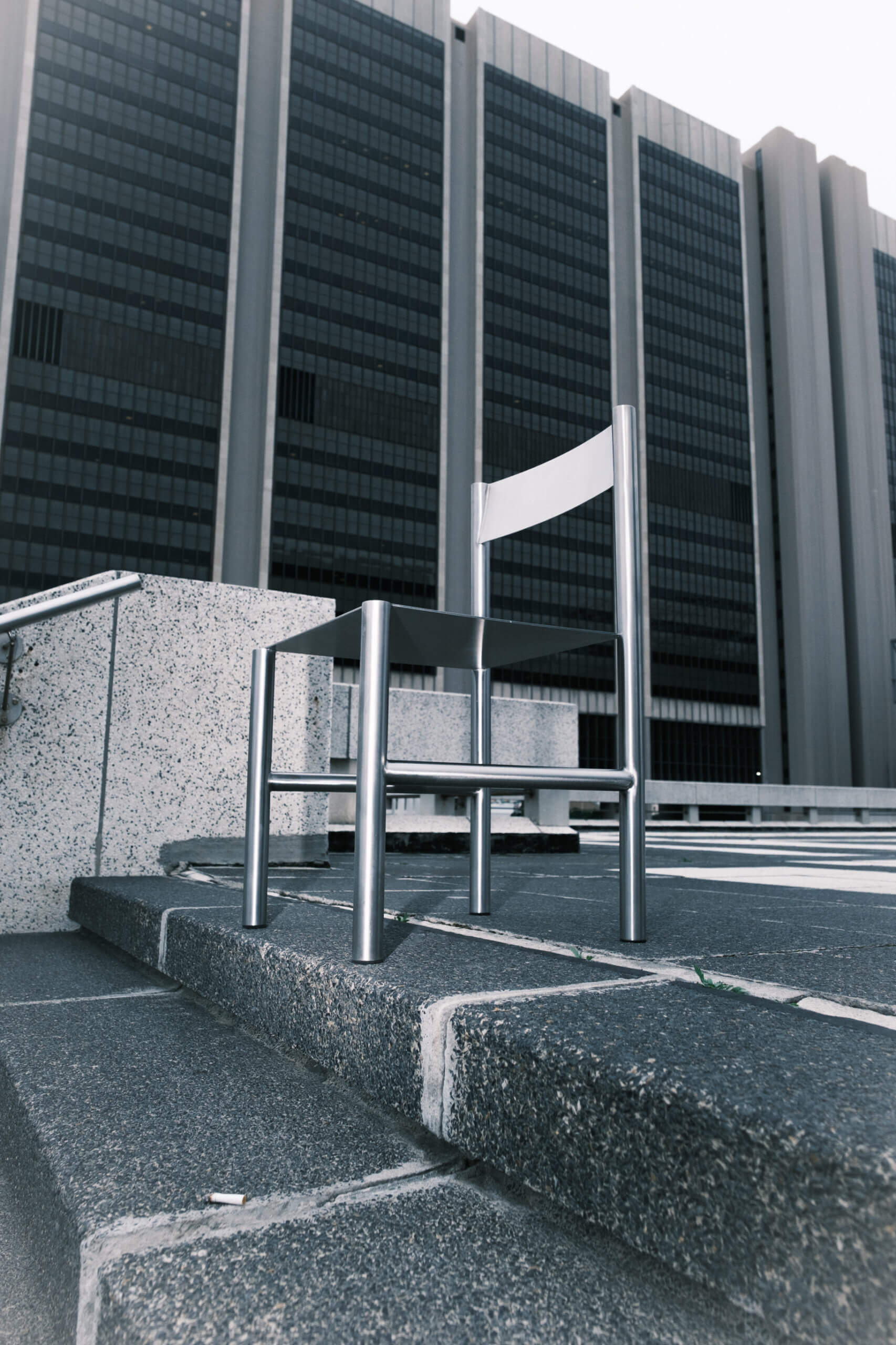
My J O H N chair is the piece that best represents my brand, N I S H, at this moment.
What do you hope to contribute to the world?
I want to inspire other designers to follow their gut and just create and take risks. Starting my own brand was scary but i didnt give my fear enough time to convince me not to do it…so here we are!
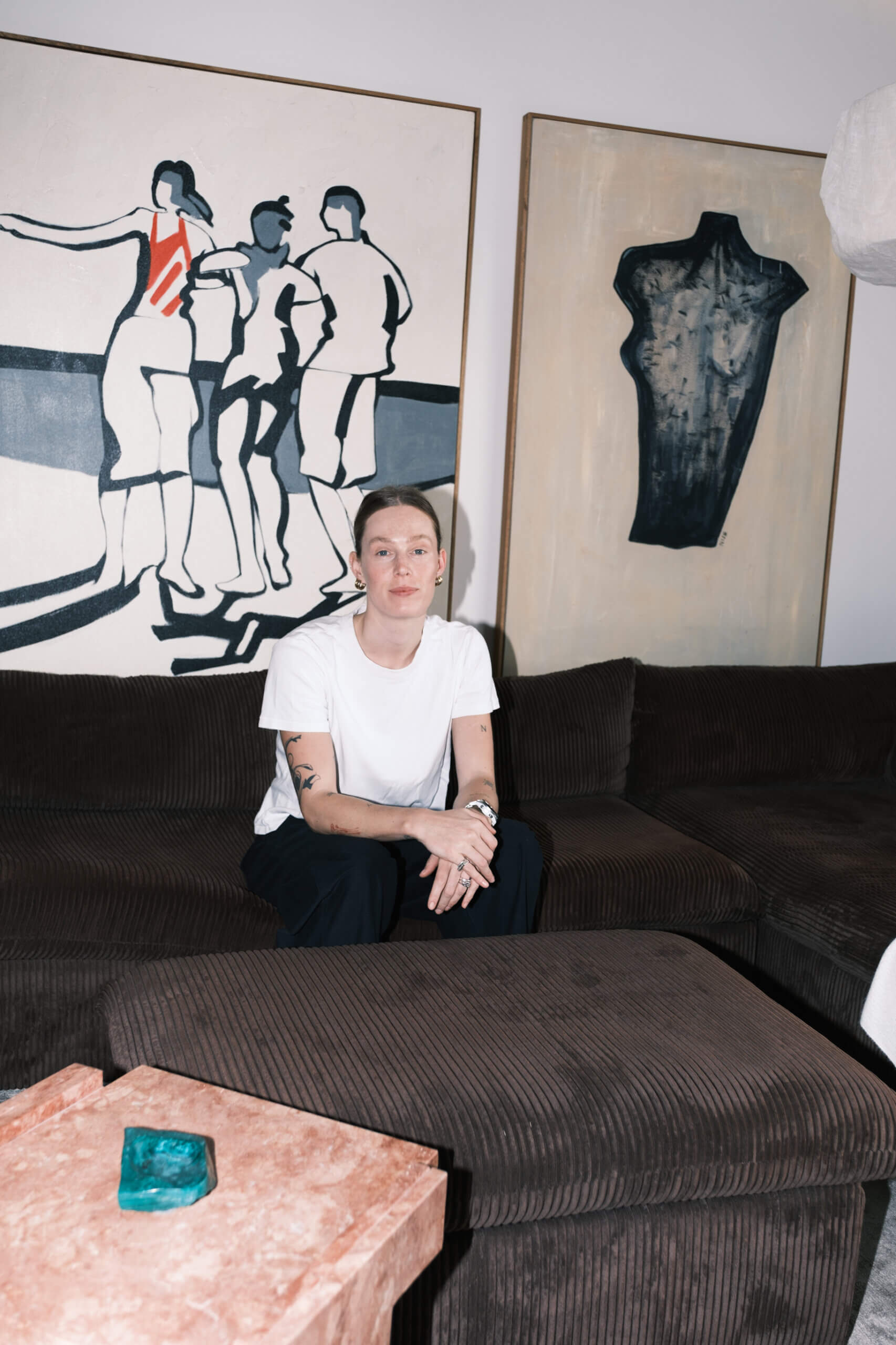
Discover more of Tanisha Neill’s work: Instagram, Website.
What inspires you as a young designer?
I’m inspired by everyday life, organic forms, craftsmanship and the character of materials. What drives me is creating objects that are functional but also have an emotional and expressive quality, while constantly experimenting and finding new ways of working with familiar materials.
What are you working on right now?
Right now, I’m working on a series of handmade wooden wall lamps, exploring organic forms and the relationship between light, material and craftsmanship.
What is a specific project you would like to share?
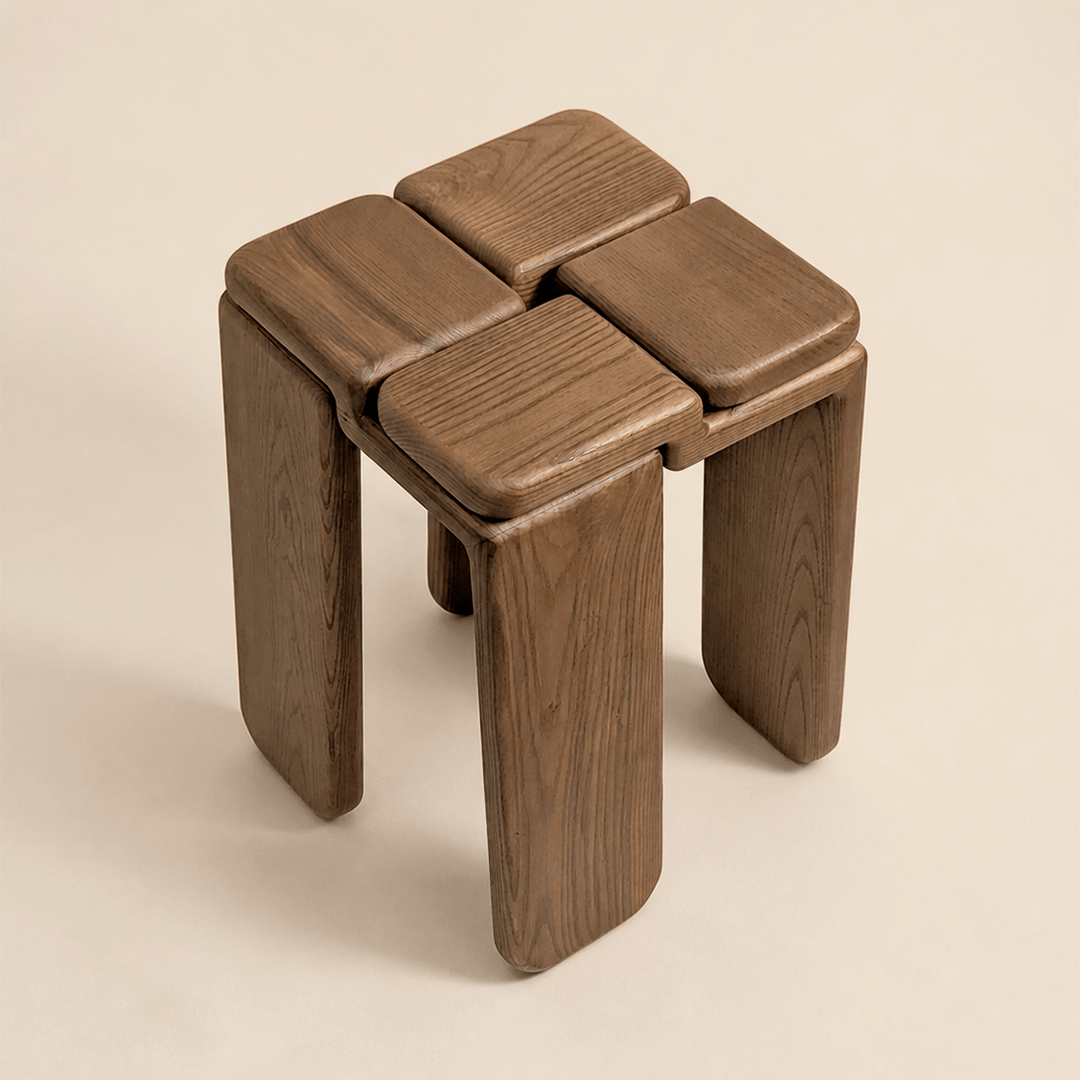
I’d like to share the Knot Collection, a series of furniture pieces exploring the idea of connecting and “tying” solid wood elements together through simple, sculptural forms.
What do you hope to contribute to the world?
I hope to bring a sense of joy and informality to everyday life through small, thoughtful objects. I like the idea that design doesn’t always have to be serious — it can make everyday moments a little more enjoyable.
Discover more of Luis Gimeno Lloret’s work: Instagram, Website.
What inspires you as a young designer?
What a place is already doing before anyone arrives. Most sites are not empty. Most structures are already carrying load, already spanning something, already dividing one condition from another. I am drawn to work that finds what is already there and gives it a reason, rather than clearing it and starting over. The same instinct shows up at furniture scale. A bone deposits material only where force is transmitted and leaves everything else hollow. That is not a metaphor for structure, it is structure. I keep looking for forms where the geometry is doing real work rather than describing it.
What are you working on right now?
I co-founded a brand, aelo.design, with Yuhan Jin. We make objects for spaces, using new methods to arrive at forms that didn’t exist before. Each piece is designed to be experienced with the whole body: how it reads from across a room, how it feels under your hand, how it holds you when you sit. Alongside the brand, I continue to work in spatial design.
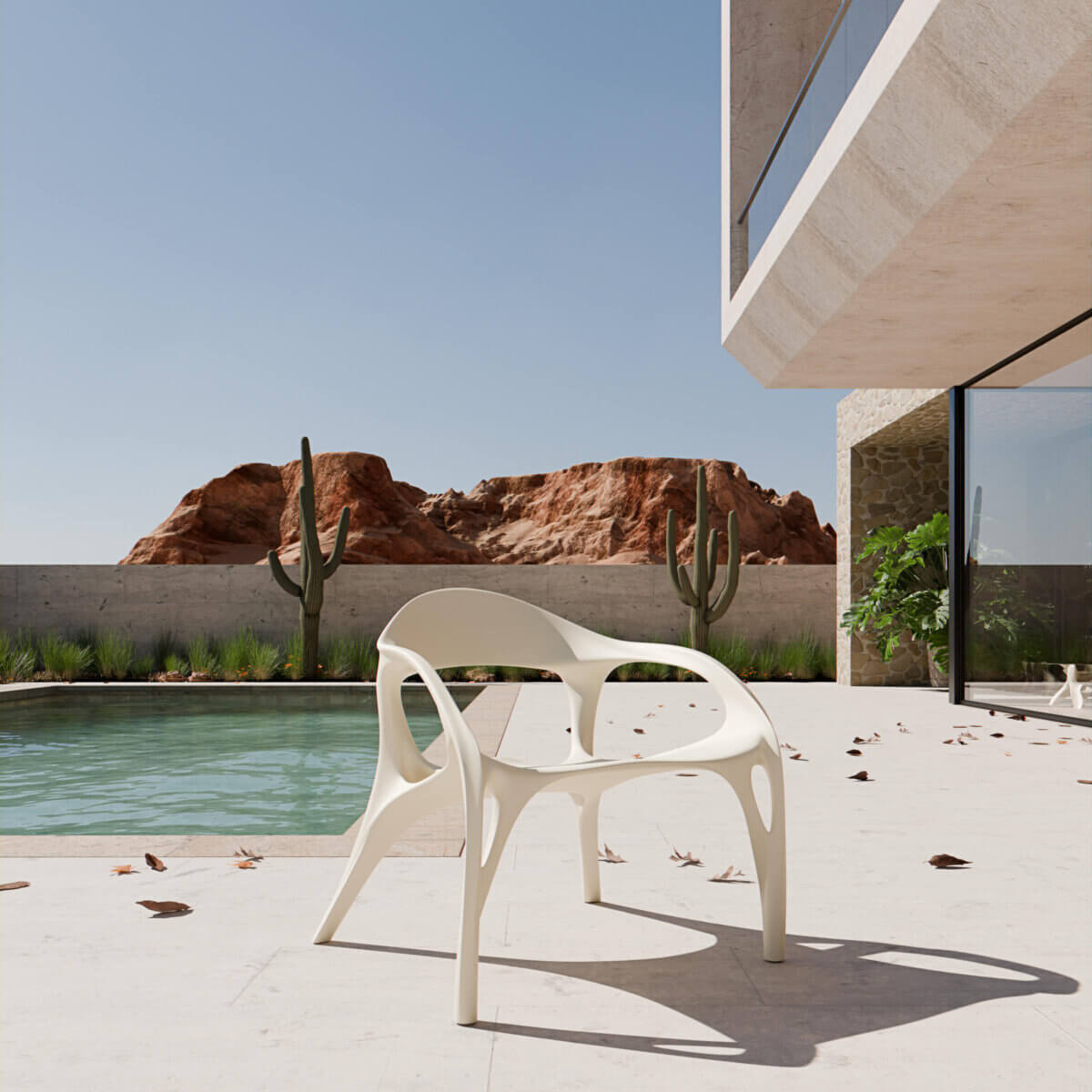
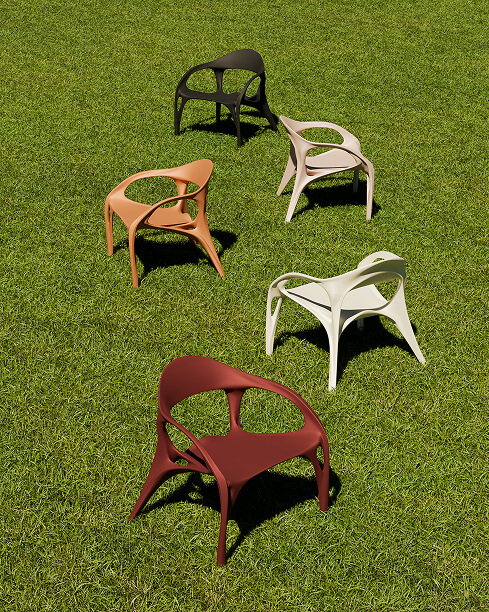
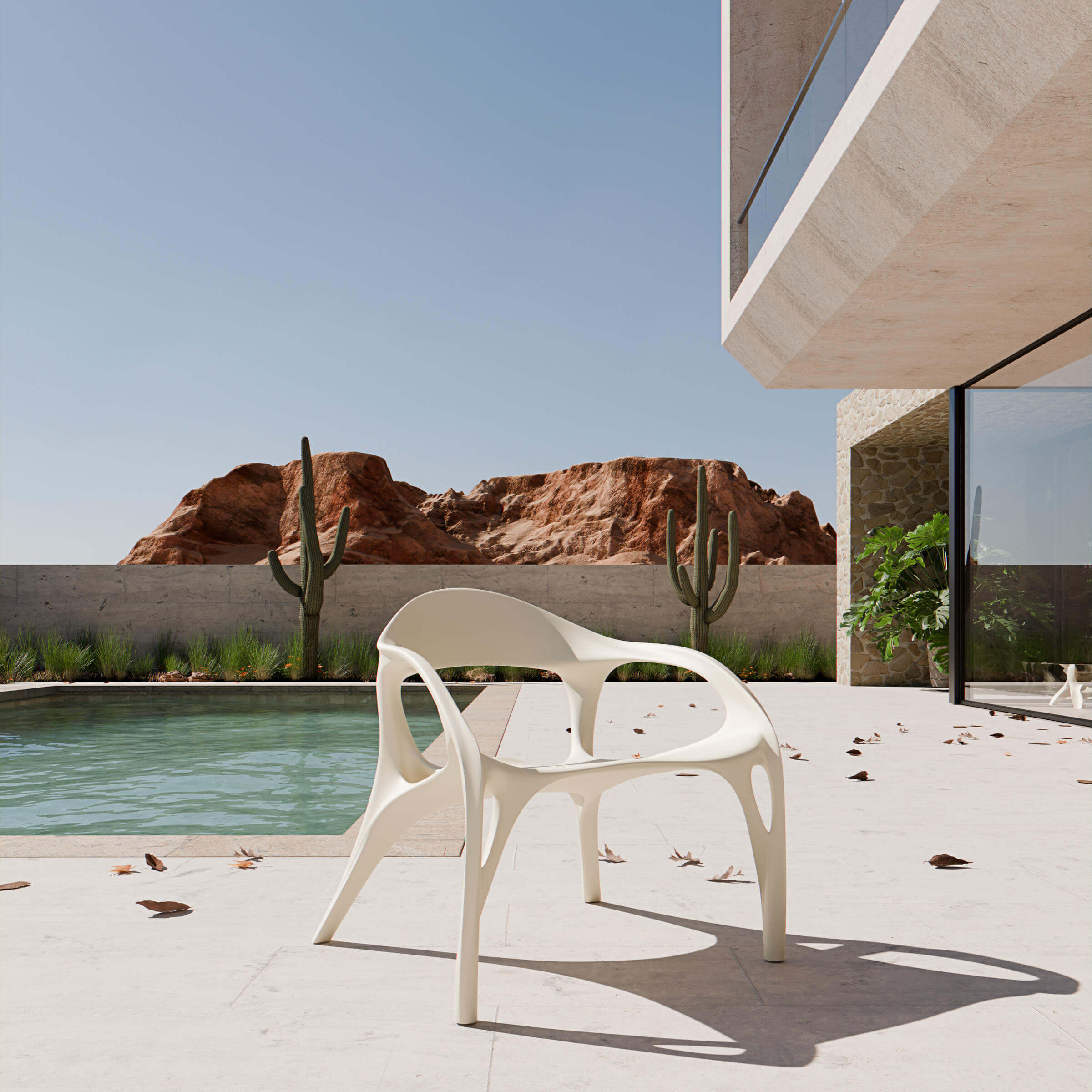
Ilium Lounge Chair (Image courtesy of aelo.design)
What is a specific project you would like to share?
Ilium, a lounge chair. A chair usually hides its structure inside its form. Ilium is a structure that became the form. The name comes from the ilium, the wing of the pelvis, which has supported the weight of an upright body for millions of years. Bone deposits material only where force is transmitted and leaves the rest hollow. This is not a reference to a bone. It is the same problem solved the same way. Every early version that treated the backrest, seat, and legs as separate parts needed a bracket somewhere, and a bracket would have contradicted the premise. So I stopped drawing parts. A continuous line, material only where force is actually transmitted, everything in between left open. It’s 3D printed in ABS and finished by hand, deliberately left unpolished in some places. A bone isn’t smooth either, and sanding it down until the logic disappeared would leave only a silhouette. What I’m aiming for is a manufacturing question. A form like this couldn’t have been made a few years ago. Not affordably, not at this scale, not as a single piece. Large-format additive manufacturing changed that, and most furniture production hasn’t caught up. I want to work with manufacturers on what this technology actually makes possible, rather than using it to approximate forms that were already buildable.
What do you hope to contribute to the world?
I would like to make the case that we do not have to keep building from zero. Most of what a designer encounters already exists. A bridge already spans the water. A room already has a threshold. A bone already knows where the load goes. There is more intelligence in what is already there than we usually credit, and finding it takes more discipline than replacing it. If I contribute anything, I would like it to be work that makes attachment look more interesting than demolition, at whatever scale I am working at.
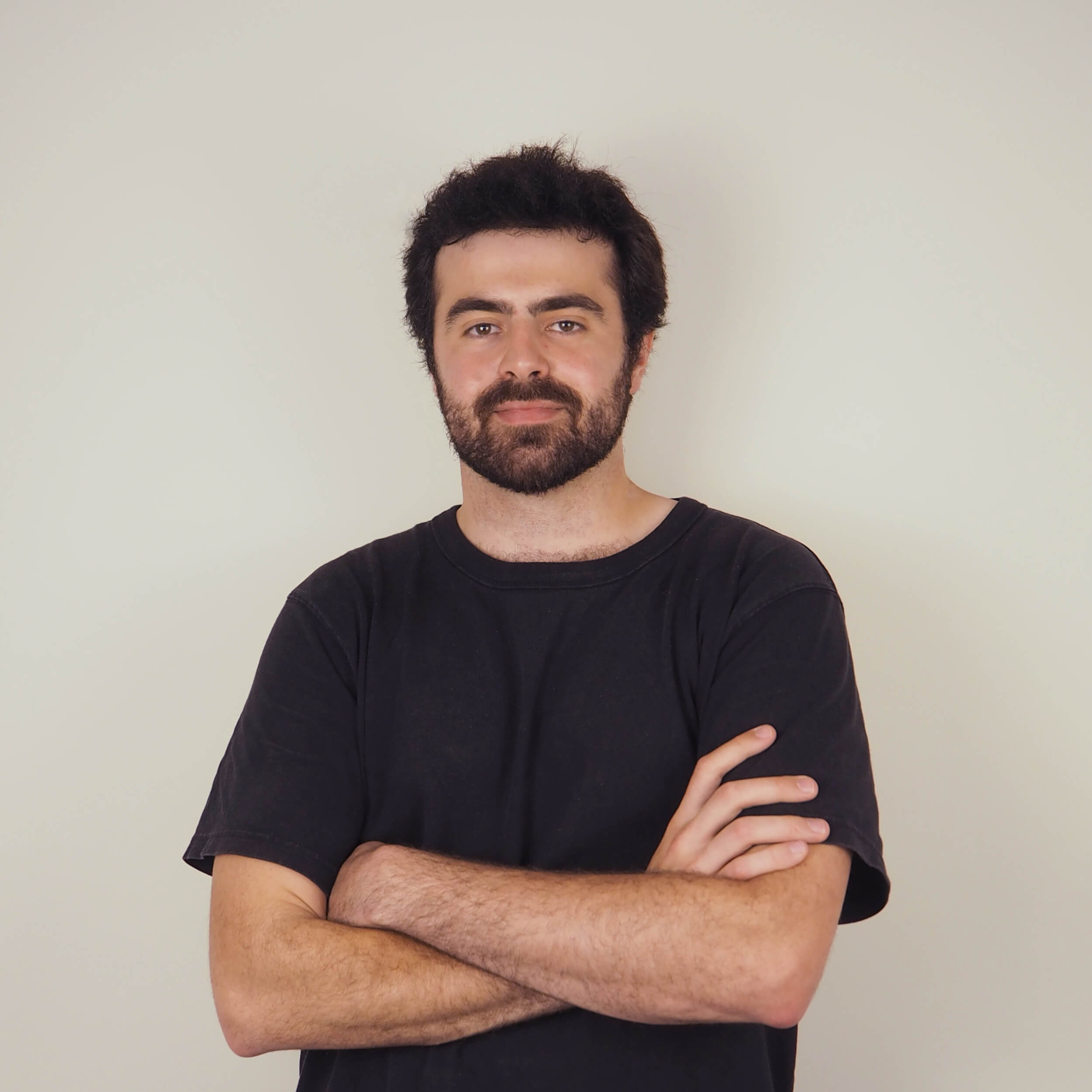
Discover more of Devin Wu’s work: Instagram, Website.