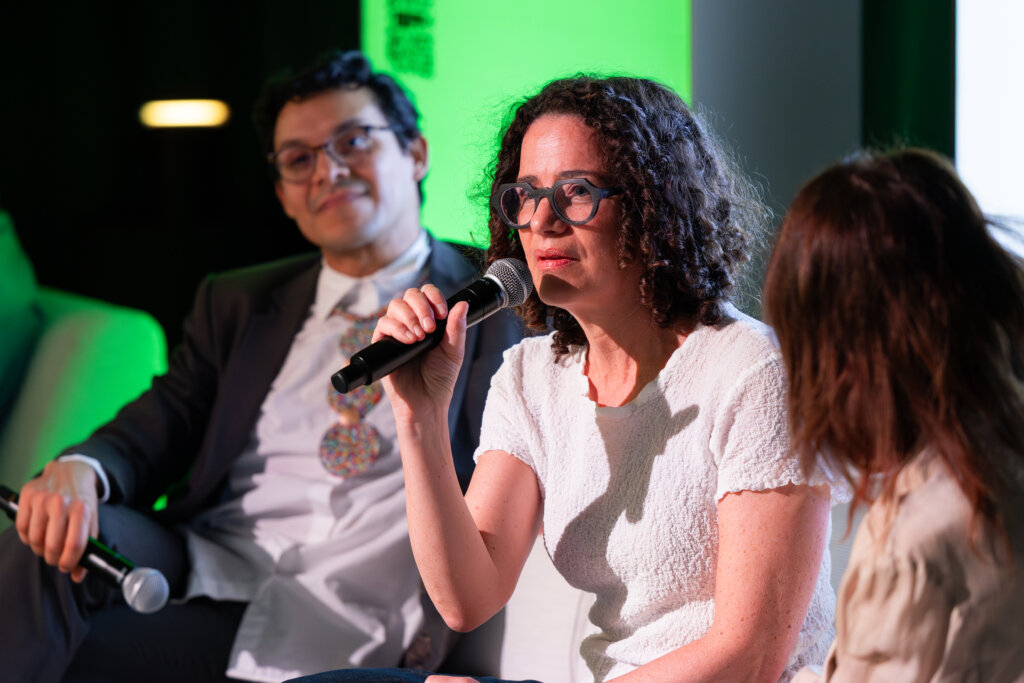
Hosted by Amy Devers of Clever and presented with Danver, Emerging Designers Spotlight Live is an engaging, fast-paced event celebrating the creative journey and the meaningful connections that propel careers, foster community, and elevate new voices in the design world.
“As the host of a Clever, long-running podcast about creativity, I’m attuned to how important it is to be able to talk with clarity and passion about your work. That’s how others are able to grasp its value and resonate with it on a deeper level. It’s very meaningful to me to be able to coach these talented young designers on how to present their projects, and then offer the platform of EDS Live in order to showcase their ingenuity to an audience. The Industry Pros that we invite on stage to give feedback, always add to their presentations with super insightful comments and questions. This year’s show was so strong and exciting! We had such great presentations from everyone that jurying the competition was really difficult. That’s a great problem to have and I can’t wait for the next edition.” says Amy Devers.
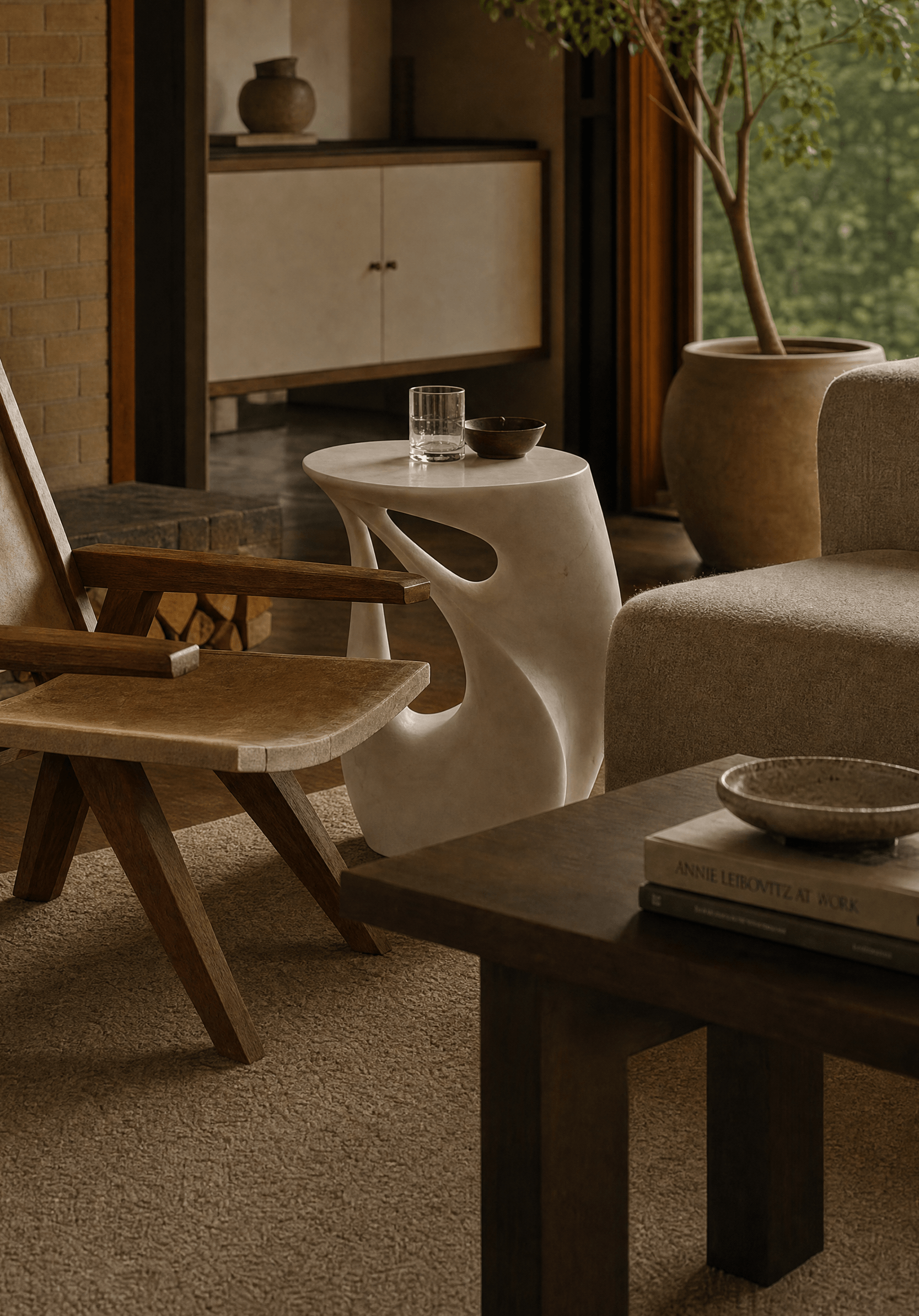
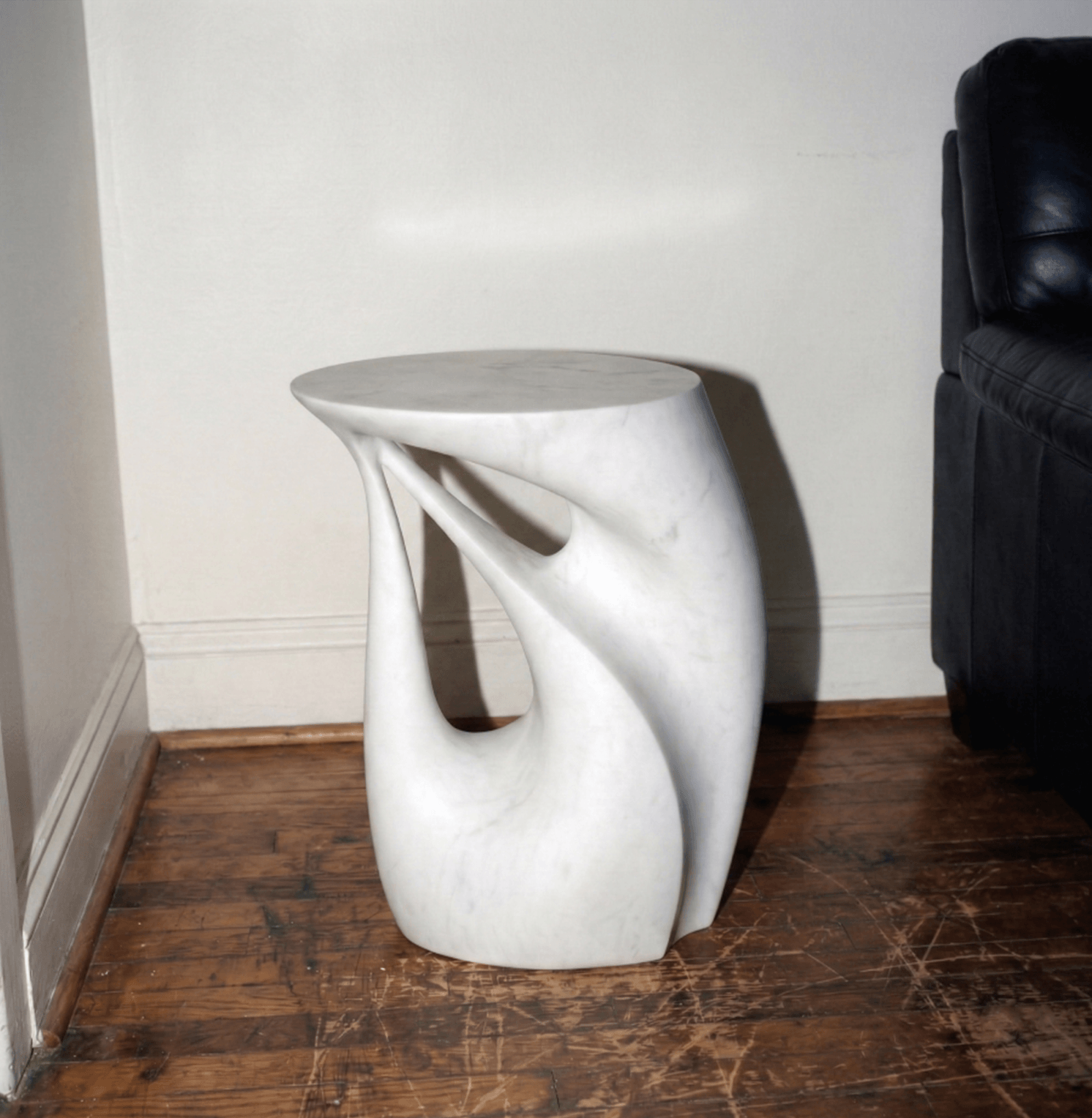
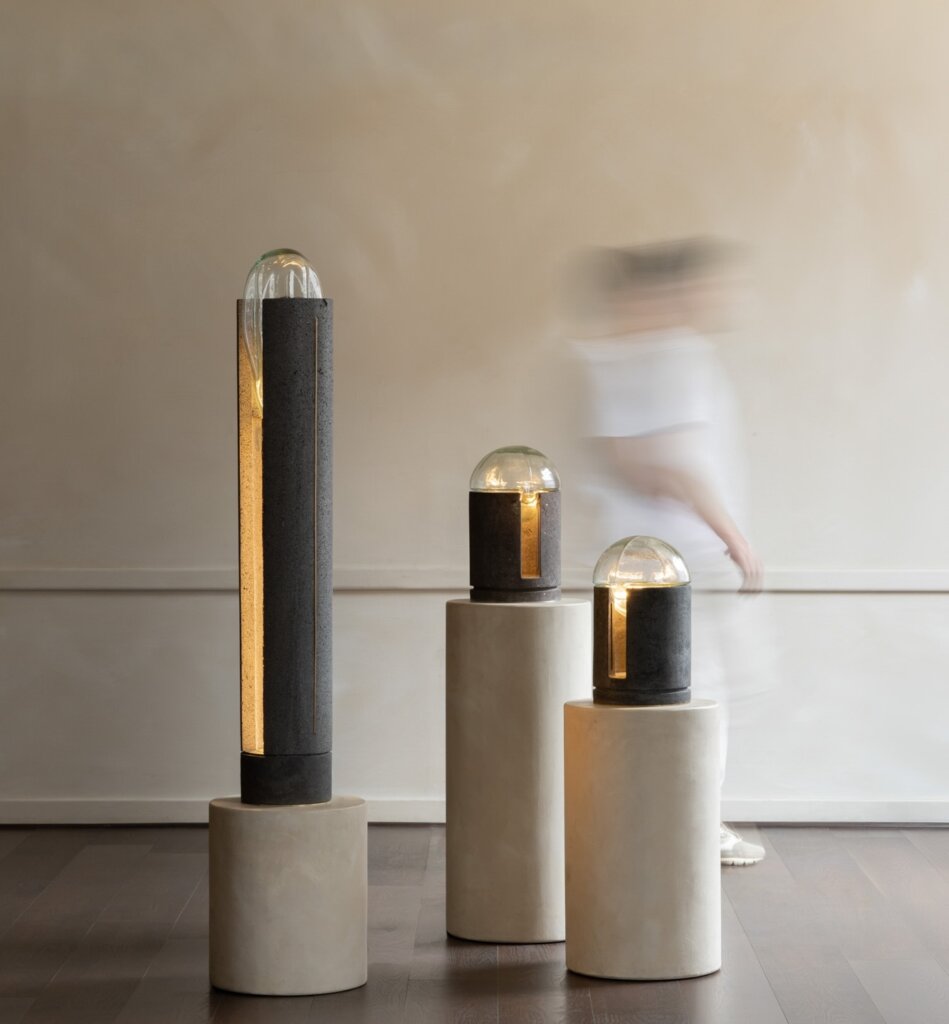
(Top image courtesy of Joey Aji | Pinch Table in Room)
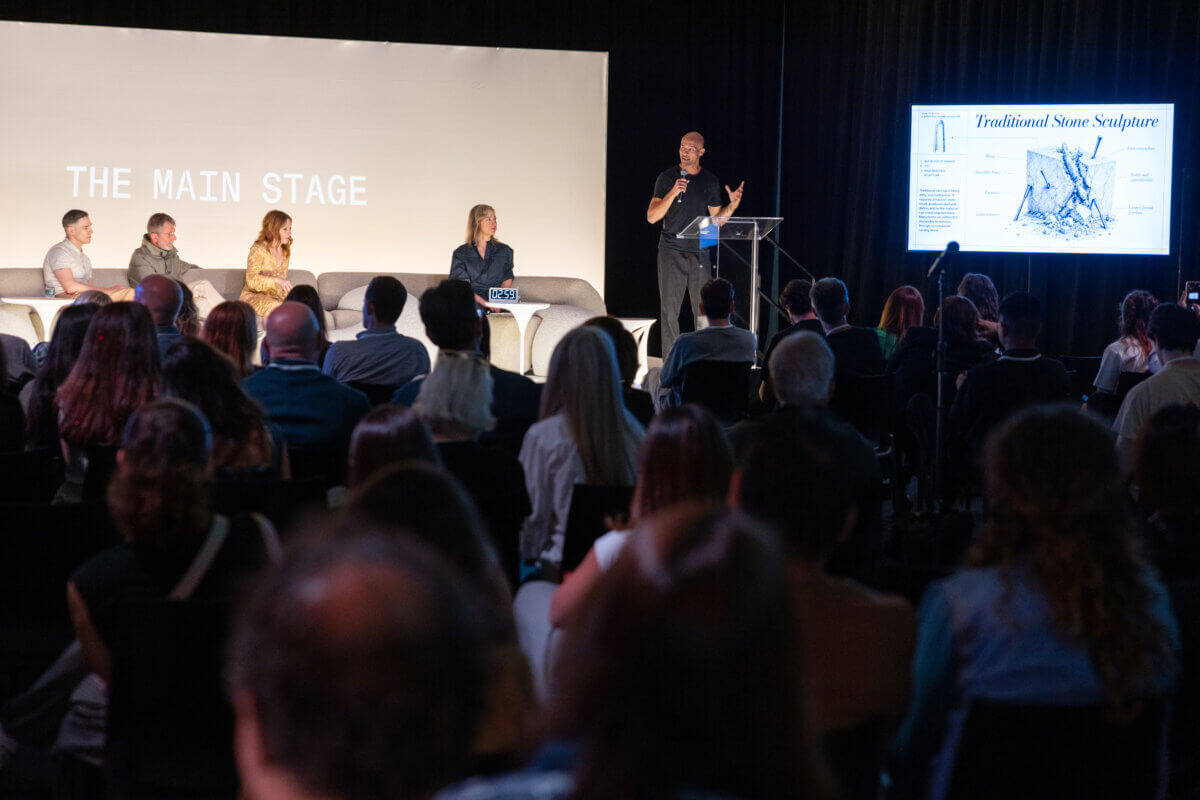
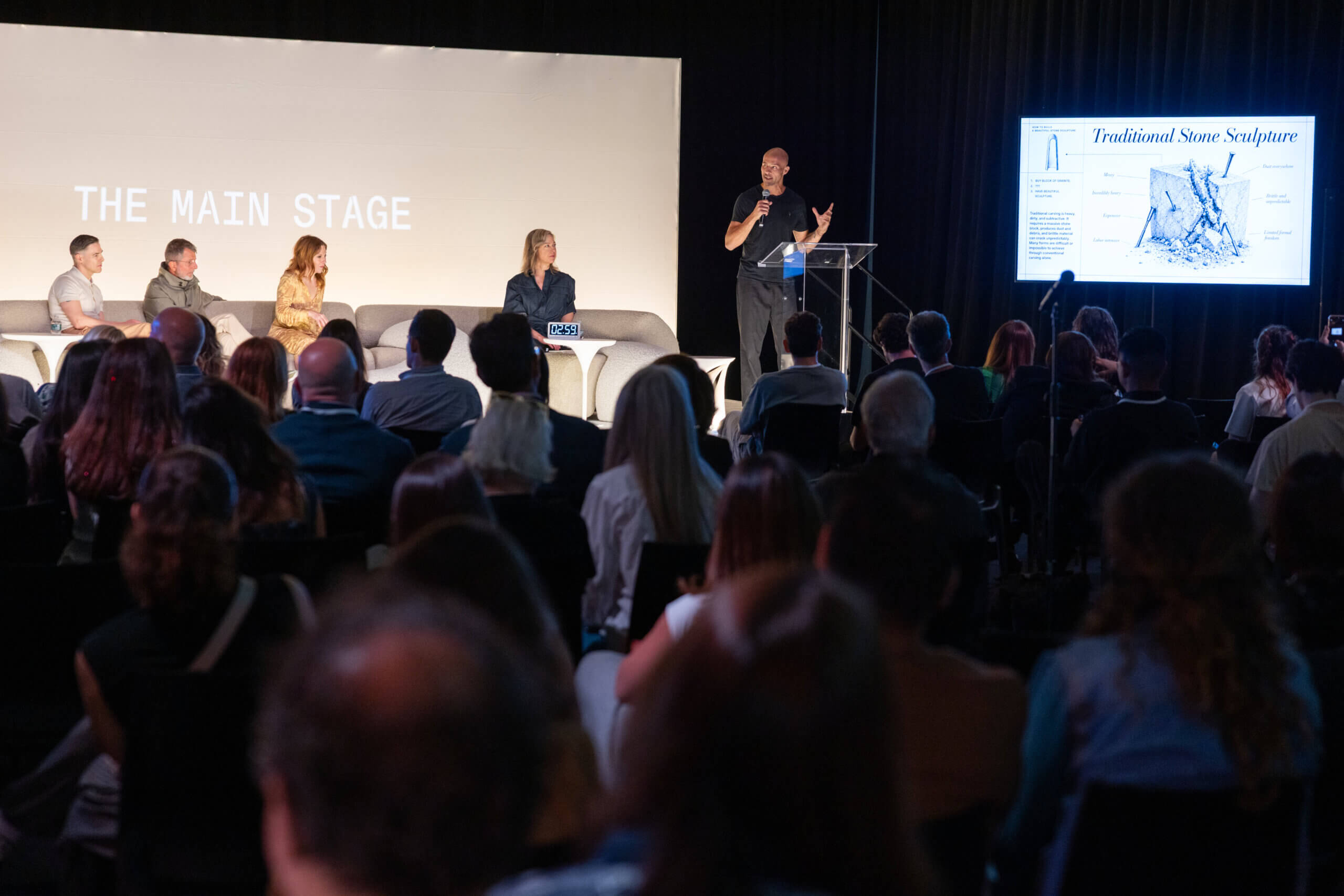
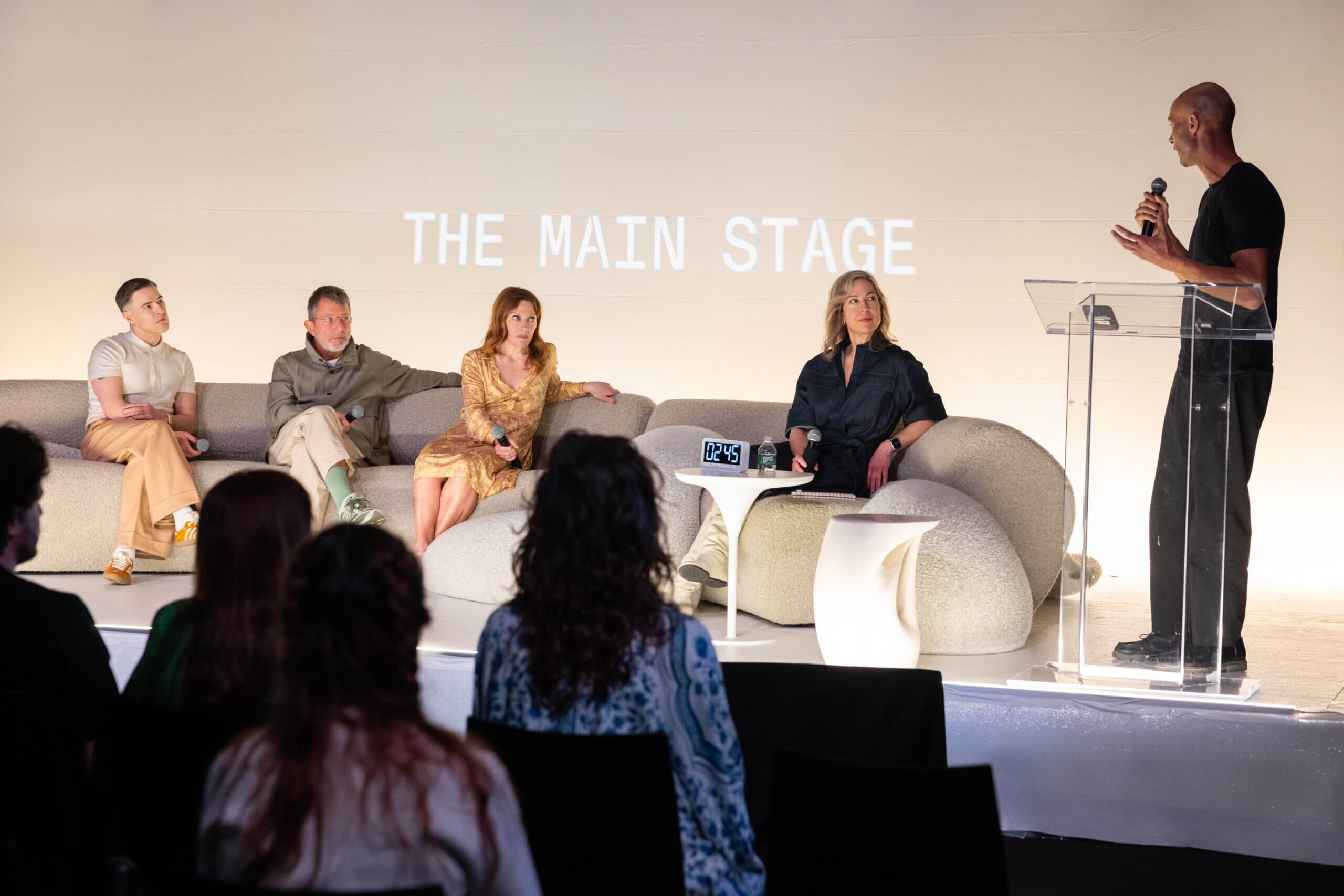
Joey Aji presenting on stage (Image courtesy of Jenna Bascom Photography)
The Jury Industry Pros for 2026 were Chay Costello, Assoc. Director of Merchandising and Product Development at MoMA, Daniel Germani, Creative Director at Danver Stainless Outdoor Kitchens and Lee Broom, Founder and Creative Director at Lee Broom.
We sat down with the 2026 winner, New York–based designer Joey Aji, to learn more about his work, inspirations, and goals.
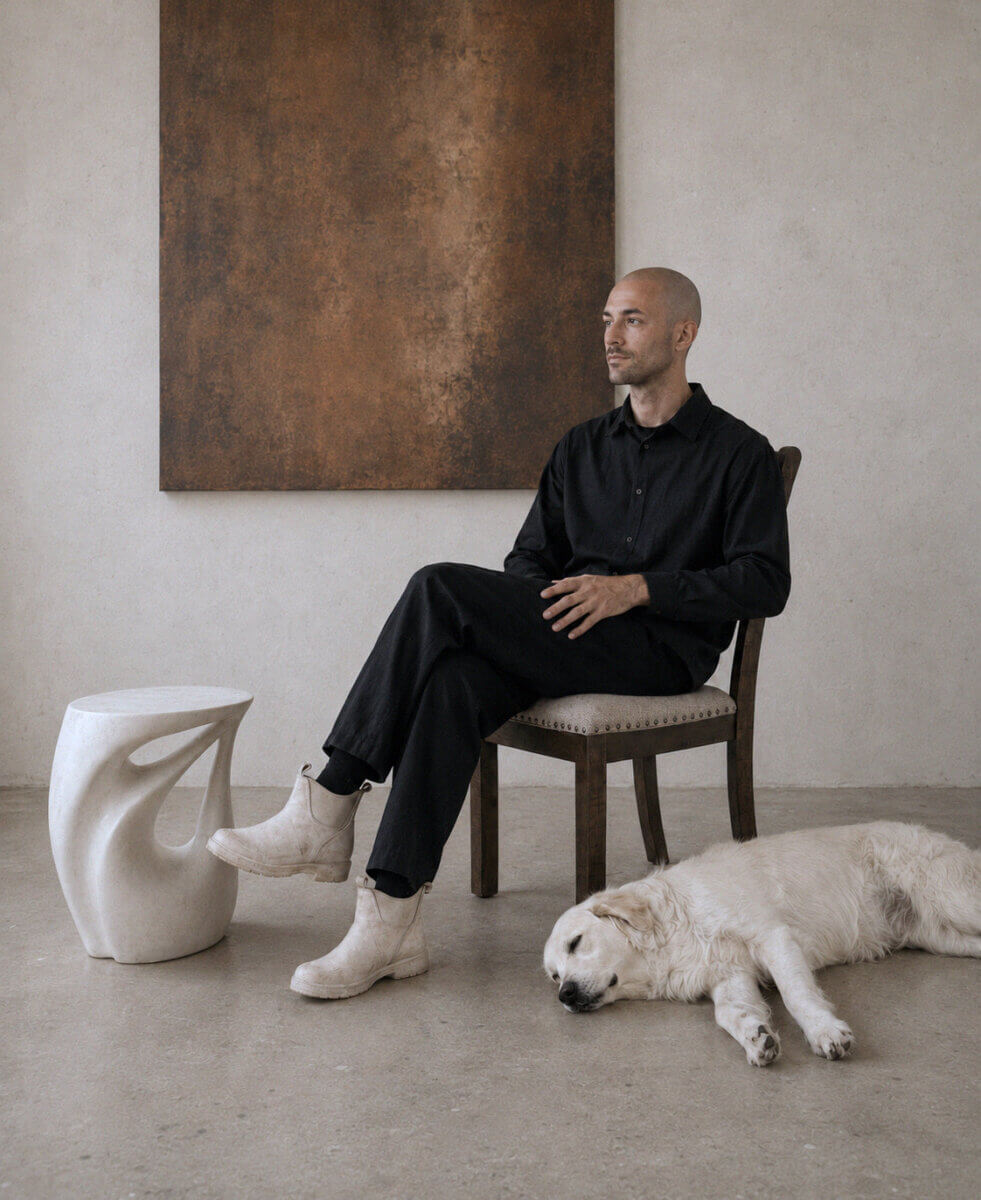
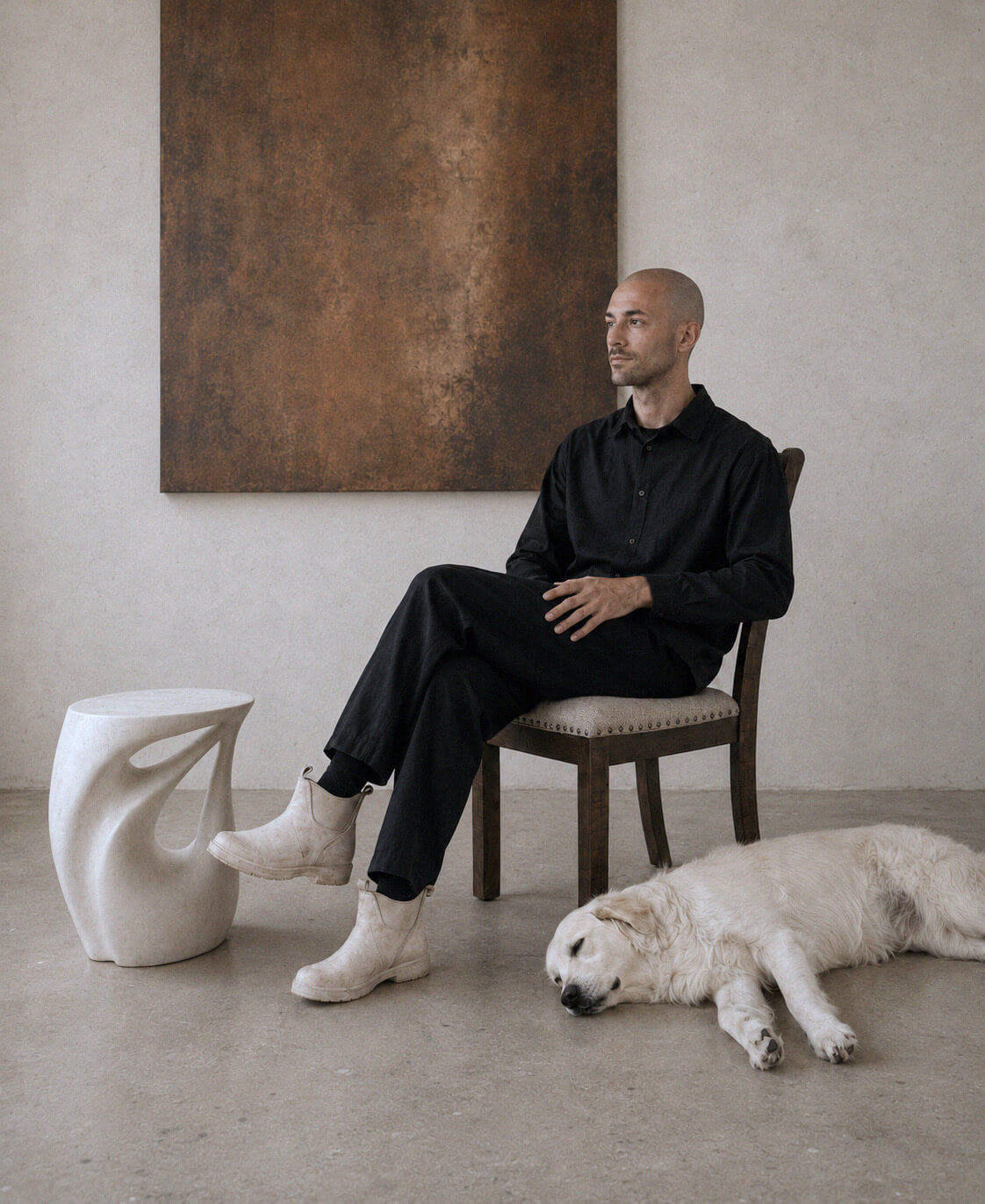
Joey Aji Portrait (Image courtesy of Joey Aji)
How would you describe your design philosophy today?
I want to make work that feels familiar yet hard to place. The internet gives us access to ornament and architecture from every period at once, but without context these forms become compressed and reordered. Our experience of time becomes less linear, and these references begin to exist alongside one another rather than in sequence.
In my work I try to recreate that experience by reordering aesthetic periods and compressing historical and archetypal forms: Islamic, Baroque, and Gothic architecture; Catholic and liturgical objects; primitive and speculative shapes.
By combining these forms with digital design and contemporary fabrication techniques, you get objects that have no direct reference to a specific time or place but are uncanny yet familiar.
What role do materials play in your work?
In my most recent work, stone became a way of grounding forms that might otherwise feel digital: an imperfect layer over a precise skeleton. It is a nice contradiction when something feels of-the-internet but carries the weight of something that has been carved or excavated.
I want to keep playing with the expectations that come with materials: glass that isn’t smooth or pristine, steel that looks fragile.
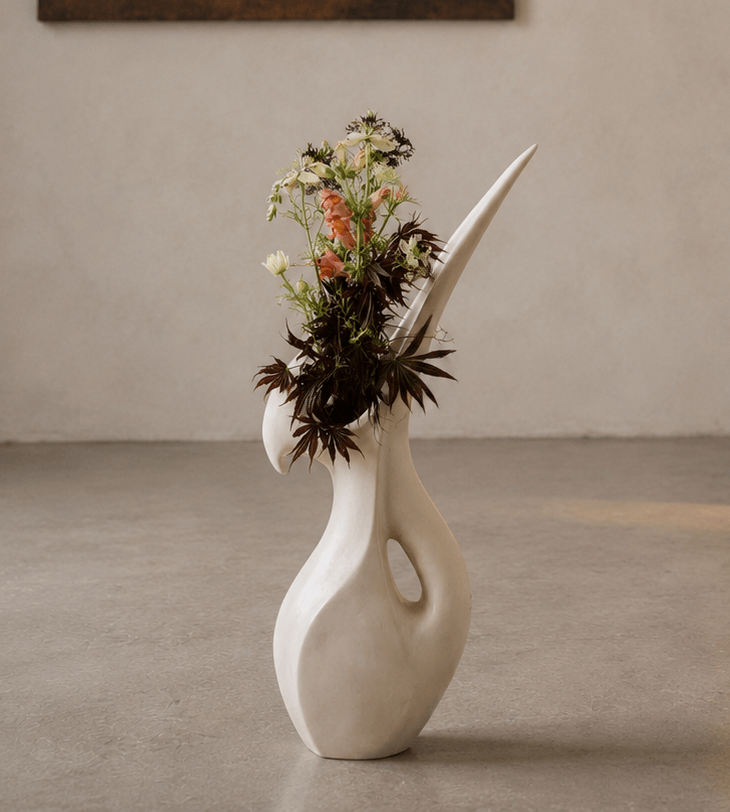
Vase (Image courtesy of Joey Aji)
How do you balance experimentation with functionality?
Dieter Rams said that good design should be unobtrusive and functional, but I think there is a great luxury in living with objects that aren’t optimized for efficiency. Some of my favorite artists and friends make some really obnoxious and hostile design objects — and I think that can be good too.
Are there particular disciplines outside of furniture or product design that influence your thinking?
Architecture, clothes, sculpture all seem kind of impossible to separate from furniture design.
Recently I have been using shells and archeology as reference. These natural forms are structural and functional and ornamental at once.
What sparked the idea for the collection you presented for EDS on stage at ICFF?
The collection I presented at ICFF began with memories of spending time in Syria as a kid and visiting Eastern Orthodox churches with my family. The domes, carved stone, and ornamentation from those spaces always stayed with me, even as my relationship to that culture became more distant or fragmented.
Now I can only access those places through memories, photographs, and the internet rather than directly. I wanted to take elements like vaulted ceilings and carved ornament and let them pass through that same compression: scanned, distorted, scaled down, and rebuilt into something physical again. The collection became a way of holding onto architecture that once felt monumental and inaccessible, and letting it become something personal and harder to place in time.
Definitely a very personal collection of work that I was really excited to share.
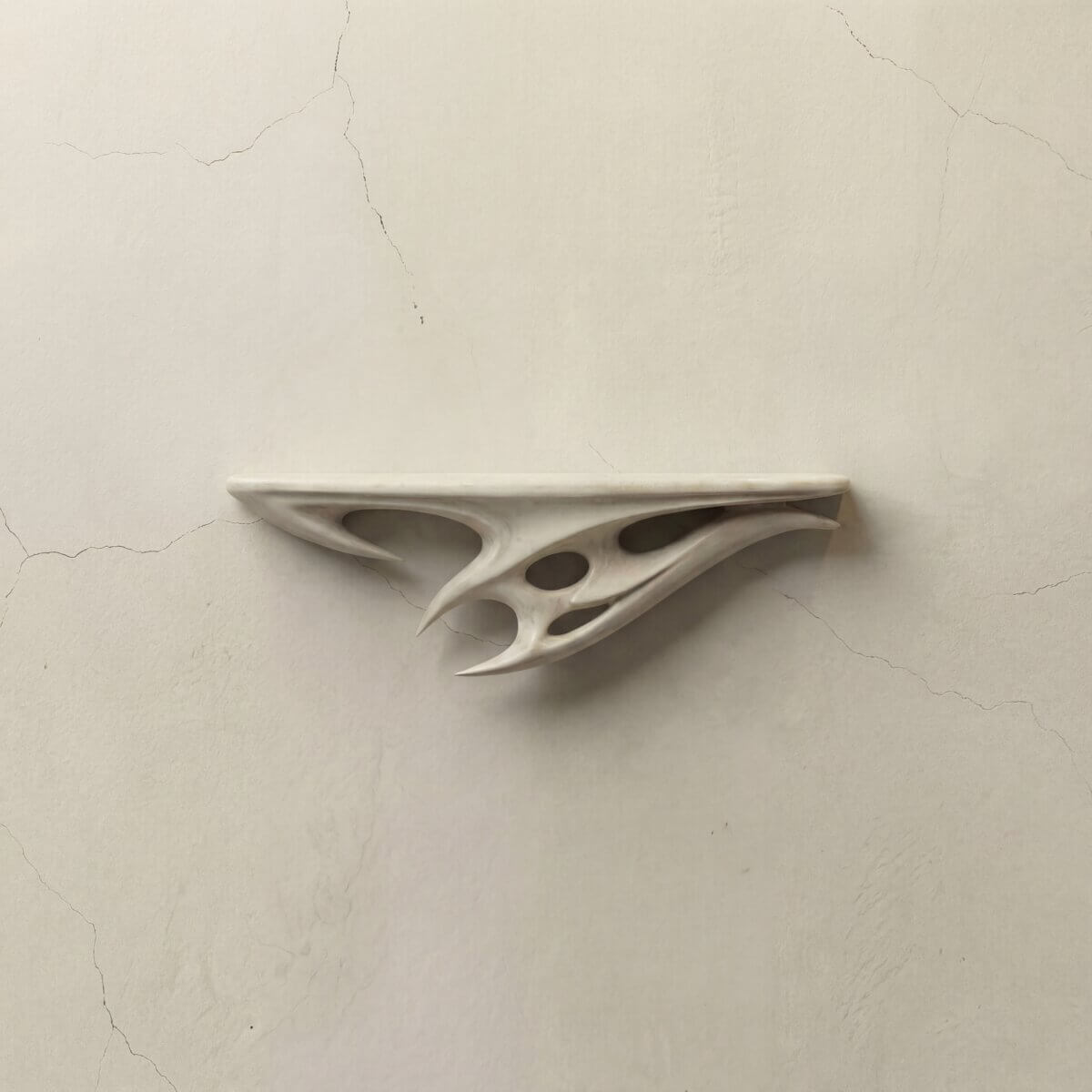
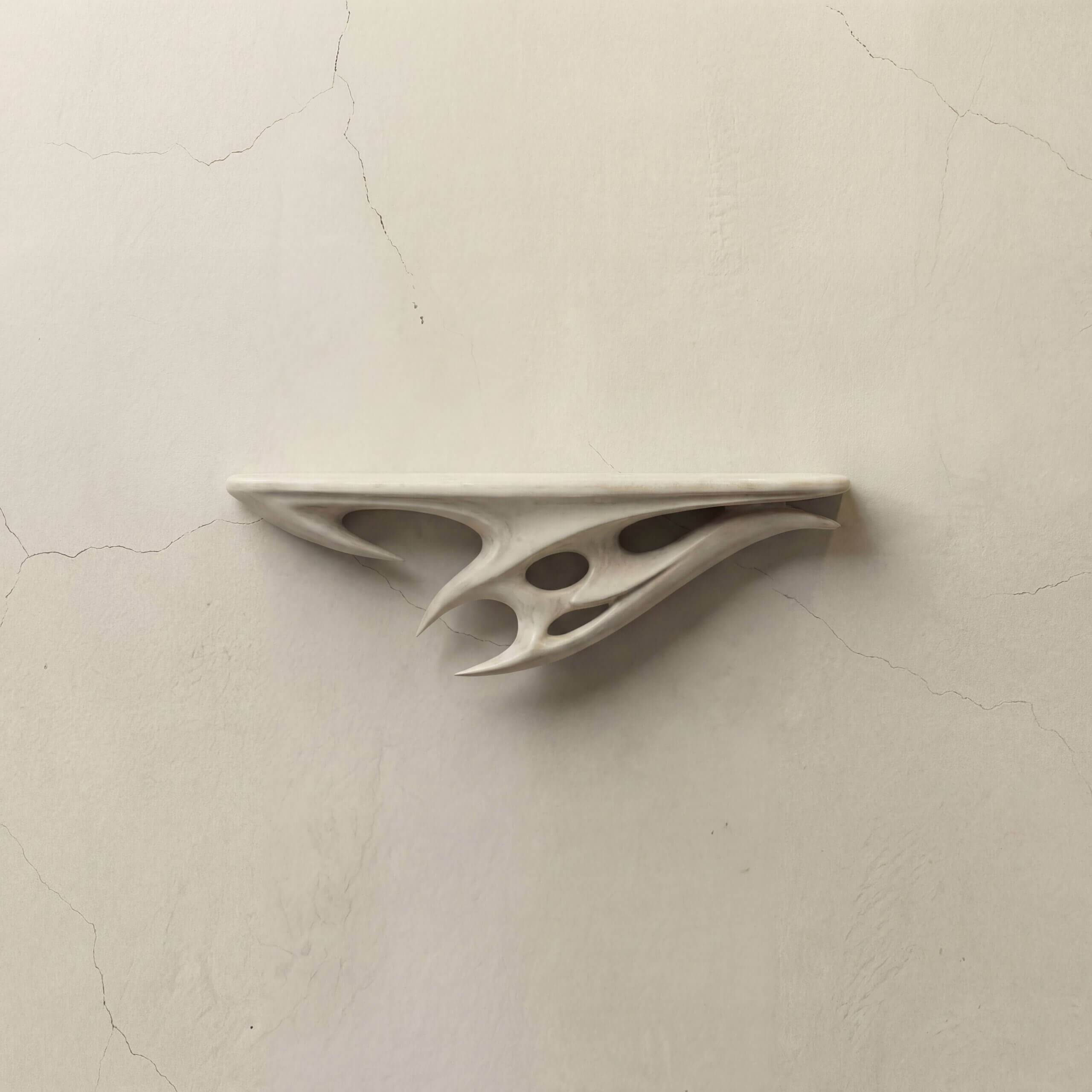
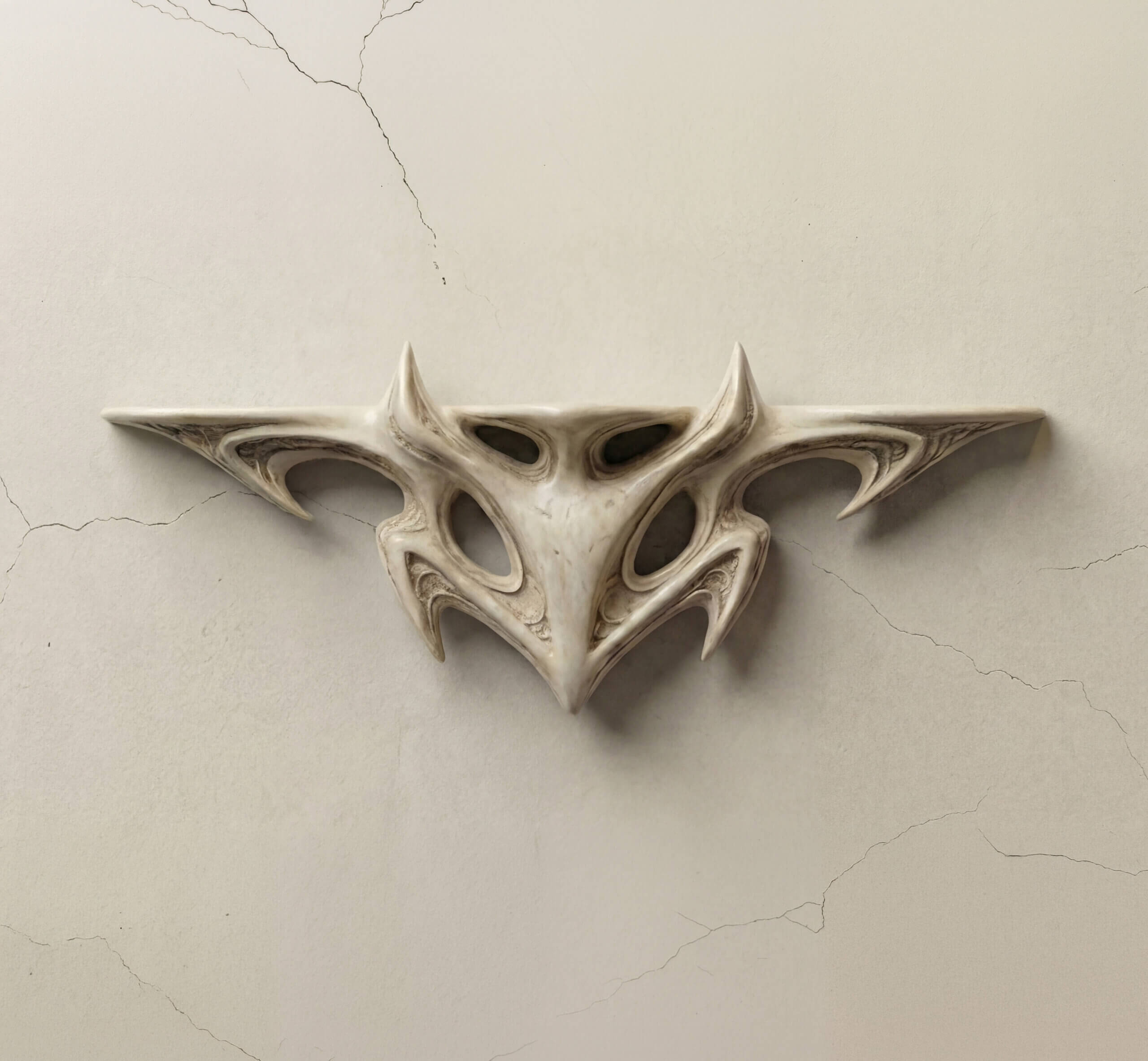
Shelf (Image courtesy of Joey Aji)
What do you hope people understand — or feel — when they encounter these pieces?
I recently saw a Louise Bourgeois exhibition and remember standing in front of a shelf of glassware that made me feel uneasy because the objects were recognizable, but impossible to place. They felt like relics from a time that never existed, but somehow still felt like I had been there before.
I want to do that.
Can you walk us through your process from initial concept to finished piece, and part excites you the most?
My process starts either with a large moodboard of references or with almost no reference at all. I’ve learned that when I start from a single image or object, I get too locked into it. It works better when the references are atmospheric: architecture, relics, shells, or just a feeling I’m trying to translate.
From there I move into CAD, which naturally lends itself to exaggeration and distortion, so the form can drift pretty far from where it started. Then I’ll use some form of additive manufacturing to make either a mold or an internal armature — and then I try to hide every trace of that process.
My most recent collection, Season One, is made from a stone composite I spent two years developing: marble dust and other stone aggregates held together with a non-toxic resin binder, laid over 3D-printed armatures, then carved and sanded by hand. It lets the forms behave in ways classic stone furniture can’t — long overhangs, thin walls — while keeping the look and feel of stone, and it’s durable but incredibly light.
The part that excites me most is the material research at the beginning. I could do without all the sanding.
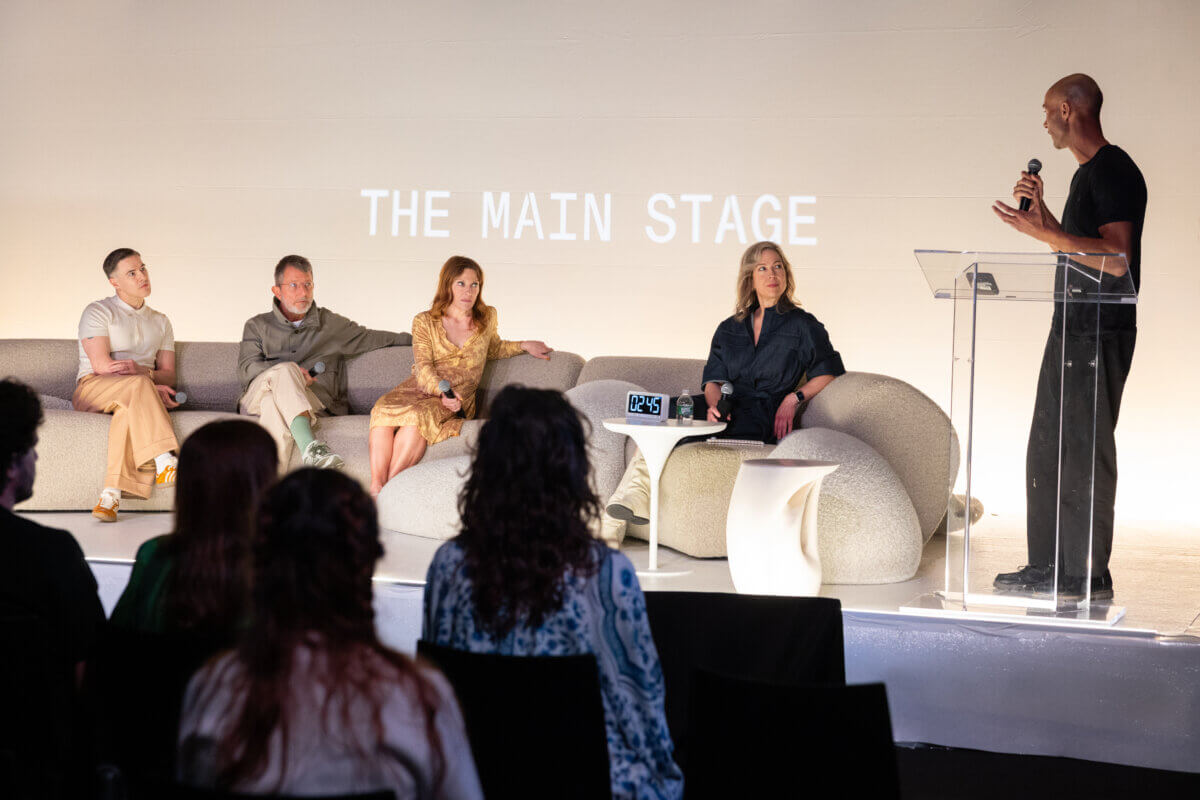
Joey Aji presenting on stage (Image courtesy of Jenna Bascom Photography)
What motivated you to apply to Emerging Designers Spotlight?
ICFF, particularly the Wanted and Emerging Designers sections of the fair, has always been a source of great inspiration for me. Like those emerging designers, I find any chance to get my work in front of the industry professionals there incredibly valuable.
EDS Live requires a tight and compelling 4 min. presentation. How did preparing this presentation help you to think through communicating about your work to an audience so that they can understand it and catch your enthusiasm?
I know how important a concise, cohesive pitch is, even when the true story behind the work is a confusing, non-linear path. Preparing for EDS Live forced me to find the through-line: which parts of that path actually matter to someone seeing the work for the first time, and which parts are only meaningful to me.
The enthusiasm was the easy part, because it’s real. What I needed to put effort into was creating some distance from the work. I’ve been so close to it for so long that I’d stopped noticing what needs explaining.
What was your experience presenting your work on stage in front of the Jury and the ICFF audience?
Our host Amy Devers did a great job creating a welcoming environment. Four minutes goes by quickly. It was a real privilege to present to, and get feedback from, some of my favorite designers.
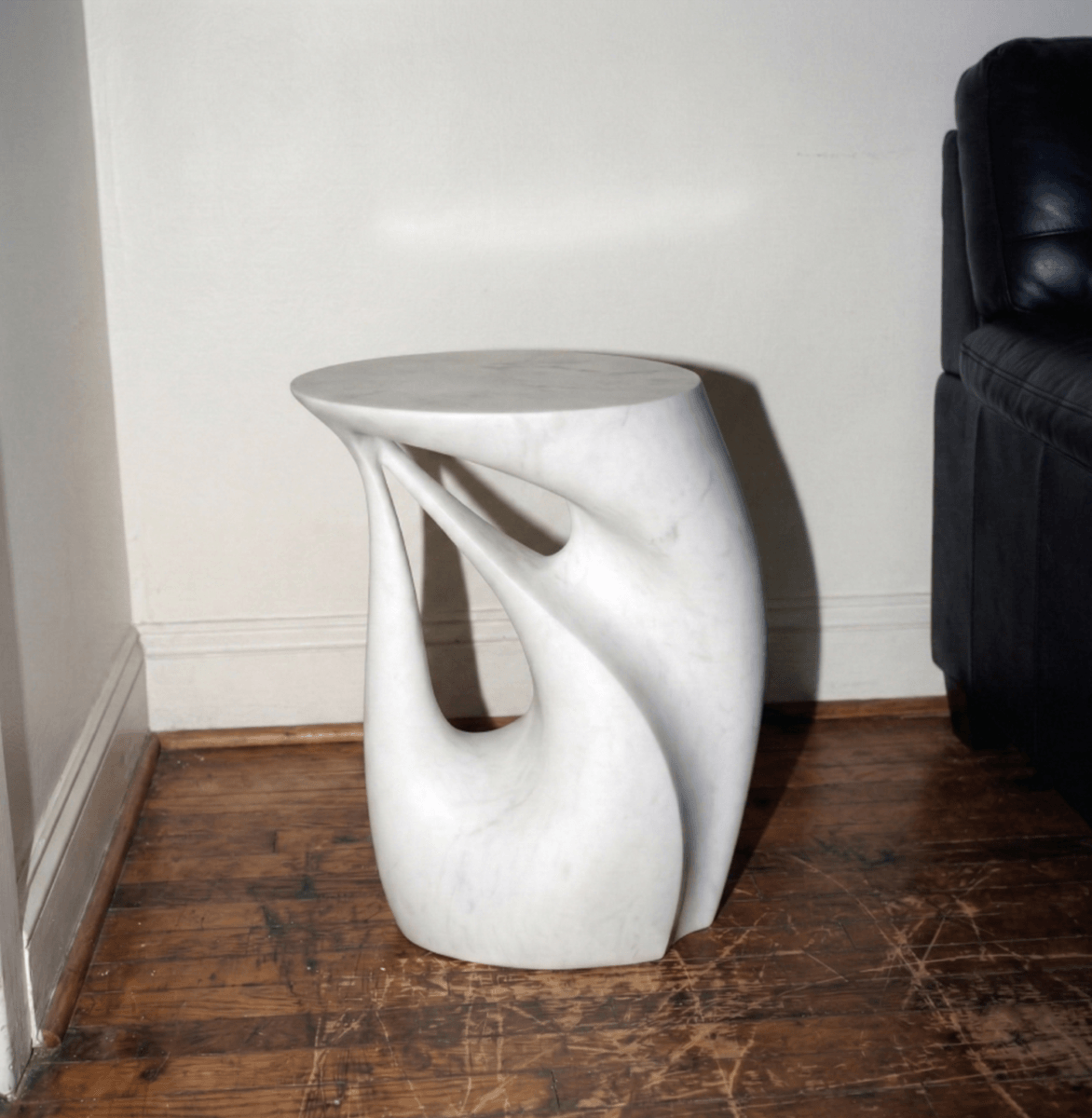
Pinch Table (Image courtesy of Joey Aji)
Did you receive feedback from the Industry Pros on stage that has given you food for thought?
Lee Broom made a comment, echoed by others on the panel, about finding a more consistent through-line in my work. It landed because it’s true: I instinctively want to explore so many aesthetic directions, materials, and processes at once.
Since then, I’ve gone back to a kind of mission statement I wrote around my work, something to check new ideas against, so the exploration stays in service of a larger whole rather than pulling in every direction.
What did it mean to be selected by the jury as this year’s winner?
The talent level of the other presenters was so high that it truly was an honor. More than anything, the whole experience felt like my introduction to the industry, a room full of people I’ve admired suddenly engaging with the work directly.
What advice would you give to next year’s EDS Live candidates?
Talk about what excites you instead of what you think will excite the judges. In four minutes it’s hard to get anything across other than the excitement itself.
Also, if you can, bring a sample of your work with you to show the audience and the judges — it helps to be able to see it in real life.
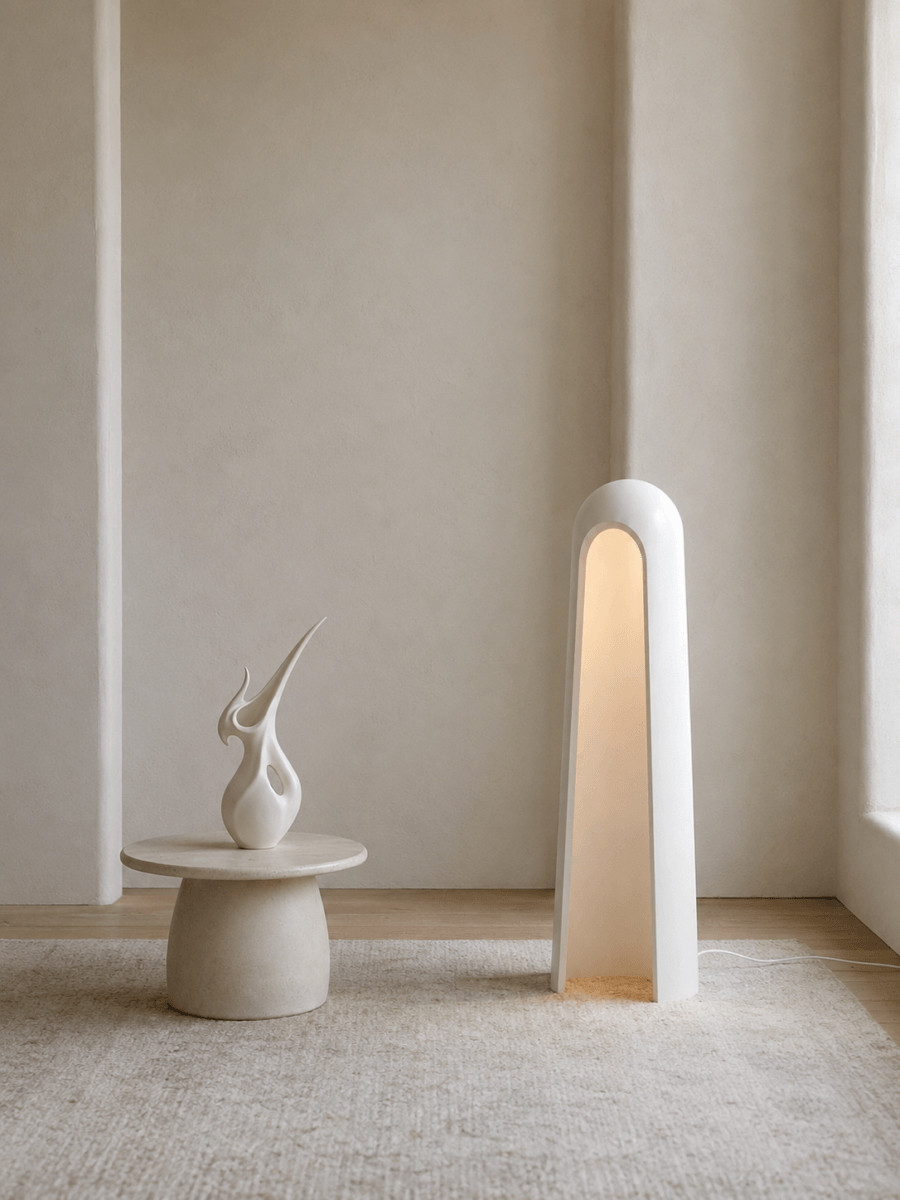
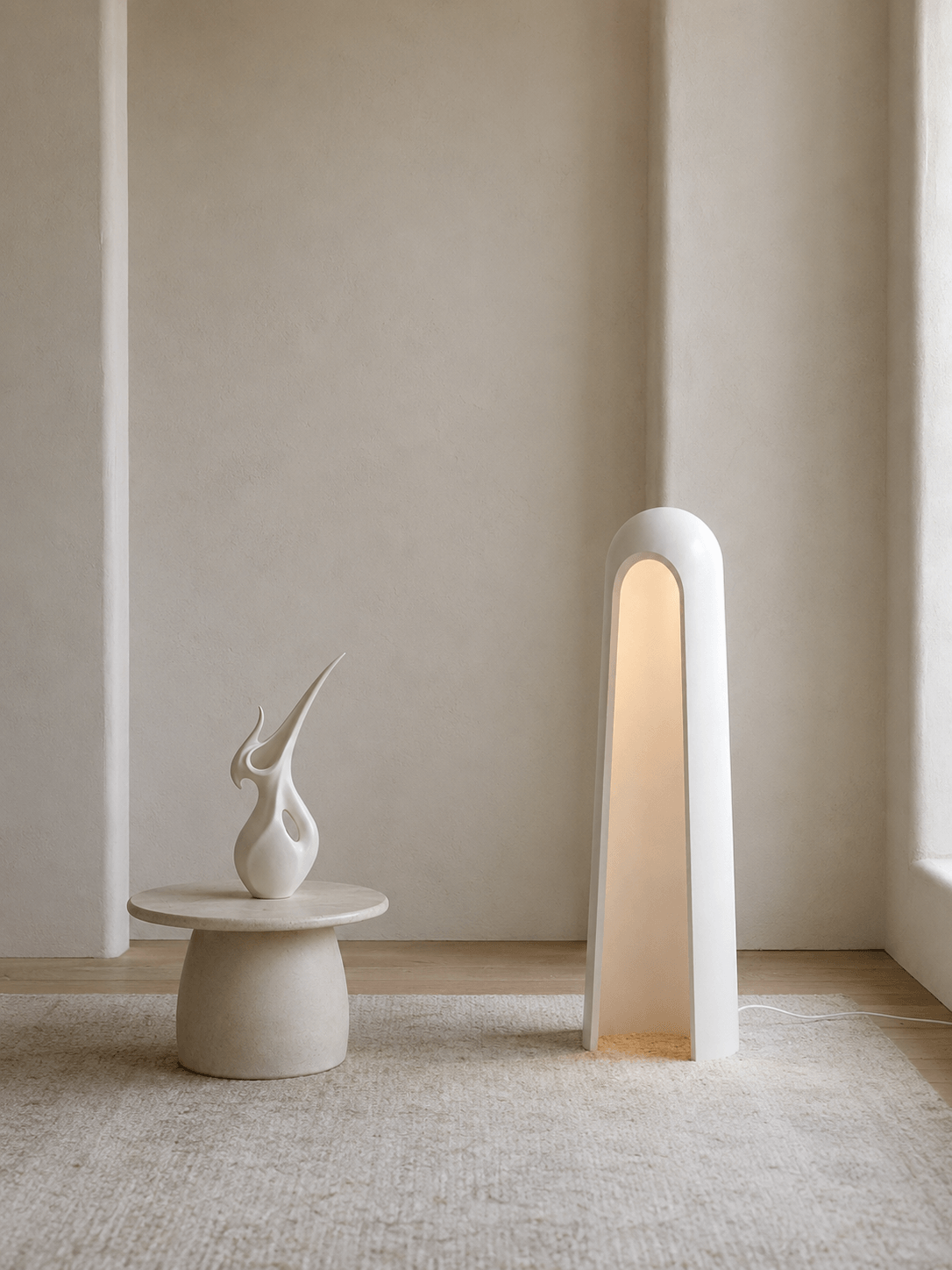
Dome Lamp and Vase (Image courtesy of Joey Aji)
What kinds of connections or conversations are most valuable to you at a fair like ICFF?
I love being around other designers — this is who I want to learn from and collaborate with. But building a real studio practice means interfacing with the industry: selling yourself, selling the work. ICFF is a good place to have those conversations.
What are you currently working on that excites you most?
At ICFF I presented Season One, a collection built around a composite I spent years developing to look and feel like stone — but the dream was always to work with the real thing.
Since then I’ve been traveling in Mexico to source natural stone, including travertine and volcanic rock, and am developing the collection alongside collaborators I’m really excited to work with.
The stone is beautiful, natural and brutal at once, which allows the forms to become simpler. I’m carrying forward elements from my previous collection, but the material transforms them.
As the winner of EDS Live, your prize includes a space in 2027 Launch Pad. What can you tell us about the designs you are planning to develop / exhibit?
I’ll be presenting the natural stone collection — pieces including fireplace surrounds, lamps, and side tables.
I’m particularly excited about the fireplaces. I’m developing a few core designs that will then be made to order to fit each specific hearth. Fireplaces and mantels are compelling territory — they’re architectural in a way freestanding furniture can’t be, and a sculptural surround can anchor an entire room. I’m looking forward to presenting it at ICFF and working with designers and architects to bring them into the home.
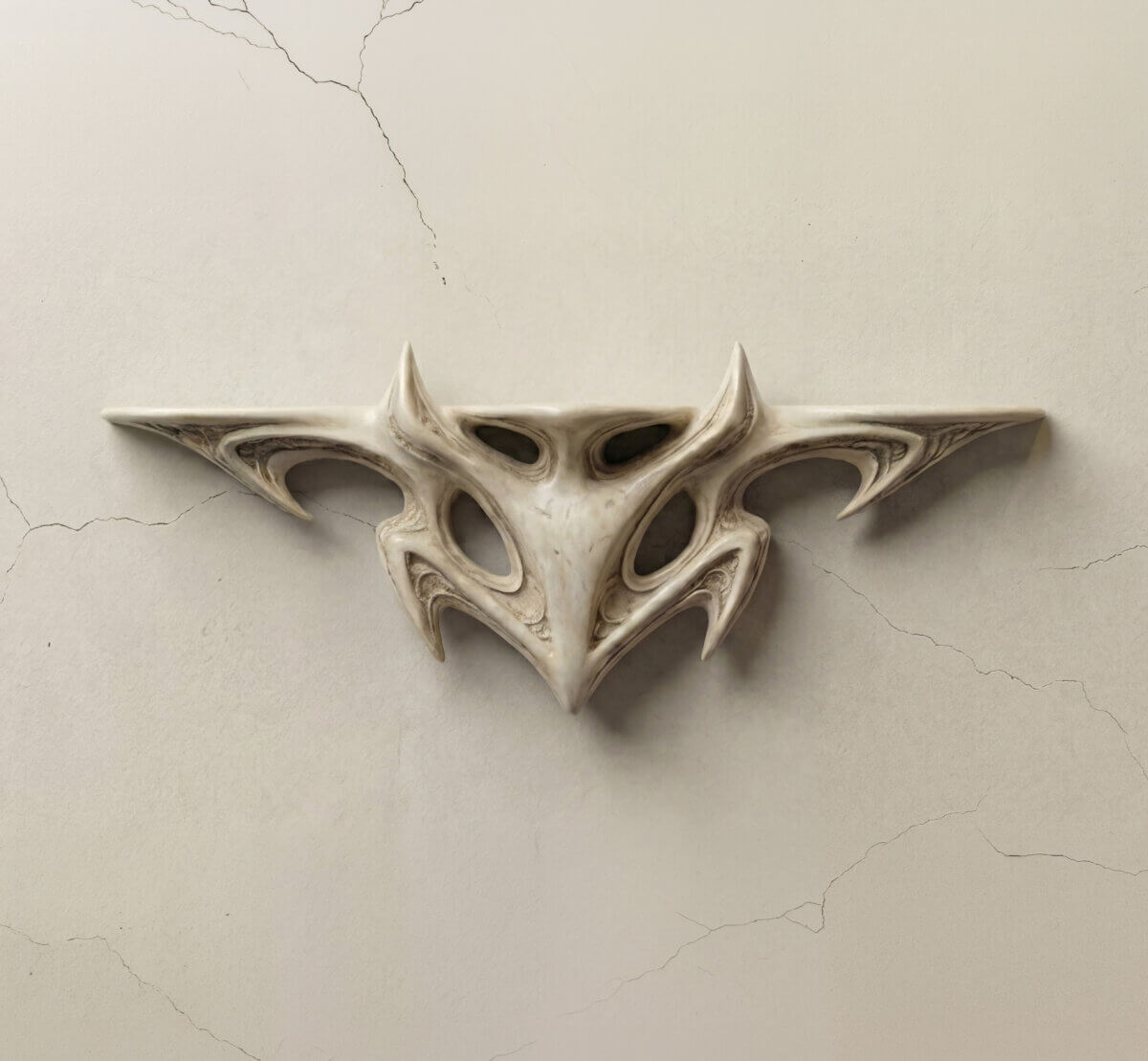
Shelf (Image courtesy of Joey Aji)
How do you envision your practice evolving over the next five years?
Over the next five years, I hope to expand my practice in both scale and material range while building on a cohesive core visual language. I want to continue developing architectural pieces, furniture and lighting in collaboration with architects, galleries, manufacturers, and craftspeople.
I would like to partner with and place my work with a collectible design gallery for the more ambitious, higher-end pieces, as well as create more accessible, scalable work that sells directly to consumers.
More than anything, I want to build a body of work that’s instantly recognizable, and that keeps getting better.
What would you like to be known for as a designer?
I would like to be known for making work that pushes the boundaries between functional design and sculpture while still creating objects that people want to live with.
Most importantly, I want to be a good collaborator and someone other designers want to build things with.
Follow Joey on Instagram >>>
View Joey’s Portfolio >>>