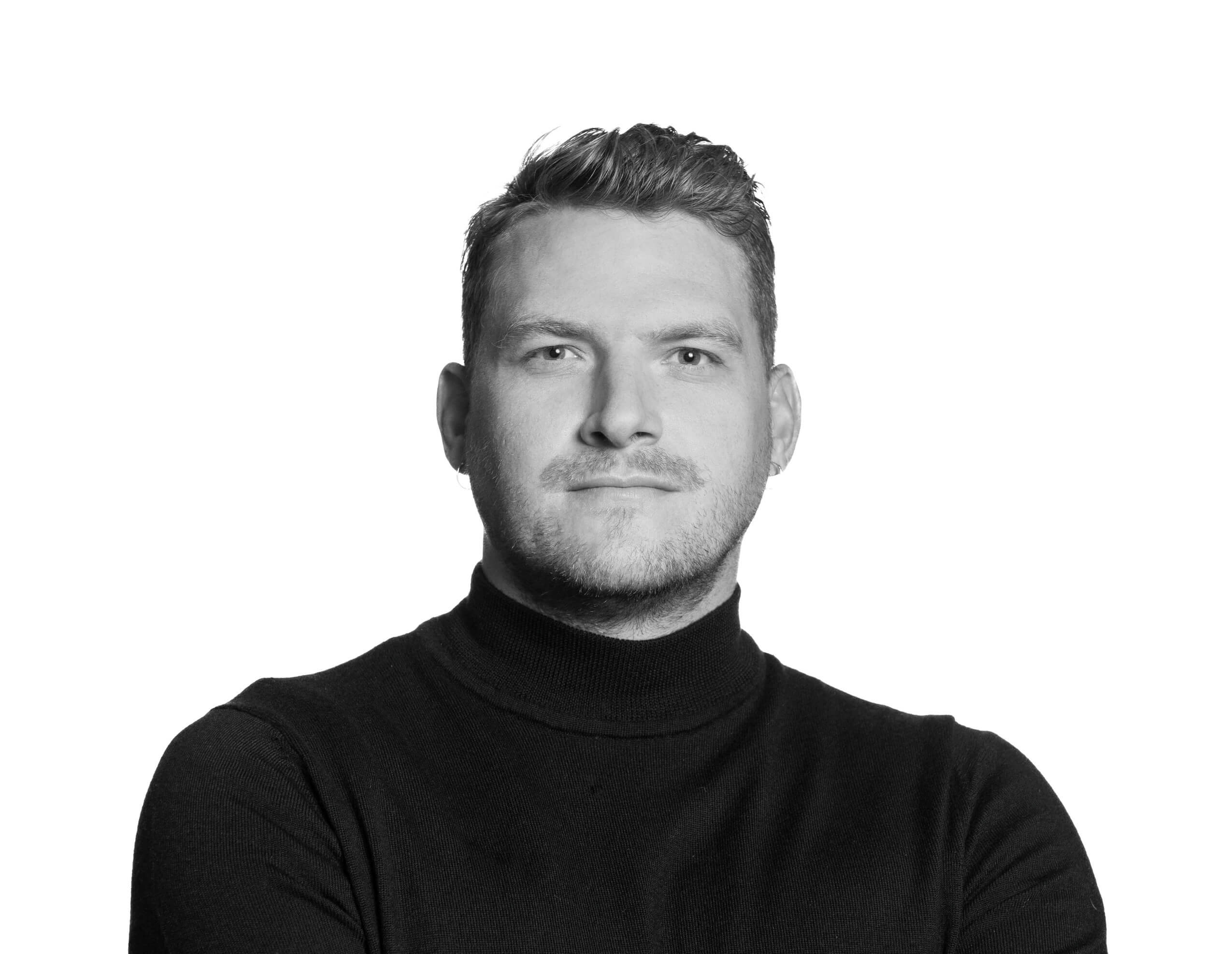
Scott McManus works in the space between brand, architecture, and human behavior, where identities become environments and stories take physical form. He leads experiential design at IA’s New York studio, bringing together creative direction, visual identity, and spatial storytelling. His work spans industries and scales, from cultural destinations to global workplaces, with projects for Amazon, BCG, Meta, Fauchon, and Uber. Recognized by SEGD, the Type Directors Club, Graphis, and Communication Arts, his practice balances conceptual rigor with an instinct for the unexpected. For McManus, design is less about what a space looks like than what it makes possible: the rituals it creates, the behaviors it shapes, and the feelings that linger long after you’ve left.
(Image above courtesy of IA | Scott McManus Portrait)
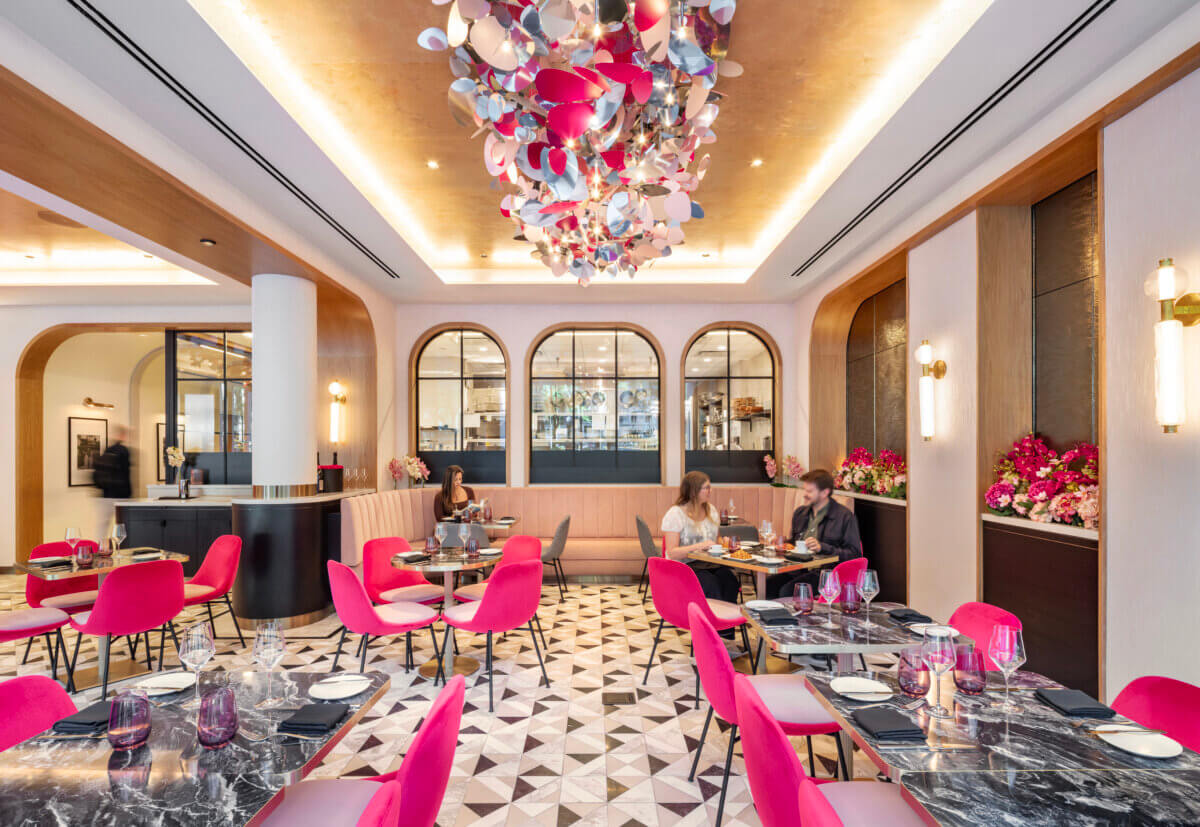
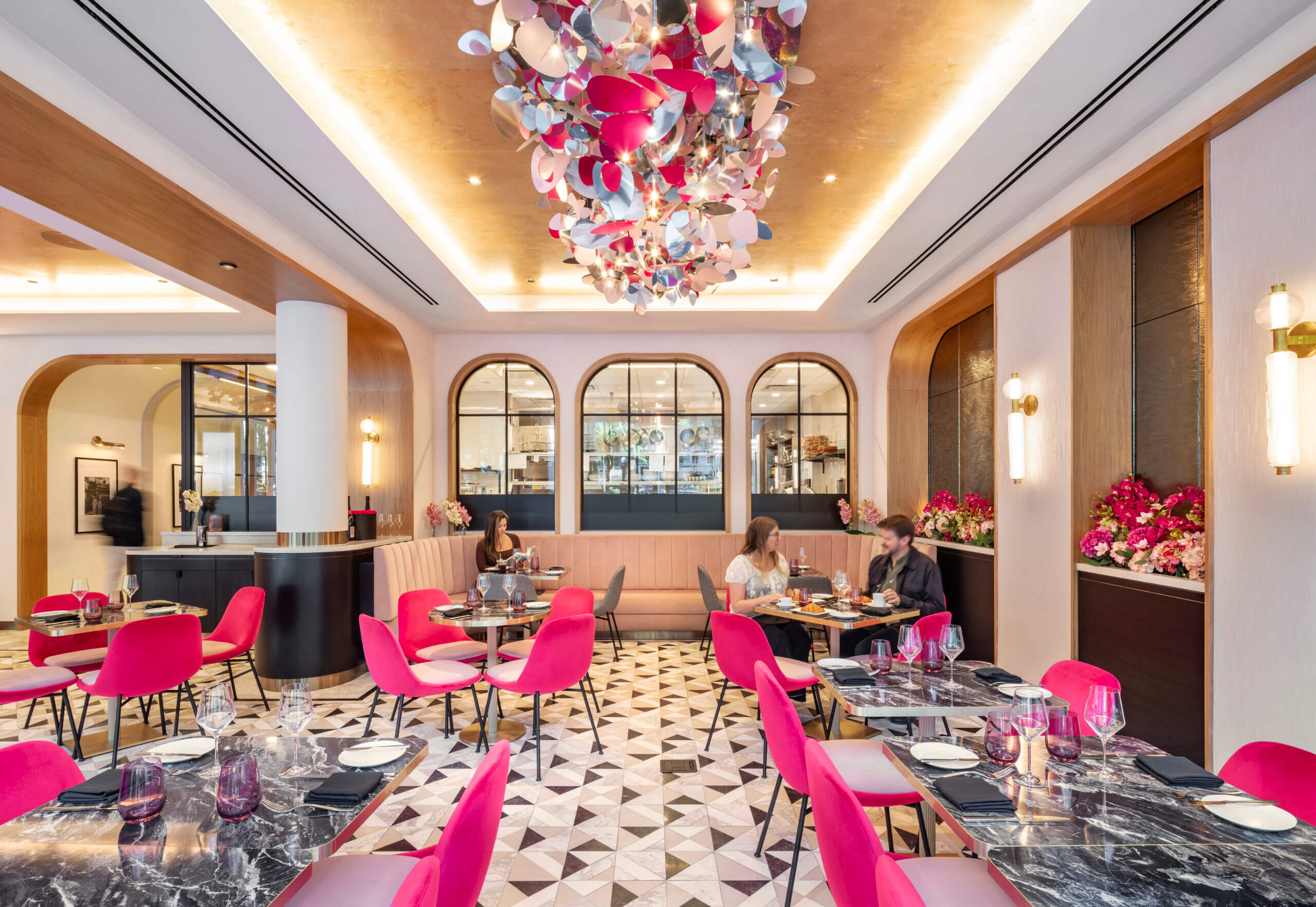
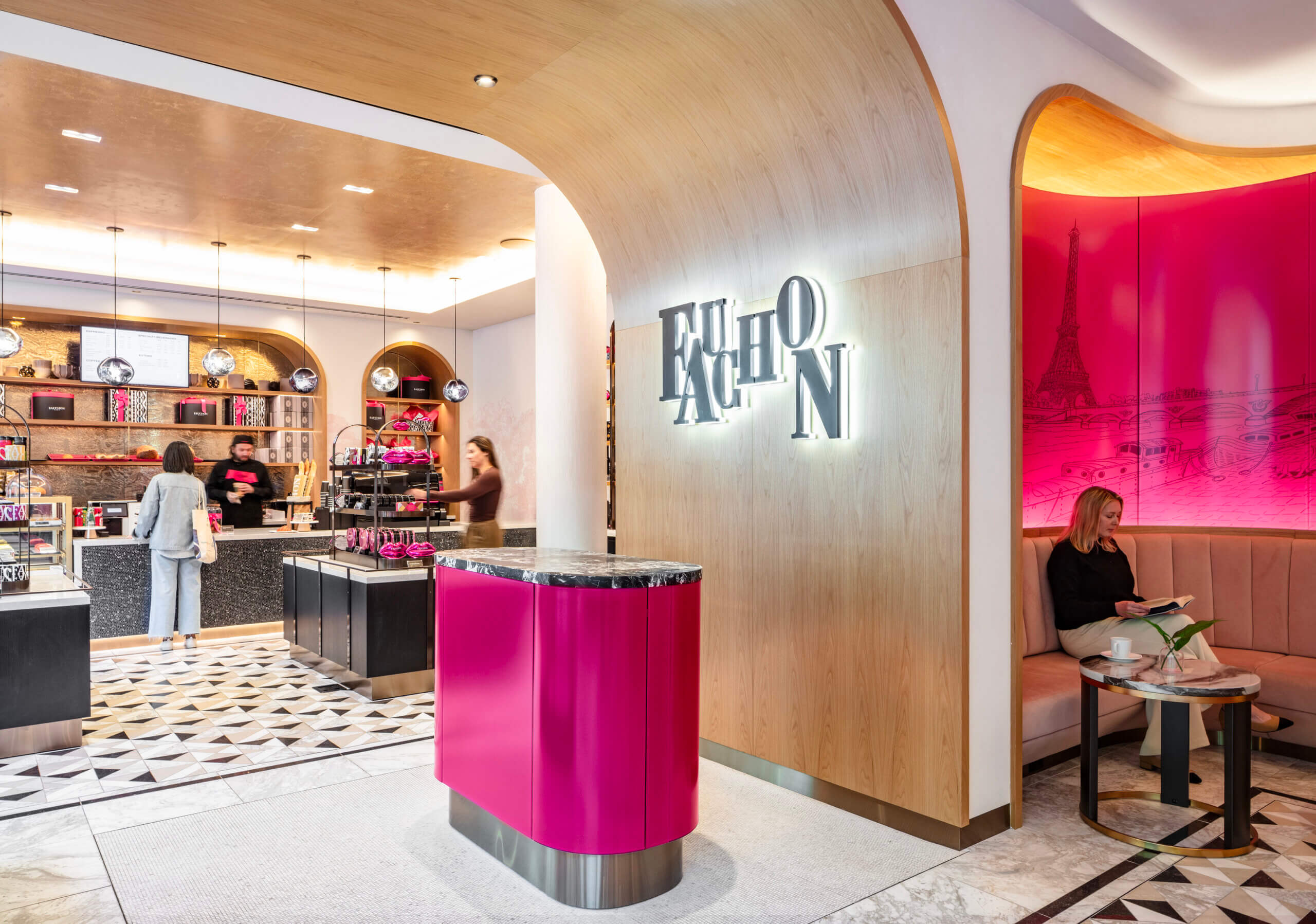
Fauchon (Image courtesy of IA, photographed by Magda Biernat)
Interview with Scott McManus
When you were a kid, what did you dream of becoming? Did any of those childhood ambitions lead you to where you are today?
As the youngest of four, I treated every room my older siblings vacated as a new creative brief. I was forever rearranging furniture and imagining what a space could become. Once, I dragged an old wooden television console into the basement, cut a rectangle into the base, and retrofitted my Xbox inside. Was it necessary? Absolutely not. Was it custom? Very.
Where and what did you study?
I earned my BFA in Graphic Design from Western Michigan University. I was trained to think through typography, hierarchy, proportion, and systems, the kind of discipline that stays with you even when the canvas becomes a building
Was there a specific turning point or experience when you realized that design was your true calling?
I don’t think there was one cinematic moment when I discovered design. It was more of a slow realization that I cared as much about the world surrounding an image as the image itself. What if the identity didn’t stop at the poster? What if it shaped the entrance, the lighting, the furniture, and the way someone felt walking in? The more I worked across disciplines, the less interested I became in the lines separating them. That was the turning point: realizing the whole experience could be the work.
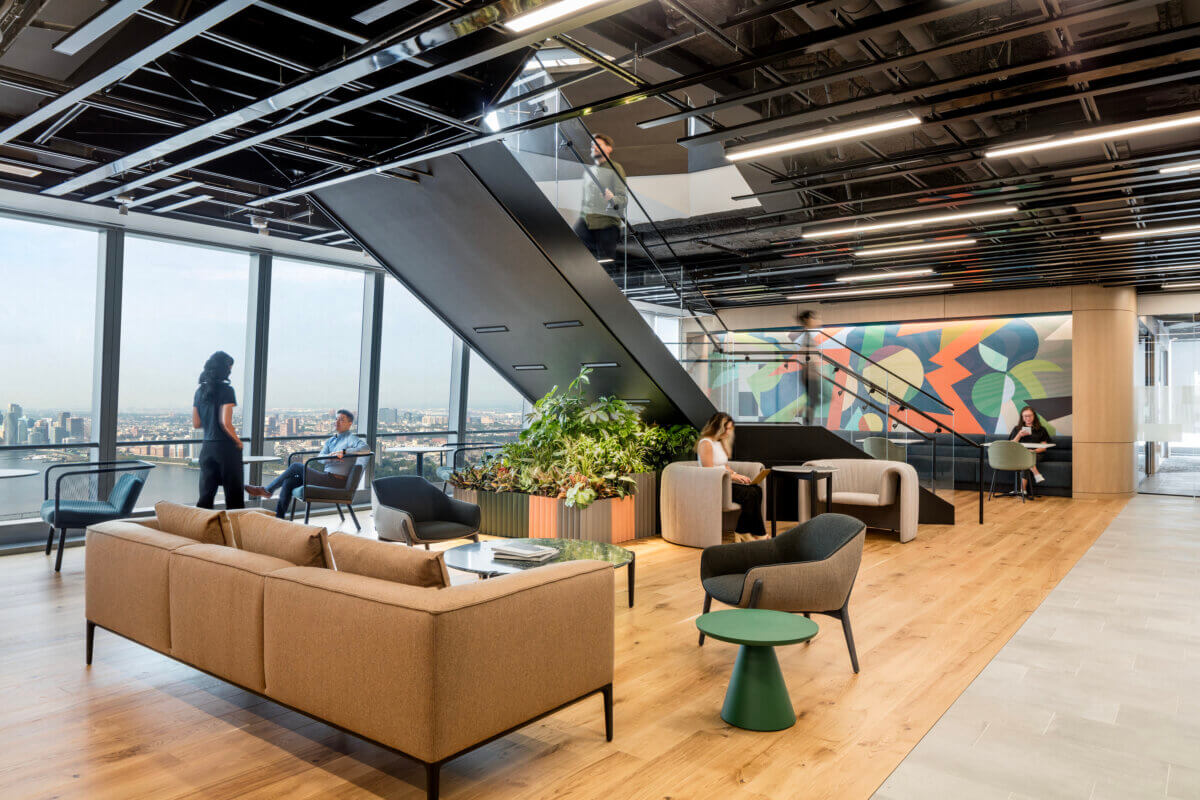
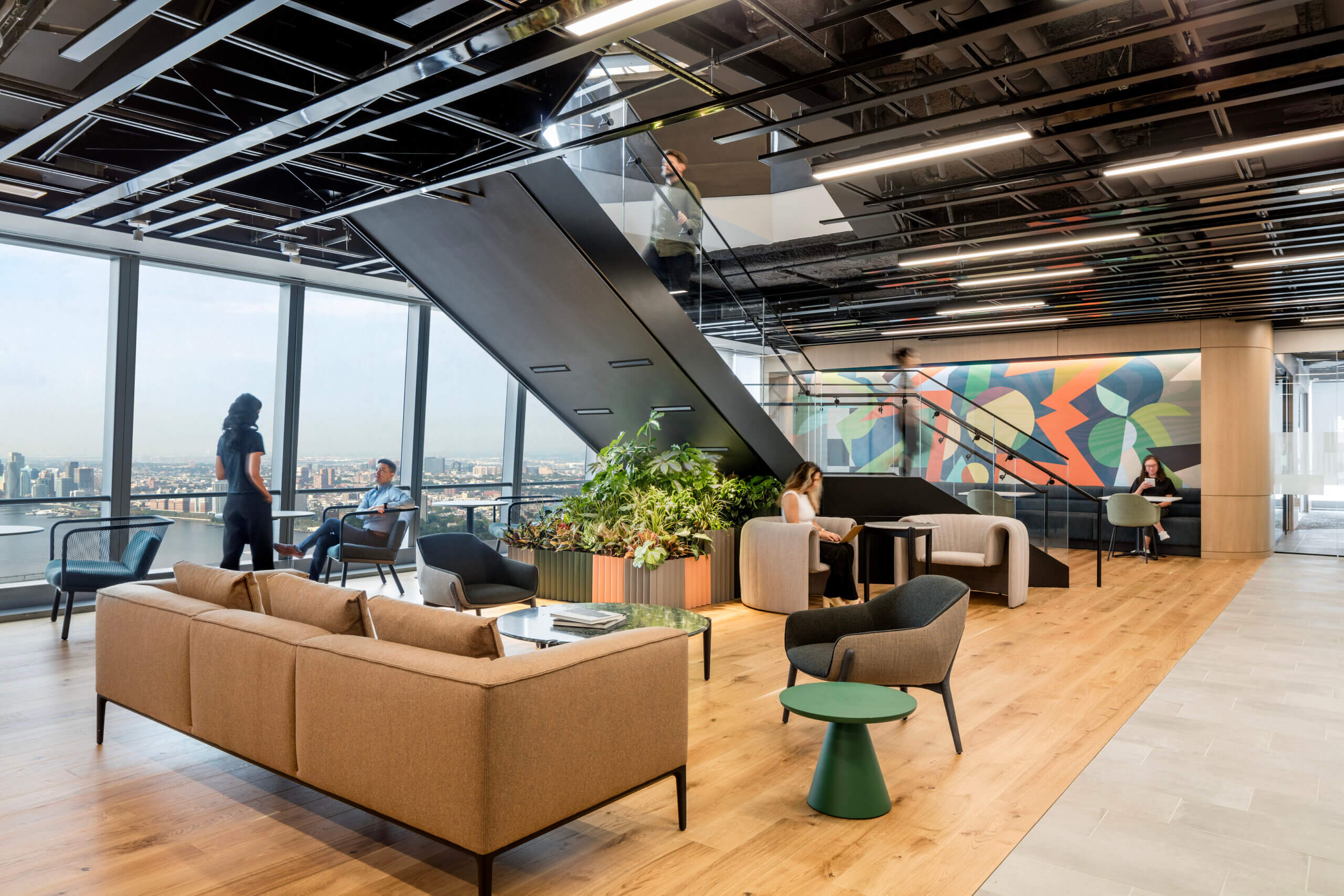
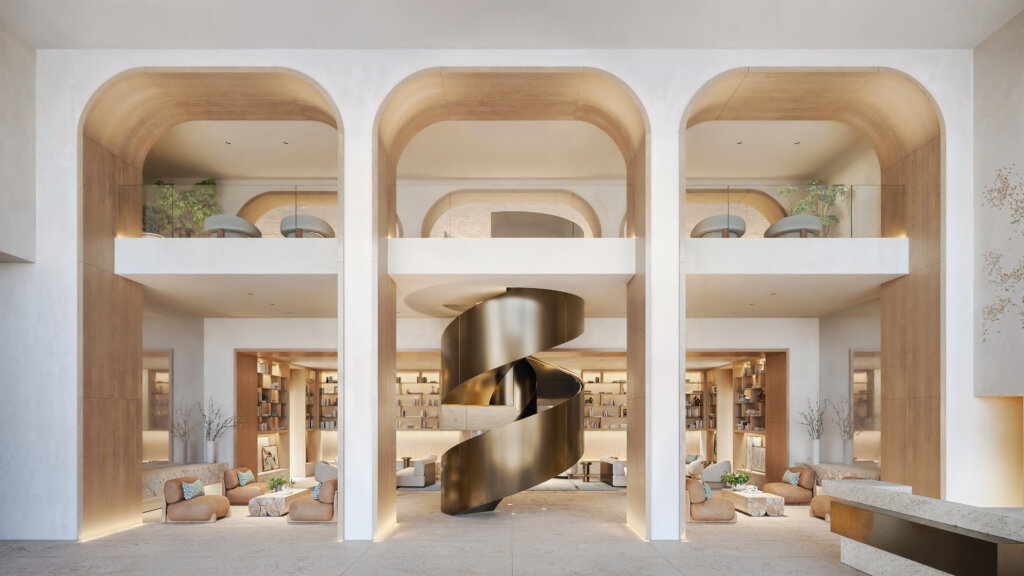
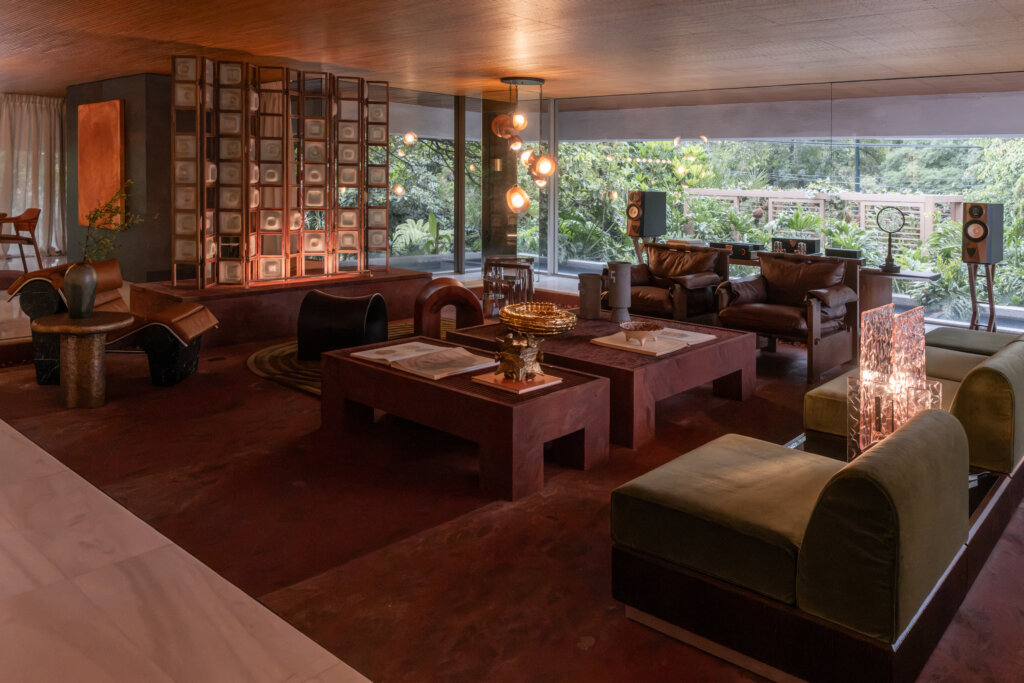
BCG’s NYC Office (Image courtesy of IA, photographed by Garrett Rowland)
Is there a particular designer, artwork, or design movement that deeply inspires you? How has it influenced your own style or philosophy?
Swiss International design taught me to appreciate clarity, proportion, and the confidence of a good idea. Working in Switzerland made those principles tangible. But I don’t want everything to be perfectly behaved. I love a disciplined foundation with something fearless at the edges: a strange juxtaposition, an unexpected material, a moment of humor. Structure is what gives you the freedom to surprise people.
What is a design rule you frequently break?
“Stay in your lane.” Graphic design, architecture, interiors, and brand strategy are useful labels for organizing teams, not for organizing human experience. Nobody enters a room and experiences the signage separately from the light or the furniture. I like it when a typeface becomes an architectural move, or when a piece of furniture carries the brand without a logo in sight. The disciplines can keep their names. I’ll keep crossing the borders.
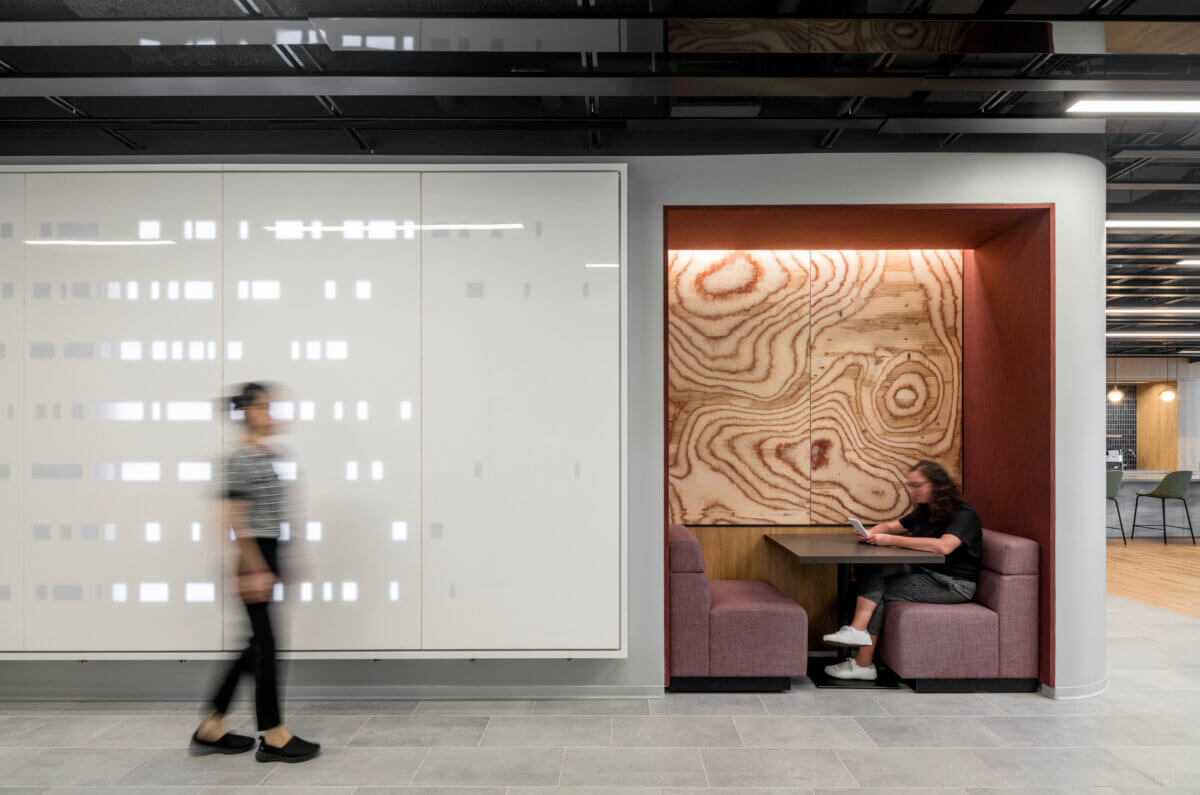
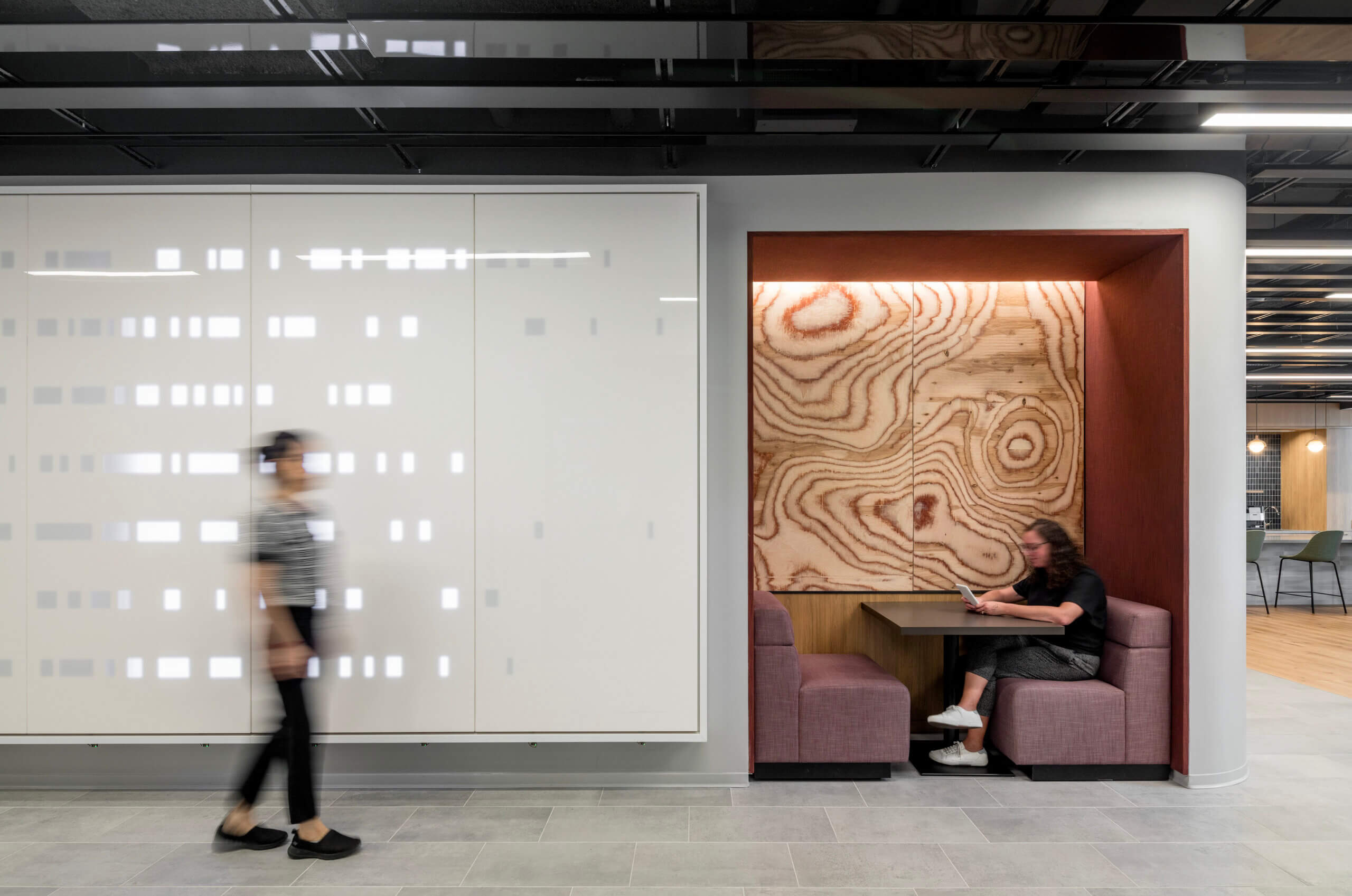
BCG’s NYC Office (Image courtesy of IA, photographed by Garrett Rowland)
What conversation do you hope your designs start?
Ideally, something other than ‘Who designed this?’ I’m interested in why one café makes you stay, and another makes you check the time. Why one lobby feels like an invitation and another feels like a security checkpoint. Those reactions aren’t accidental; they’re the cumulative effect of a thousand tiny decisions. I’d love people to become more conscious of what spaces are asking of them, and whether they want to say yes.
How would you describe your design philosophy? Has it evolved over time?
Design the story before it writes itself. That’s the line I keep coming back to. I think in feeling, flow, and form: the instinctive first impression, the choreography of what happens next, and finally the physical language that makes it real. Early in my career, I was more concerned with what a space said. Now I’m equally interested in what it does. A beautiful room with no point of view is just a very expensive room.
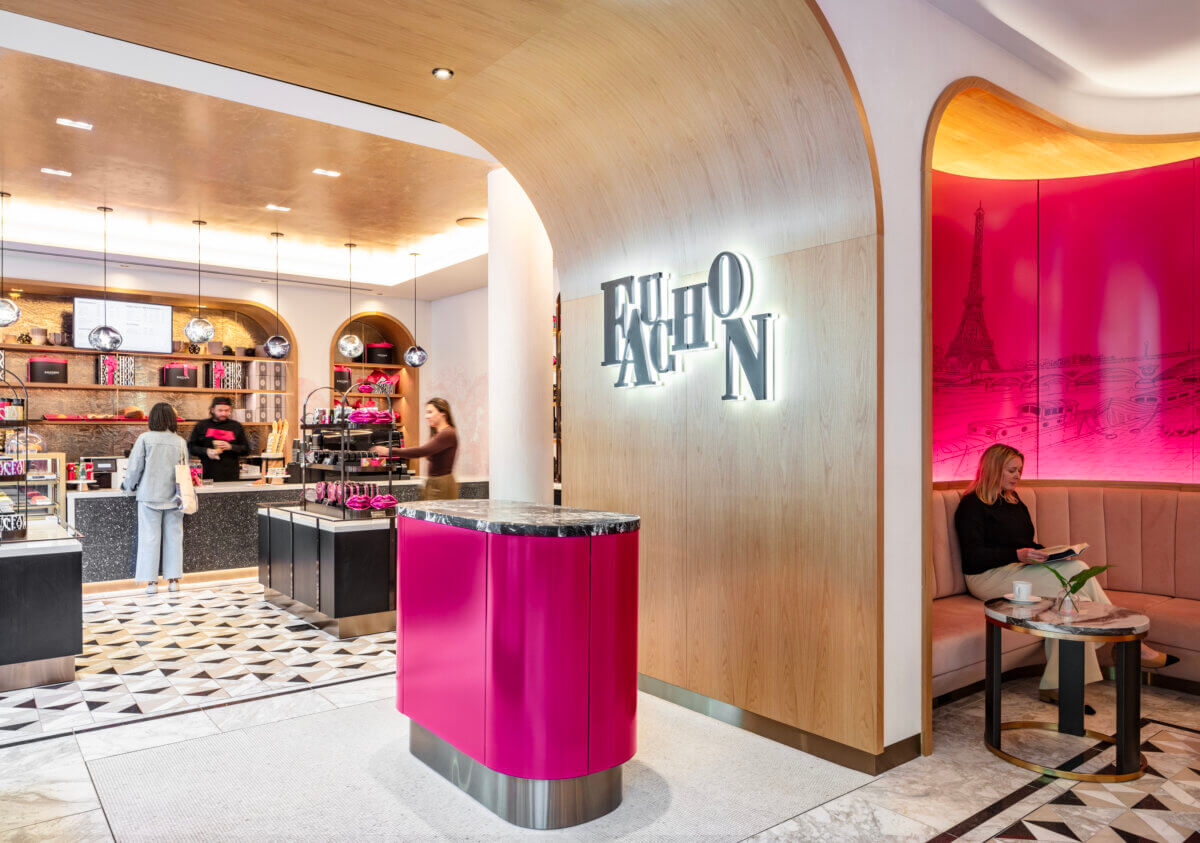
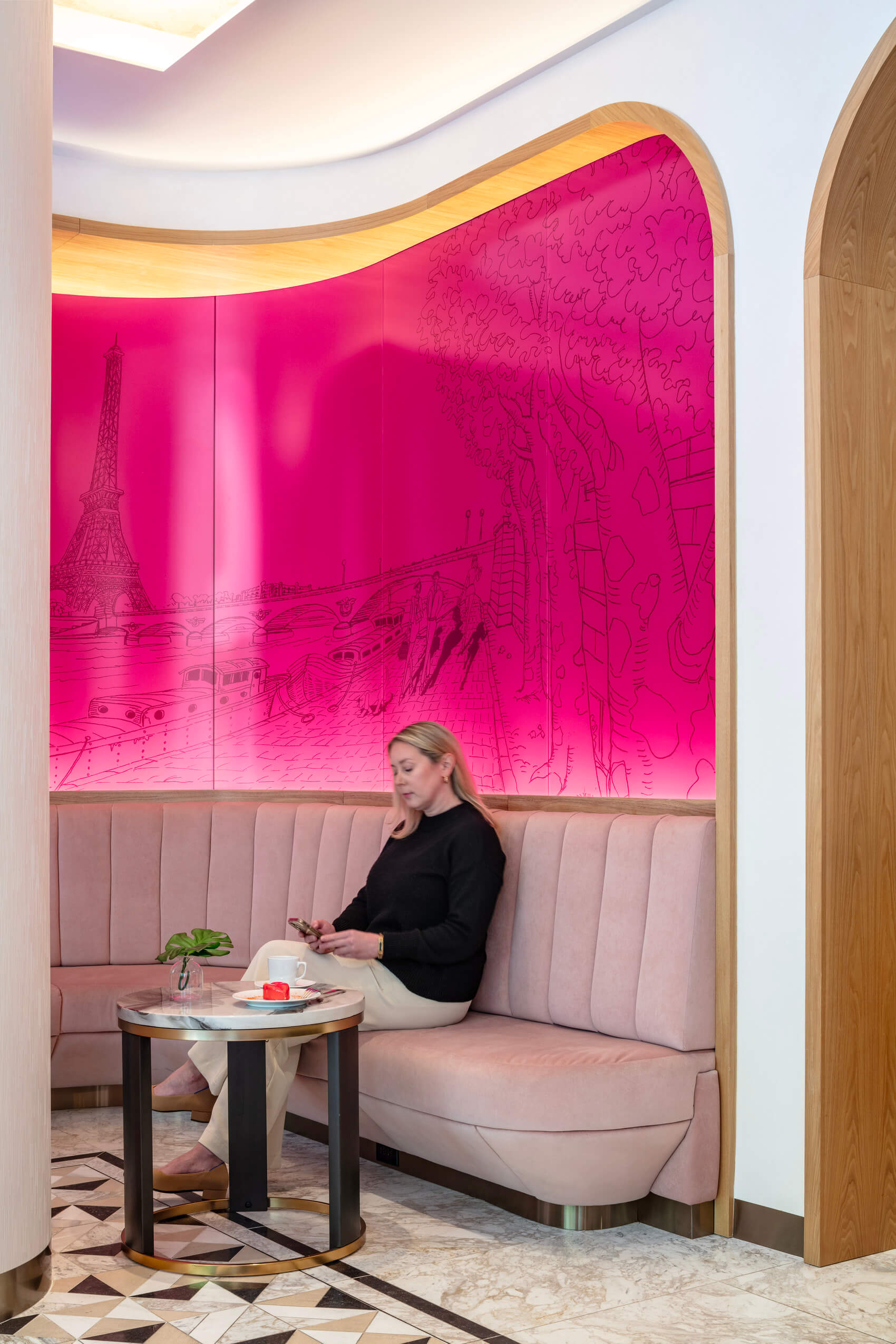
Fauchon (Image courtesy of IA, photographed by Magda Biernat)
Tell us a bit about where you live: How long have you been there, and how does your environment shape your creative process?
I’ve lived in Brooklyn for 15 years, long enough to watch neighborhoods reinvent themselves and to know that the best places rarely feel overdesigned. There’s an incredible mix of high concept and total improvisation here. I’m a Virgo with ADHD, which is probably the most accurate description of my creative process: obsessed with order, endlessly distracted by possibility. Brooklyn accommodates both. It keeps my eye sharp and reminds me that personality is not a defect to be edited out.
Which of your projects are you most proud of, and what makes them stand out for you?
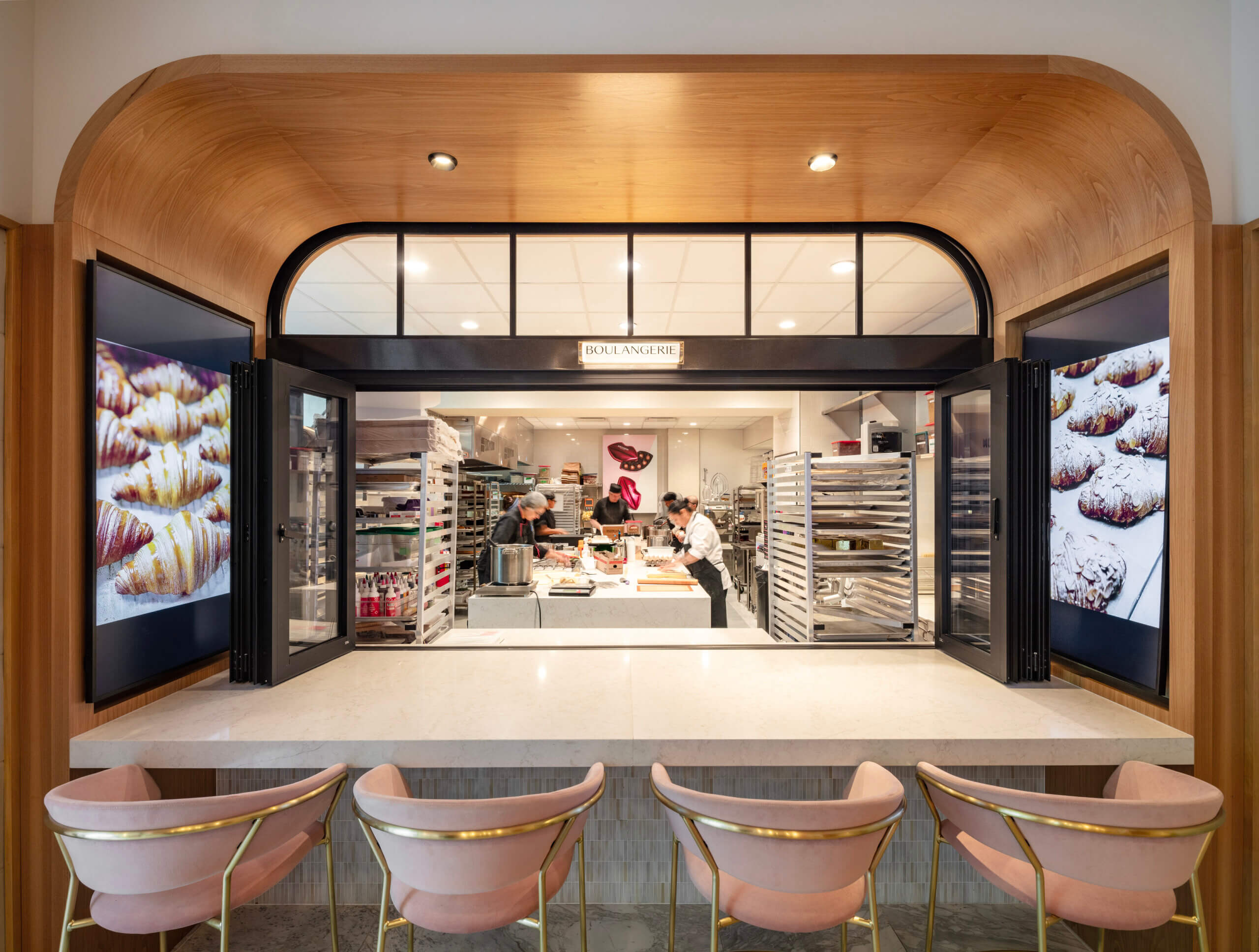
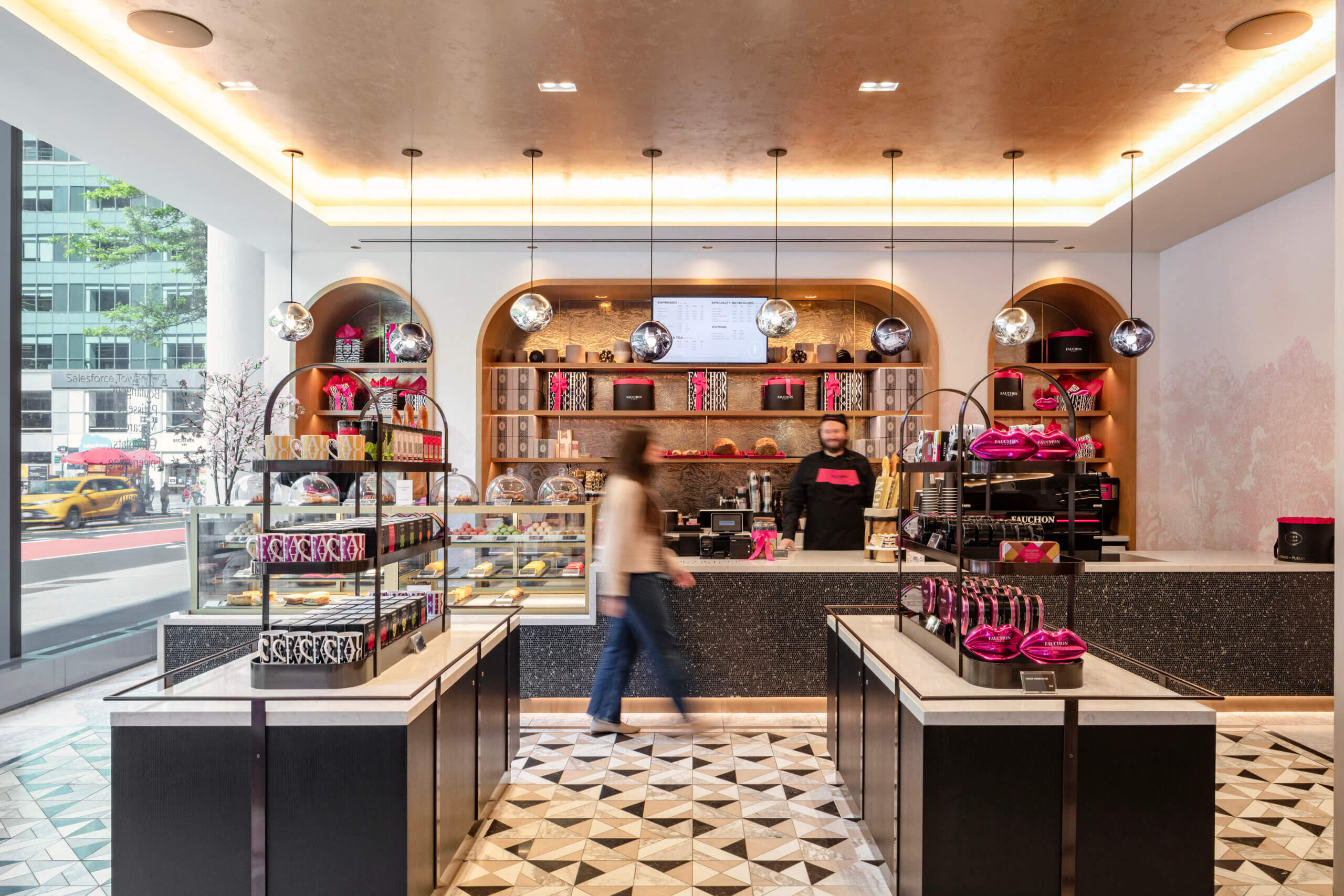
Fauchon, an iconic Paris-based restaurant, café, and bakery, recently opened a New York City location next to Bryant Park. There’s something wonderfully complicated about bringing a Parisian institution to New York. The brand arrives with a century of visual memory, but the experience can’t just be a postcard from Paris. It has to belong to Bryant Park, to the pace of Midtown, and to the people walking in for a pastry on an ordinary Tuesday.
What I loved was working through that tension between heritage and reinvention. We began with a New York state of mind and considered the whole experience, from the storefront and arrival to the lounge and test kitchen. The ambition wasn’t to make something that looked French. It was to preserve what makes Fauchon unmistakably Fauchon while giving it a new life in the city. That’s the kind of creative challenge I enjoy: respecting the history without being intimidated by it.
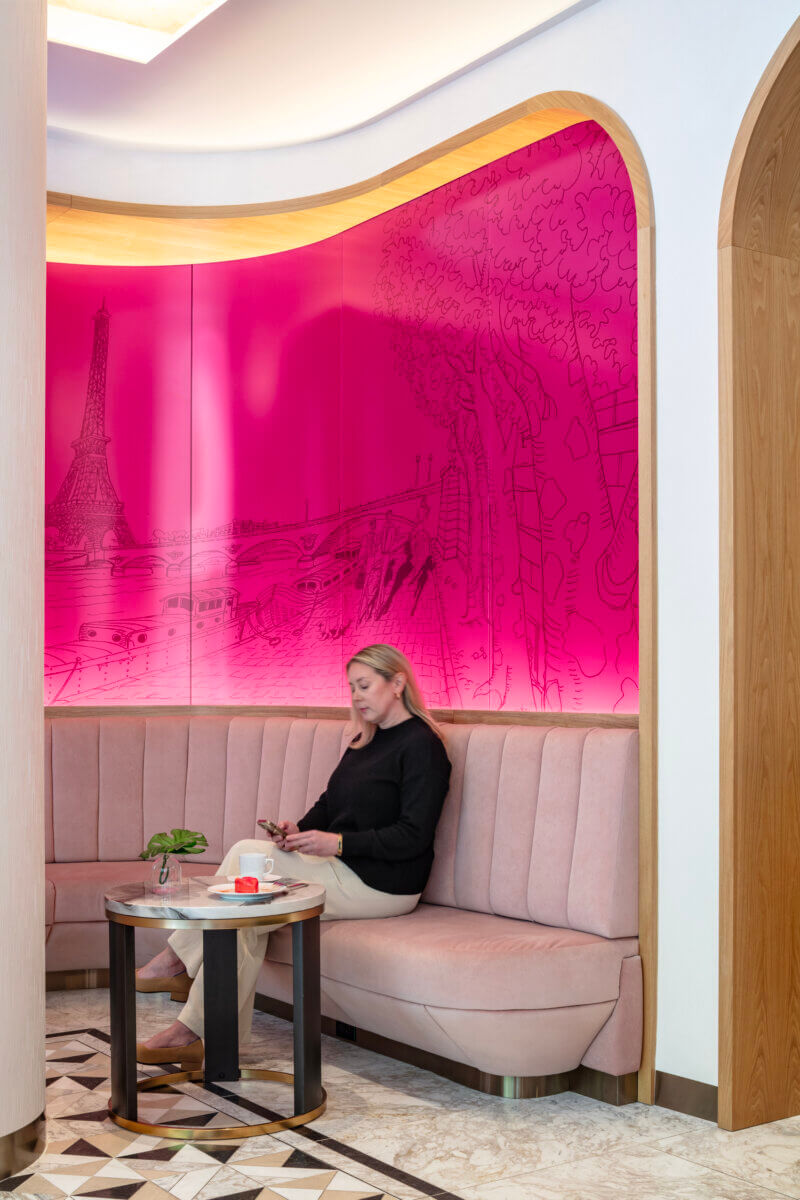
Fauchon (Image courtesy of IA, photographed by Magda Biernat)
Are there any recurring ideas, themes, or materials that continually find their way into your work? What draws you to them?
I return to contrast, ritual, and the pleasure of discovery. Something highly considered beside something spontaneous. A quiet gesture that makes a bold one more effective. I love it when materials, objects, art, lighting, and language work together to establish a mood without explaining themselves. Maybe that’s the “I Spy” kid in me: I want a space to reward a second look, and a third.
In your opinion, what is the most significant challenge facing the design world today? How do you think designers should respond to it?
I think one of our biggest challenges is confusing access to inspiration with having a point of view. New technologies can generate images, options, and entire visual worlds in seconds. That’s exciting, but it makes cultural understanding, discernment, and craft more important, not less.
A lot of my thinking right now is around cultural design and concierge-led hospitality: experiences that respond to people rather than asking people to adapt to a predetermined script. What does it mean to be genuinely welcomed? How can technology make an experience more attentive without making it feel automated? And where is the human touch nonnegotiable?
I want designers to be as curious about behavior, service, and the people making things as they are about the next tool. Technology should expand what we as designers can imagine, while craft gives value to the experience.
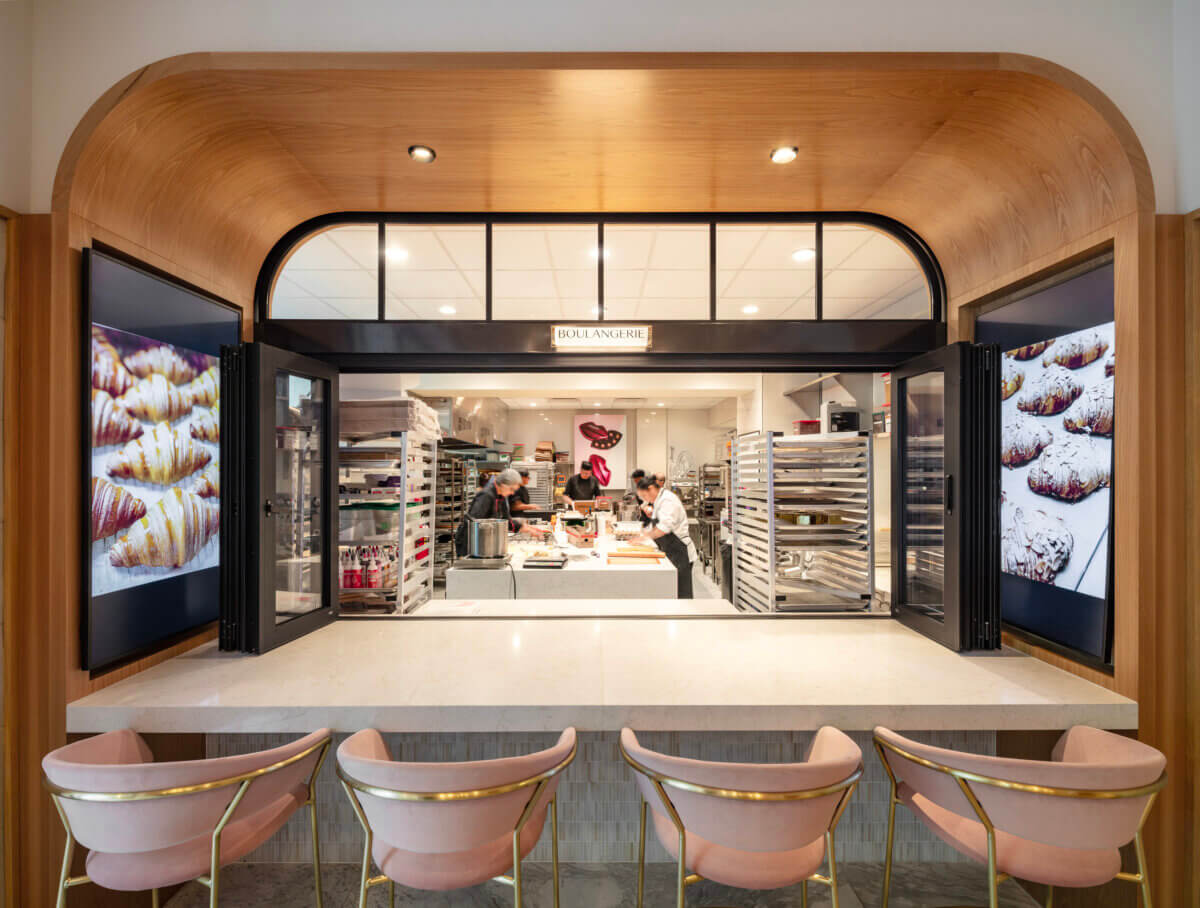
Fauchon (Image courtesy of IA, photographed by Magda Biernat)
What are you currently working on, and what projects or goals are on the horizon?
Right now, I’m particularly interested in the different scales of creative direction that are possible in my project work at IA. For example, our upcoming HQ project for Ramp, a New York fintech company that develops spend management software. The client has tasked us with designing their workspace for their expansion into an old cast-iron department store in the Flatiron district. What I like about this project brief is that we’re not just doing the signage package. We’re setting the creative and art direction for the entire look and feel of the building and working out how the brand shows up throughout: the materials, the lighting, the type on the doors, the furniture, the art, and a feed of their own data somewhere. The design concept is the finance OS in physical form. Most of each floor stays quiet and precise, like the product, and the warmth collects in the rooms where people gather.
How do you know when a design is finished?
When I can take something away, the idea gets stronger. I’m not particularly sentimental about a clever detail if it’s competing with the whole. A good system should feel inevitable, but not sterile. It should leave enough space for life to happen.
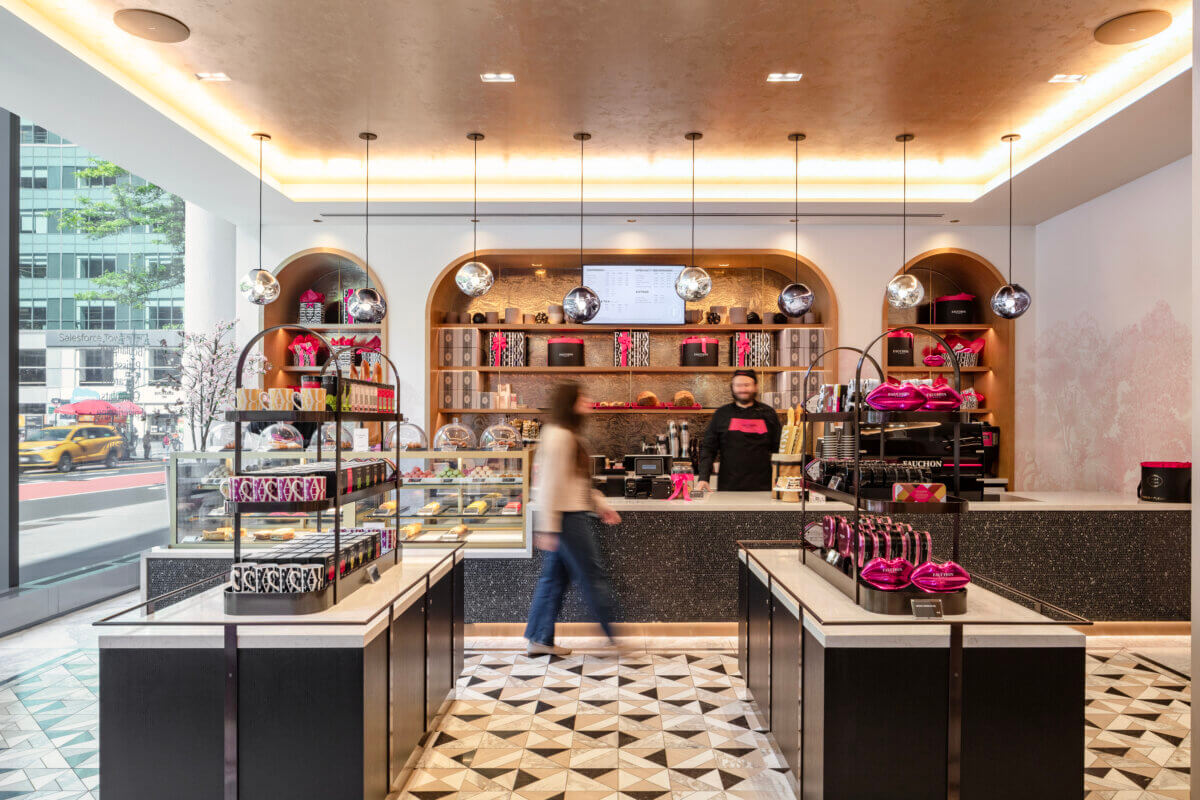
Fauchon (Image courtesy of IA, photographed by Magda Biernat)
What’s a favorite movie, band, or song that has inspired or shaped your creative mind?
Wes Anderson’s films. I love how completely imagined they are. Every location, costume, prop, and perfectly awkward interaction feels like it belongs to the same universe. The worlds are meticulously composed, but there’s always humor, eccentricity, and something deeply human beneath the symmetry.
That balance sticks with me. Creative direction isn’t just deciding what something looks like. It establishes a point of view so clear that every detail, even the smallest, has a role to play. And knowing when to let something a little strange into the picture.
What are you currently curious about?
I’m curious about what happens after the reveal. We spend so much energy designing the first impression, but what does a place feel like on day 300? Which details become rituals? Which moments age well, and which were only exciting in a rendering? I’m interested in environments that can be bold without exhausting people, and systems that make room for culture to change.
Visit IA’s Website >>>