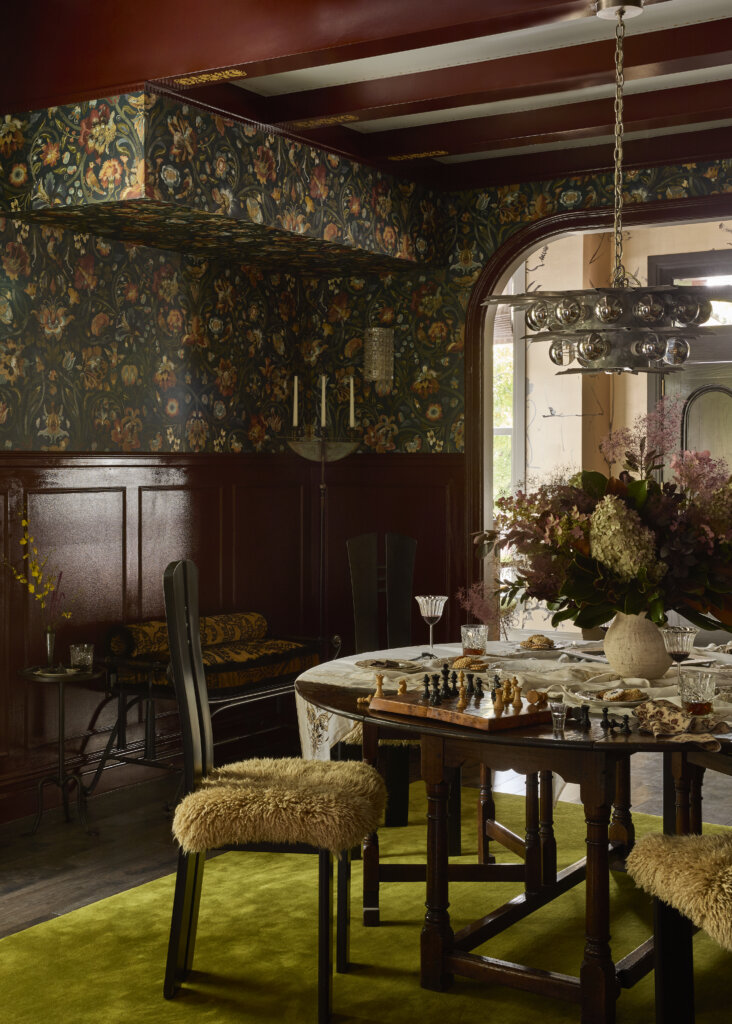
When it comes to the perception of Italian design, many picture elaborate marble-ladden interiors with baroque furnishings and gilded ornamentation. This is a limited, romanticized image of a bygone era; a classical and neoclassical era when architecture and furniture were implemented as conspicuous demonstrations of wealth and status. There’s much more to the multivalent country’s contribution to the cannon, in particular during the 20th and 21st centuries. In that time, the surprisingly diverse country was home to numerous radical movements, periods of economic growth forged out of an uptick in international demand for its furnishings and finishings. Design is culture here, a central feature of daily life. Craftsmanship and long held artisanal traditions also define this output. Just like with cuisines, there are specializations in each region and pocket of a region.
With so much on offer, not everything receives the attention it deserves. Smaller but no less impactful or innovative producers get overshadowed by the giant manufacturers and fall through the cracks, especially when it comes to garnering international attention. The Italian Trade Agency (ITA), endeavors to rectify this imbalance with numerous initiatives. With outposts across the globe, the government organization provides information, assistance, consulting, promotion, and training to Italian small and medium-sized businesses. The sizable showcase it mounts at each annual edition of ICFF has become an important platform for these boutique producers to gain exposure and recognition from a North American audience. It’s played a vital role in broadening the perception many have of Italian design.
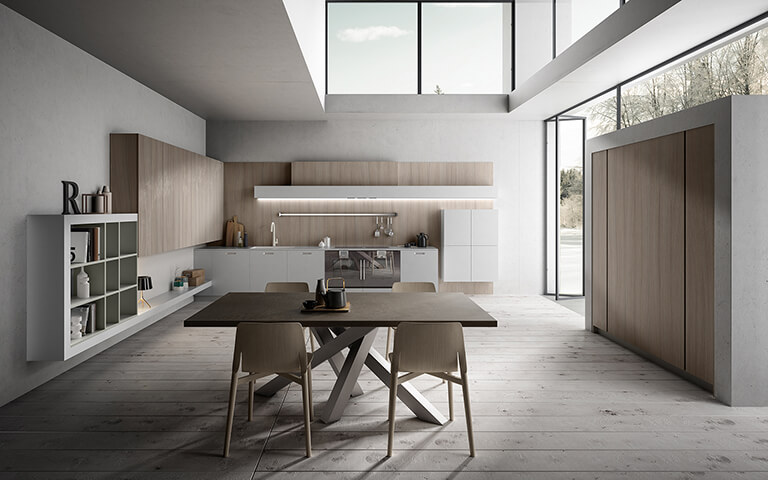
(Top image courtesy of IRPAC)
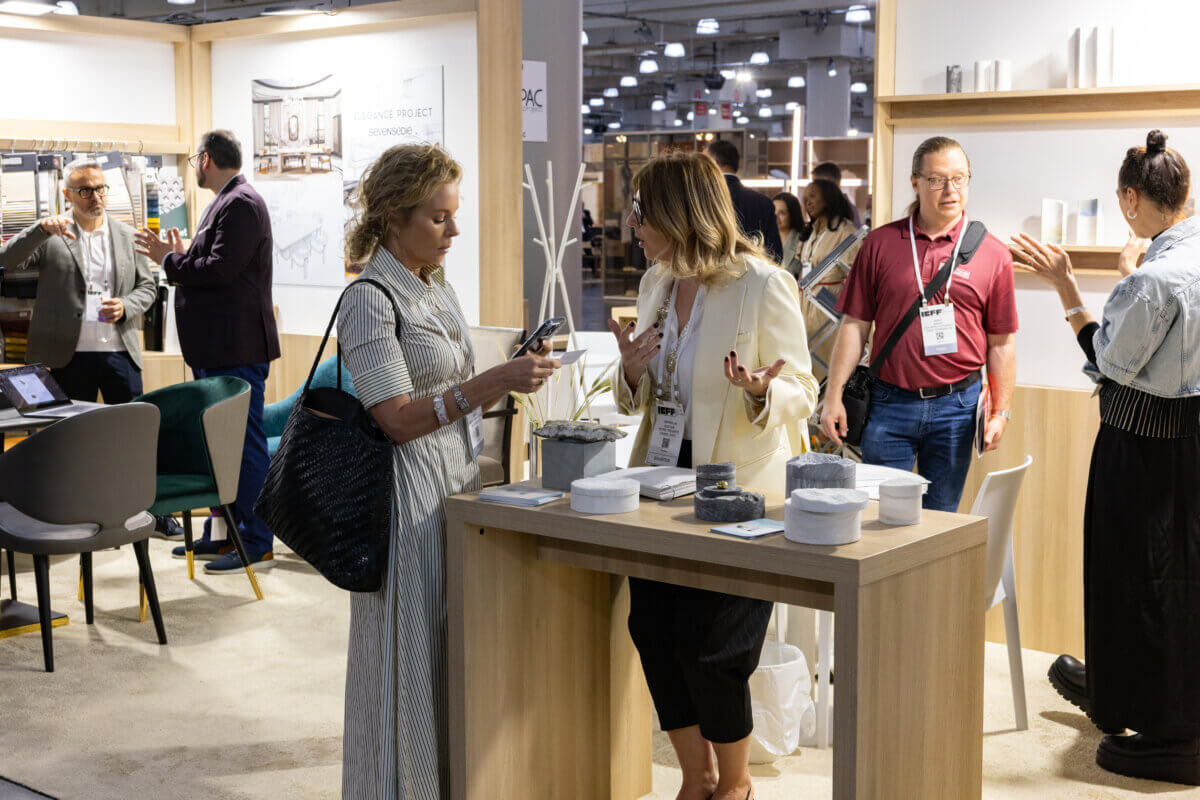
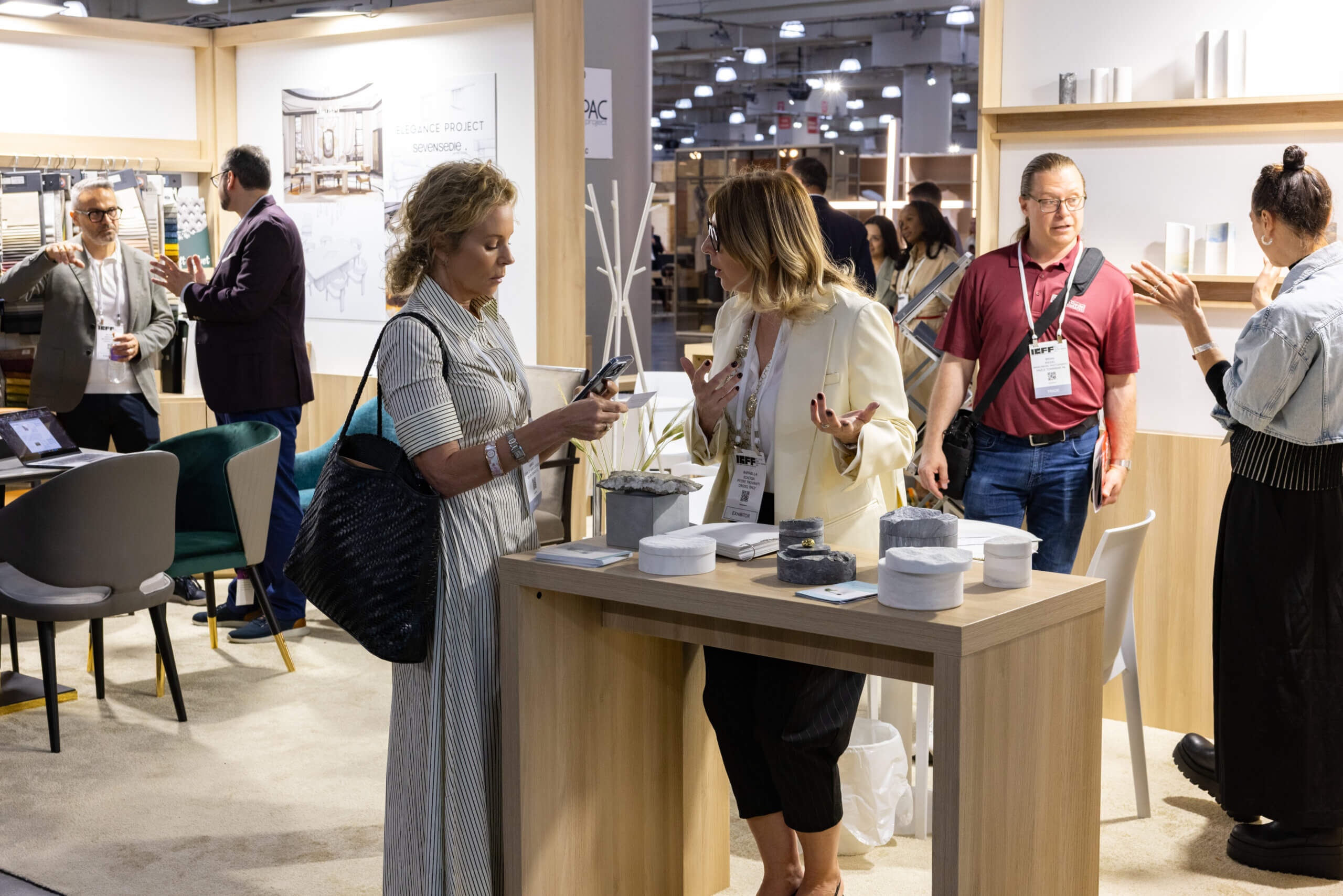
Italy at ICFF (Image courtesy of Jenna Bascom Photography)
“Italian design continues to enjoy an exceptionally strong reputation in the United States,” says Marco Verna, ITA Trade Commissioner and Director. “It’s widely associated with sophistication and manufacturing excellence. American professionals often view Italy as a benchmark for how design can successfully combine creativity, craftsmanship, and industrial expertise.” For him, however, perceptions are evolving. “There is growing recognition that Italian design is not solely about heritage or luxury,” Verna adds. “Increasingly, it’s seen as a dynamic and forward-looking sector that is actively addressing issues such as sustainability, technological innovation, changing lifestyles: new modes of living and working.”
From the outset, the mission behind the Italy at ICFF initiative was not simply to increase exports but to build meaningful commercial and cultural connections between Italian manufacturers and the North American design community. “Italy has long been recognized as a global reference point for design excellence, yet many highly innovative companies remain relatively unknown outside specialized industry circles,” says Verna. “The initiative was conceived to help bridge that gap.”
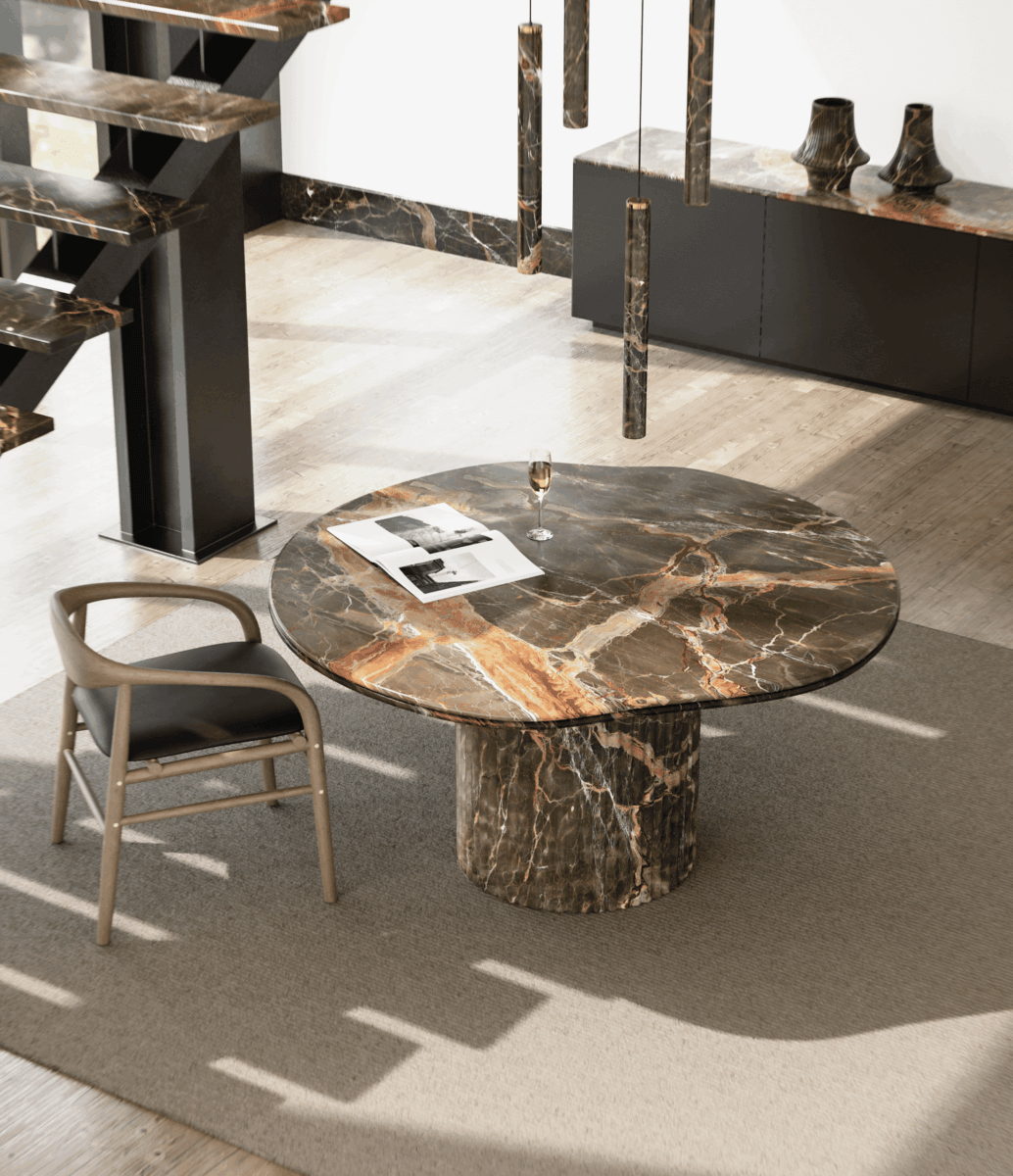
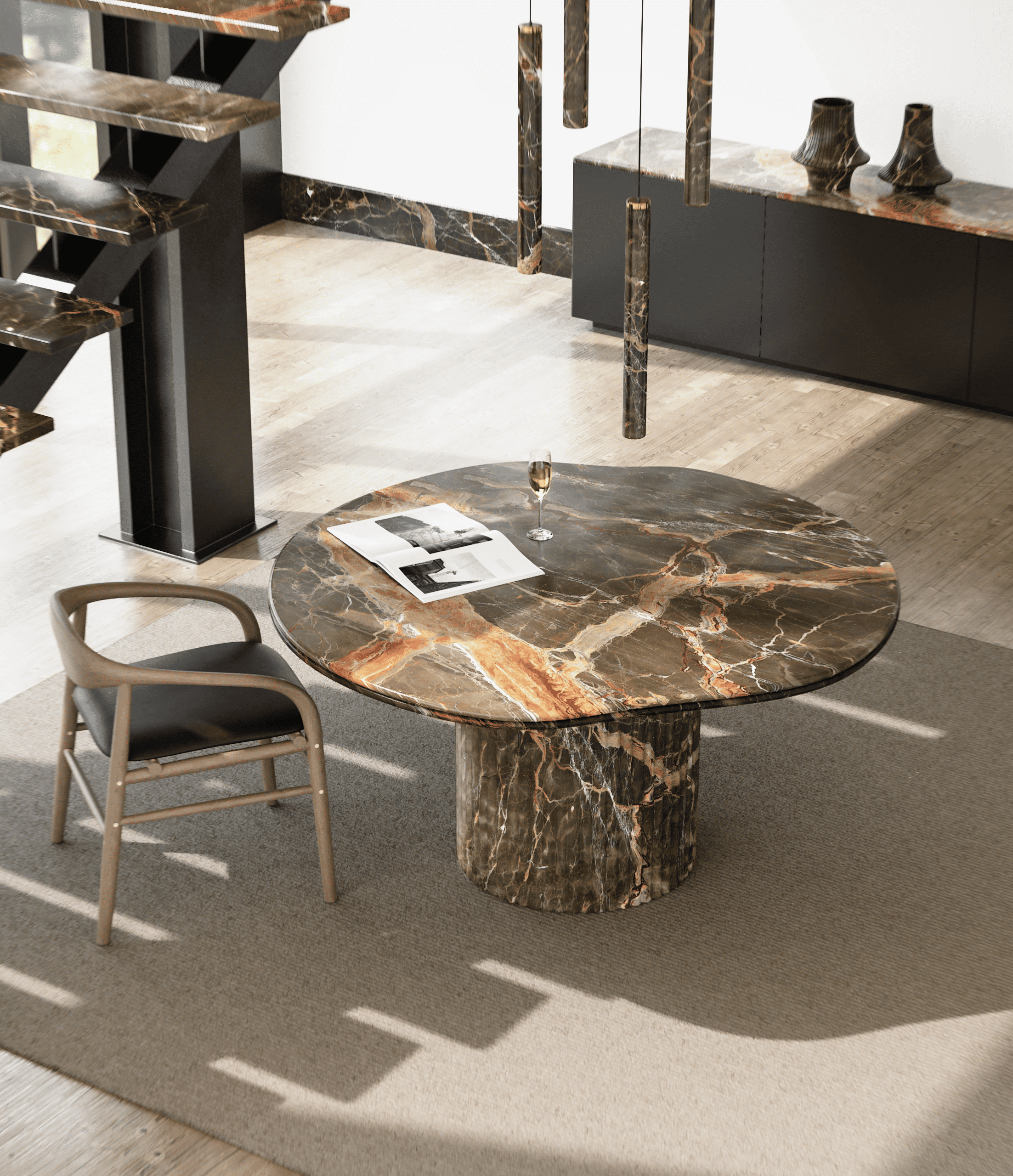
Aura Table in Ombra di Caravaggio (Image courtesy of Pistore Marmi)
Over time, the effort has kept pace with changes in the industry itself. While business development remains a central objective, the showcase has increasingly become a platform for storytelling—one that not only presents products but also the values, technological innovation, sustainability efforts, and entrepreneurial culture that’s driving the contemporary Italian scene. “Today, it serves as both a commercial showcase and a reflection of how Italian design continues to adapt to a rapidly changing global market,” says the trade commissioner and director. “The Italy at ICFF exhibit offers American architects, designers, retailers, and developers—the highly qualified decision-makers actively seeking innovative products—the opportunity to discover new voices, emerging brands, specialized manufacturers, and innovative production realities that represent the depth and diversity of Italy’s design sector.”
The showcase incorporates a range of product categories—furniture, lighting, surfaces, accessories, outdoor solutions, contract products, and increasingly innovative sustainable materials and processes but also presents different design approaches, production techniques, and regional traditions that reflect the richness and diversity of the country design sector. What unites these companies is a shared commitment to quality, craftsmanship, and manufacturing excellence—values that have long distinguished Italian design internationally. One of these principles is humanism; prioritizing comfort, usability, emotional connection.
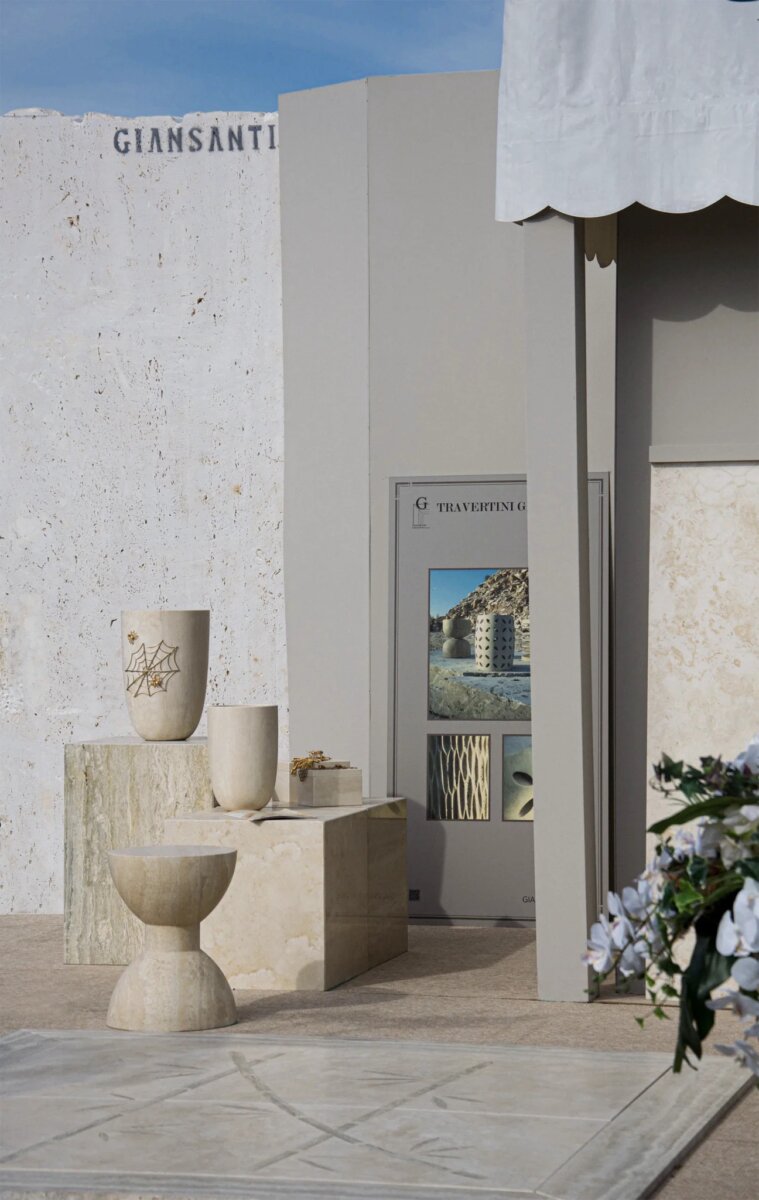
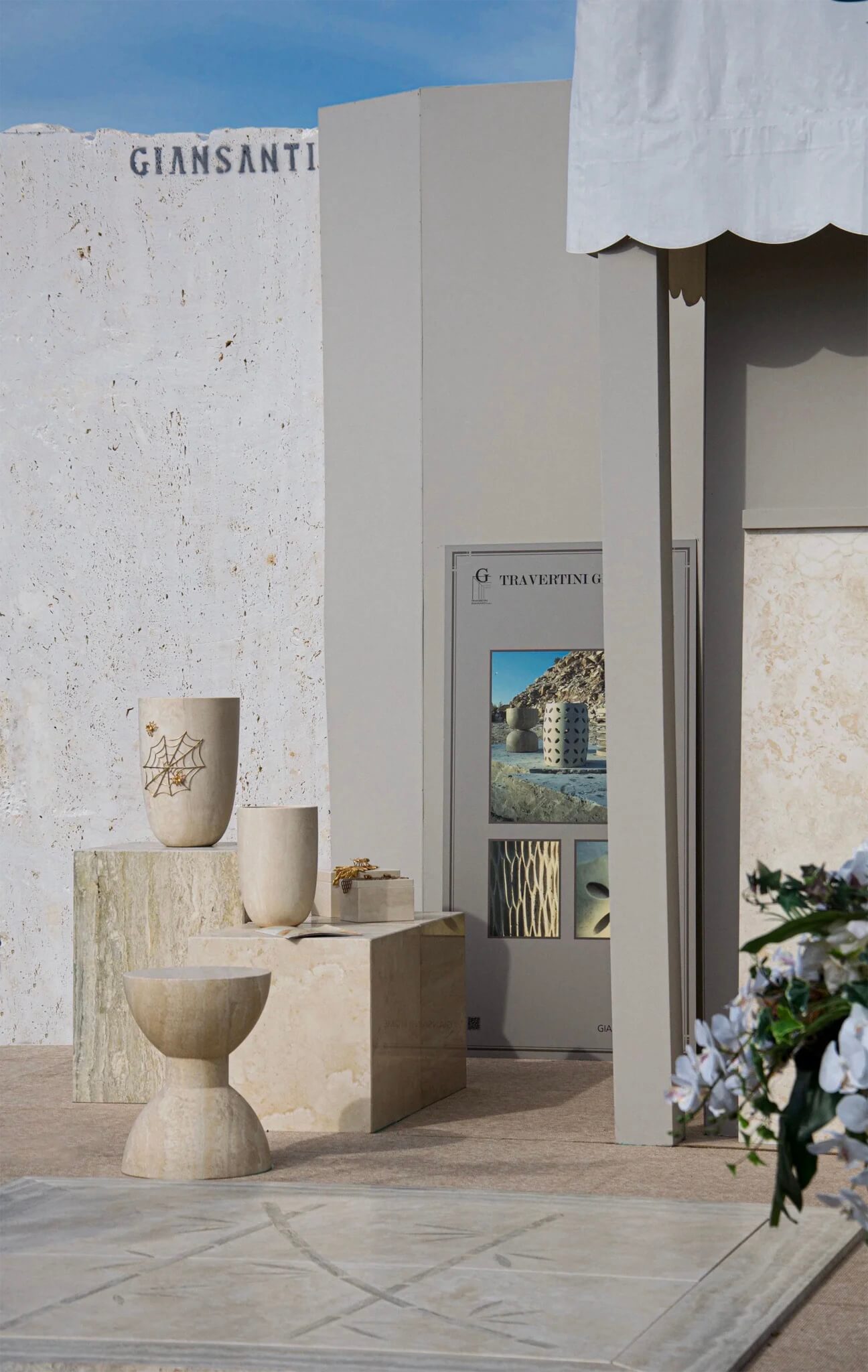
Image courtesy of Giansanti Home
Participants come from different parts of Italy, each bringing distinct production traditions, technical expertise, and cultural influences. This diversity demonstrates that Italy’s creative identity is not defined by a single style. “Perhaps the most interesting aspect of contemporary Italian design is its ability to evolve without losing its roots,” Verna says. “Many of today’s companies build upon generations of manufacturing knowledge while simultaneously investing in new technologies, sustainable production methods, and digital processes to meet evolving consumer needs.”
The current generation of Italian manufacturers understands that design must respond to broader social and environmental challenges. Increased attention is being given to circularity, responsible sourcing, material innovation, durability, flexibility, and well-being. At the same time, the values that have historically defined Italian design—craftsmanship, technical excellence, aesthetic sensitivity, and human-centered thinking—remain firmly intact. “Rather than viewing tradition and innovation as opposing forces, Italian companies often treat them as complementary elements that strengthen one another,” Verna concludes.
Want to learn more about the Italian brands at ICFF 2026?
READ ABOUT THEM HERE>>>
Interested in what other global brands were present at the fair?
CHECK OUT OUR INTERNATIONAL SPOTLIGHTS PAGE >>>