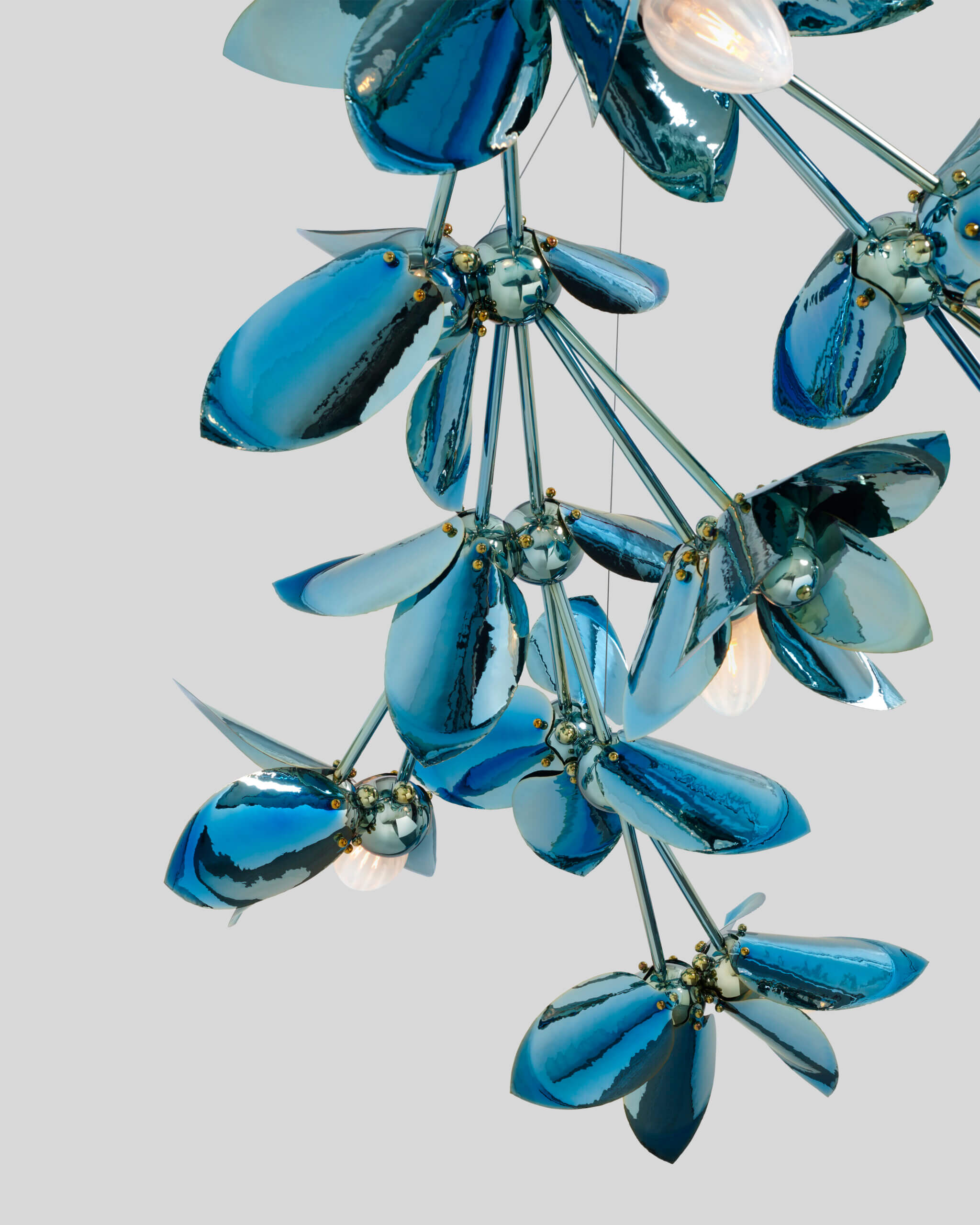
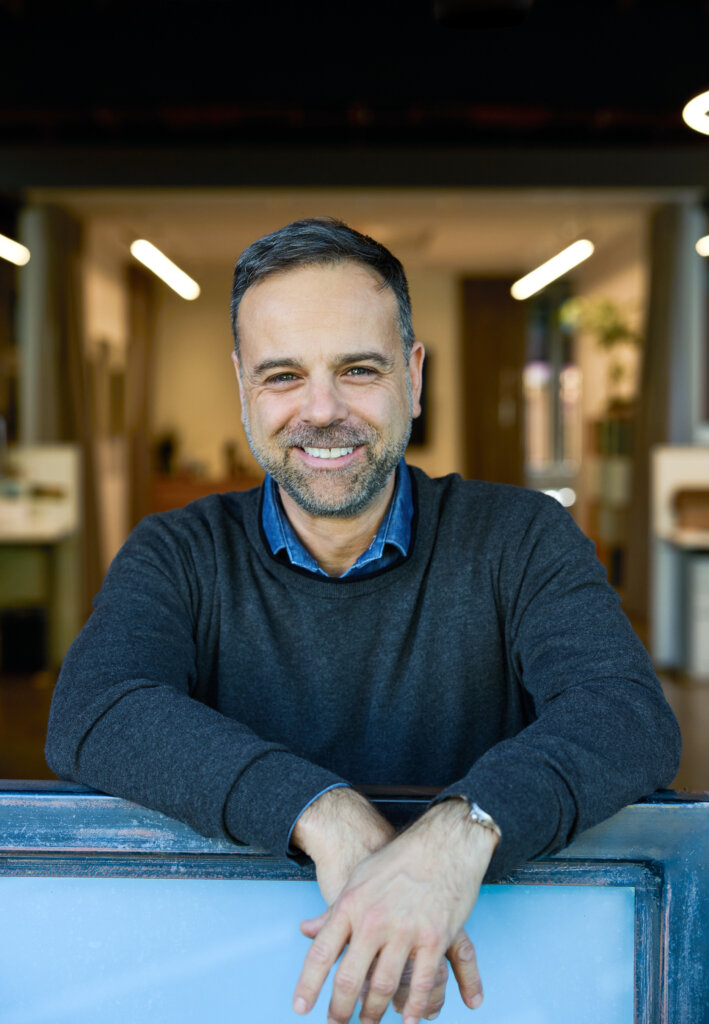
In a New York design scene often defined by economically pressured binary choices—the industrial versus the artisanal—Rosie Li Studio carves out a rare, intelligent middle ground. At the helm of the continuously yet carefully expanded company, Rosie Li has mastered a unique alchemical practice, weaving together mathematical precision and organic, sculptural form to create luminaires that function as much as art as they do lighting.
Whether through the modular intricacies of her five-year-in-the-making Jewel Block collection or the hand-painted, evolving narratives of Pilar x Huanxi, Li’s work demands a deliberate, secondary look. Following her participation at ICFF this May, we caught up with Li this summer to peel back the layers of her process, her Crown Heights, Brooklyn studio, and the philosophy that keeps her at the forefront of the contemporary lighting conversation.
(Image above courtesy of Rosie Li)
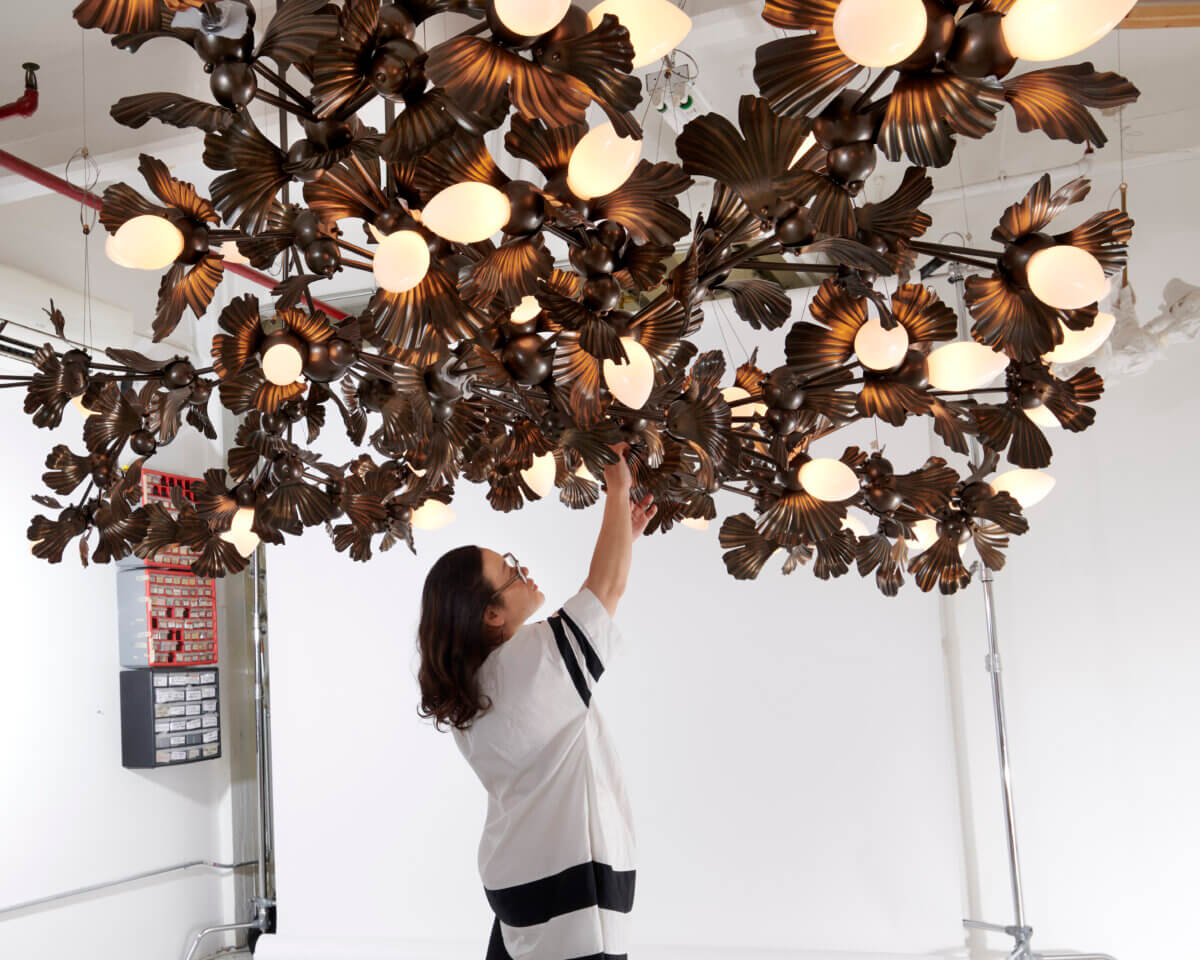
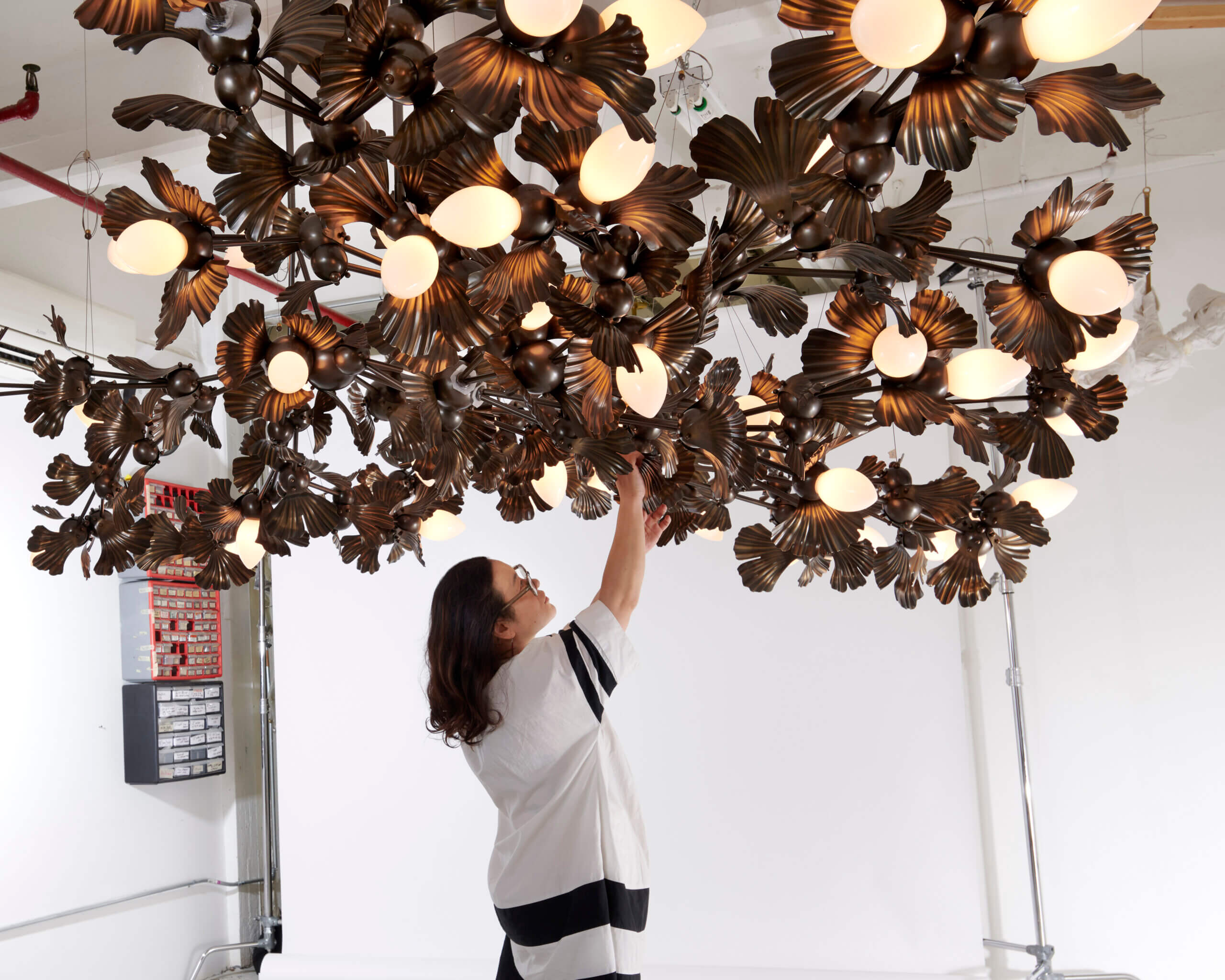
Image courtesy of Rosie Li
Interview with Rosie Li
Since founding your studio in 2015, how has your collaborative dynamic with engineer Philip Watkins shaped the way you approach the intersection of formal exploration and technical innovation?
Philip and I met working at Roll & Hill (the now well established New York lighting brand),” where he was actually my manager. He was very encouraging while I was just starting in a junior designer position. We both shared an interest in product development and eventually started the studio together. Early on our roles were more clearly defined. I was the designer to his engineer, but over time that line has blurred. We bounce ideas back and forth constantly. To me, design and engineering are two sides of the same coin. Having engineering woven into the design process lets us push an idea further without losing sight of how it will actually be made. The goal is always to preserve the original gesture while solving the technical problems needed to bring it to life.
Your work is consistently described as a synthesis of mathematics, science, and artisanal fabrication. How do you navigate the tension between these rigorous mechanical inputs and the organic, “elemental” aesthetic that defines your lighting?
I’m interested in how simple systems can generate complex forms. A lot of that comes from looking at natural patterns of branching, clustering, spiraling and trying to understand the underlying geometry. The mathematics gives us a framework, but I never want the finished piece to feel overly calculated. I find mathematical perfection reads a bit cold. Hand-forming, material variation and asymmetry bring some “aliveness” back into the work. I like that tension between something precise and something that still shows the hand of the maker.
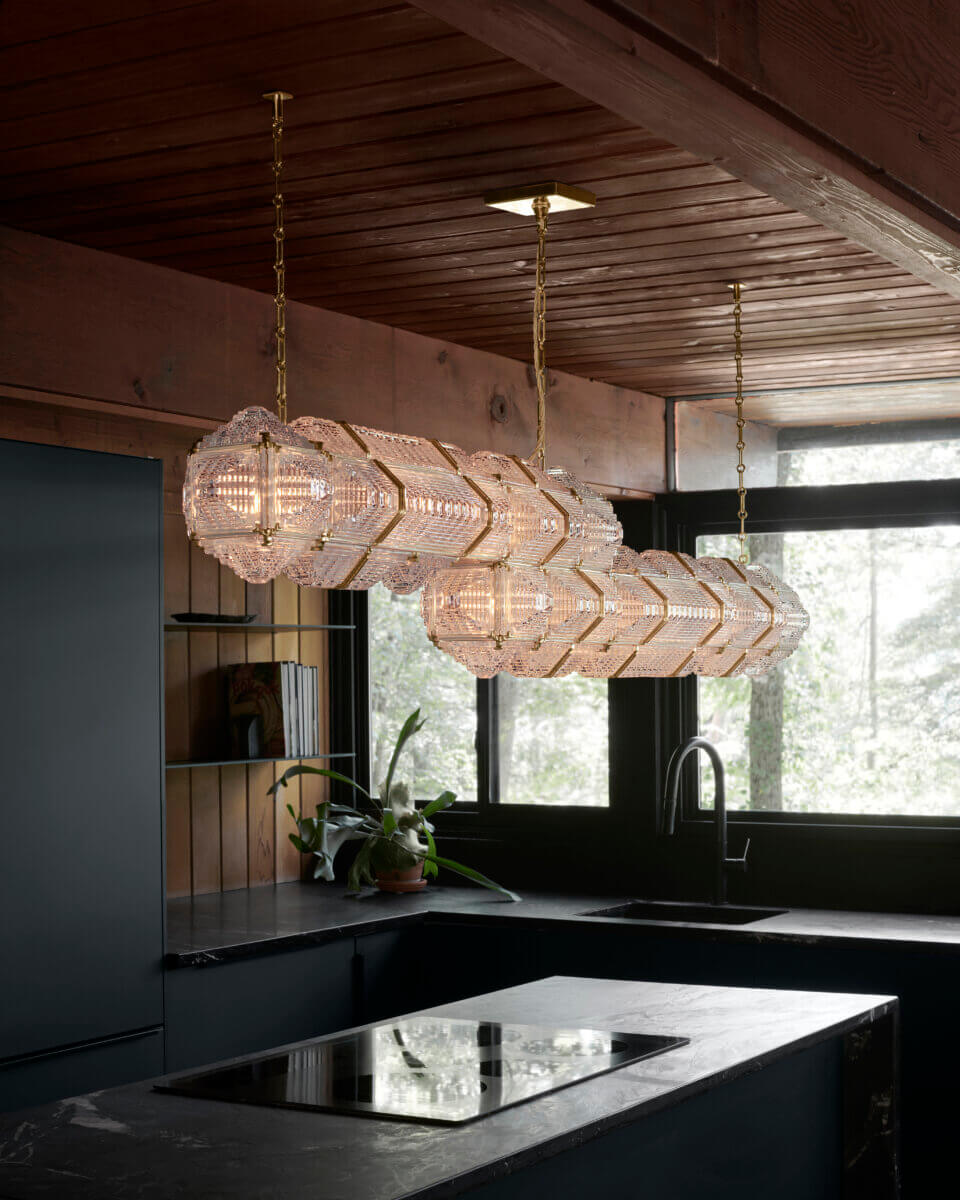
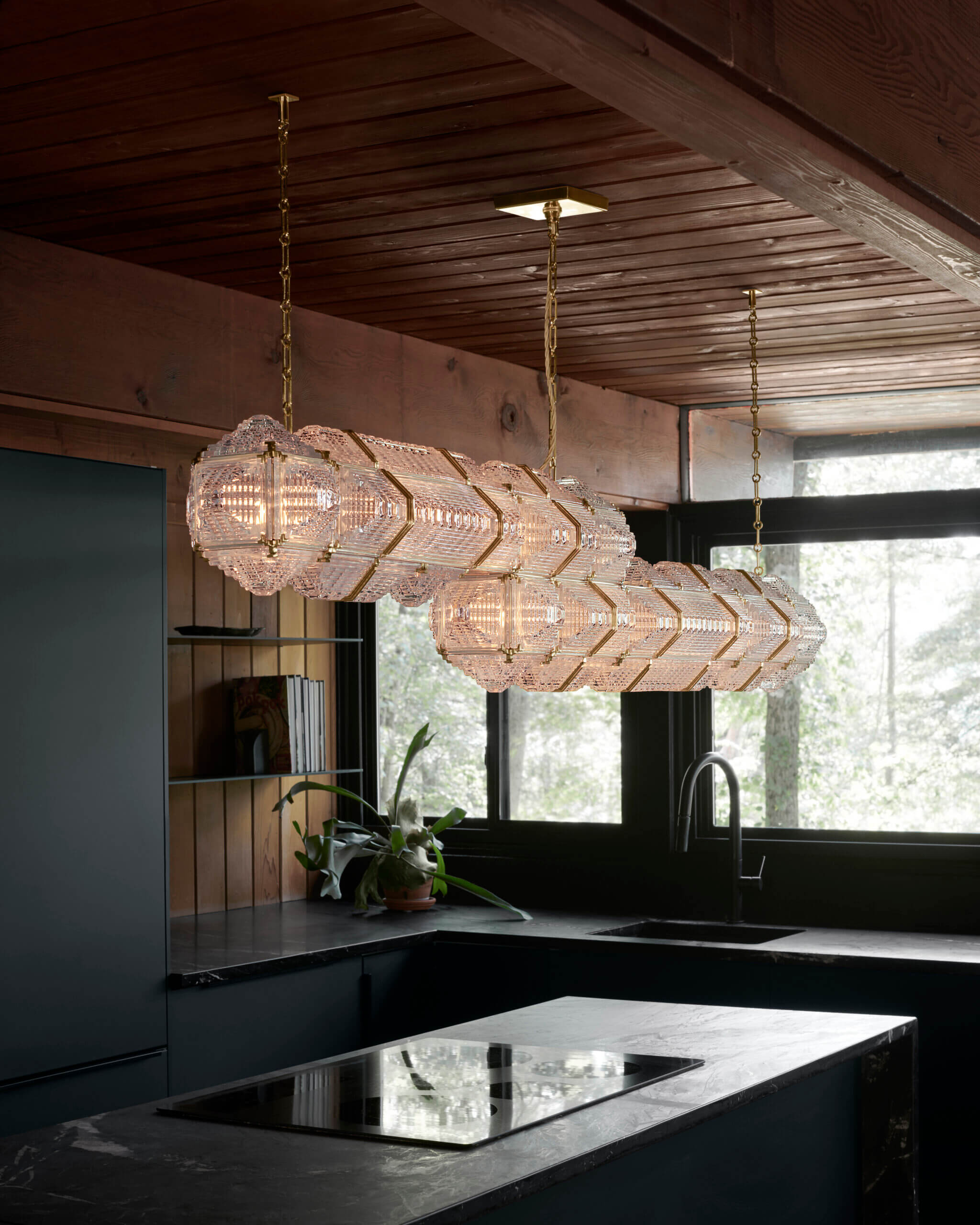
Jewel Block Collection (Image courtesy of Rosie Li)
The Jewel Block collection draws heavily on early 20th-century pressed glass architectural tiles and train signal lights. What was the process of developing those three custom pressed glass lenses, and why did you choose lenticular patterns to manipulate light?
Jewel Block took over five years to develop. We started with an interest in old architectural glass tiles and train signal lenses, then began studying how ribbed glass could become the basis of a modular lighting system. We developed three custom pressed shapes that could connect in different orientations and build into larger forms. The ribbed lens pattern was important because it does more than diffuse the bulb. It bends, repeats, and scatters the light as you move around it. The opal glass finish has a cool blue undertone when unlit and shifts to a warm amber glow when illuminated, which I love!
You’ve often spoken about producing lighting that functions as contemporary art. How do you calibrate the balance between the “sculptural” statement of a piece like those in and its primary utility as an illuminator in a residential or hospitality space?
Light is always the starting point. I think about the fixture when it’s off, but also how it changes once illuminated and what kind of atmosphere it creates around it. Ideally the fixture can hold its own as an object during the day, to take on another character when it’s turned on. There’s that instant, almost alchemical transformation that happens. With Jewel Block, the glass itself becomes part of that transformational experience. The lenses catch and scatter light, so its form and illumination are intertwined.
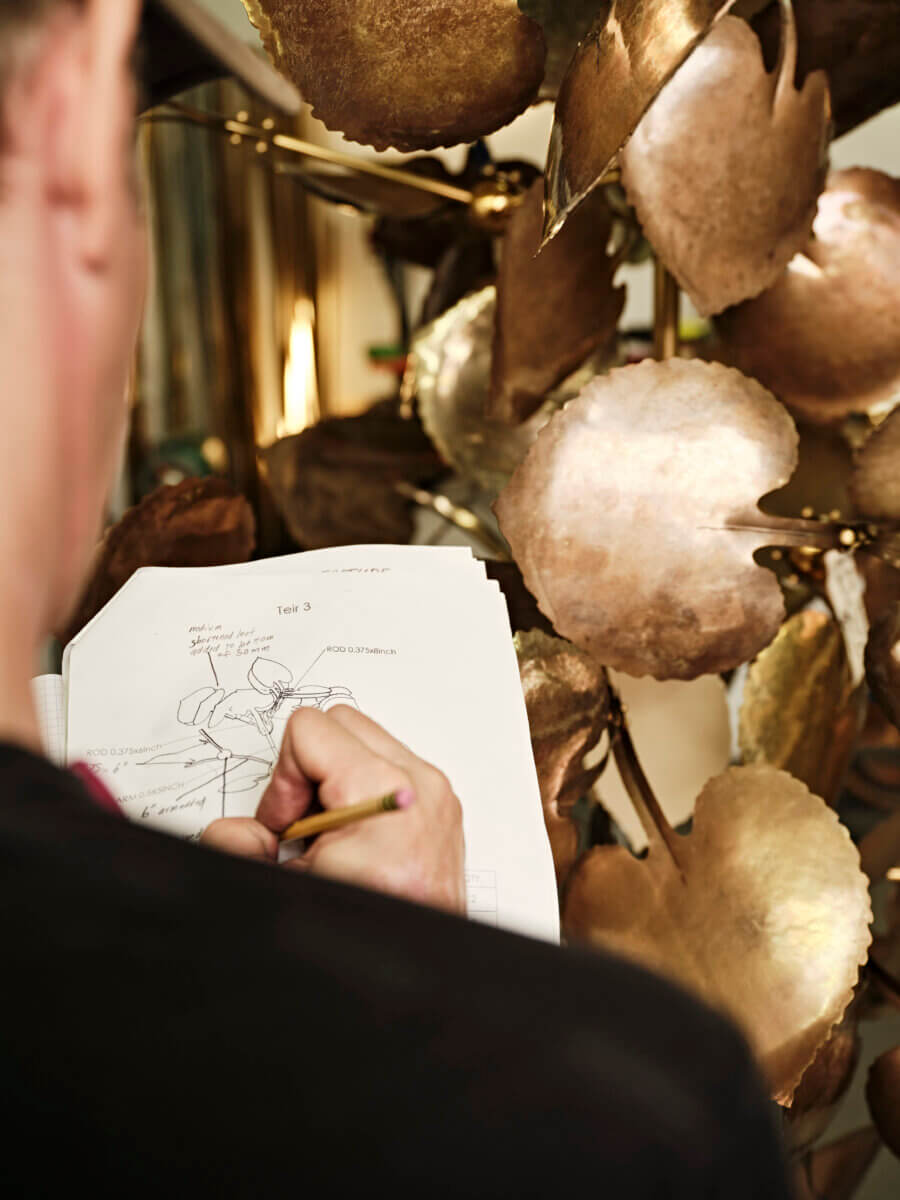
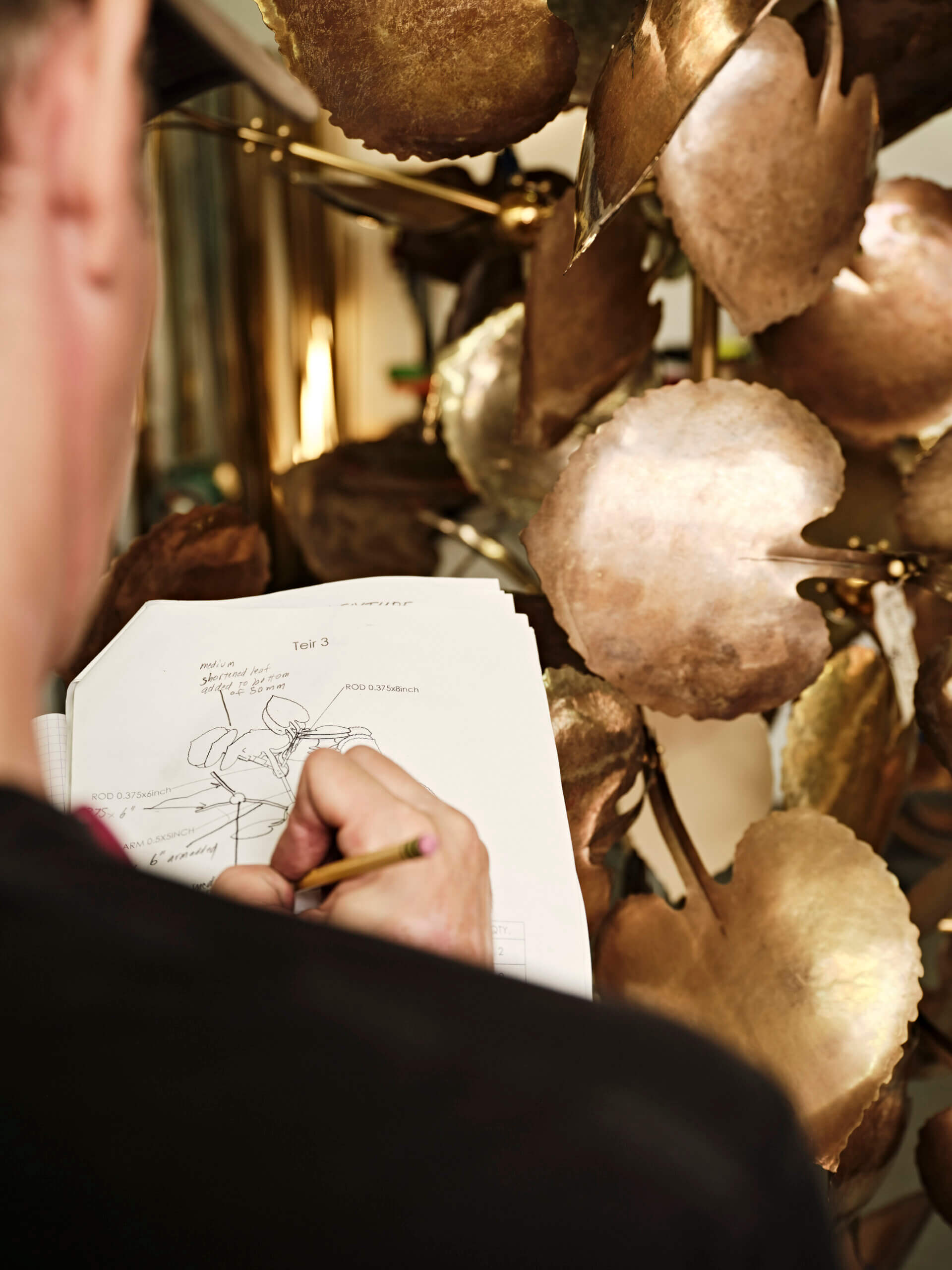
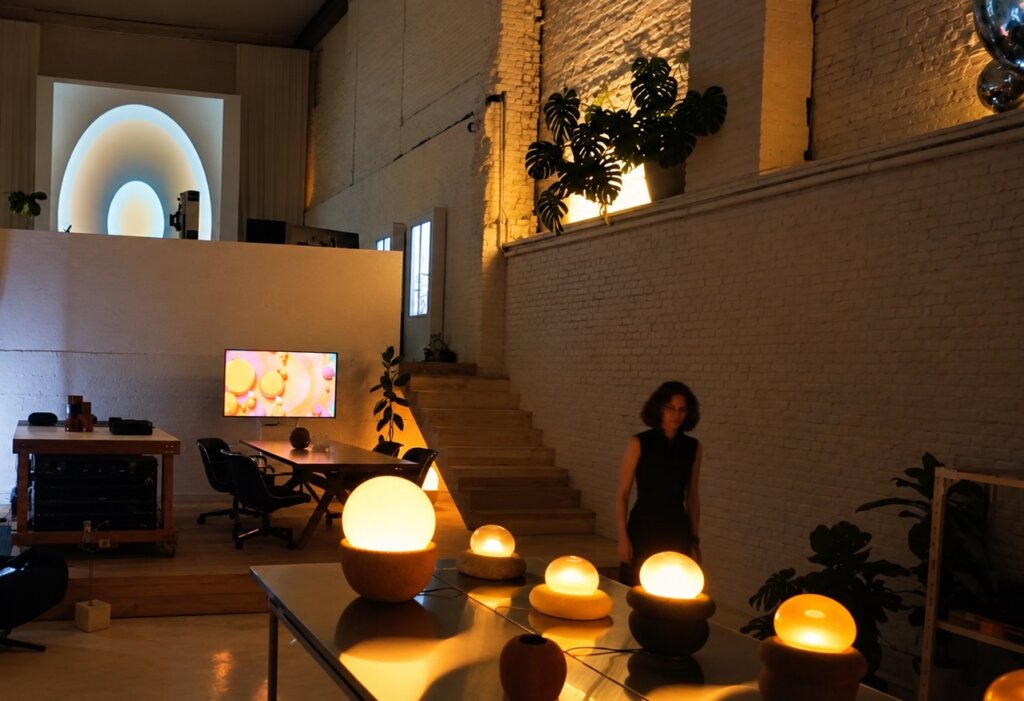
Inside Rosie Li's Studio (Image courtesy of Rosie Li)
You assemble your luminaires in Crown Heights, utilizing a network of locally and globally sourced components. As your studio grows, how do you manage the challenge of scaling production while protecting that localized, small-batch process?
For us, scaling isn’t necessarily about making huge quantities. It’s about developing better systems so we can produce more consistently while keeping the level of detail that defines our work. When we first started, I felt that custom designs had no limits or bounds. But as we’ve grown, we’ve discovered that there are certain rules that define the structure and assembly.
I love this Andrea Zittel quote from an Apartamento feature and often come back to it: “The creation of rules is more creative than the destruction of them. Things that we think are liberating can ultimately become restrictive, and things that we initially think are controlling can sometimes give us a sense of comfort and security.”
ICFF 2026 was curated around the theme of “Common Ground”. How did presenting your latest collection within that framework influence your perspective on the role of independent lighting studios in today’s broader design industry?
Independent studios can occupy an interesting middle ground between art, craft and manufacturing. We’re small enough to experiment and develop idiosyncratic processes, but we also have to think seriously about value, function and, of course, production.That combination feels increasingly relevant, but rare at the same time. It’s challenging to find your creative stride and compete with larger corporations. I have a lot of respect for young studios and am always excited to see fresh ideas at the fair.
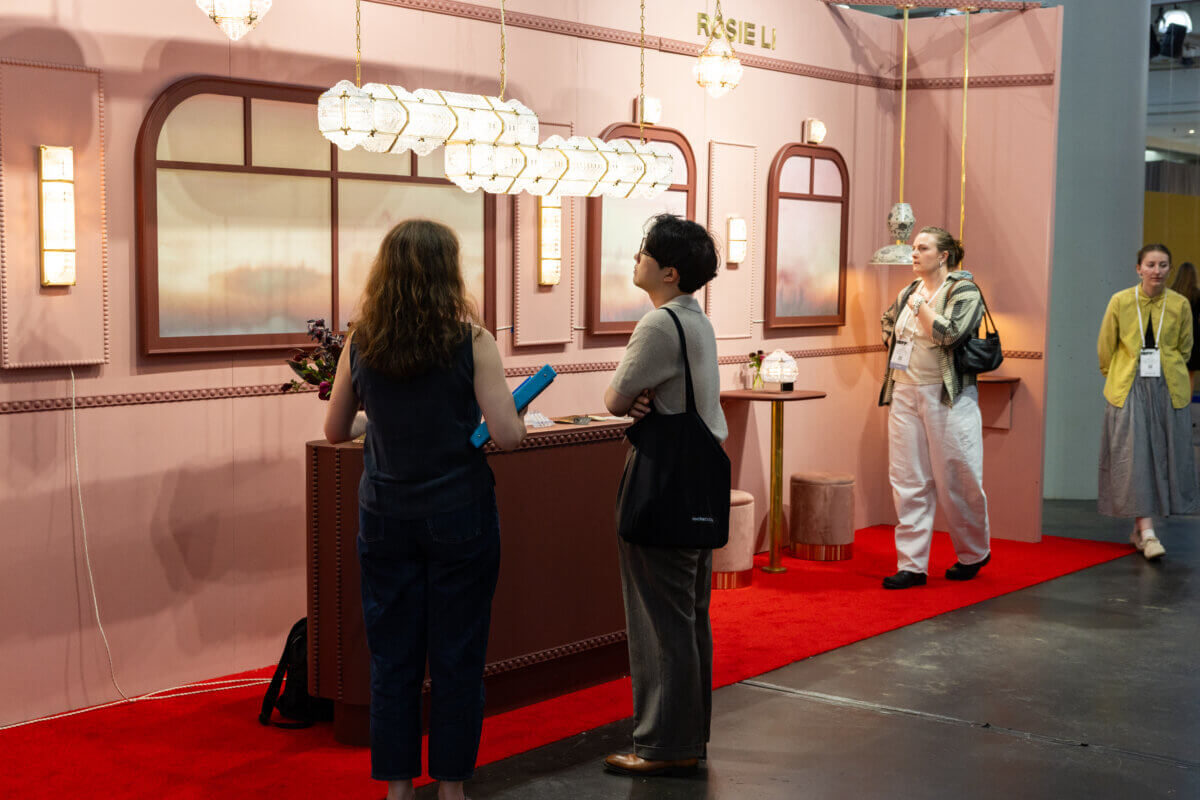
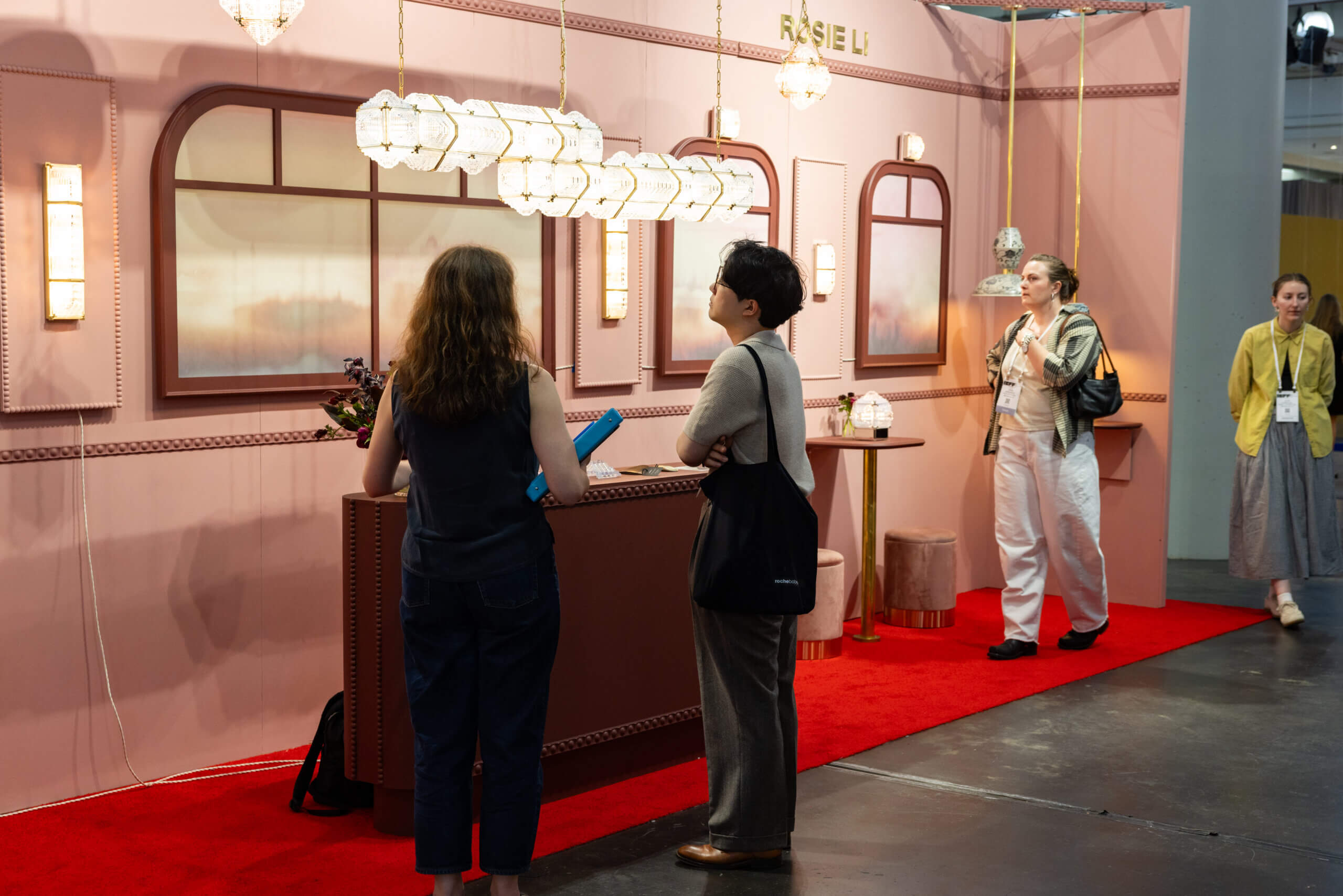
Rosie Li's Booth at ICFF 2026 (Image courtesy of Jenna Bascom Photography)
Beyond direct sales, in what ways has presenting at a platform like ICFF been strategically beneficial for your business growth—specifically in terms of building brand authority and connecting with the international A&D domain?
For a small boutique studio, being able to show the work in person is important. Lighting is tough to fully convey through photography. Funny enough, we usually hear that the work looks better in person than in photos. I smile and think “but of course” because you get to see the scale, touch the materials and experience the quality of light —these are all highly nuanced, human experiences that an image cannot capture.
A platform like ICFF creates an opportunity to have those conversations directly with designers, architects and other members of the industry. These interactions can be quick but can make a lasting impression. It helps when people understand what we make, but also what we’re capable of developing with them.
You’ve become known for signature elements like your leaf diffusers and now the layered glass. Is there a particular material or fabrication method you are eager to explore?
I’m always interested in processes where the material has some agency of its own—where you can design the parameters but don’t have complete control over the final result. That’s part of what I enjoy about hand-formed metal, ceramics and glass. Right now I’m interested in continuing to explore glass as a vessel for light and develop material processes that can bring organic variation into a repeatable system. That balance between control and unpredictability tends to lead somewhere interesting…
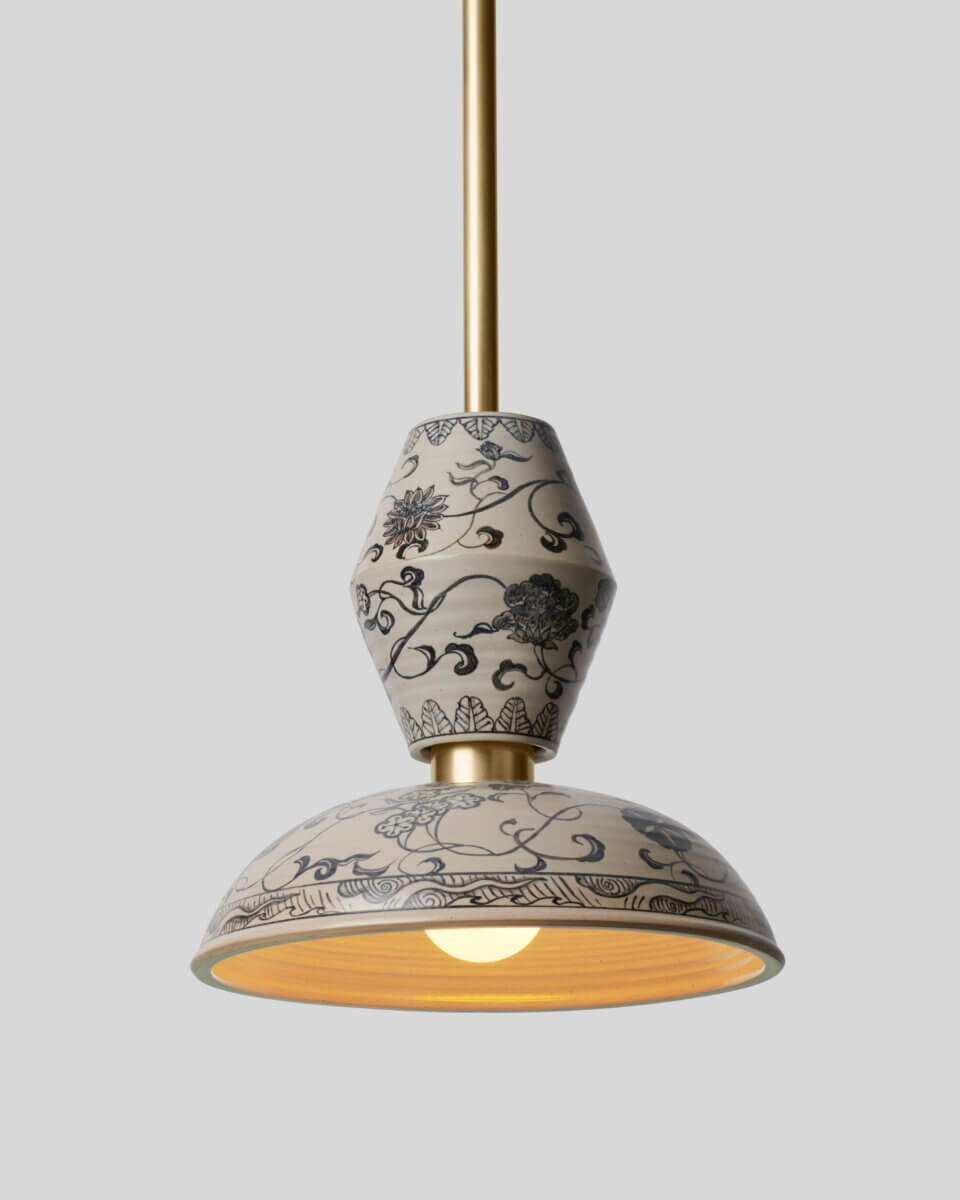
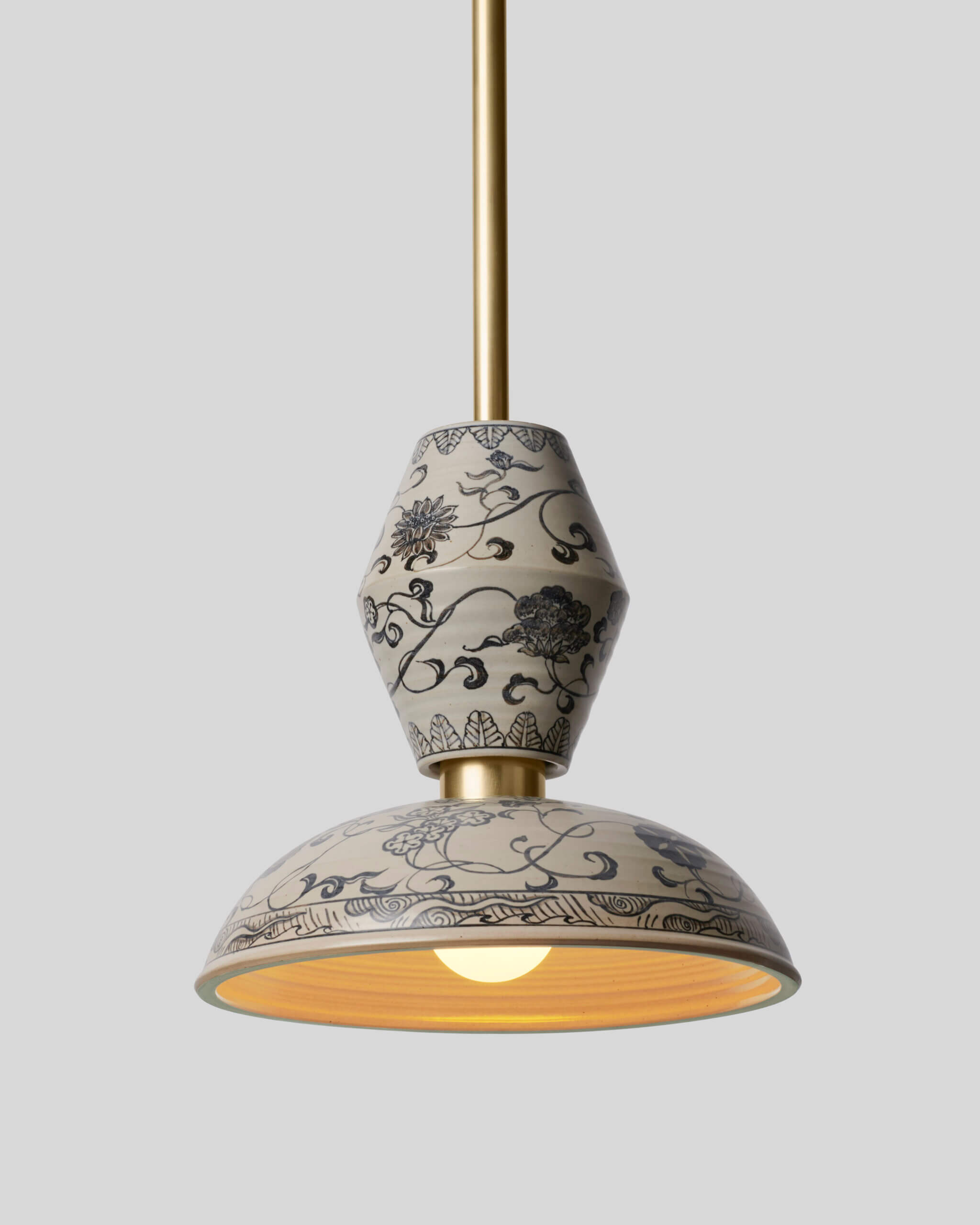
Pilar x Huanxi Round Cone Pendant 02 (Image courtesy of Rosie Li)
There is a growing demand for art-driven, statement lighting in interiors. As someone who has been at the forefront of this shift, how do you see the expectations of your clients evolving regarding the “intelligence” or “intent” behind the design objects they commission?
Clients are increasingly curious about how something is made and why it looks the way it does. They want the background, but I think more importantly they want the object itself to have meaning behind it. The collaborative process is also important. We work with a lot of designers who understand materials and technical specs, so the conversations are increasingly focused on the gesture or the mood they want to evoke. That makes the collaboration much more interesting for us!
Looking ahead to the next phase of the studio, are there specific typologies or scales—beyond lighting—that you are currently focusing on, or is the studio’s path forward primarily about deepening the lighting systems you have already established?
For now, I’m interested in going deeper rather than broader. Jewel Block is still fresh and there’s a lot of territory within this system that we haven’t explored. We also introduced a hand-painted edition to our Pilar x Huanxi collection which is ripe for more variations.
At the same time, I’ve been feeling pulled toward smaller, more intimate objects. Particularly jewelry and decorative hardware. I’m interested in what happens when some of the same ideas we explore in lighting, such as material, repetition and organic pattern are scaled down for hand or body. But I want to make those pieces with my own hands first and return to a direct way of working, where the process of making determines what the object eventually becomes. If those experiments grow into something larger for the studio, I’d like that to happen organically.
Follow Rosie Li on Instagram >>>
Visit Rosie Li’s Website >>>