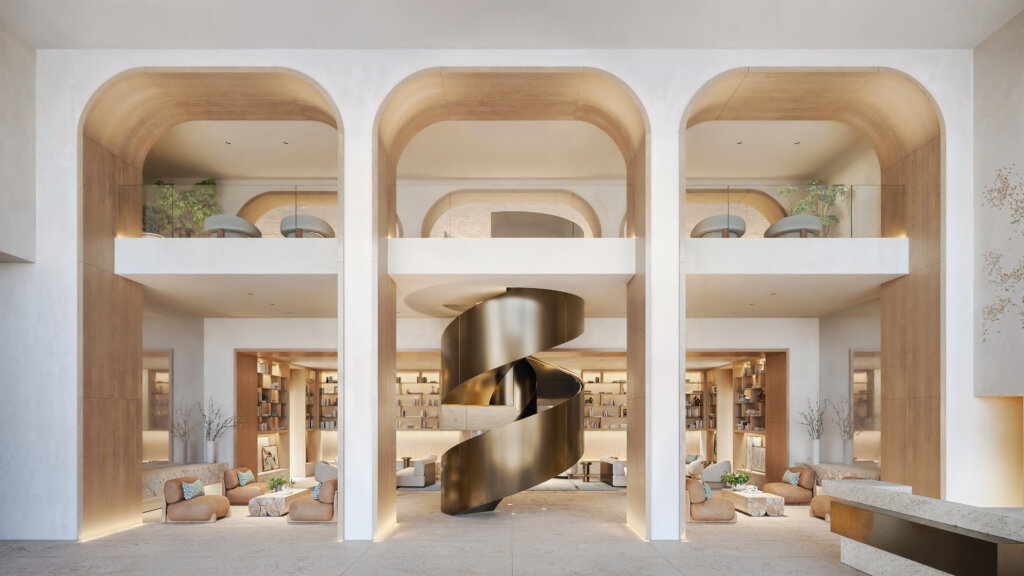
Over the past five decades, the canon of architecture and interior design has undergone recurring waves of ideological reversal. Successive generations of practitioners have attempted to refute Modernism, characterizing its dictates as unyielding. Critics argued that its rationalist tenets lead to a form of one-size-fits-all top-down subjugation, systematically draining architectural environments and design objects of personal narrative, collective expression, and emotional resonance.
Out of this dissatisfaction, Postmodernism arose in the late 1960s, positioning itself as a radical countermovement seeking to dismantle not only the minimalist, pared-back aesthetic of the International Style but also the perceived conformity of mid-century societal behaviors. It also, ultimately, foundered and lost popularity because it was rapidly co-opted by commercial forces that reduced its iconographic irony into superficial flex. Deprived of structural purpose, the counterwave retreated into a primarily artistic medium. Focusing on self-expression and sensionalist surface-level riffs, architects and designers began producing work within isolated, elite silos. In doing so, design veered from the criteria of utility, skilled craft, and site responsiveness. In the subsequent counter-counterwave, modernism was also compromised; misappropriated in garishly boxy, cheaply constructed McMansions.
Many historians and theorists argue that Postmodernism ultimately fell under the larger umbrella of Modernism. In its direct push against the perceivedly rigid convention, the former was still perpetuating and amplifying the latter. Perhaps, like any ideology, the problem lies in blaming an entire, broadly reaching school of thought rather than a few bad actors.
(Image above courtesy of Bassam Fellows, photographed by Michael Biondo)
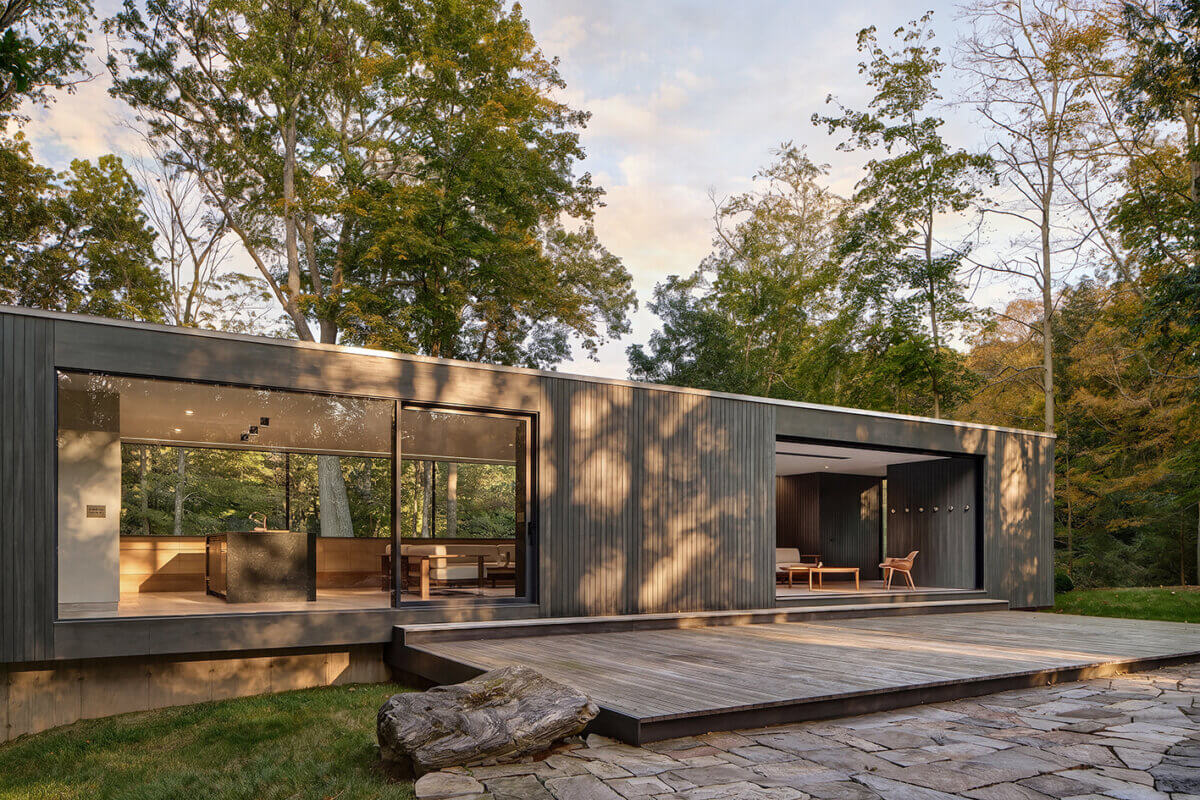
Image courtesy of Bassam Fellows, photographed by Michael Biondo
Since its inception during the Industrial Revolution, modernism has remained a quiet structural foundation through the ebbs and flow of passing fads. Founded in 2003 by architect Craig Bassam and creative director Scott Fellows, multifaceted Connecticut studio Bassam Fellows championed the philosophy as a vital, site-responsive framework rather than just an aesthetic.
Operating from historic sites in New Canaan—Philip Johnson’s Hodgson House and Landis Gores’ Schlumberger Executive Offices—the firm adhered to an ethos of “crafted modernism:” merging the rationality, clarity, and functional simplicity of the movement with warmth and tactile texture of traditional craftsmanship. Serving as a resource for ICFF’s audience, they’ve outlined what that approach entails and in that, how this approach can sustain both practice and output.
Extracting from Total Design
“Modernism believes that design can improve everyday life,” says Bassam. “That basic belief continues to shape how we think about furniture and interiors today. The principles that resonate most strongly are honesty of materials and construction, clarity of purpose, human scale, and the integration of furniture and architecture.”
Rather than scattering them across a space, the studio carefully introduces furnishings that amplify the guiding but not necessarily intransigent vision of a space. This holistic methodology draws directly from the classic Modernist concept of Gesamtkunstwerk. We have always been drawn to the idea of ‘total design.’
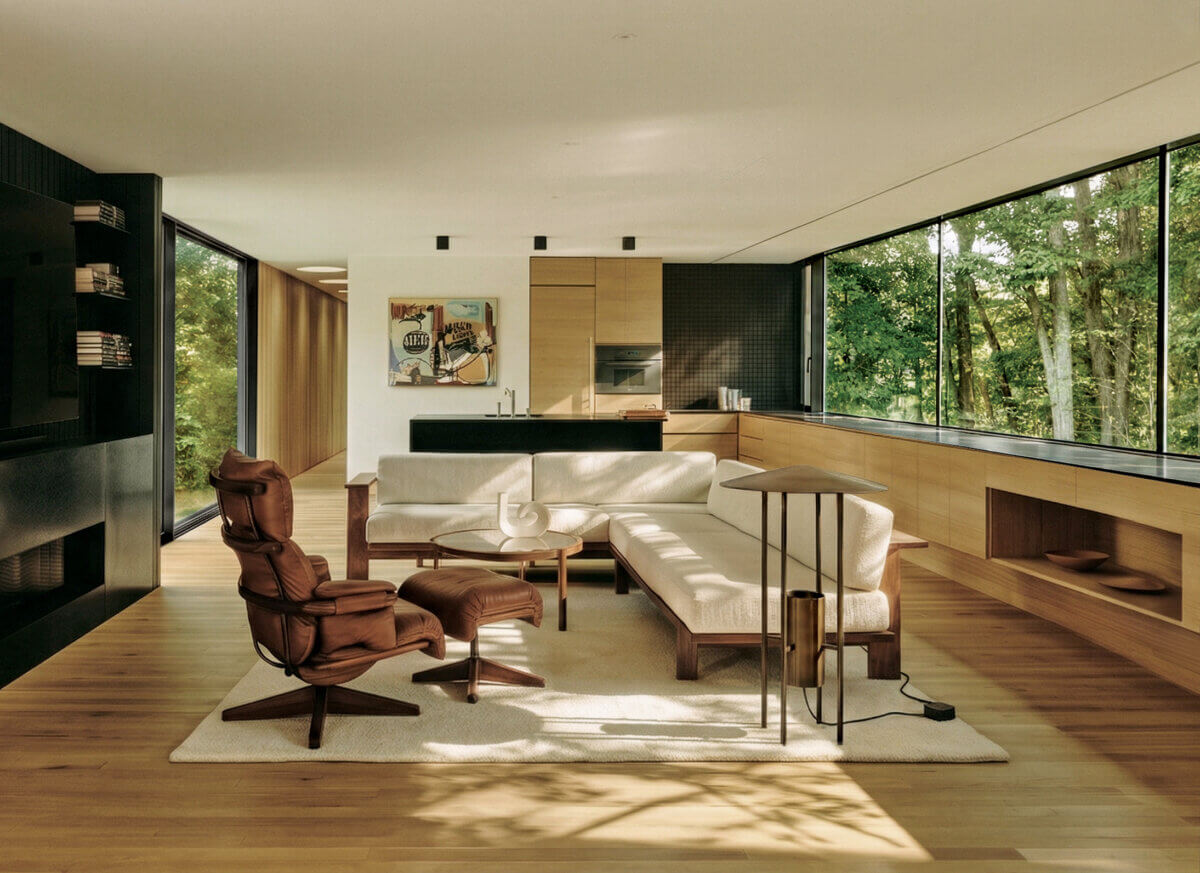
Image courtesy of Bassam Fellows, photographed by Michael Biondo
For the studio, this isn’t an abstract academic theory. “Modernists design from the inside out, starting with a floor plan,” says Fellows. “Our product development flows the same way. By planning specific interior architecture projects, we identify needs that develop into new furniture pieces.” First developed according to site specific requirements, these designs are ultimately extracted and turned into standalone collections that balance idiosyncrasy and universality.
Bypassing Stylistic Extremes: Rigor, Warmth, and Balance
Because design culture is prone to shifting between decorative maximalism and clinical minimalism, sustaining relevance requires a degree of transcendance. “Modernism remains a constant because its strongest principles give us a way to judge design beyond the prevailing trends,” says Fellows. “Does it serve a purpose? Are the proportions right? Are materials being used intelligently? Does it enrich the experience of space? These design principles form our design intent as we strive for timelessness.” That intrinsic quality that should never be confused with sterile uniformity or cold detachment.
A persistent misconception in contemporary culture equates Modernism with stark, uninviting emptiness. “Timelessness doesn’t have to mean boring,” Bassam adds. “We look to balance opposites. Simplicity can also have material richness and exude warmth. Clarity of structure can coexist with sensuality and sculptural form. Industrial precision can live in harmony with the softness of handicrafts.”
This equilibrium is informed by the duo’s personal stewardship of historic architectural landmarks. “Living with and restoring Modernist architecture has reinforced this for us,” says Fellows. “Abundant light, natural materials, and a strong relationship between furniture and space continues to feel relevant and even refreshing. We approach our own work with that same ambition: to create things people will want to keep, use, and cherish for the long term.”
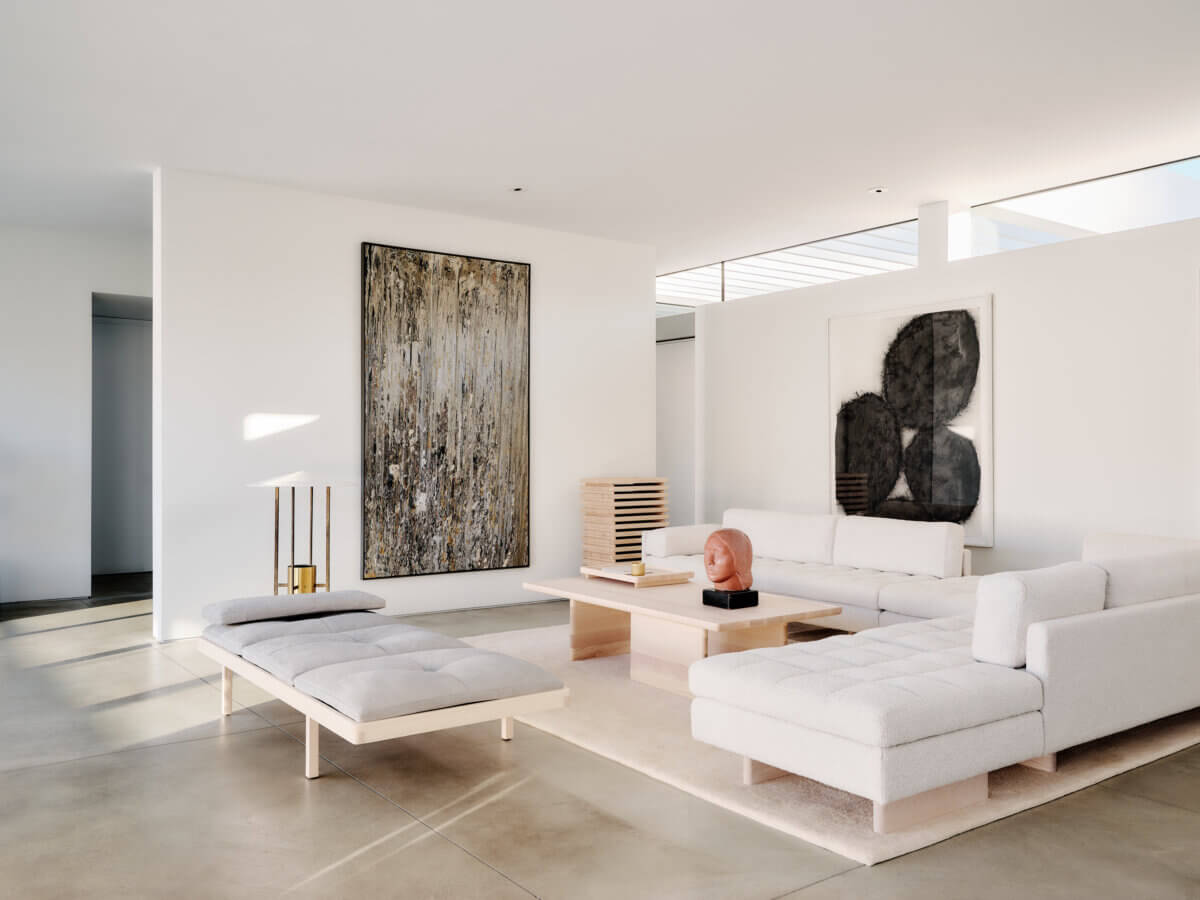
Image courtesy of Bassam Fellows, photographed by Michael Biondo
Evolution Without Compromise: Domestic Fluidity and Technology
To remain relevant, a philosophy must adapt to changing societal structures without abandoning its key principles. “We need to keep asking ourselves how design can improve life as circumstances change,” says Fellows. “Today, we continue to see the blurring of boundaries between home, work, and hospitality. The same room may need to support concentration, dining, and socializing. Furniture has to accommodate these overlapping demands while retaining comfort, character, and a clear sense of purpose.”
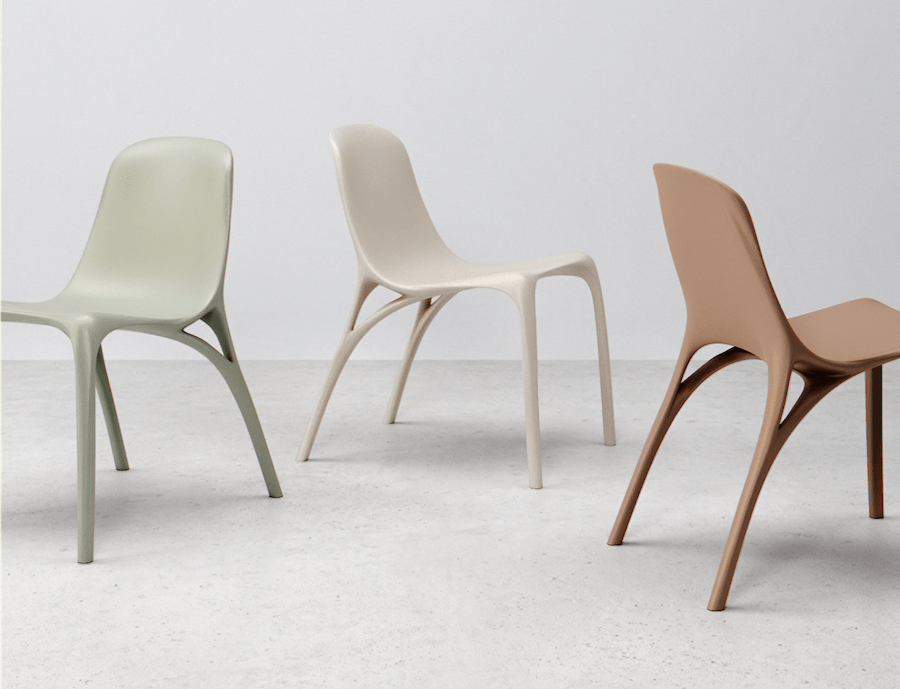
This pragmatic agility led directly to the creation of the studio’s iconic Ramus Chair. “Our Ramus Chair grew out of this thinking,” says Bassam. “We wanted to bring the warmth of carved wood and the softness of lounge seating to a chair designed for working.”
In a similar way, the studio navigates rapid technological advancement by drawing a strict distinction between technology embedded directly within a product and technology used as a manufacturing tool. Rather than inserting gadgets into furniture that risk quick obsolescence, the studio leverages the latest digital machinery to push the boundaries of woodworking, marrying computational accuracy with meticulous hand finishing, almost as if to fulfil the precision early modernists were after. This also allows them to respect material integrity and ensure a better degree of durability.
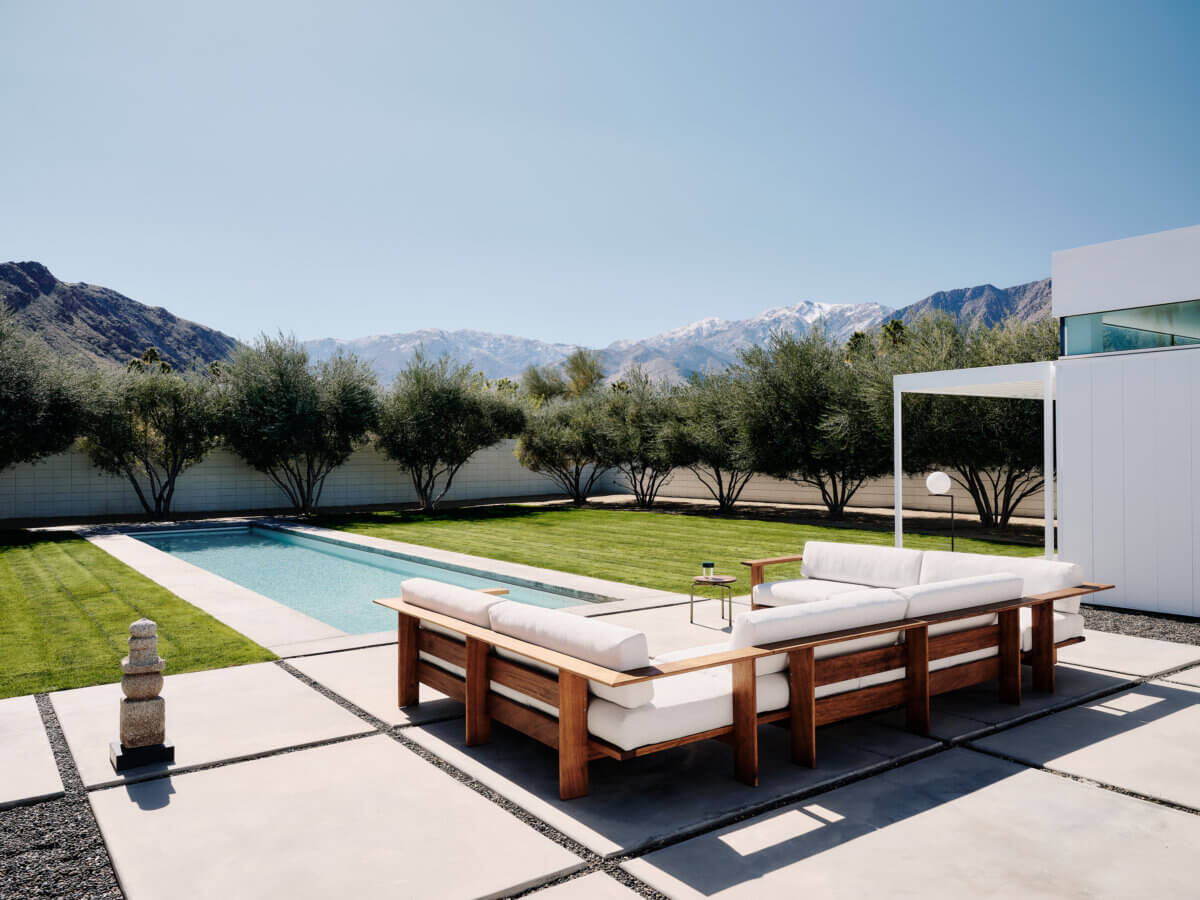
Image courtesy of Bassam Fellows, photographed by Michael Biondo
Curating Spaces with Intent: Advice for Architects and Collectors
When advising interior architects, collectors, and design enthusiasts on selecting furnishings from international and domestic makers, BassamFellows urges a return to architectural fundamentals. “Our advice starts with the floor plan,” says Bassam. “What are the dimensions and orientations of the rooms and how will the spaces be lived in? Architecture, light, scale, and daily routines should guide the selection and create a framework for mixing different pieces; sourcing only those pieces that have a place.”
Within that structural map, spaces require an intentional balance between expressive focal points and understated functional seating and storage. Giving objects breathing room allows their proportions and material qualities to articulate themselves fully. “A collection develops depth through relationships: between sculptural and restrained forms, different materials, and objects made decades apart,” says Fellows. “Allow some of those relationships to emerge over time. Often, we have waited years for the perfect pieces to complete a space.” He emphasizes evaluating the intrinsic craft knowledge and geographic heritage carried in a piece.
Experiential Choreography: Spatial Flow in Practice
For BassamFellows, interior design is the continuous sequencing of spatial reveals rather than the static arrangement of decorative furniture. This focus on experiential choreography is evident in their architectural projects as well as their immersive gallery installations, such as those they devised for R & Company at gallery fair Design Miami.
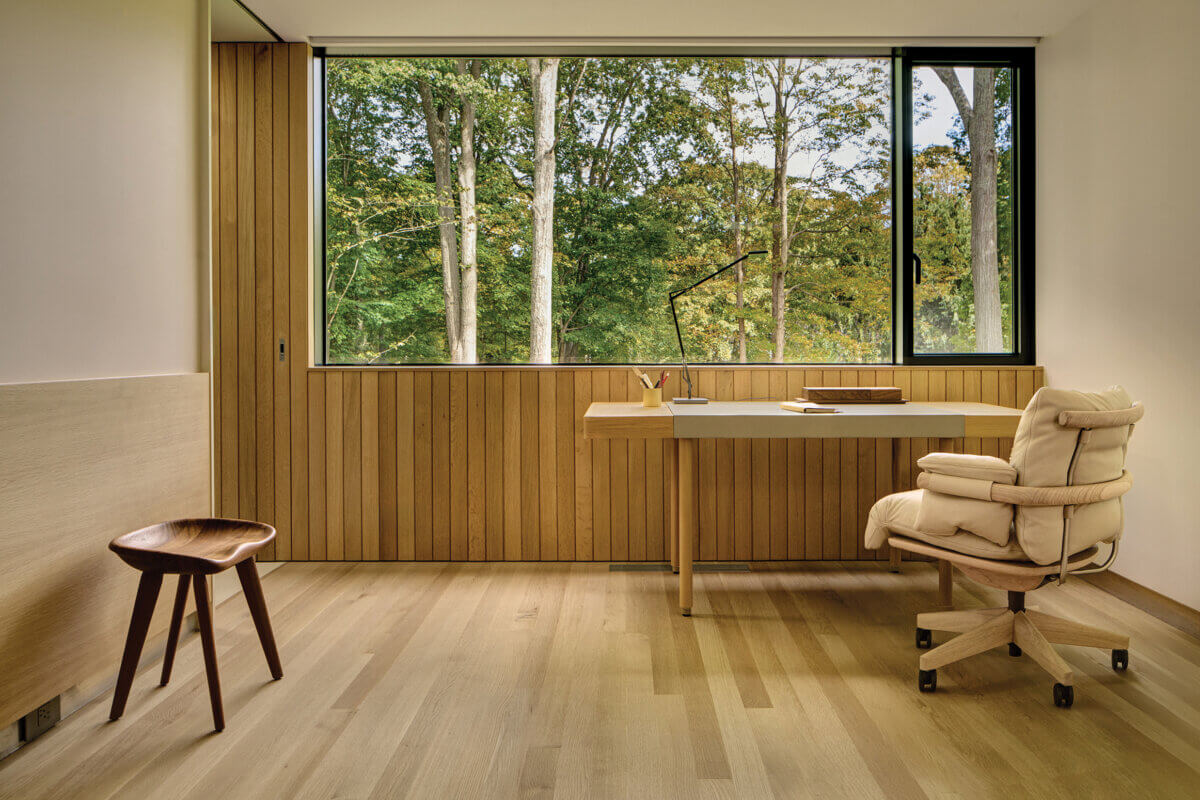
Image courtesy of Bassam Fellows, photographed by Michael Biondo
“We begin by thinking about how someone moves through a space and what unfolds along the way,” says Bassam. “What do you see from the entrance? What draws you forward? Where do you pause, sit, or find a more private moment? Those relationships establish the interior’s rhythm and help determine where the furniture belongs and how you experience the architecture.”
Architectural elements like freestanding partitions, architectural screens, and strategically oriented furniture clusters serve as structural tools to shape movement while maintaining visual continuity throughout an interior. “An opening can frame a view; a change in height can create enclosure; a partial screen can invite exploration,” says Fellows “The back of a sofa or the orientation of a group of chairs can also define a space and shape the route through a room. Furniture participates in architecture.”
This philosophy extends directly to how the studio presents its collections to the public. At international design fairs, BassamFellows turns staid booths into micro-environments that allow visitors to experience furniture within spatial contexts closer to the real thing. “Vsitors can experience furniture in relation to other pieces, rather than as isolated objects,” says Bassam “Approaching a chair, walking around it, and sitting in it beside a table gives a fuller understanding of its scale, material, and purpose.”
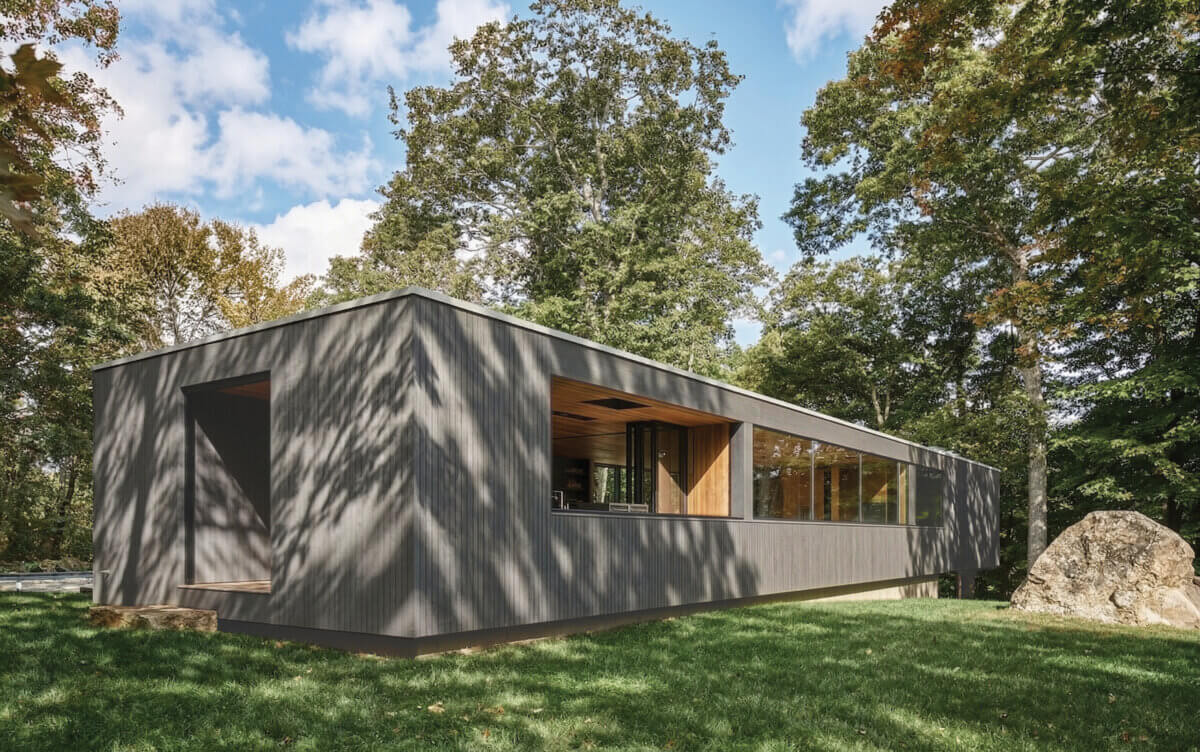
Image courtesy of Bassam Fellows, photographed by Michael Biondo
Comparative Case Studies: Palm Springs and New Canaan
The versatility of the Bassam Fellows approach is demonstrated in two contrasting residential projects: a light-filled desert pavilion in Palm Springs, California, and a wooded guest sanctuary in New Canaan, Connecticut. While both residences share an acute sensitivity to landscape, site orientation, and natural illumination, their material expressions reflect the distinct geographic settings.
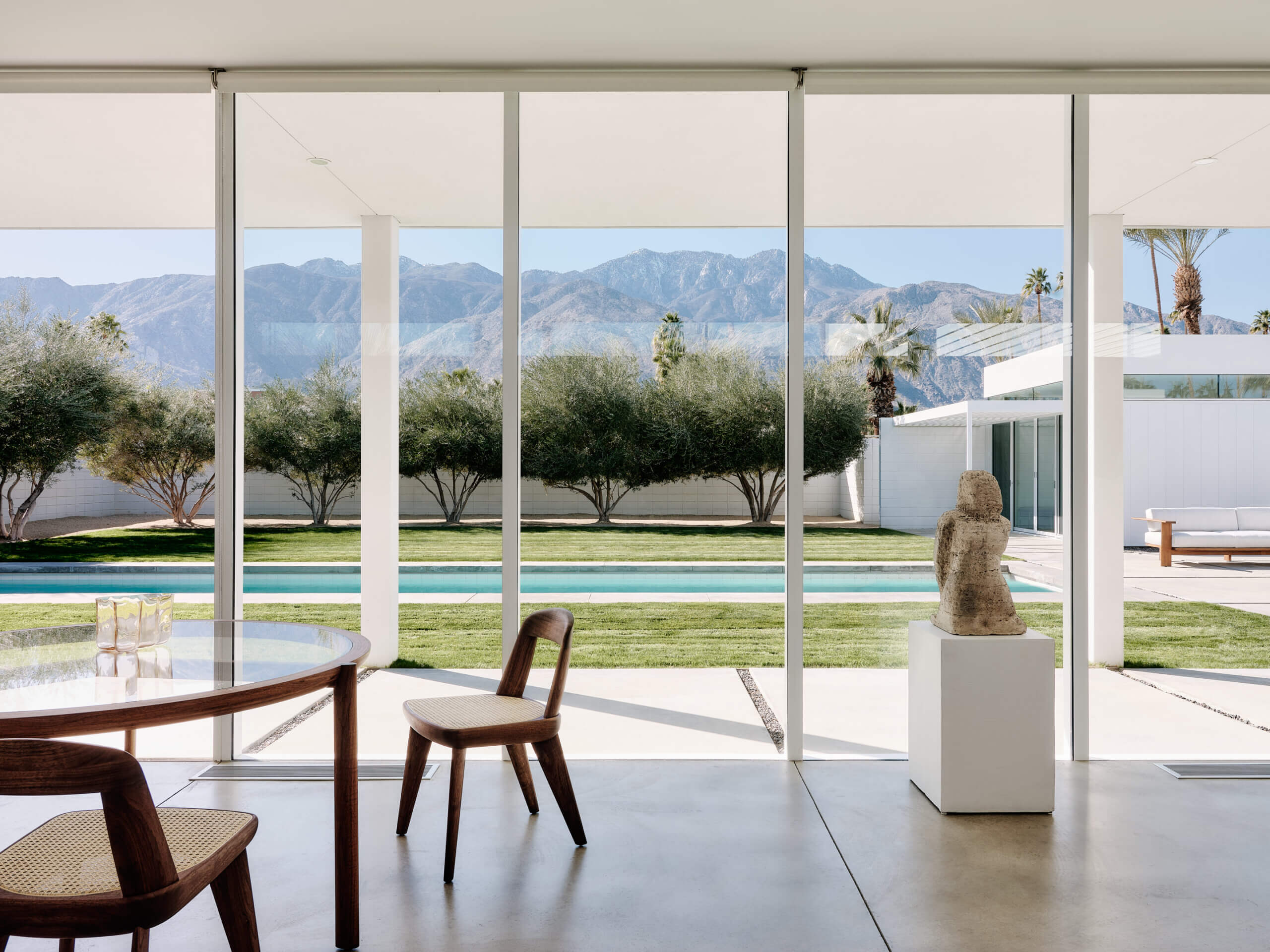
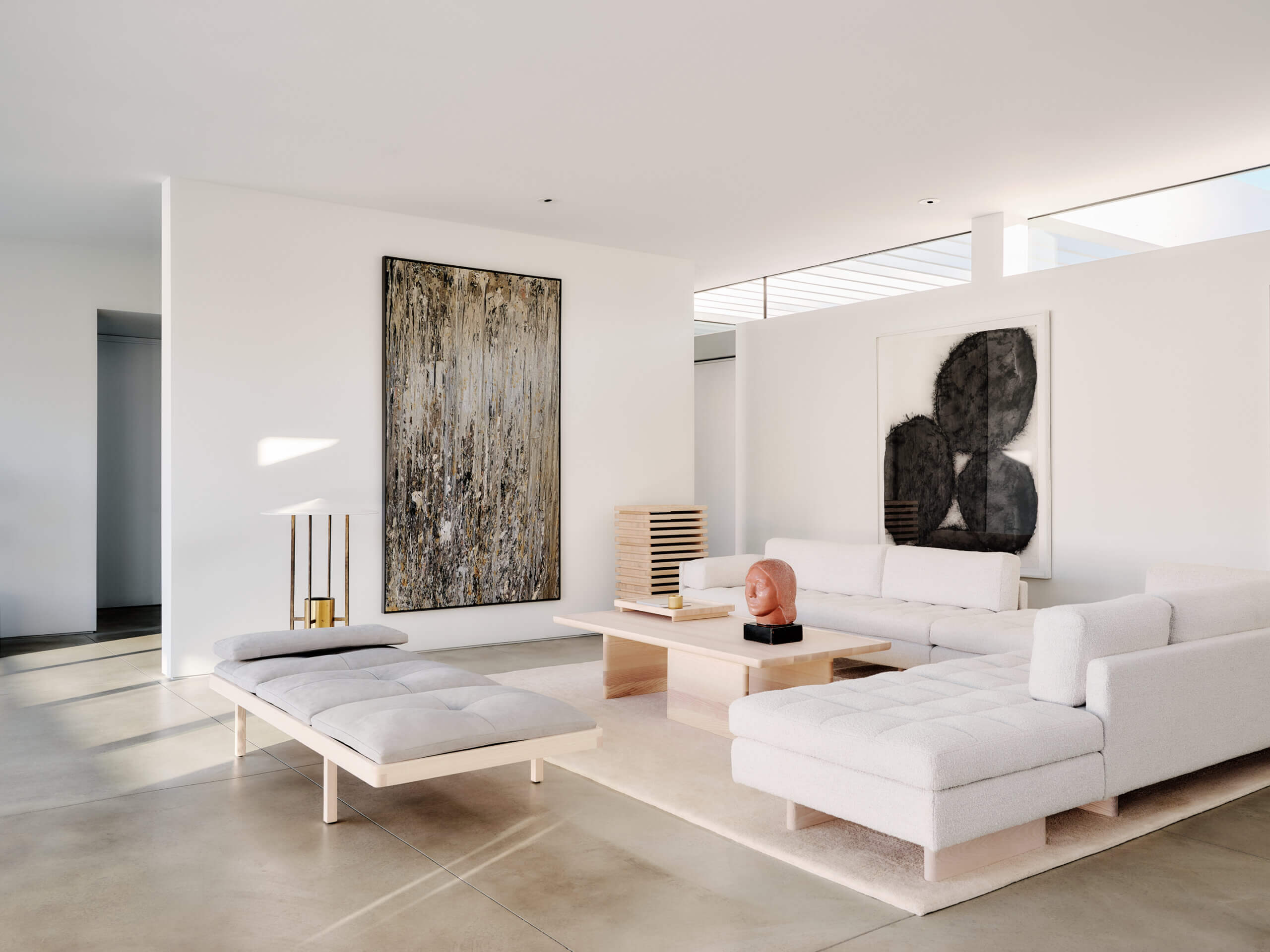
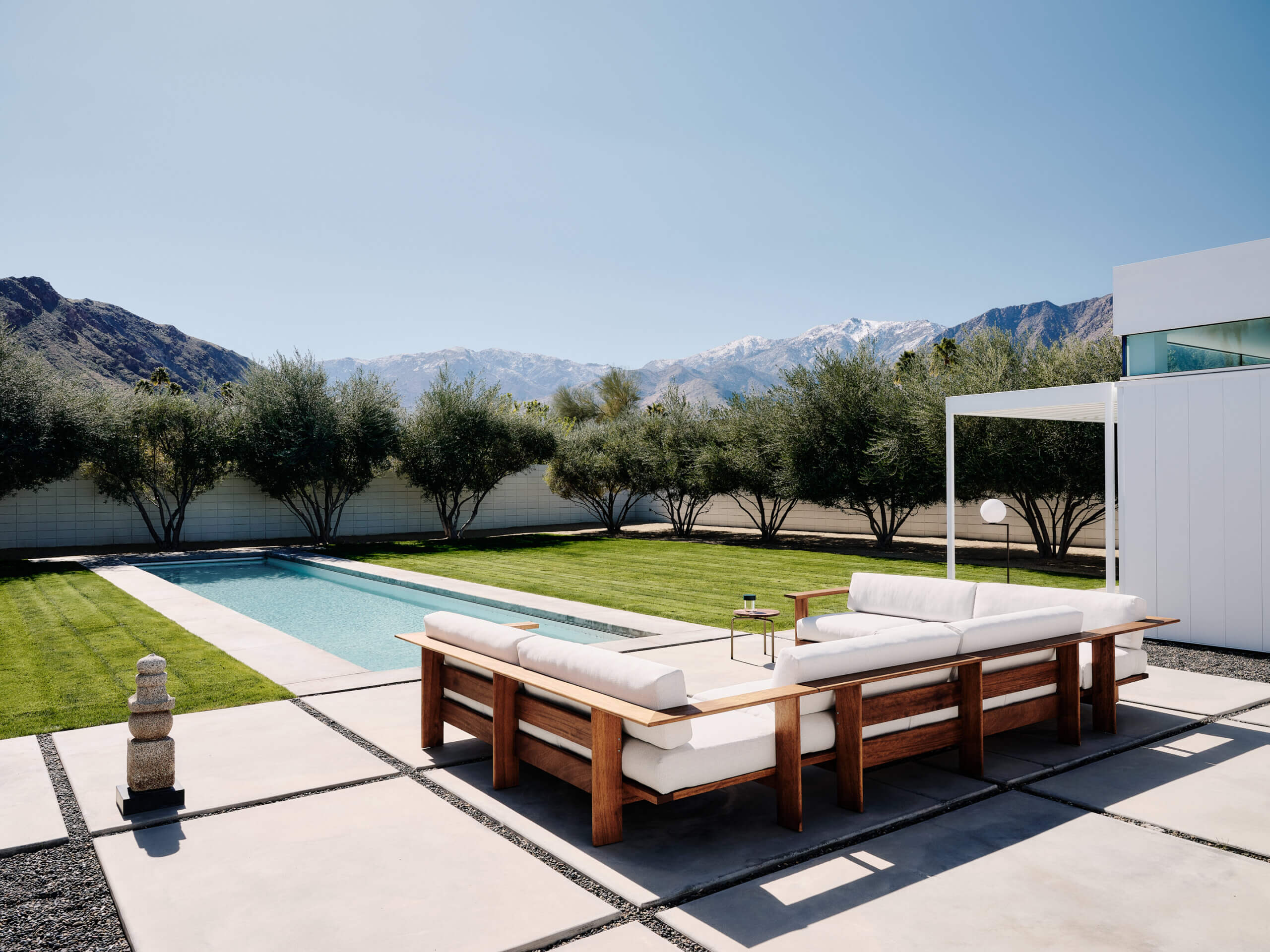
The Palm Springs project is a modern steel-and-glass residence situated within a private courtyard walled with crisp white concrete block. “To complement the bright California sun, we kept the interior color palette light, but warmed the space with natural wood—bleached white ash with pale leathers and textiles in the living space and hints of oiled walnut in the adjacent kitchen and dining area,” says Fellows. “The space feels like a spacious garden pavilion, amplified by floating all the furniture in the room.”
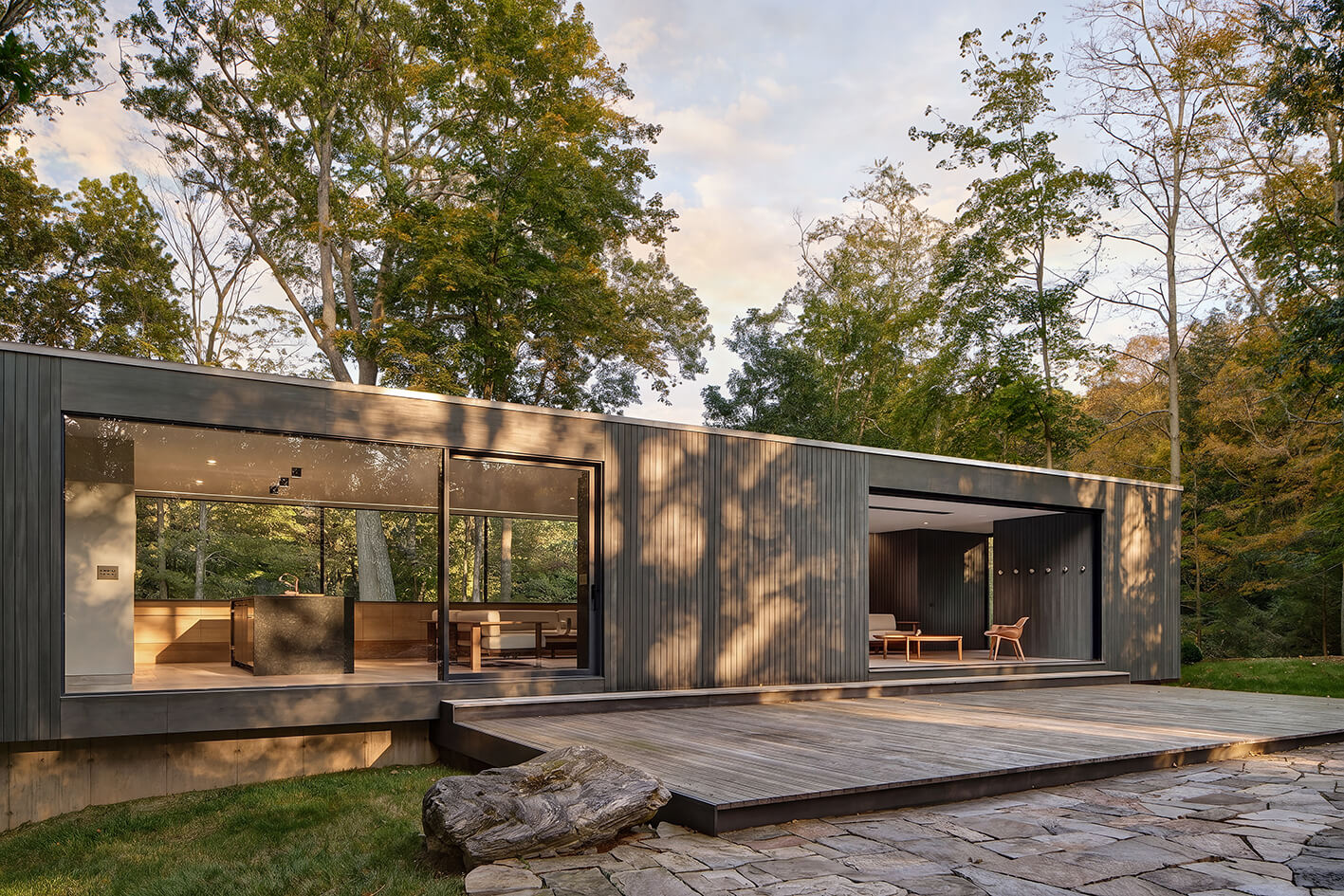
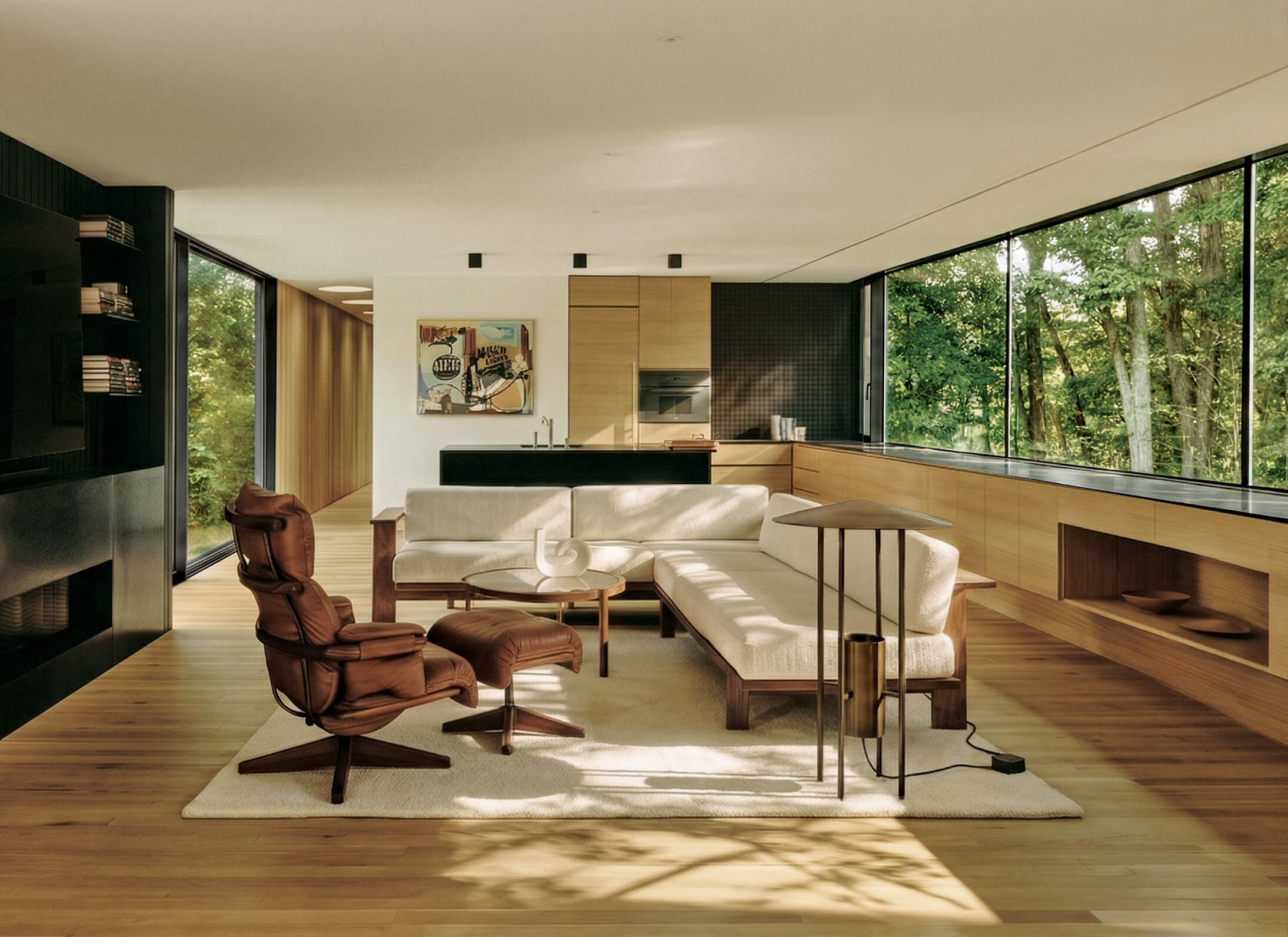
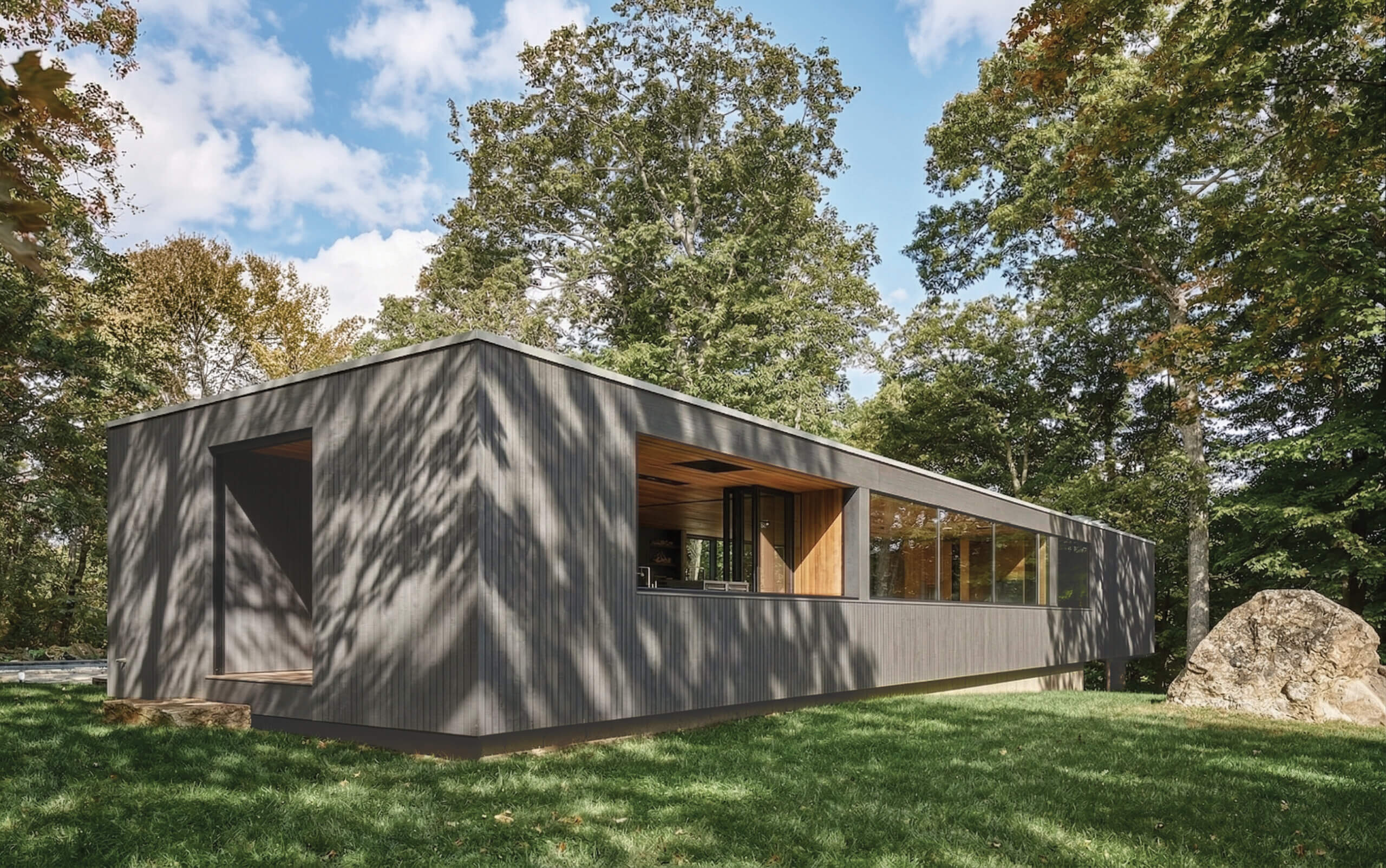
In contrast, the New Canaan project required a comprehensive, top-view execution of total design. Nestled among dense woods and dramatic rock outcroppings, the project called for an entertainment and guest pavilion positioned near an existing home and swimming pool. Bassam Fellows designed the entire physical experience, spanning architecture, interior space, and custom furnishings.
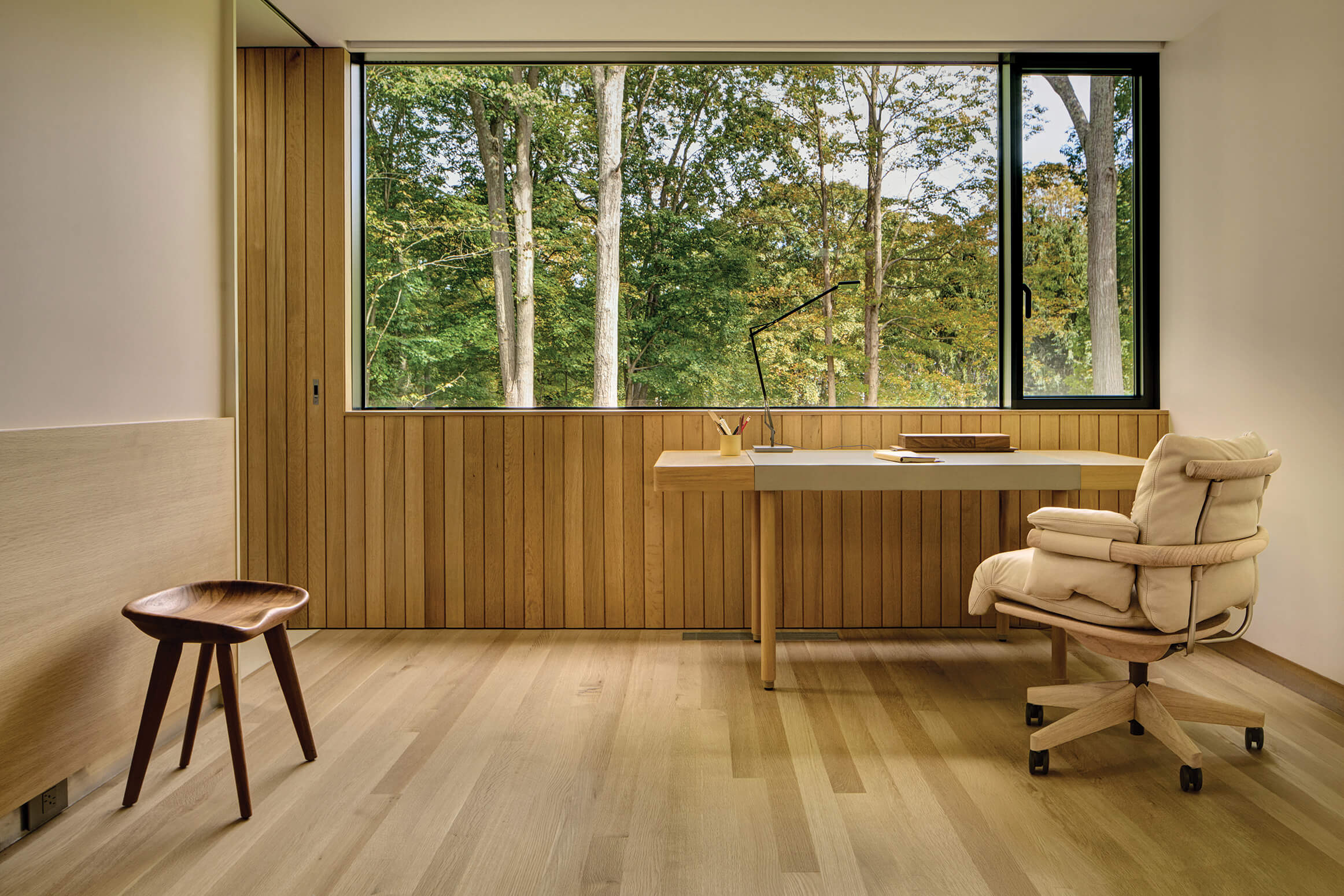
“The multi-purpose program for the space necessitated a simplified layout with built-in oak cabinetry extending from the kitchen through the living room into the covered outdoor terrace,” Craig Bassam details. “Materials reflect the wooded setting with pale oak for interior floors, walls, and cabinetry.” By extending the same wood species continuously from interior living areas onto the sheltered terrace, the design dissolves the boundary between building and landscape, realizing the Modernist ideal of seamless indoor-outdoor cohesion.
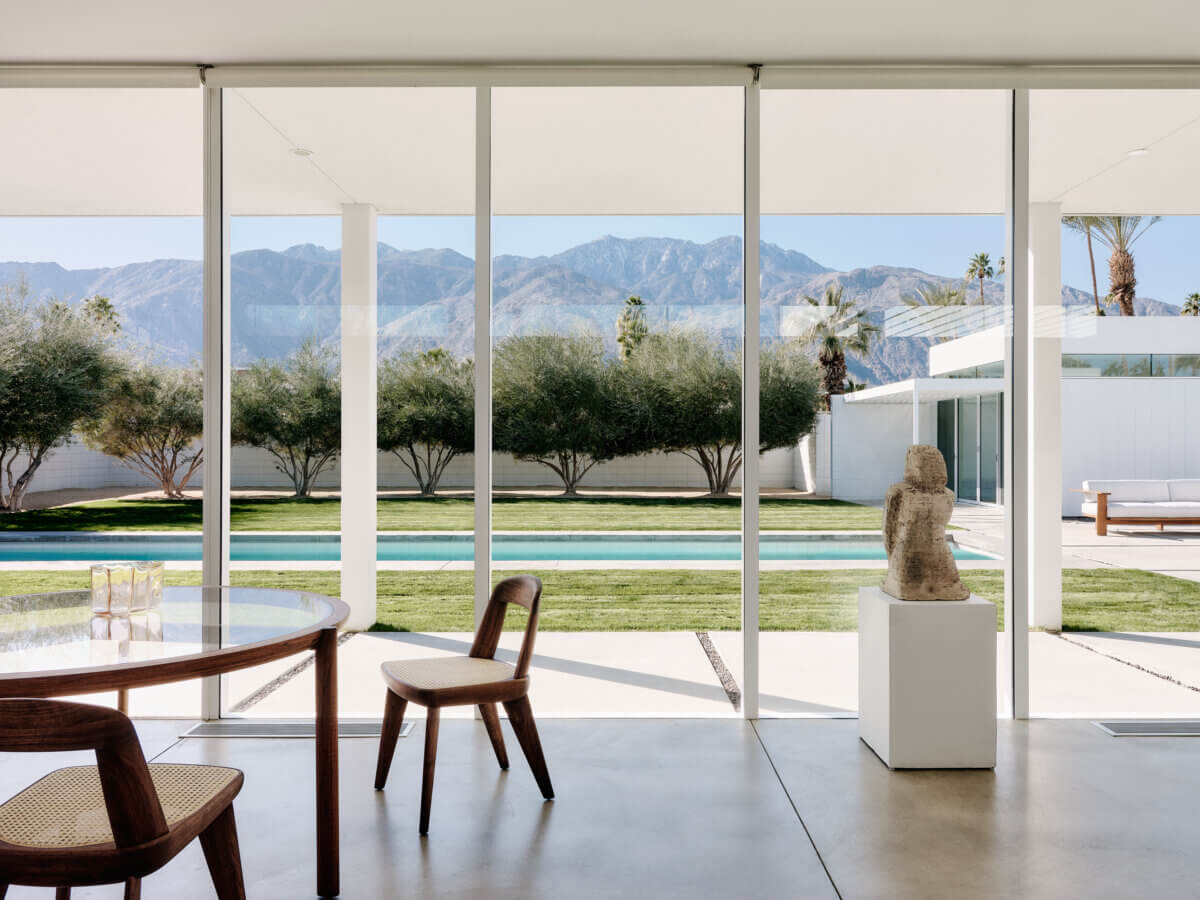
Image courtesy of Bassam Fellows, photographed by Michael Biondo
The Unbroken Line of Modernist Thought
“We think there is a fundamental misunderstanding of Modernism that is often confused with the austerity of Minimalism,” says Fellows. “Warmth, texture, nature, detail, beauty, and comfort are all central to the Modernism we value. Reducing a room to fewer objects places greater demands on everything that remains: the proportions, the quality of light, the furniture, and the materiality. Emptiness is not a shortcut for good design.”
Furthermore, treating Modernism purely as a nostalgic homage misses its true purpose. “There is a tendency to treat Modernism as a historical, mid-century modern style and a collection of iconic forms,” says Bassam. “Those works deserve study, but their real value is the thinking and experimentation behind the design. The iconic creations of historical masters were answers to the technological and societal questions of their time. “We’re not repeating their appearance without examining present needs; continuing a line of thinking rooted in the principles of Modernism: solving real functional problems through material honesty, structural clarity, and spatial harmony,” he adds.
As stylistic fashions alternate between extremes of theatrical maximalism and bare-bones minimalism, the work of Bassam Fellows serves as a compelling reminder of design’s higher calling. By maintaining an unbroken connection to Modernist principles while responding flexibly to contemporary needs, Craig Bassam and Scott Fellows demonstrate that true rigor never goes out of style.