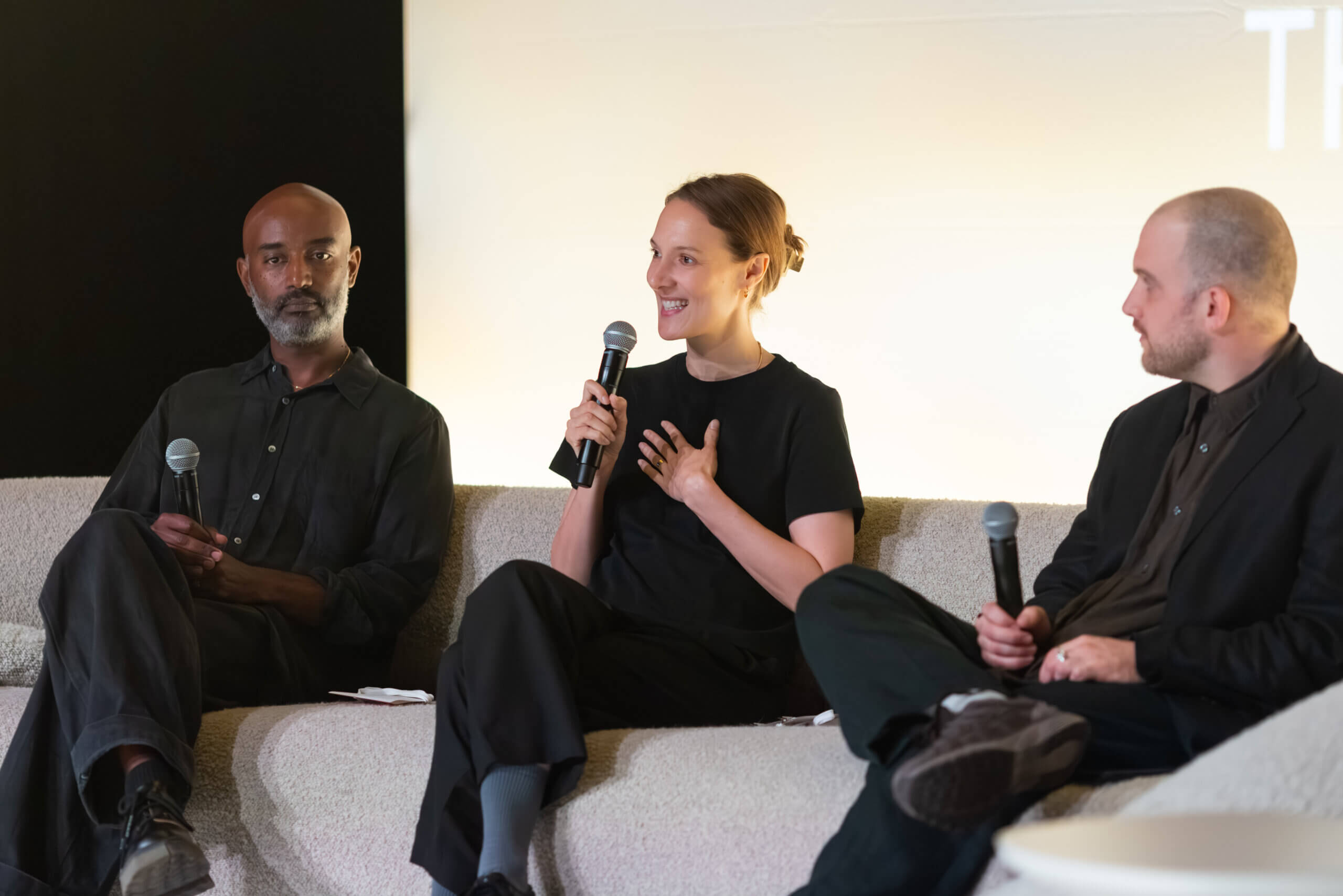
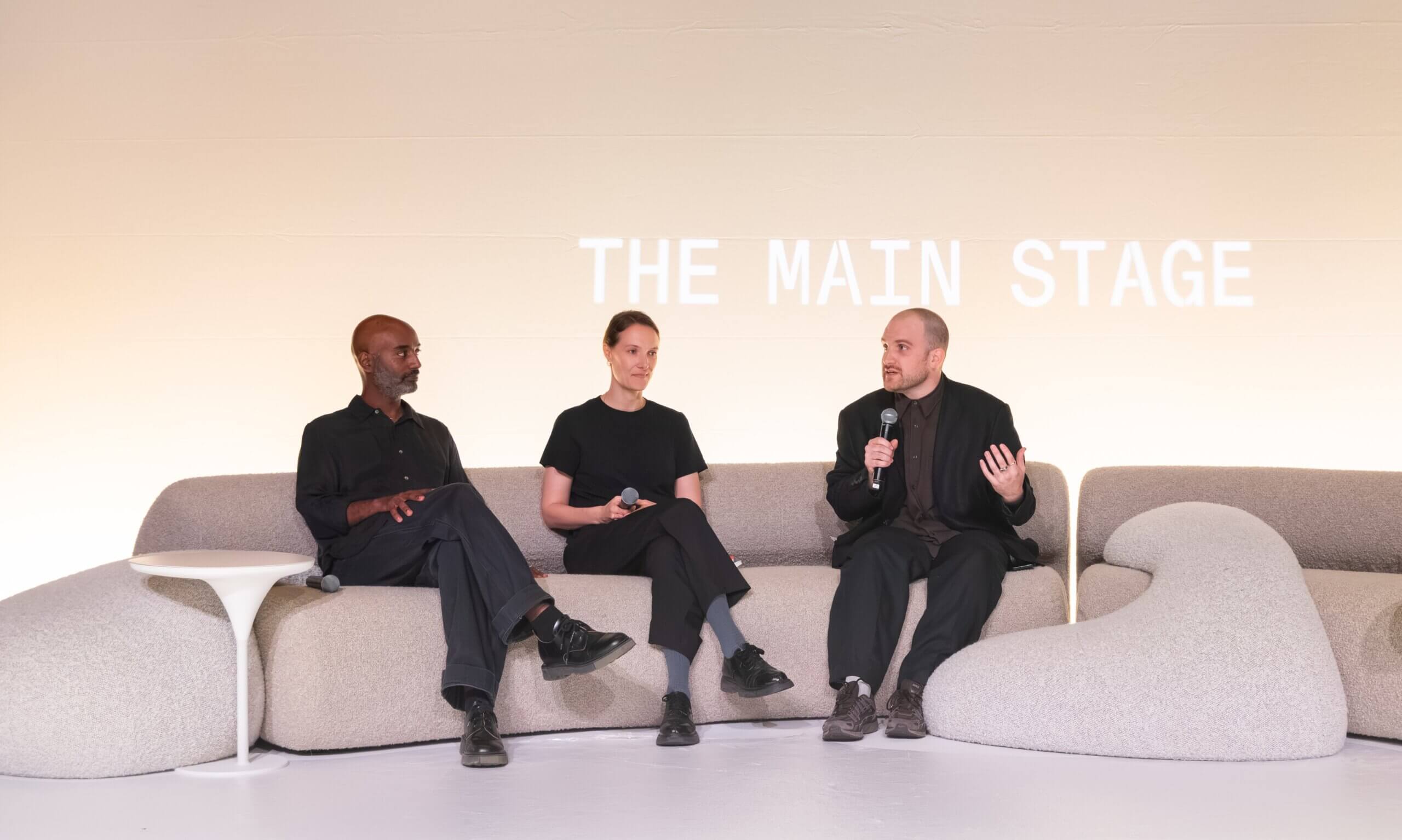
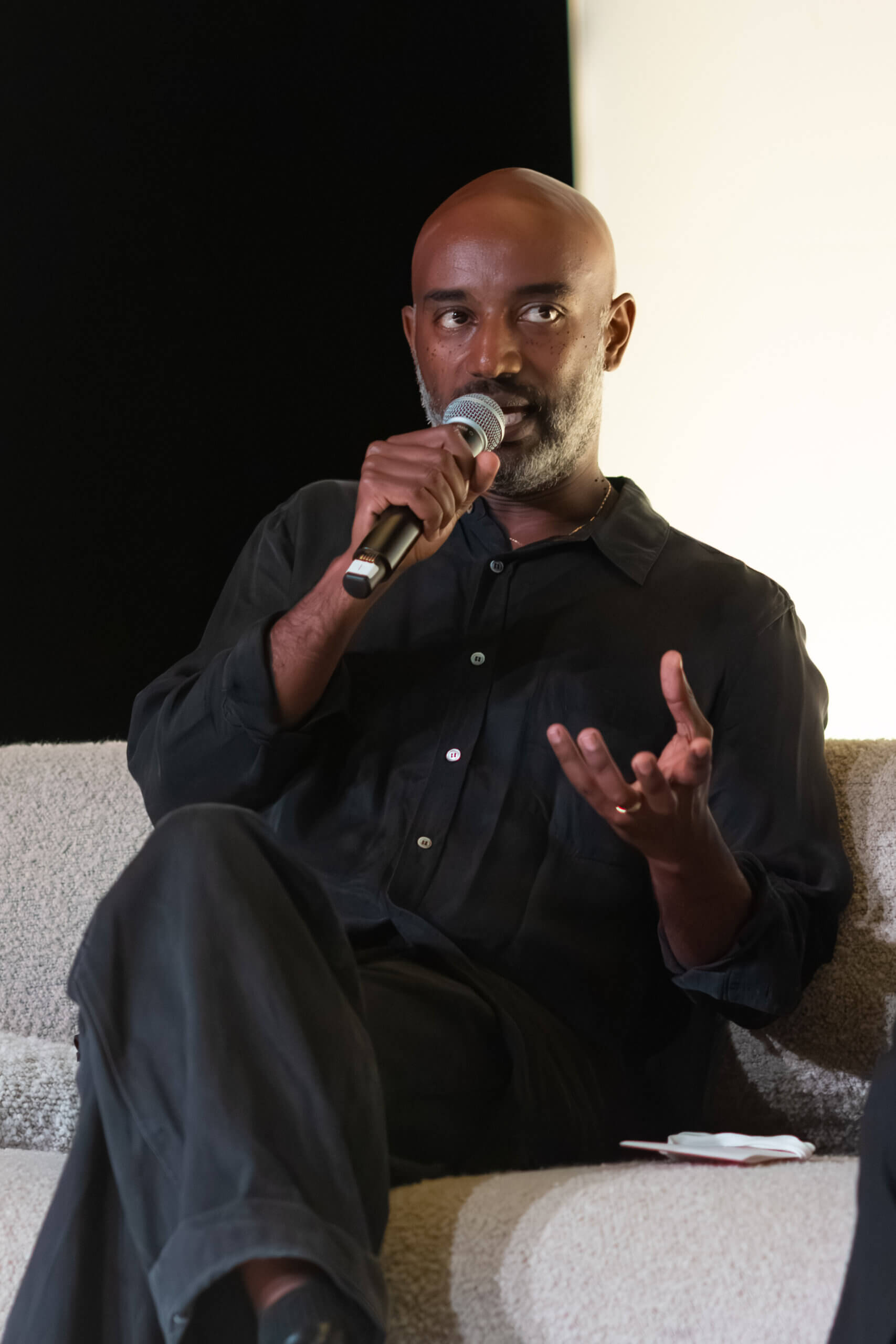
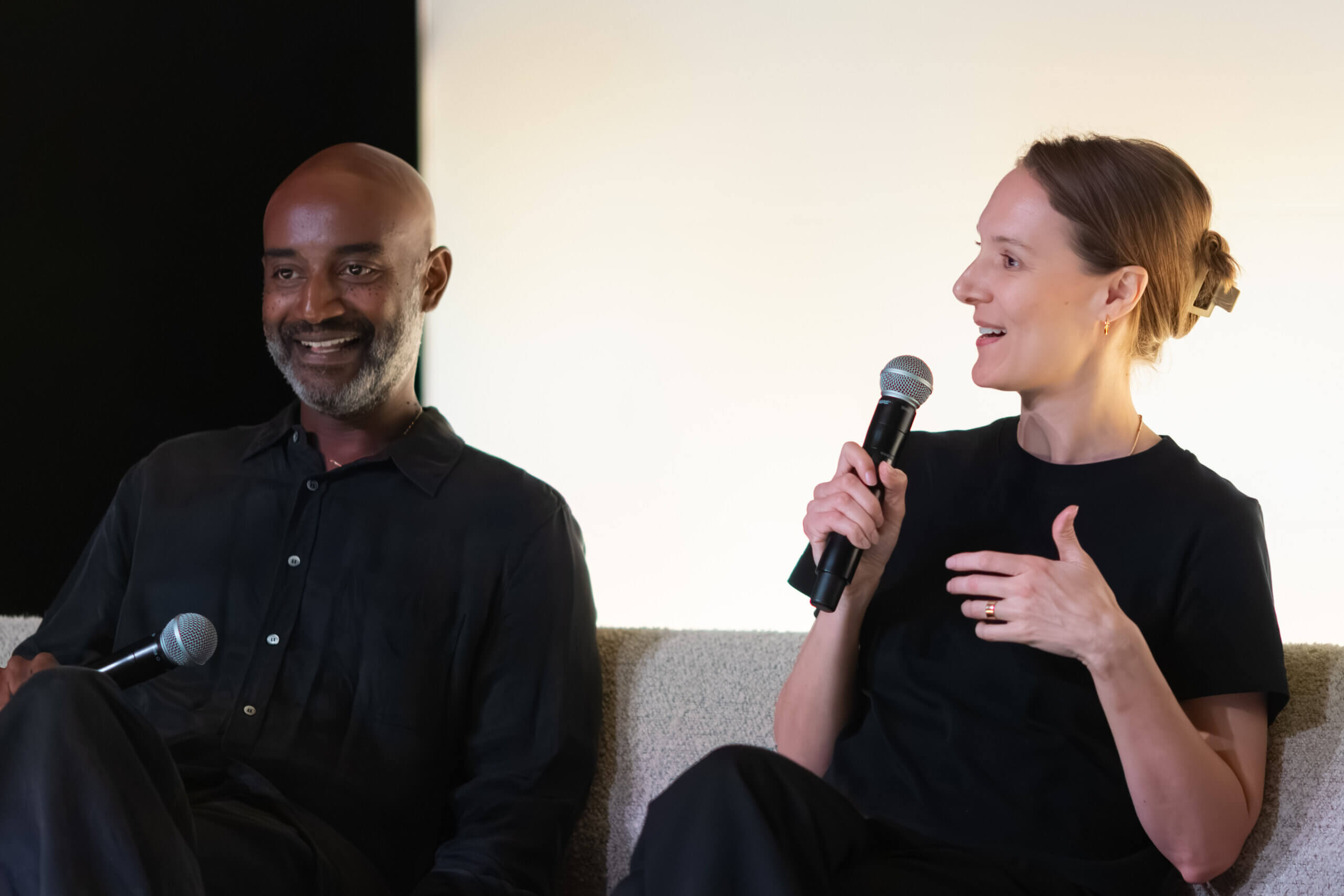
A pavilion stands for a season, then it’s gone. For AD-WO, the New York-based art and architecture practice led by Emanuel Admassu and Jen Wood, that short life is the opportunity. On the ICFF 2026 Main Stage, the two architects joined Dezeen editor Ben Dreith for “Pavilions – Between Architecture and Design,” a conversation about how temporary structures can carry history, myth and memory.
(Image above courtesy of Jenna Bascom Photography | Emanuel Admassu, Jen Wood, and Ben Dreith on the main stage at ICFF 2026)
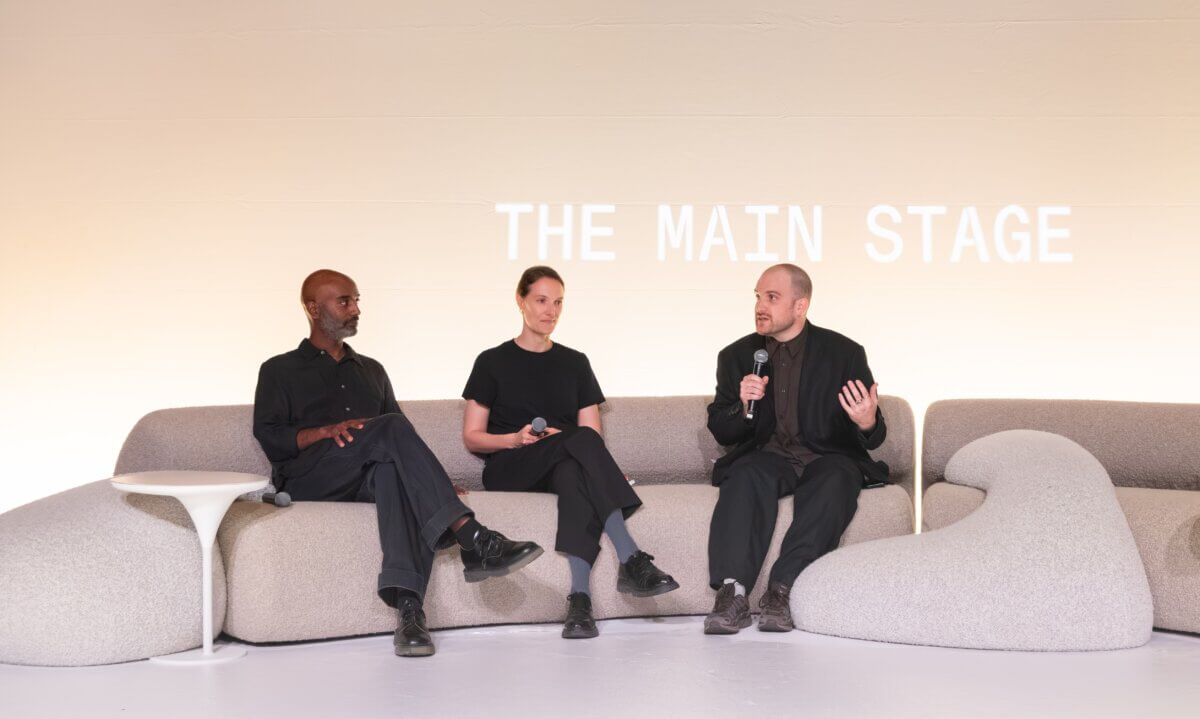
Image courtesy of Jenna Bascom Photography
Temporary Architecture as a Space for Experimentation
Dreith opened by naming what makes pavilions and fair booths so valuable to designers. He described “using these pavilions, these temporary structures… as an opportunity for research, experimentation without some of the constraints that you get when building something more permanent.”
ADWO works in exactly that space, and its research is rarely solitary. “Debate and conversation is a major part of the way we think about research,” Admassu said. The studio collaborates with local communities, academic networks and other knowledge systems, which deliberately dissolves the idea of a single authorial voice.
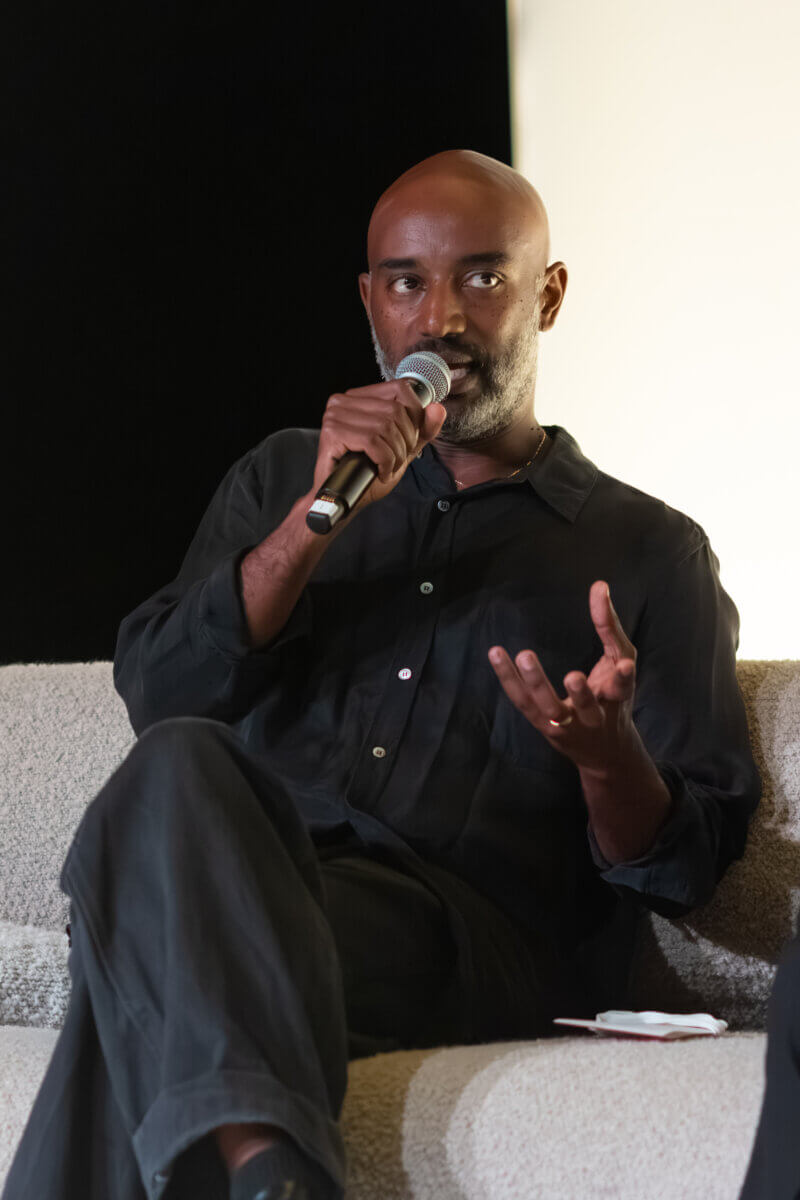
Image courtesy of Jenna Bascom Photography
Material Fiction and the Aliveness of Matter
Wood explained the idea that drives much of the studio’s work. “I have an almost exclusive commitment to fiction,” she said. “Fiction is a way for us to kind of expand the meaning and the logic behind the material.”
That approach treats materials as alive, not inert. By drawing on narrative and mythology, ADWO uses matter to surface histories that have been omitted or erased. At MoMA, the studio worked with magnetite sand from the Mid-Atlantic Ridge to evoke the Middle Passage and underwater mythologies.
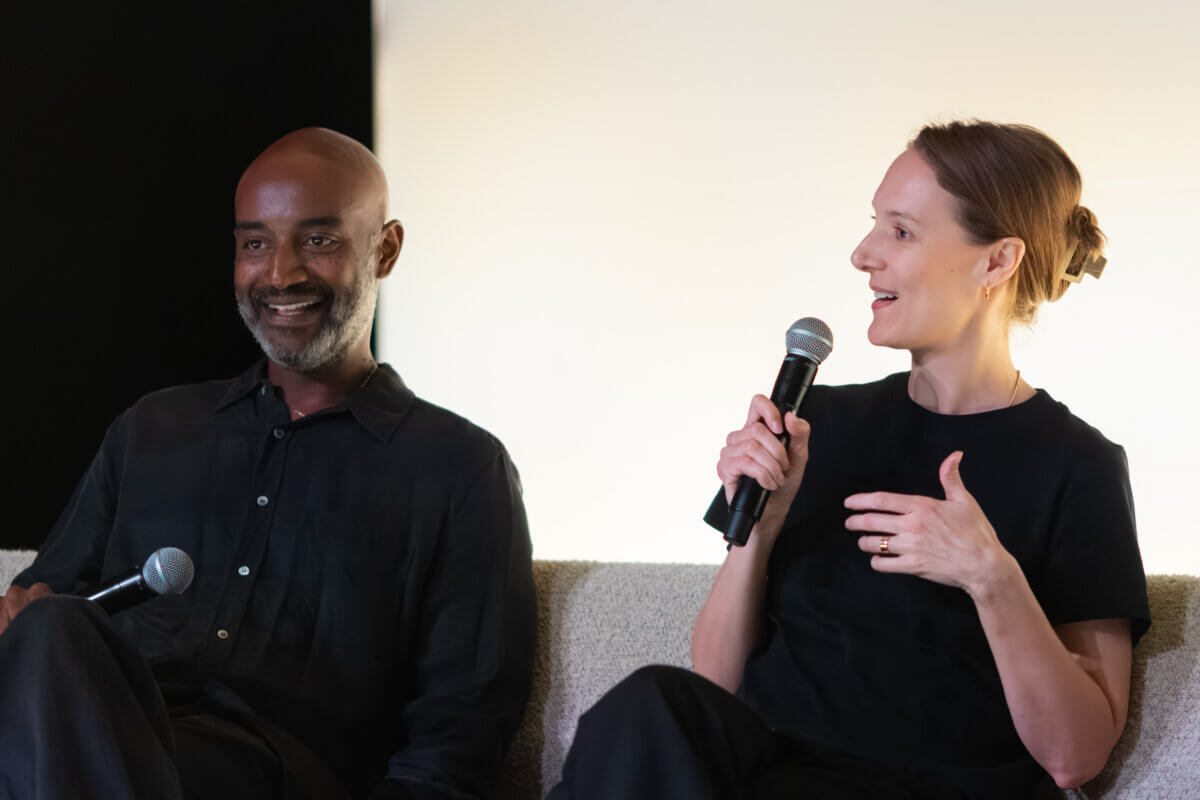
Image courtesy of Jenna Bascom Photography
Weaving as Spatial Intervention
Weaving connects much of ADWO’s thinking. For the Venice Architecture Biennale, the studio developed enormous 3-by-6-meter tapestries with a Dutch weaving lab, exploring sovereignty and the compound houses of Addis Ababa. Hand-woven sculptures at Brooklyn Botanic Garden pushed those material logics further.
The same idea shapes how Admassu and Wood see the built environment. Architecture isn’t a blank slate. It’s a new thread woven into dense physical and historical fabric. Wood embraced that complexity: “There’s like possibility in what is unclear.” To hear the rest of the conversation and explore the panelists’ insights in greater depth, listen to the complete session below:
Want to listen to other talks? SEE OUR 2026 REWIND PAGE >>>