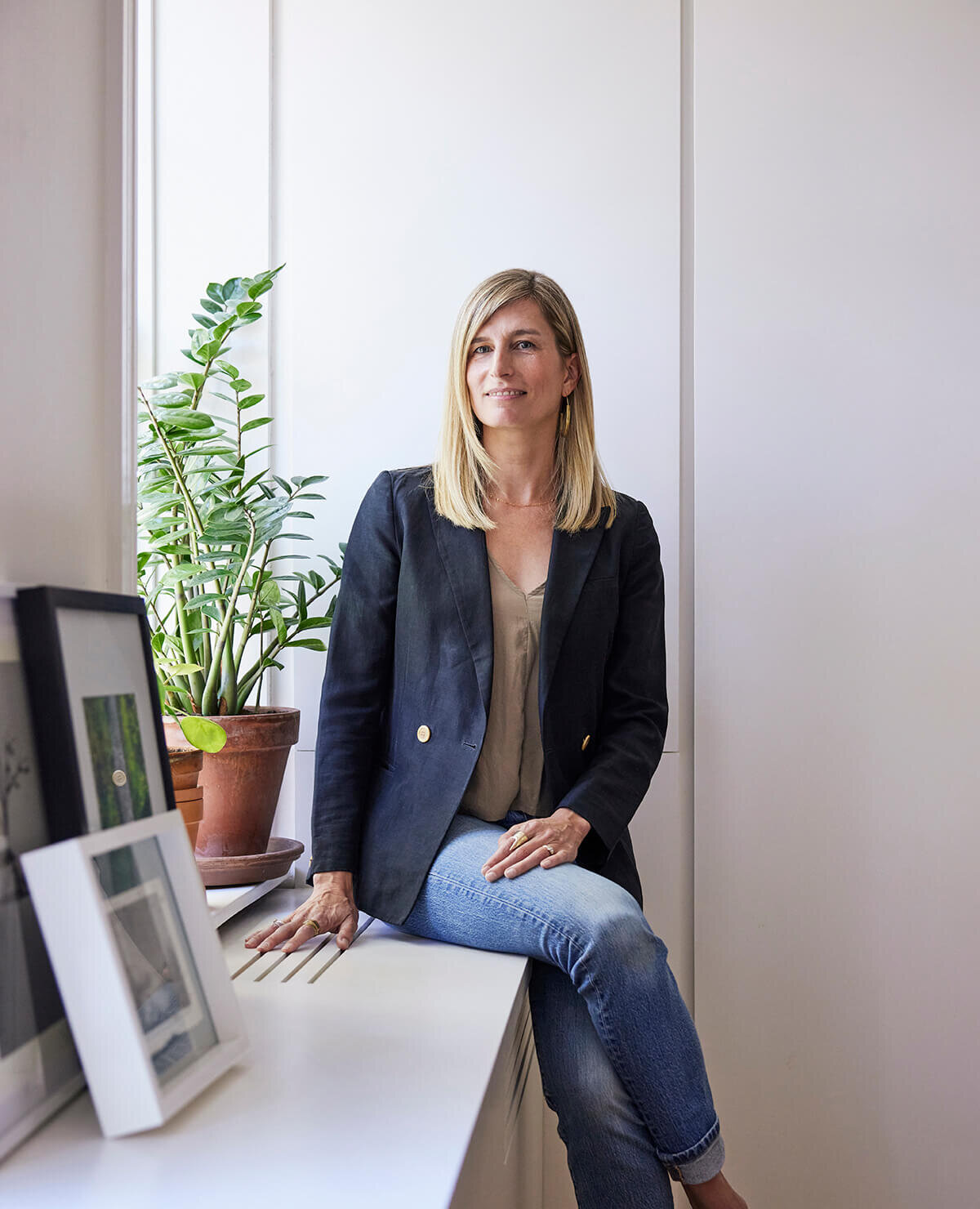
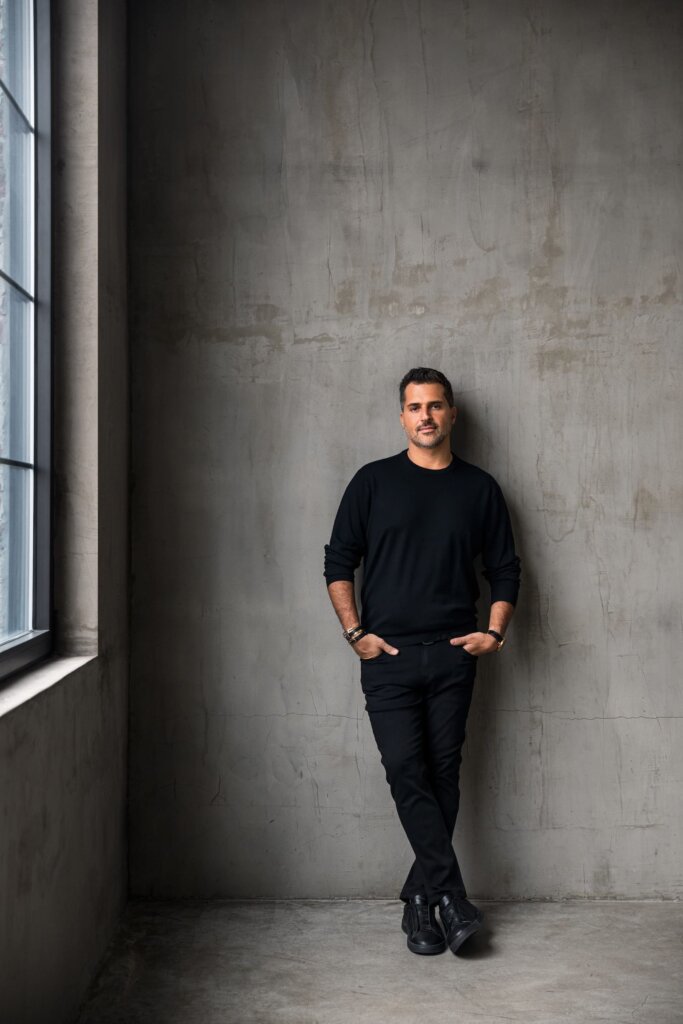
Kalos Eidos is a New York-based design practice that overlaps architecture, interior design, and spatial identity across multiple scales of intervention, from objects, installations and interiors, to buildings and urban spaces. Founded by Ryan Brooke Thomas in 2017, Kalos Eidos’ concept and experience-driven approach overlays the distinct spatial, formal, material and social opportunities of each project to craft holistic and thoughtfully detailed environments. With a diverse background working on residential, hospitality, brand engagement, workplace, public realm and community engagement projects, the studio draws from this breadth of experience in approaching each project as distinct and multifaceted, rather than through the singular lens of a focused expertise. In addition to leading Kalos Eidos, Ryan is also a design educator, teaching architectural design studios as an Adjunct Professor at The Cooper Union.
(Image above: Ryan Brooke Thomas portraits by Jonathan Hokklo)
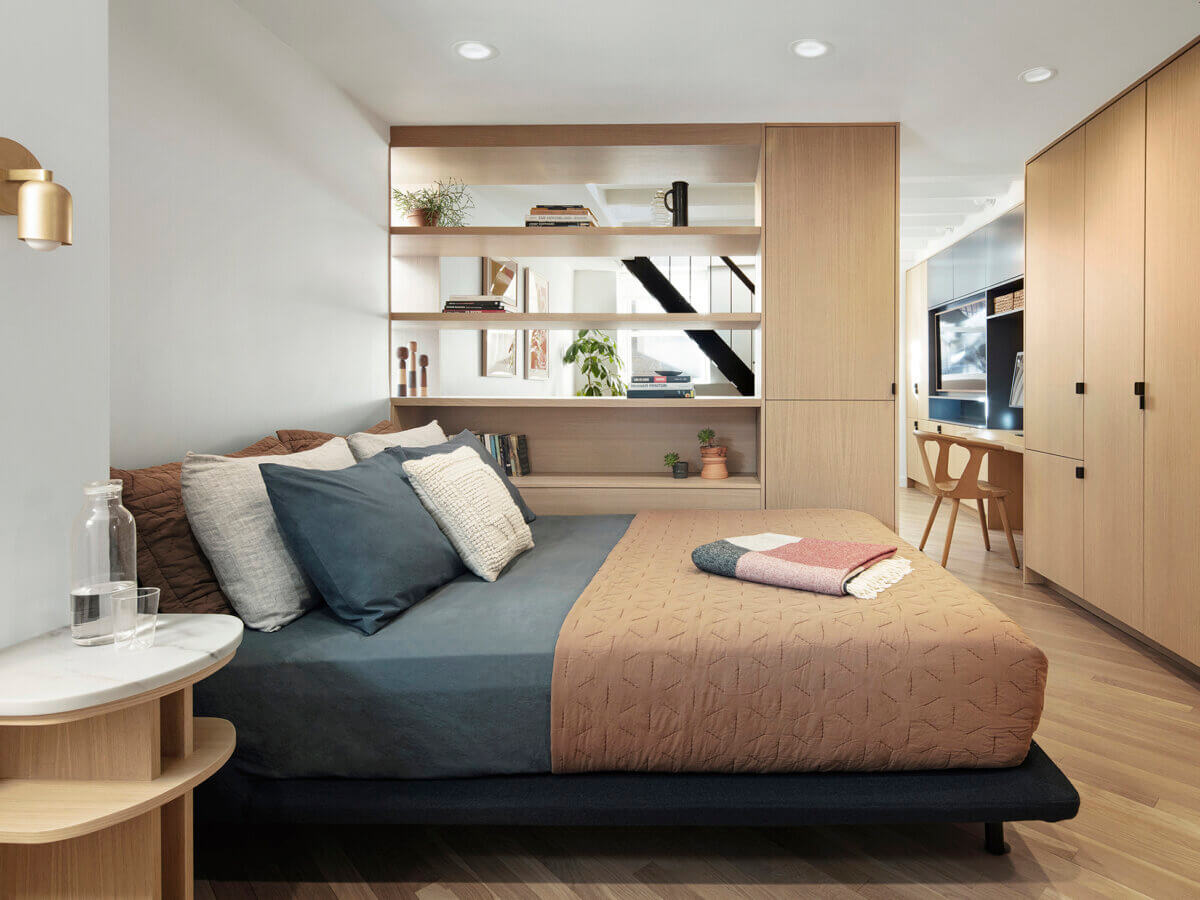
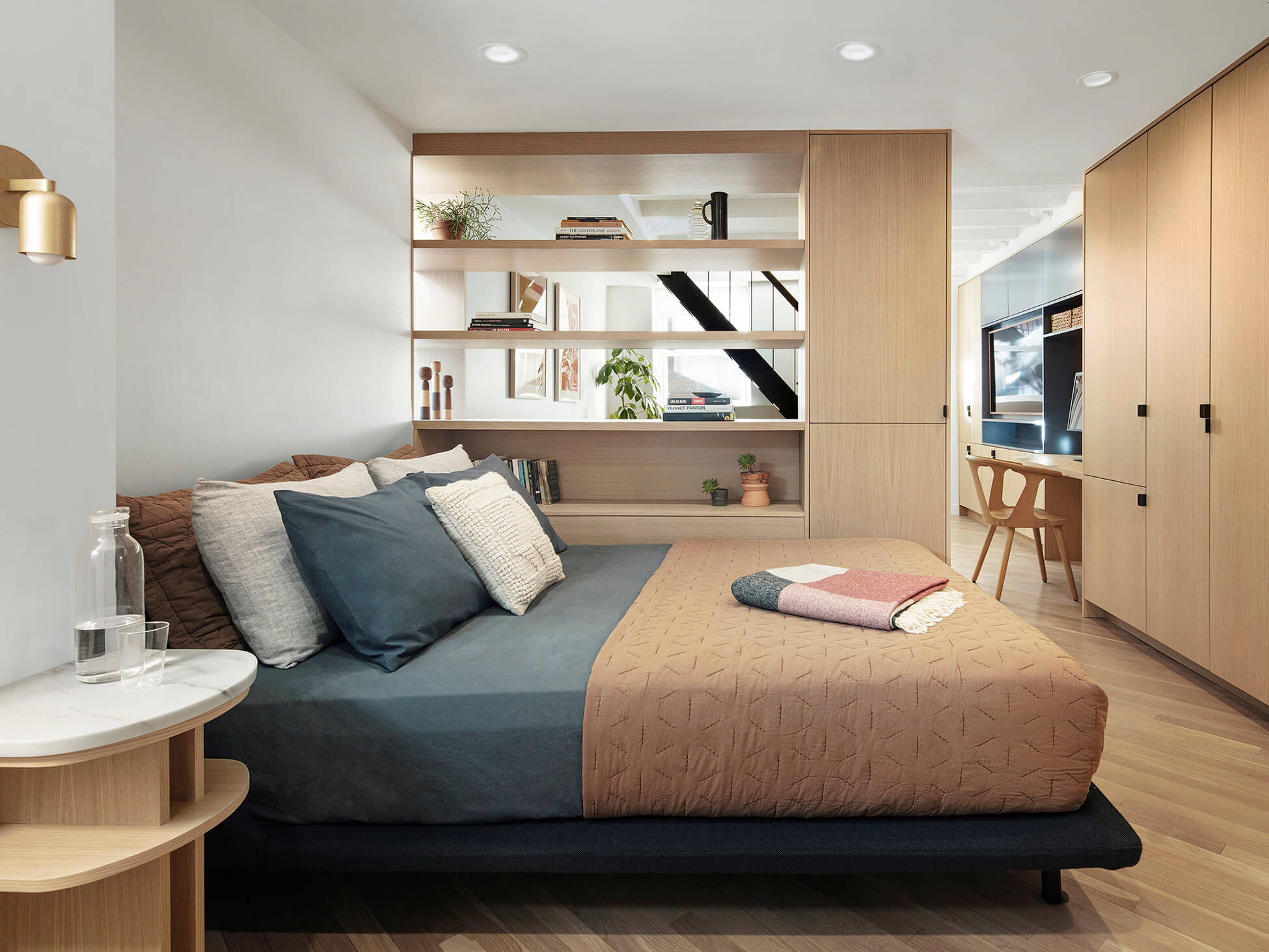
Adjoin Project by Kalos Eidos | Image by Steve Freihon
When you were a kid, what did you dream of becoming? Did any of those childhood ambitions lead you to where you are today?
As a kid I was never fixated on any particular profession or career idea, but I always loved making things by hand. Without thinking of it as such, I ended up diving into design projects all the time. I think I always envisioned that I would be a professional in some way, but I was also very drawn to the arts and to visually creative endeavors.
Was there a specific turning point or experience when you realized that design was your true calling?
I studied Modern Thought & Literature at Stanford University with a focus on art history and philosophy. In my last year, a couple of courses – one on postmodern architecture and another on the Bauhaus movement – exposed me to architecture in a whole new light. I started to understand architecture through the vantage point of design and critical theory; I saw that it could be a craft, an intellectual pursuit, and a profession all in one. Those introductory takeaways really resonated with me as I pondered what to do next with my life. Inspired and encouraged by a friend who was exploring architecture too, I came to New York somewhat impulsively right after graduating from college to attend a pre-grad program at Columbia GSAPP. That experience gave me a small taste of what an architecture studio and practice might look like and it just fit. It was at that point that I really identified that this was the field that I belonged in. I jumped right into an internship with an architecture firm in NYC while applying to graduate programs, and headed back to California to get my graduate degree in architecture from UCLA. Where I would go within that field took more time to figure out (and to some degree, that will always be an ongoing investigation), but I knew that I had found in design and architecture a universe of exploration that was both challenging and gratifying.
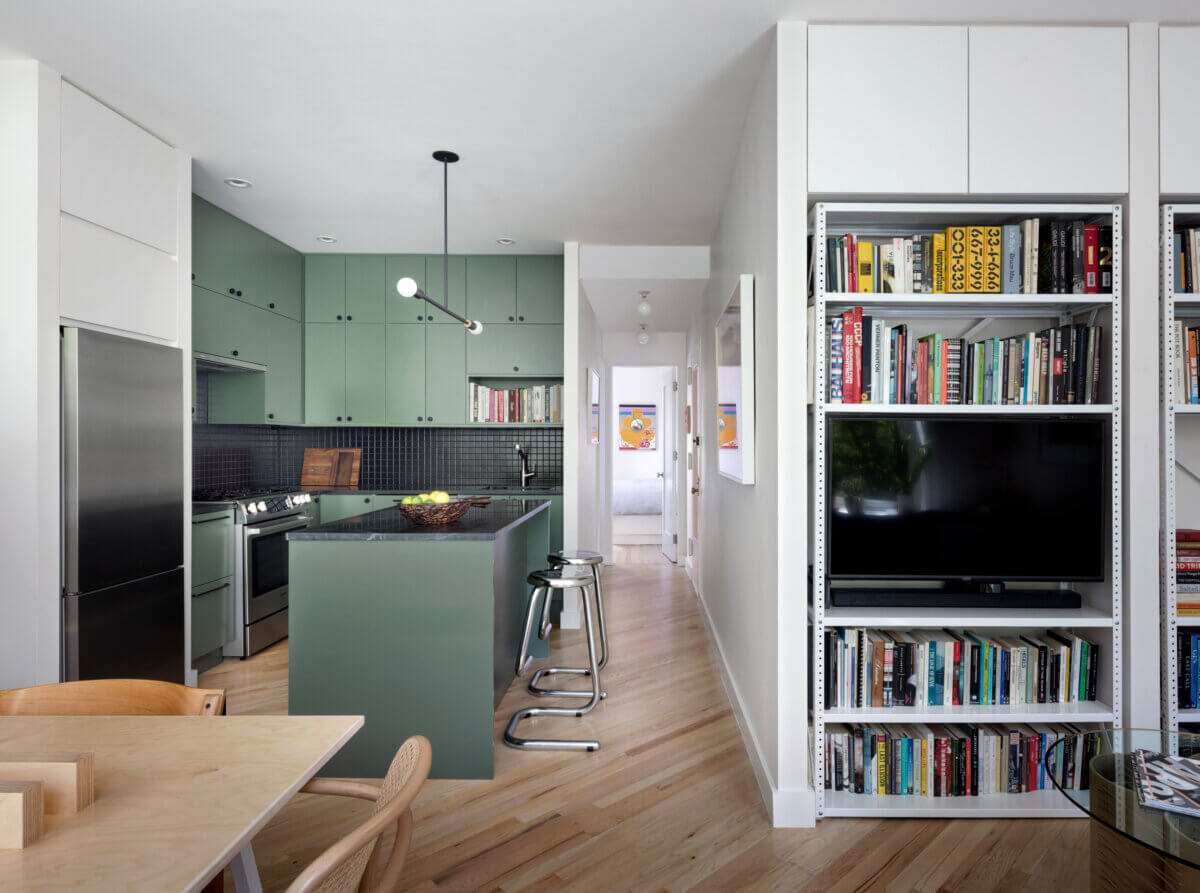
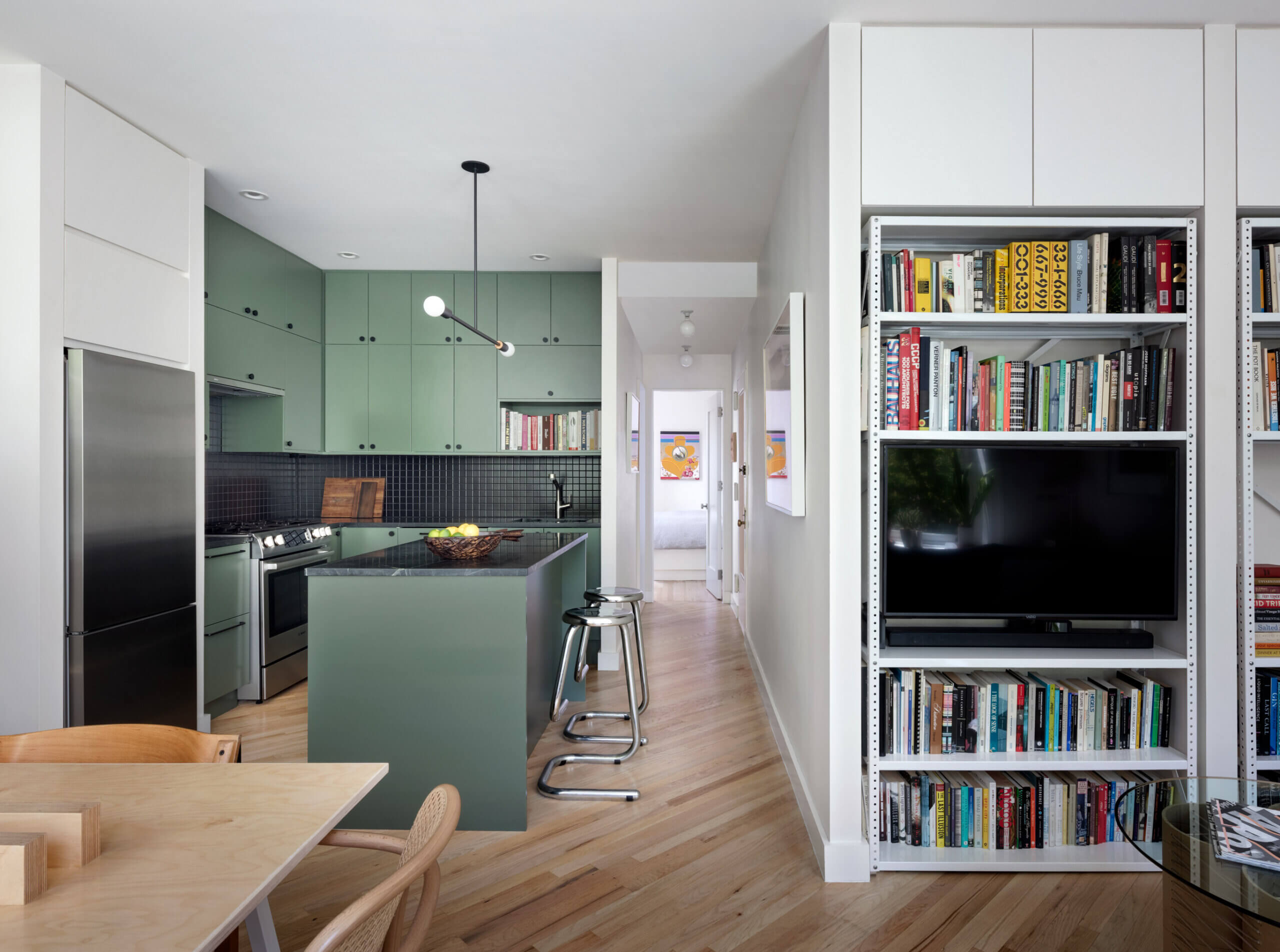
XSmall by Kalos Eidos | Image by Steve Freihon
Tell us a bit about where you live: How long have you been there, and how does your environment shape your creative process?
The choice to build a life and career in New York City was a pivotal decision made early in my career after finishing my studies. I’ve found that NYC provides an ideal context for the work I love to do – it’s a place where interior and urban conditions are ever-present and deeply intertwined, where culture and social interaction are richly diverse and inventive. Much of the opportunity for design and building here involves renovations, adaptive reuse, and new interventions that are always stitched into an existing but ever-evolving fabric.
I’ve lived in Brooklyn for 15 years, and my neighborhood of Fort Greene is an incredibly vibrant and rewarding context, with a true sense of community and a beautiful patch of blocks that I cherish greatly. It’s a place where neighbors have become both friends and clients. I live in a small co-op building there, in an apartment that I renovated and designed myself, shortly after moving in along with my partner. It was a dream come true to have the opportunity to shape my own living space, to do so in a way that created a sense of home and catered to the differences and commonalities of two people, to reflect a shared life.
For me, designing a living space well is not about style–and only peripherally about aesthetics–but is more fundamentally about an organization of space and objects, surfaces and textures, that anchor and influence the patterns of daily life, altogether in a detailed overlay. Living in an environment that feels considered and engaging in ways that I notice all the time, even as other aspects of life inevitably change – sometimes radically so – is grounding in a way that strongly echoes and reinforces my creative process.
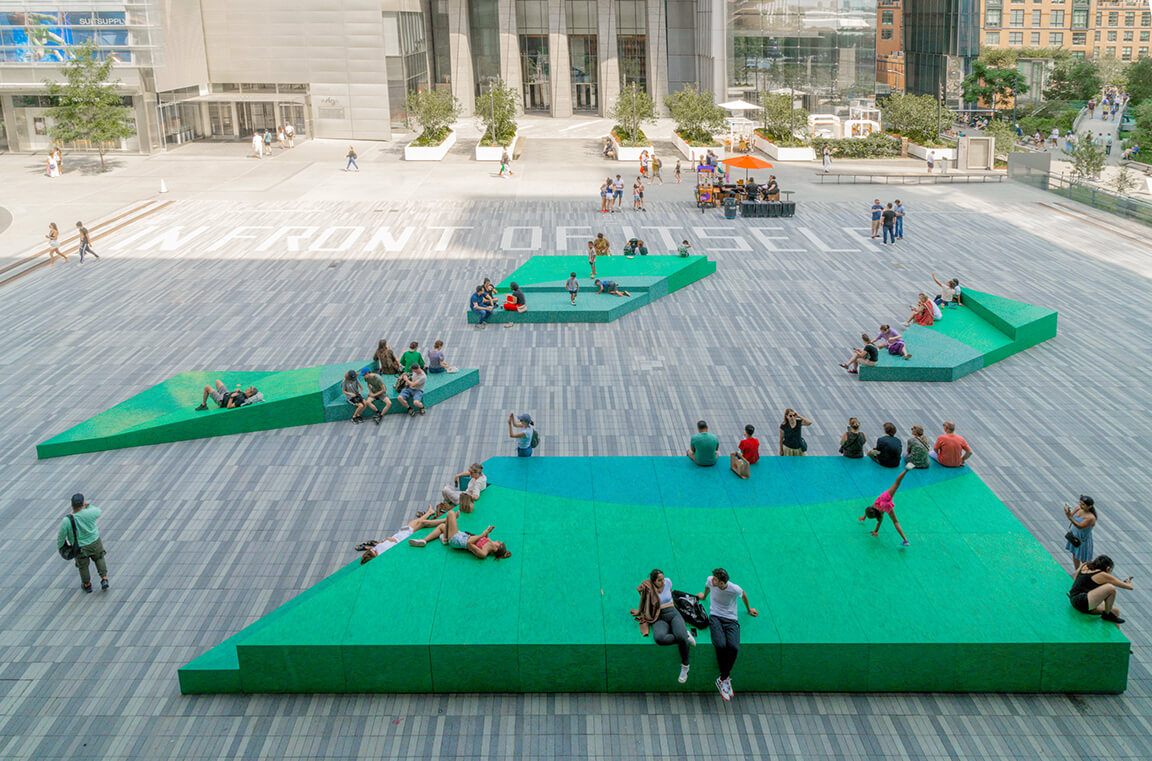
Tidal Shift by WIP Collaborative (with Ryan Brooke Thomas / Kalos Eidos) | Image by Michael Vahrenwald
How would you describe your design philosophy? Has it evolved over time, and if so, how?
I think less about subscribing to a design philosophy per se, and more about committing to a framework for exploring design within the overlap of architecture with other modes of design and cultural research. What I love most about design is that, when done well, it is both highly intentional and yet not prescriptive, setting up an overlay of conditions into a dynamic composition to prompt social interaction and human experience. I value working across the scales of the city, the building, and the interior in a seamless way that dissolves the distinction between them as discrete fields of expertise. When the formal logic, spatial analysis and language of architectural design can be intertwined with the textural and sensorial richness of materials, plants, and objects across multiple scales, there is an opportunity to shift design focus away from an emphasis on building autonomous objects and instead towards environments.
What are you currently working on?
We recently concluded a residential renovation in Oakland, CA which entailed not only a gut renovation of the house interior, but also a structural and organizational rework of the whole property to seamlessly integrate outdoor and indoor spaces. We are also currently working on the first ground-up architecture project for Kalos Eidos, a mountain-side home in the Catskills. The project has introduced so many new and different contextual factors of site and locale that have been fun to tackle. Sited on a steep and remote site, it’s entirely opposite the urban fabric that most of our projects consider. We’ve been working on it in phases over a few years in a unique and deeply personal collaboration with our client and her father, who is an acclaimed architectural renderer. It’s a bit of an outlier given those specifics, but it’s been rewarding to commit to a project that follows a different pace, process and practice model than many of the others in the office.
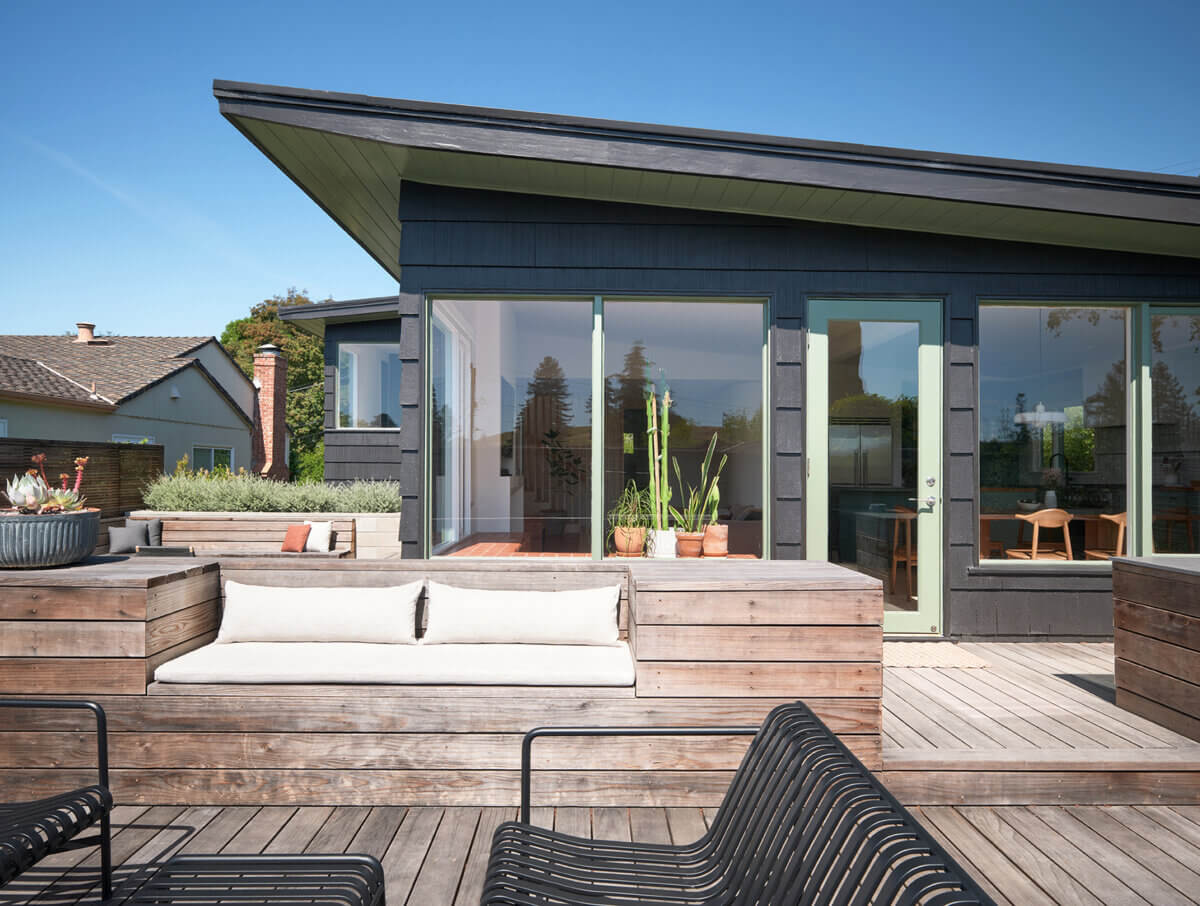
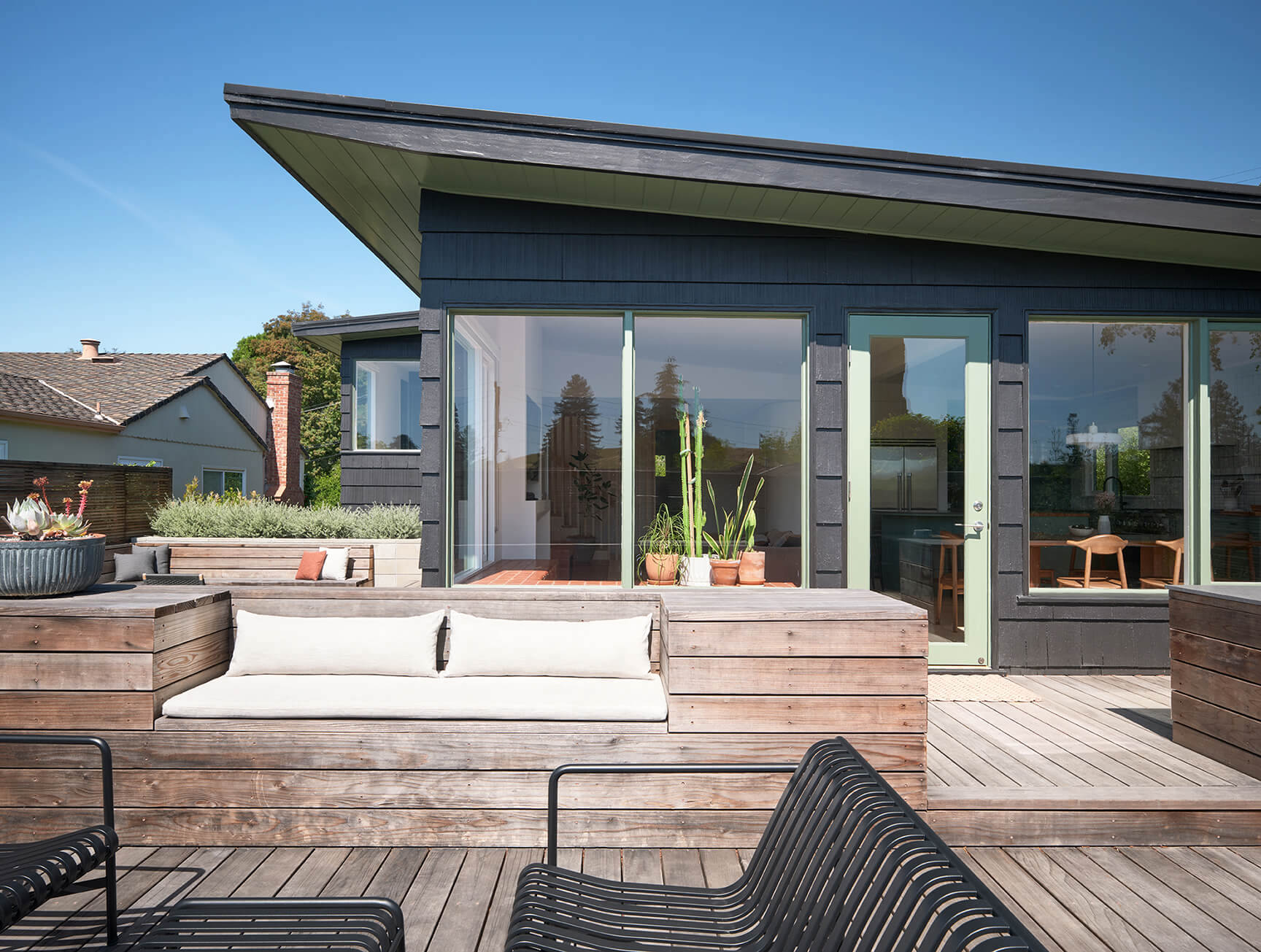
Backfront House project by Kalos Eidos| Image by Mariko Reed
What’s on the horizon for you? Any upcoming projects, events, or goals you’re particularly looking forward to?
There’s nearly always at least one residential project underway at any given time, and then we always seek to complement that baseline with a different type of program or client. We’re looking forward to taking on more bar/restaurant and workplace projects, especially since there’s increasing interest in reconsidering how those spaces and business models can foster community and sustain creative networks. We’ve also begun experimenting with communal installations for convening in rural settings, applying insights from previous work and research on urban public space adapted to suit sites, locales and communities outside of the city context.
What’s a favorite movie, band, or song that has inspired or shaped your creative mind?
Robert Altman’s Three Women, Michelangelo Antonioni’s La Notte and Red Desert, and Wong Kar Wai’s In the Mood for Love all spring to mind as films that have been incredibly inspirational for me in their attention to space, atmosphere and spatial mood. Each of these directors explores setting in a way that is as much a protagonist as the human characters themselves, casting the narrative across a fluid spectrum of scales from the urban to the interior, but always with a sense of relevance, intimacy and meaning.