In 2026, Ferreira de Sá marks its 80th anniversary. Founded in 1946 in Silvalde, Espinho, the company remains rooted in the same coastal town where its approach to making first took shape. In this part of northern Portugal, knotting once belonged to fishing nets before it became part of textile craft. The material changed. The discipline did not.
For decades, Ferreira de Sá built its reputation quietly. It began exporting in 1961. By the 1970s, its rugs were already entering projects across Europe. Hotels, private residences, commercial interiors. The work travelled. The name often stayed discreet. Inside the design community, however, it became known for something essential: reliability under pressure, clarity in execution, the ability to translate ambitious ideas into surfaces that hold.
(Top image courtesy of Ferreira de Sá)
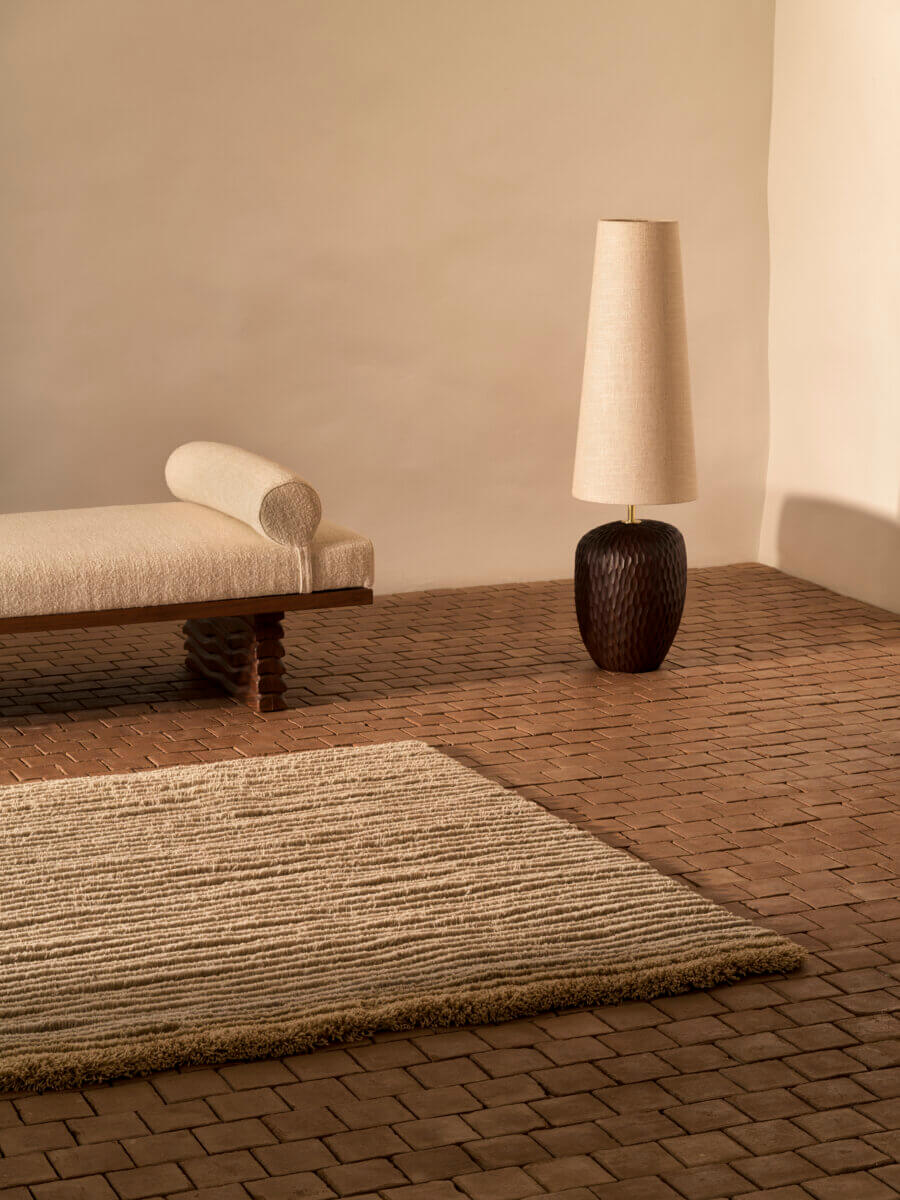
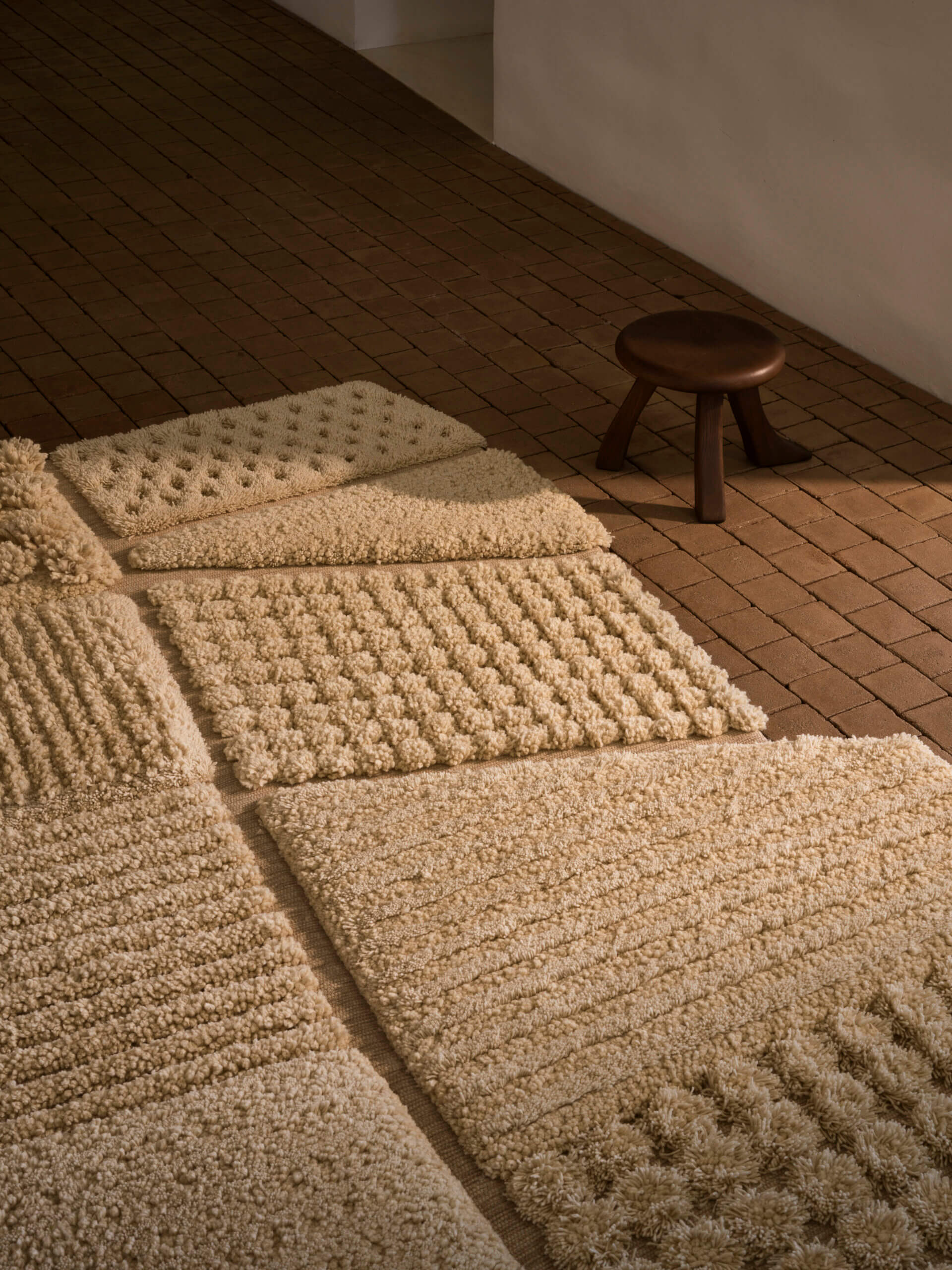
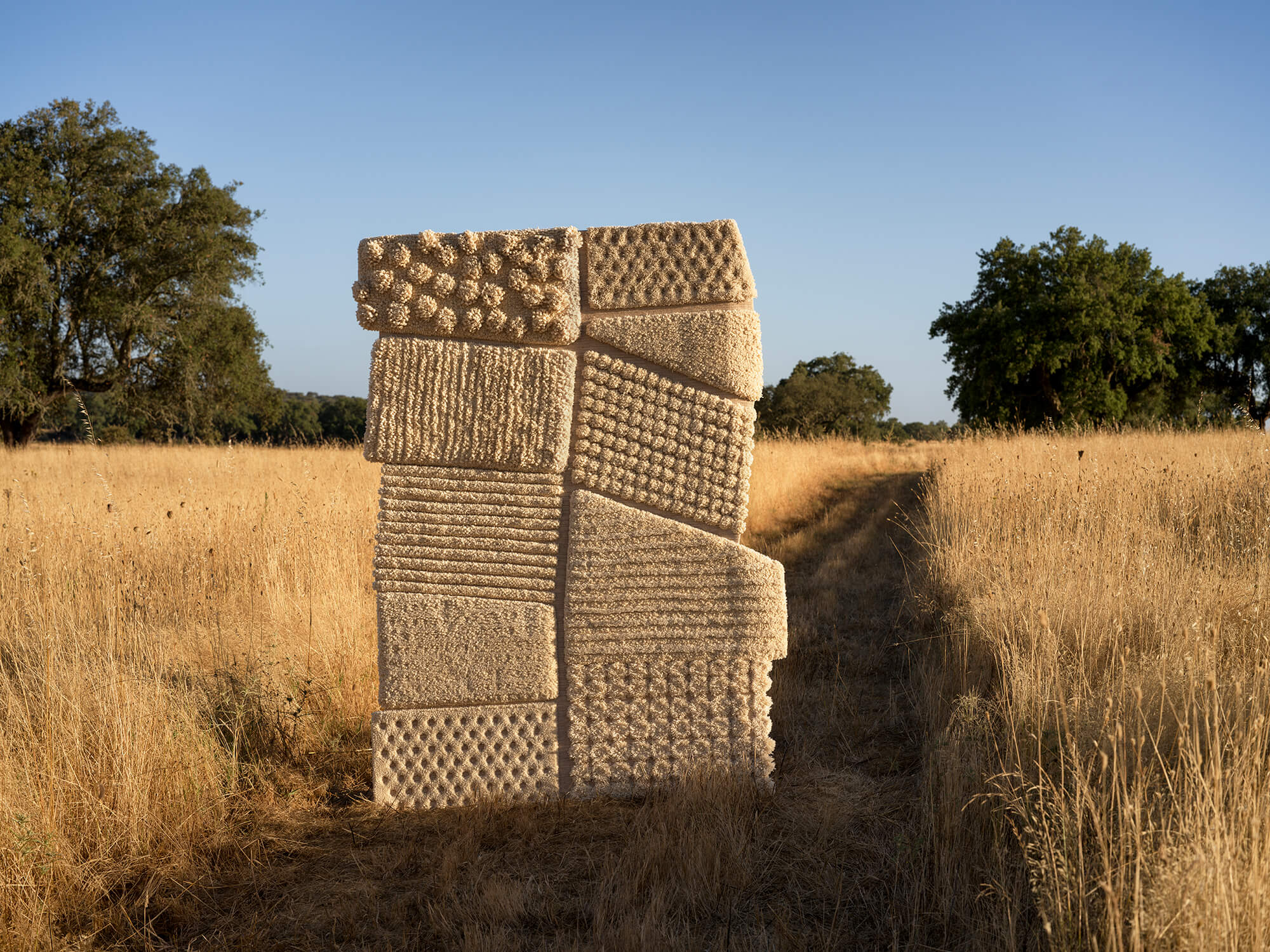
ALÉM TEJO Collection, Sul (image courtesy of Ferreira de Sá)
That accumulated experience sharpened the desire to speak in its own name. In recent years, Ferreira de Sá has stepped forward as a design-led Portuguese brand. “For many years, we were primarily recognized for execution,” says Ana Gomes, Marketing Director. “That same know-how allows us to create collections that express how we think about rugs within space.”
This thinking is spatial. A rug is approached as part of architecture. It defines scale. It stabilizes proportion. It absorbs sound. It frames circulation. It can soften a monumental interior or discipline an expressive one.
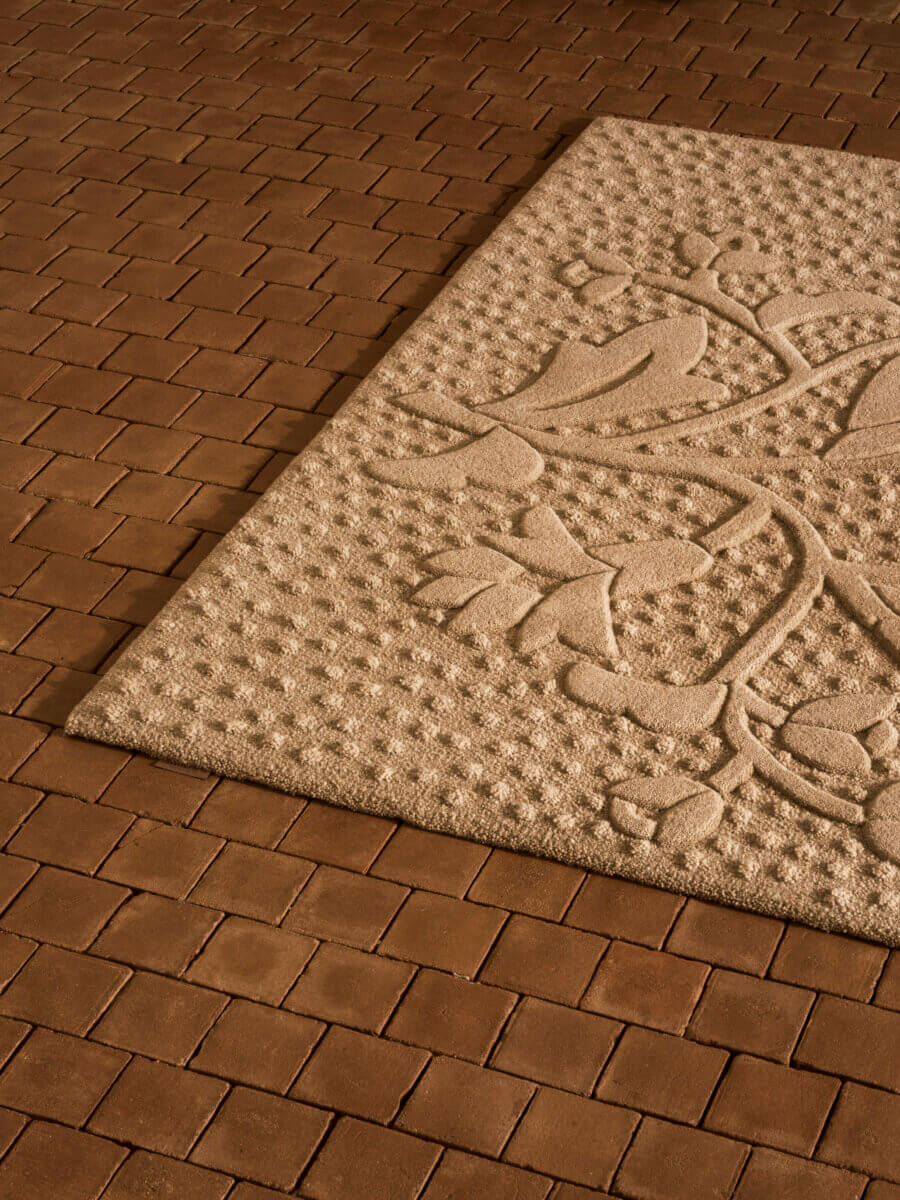
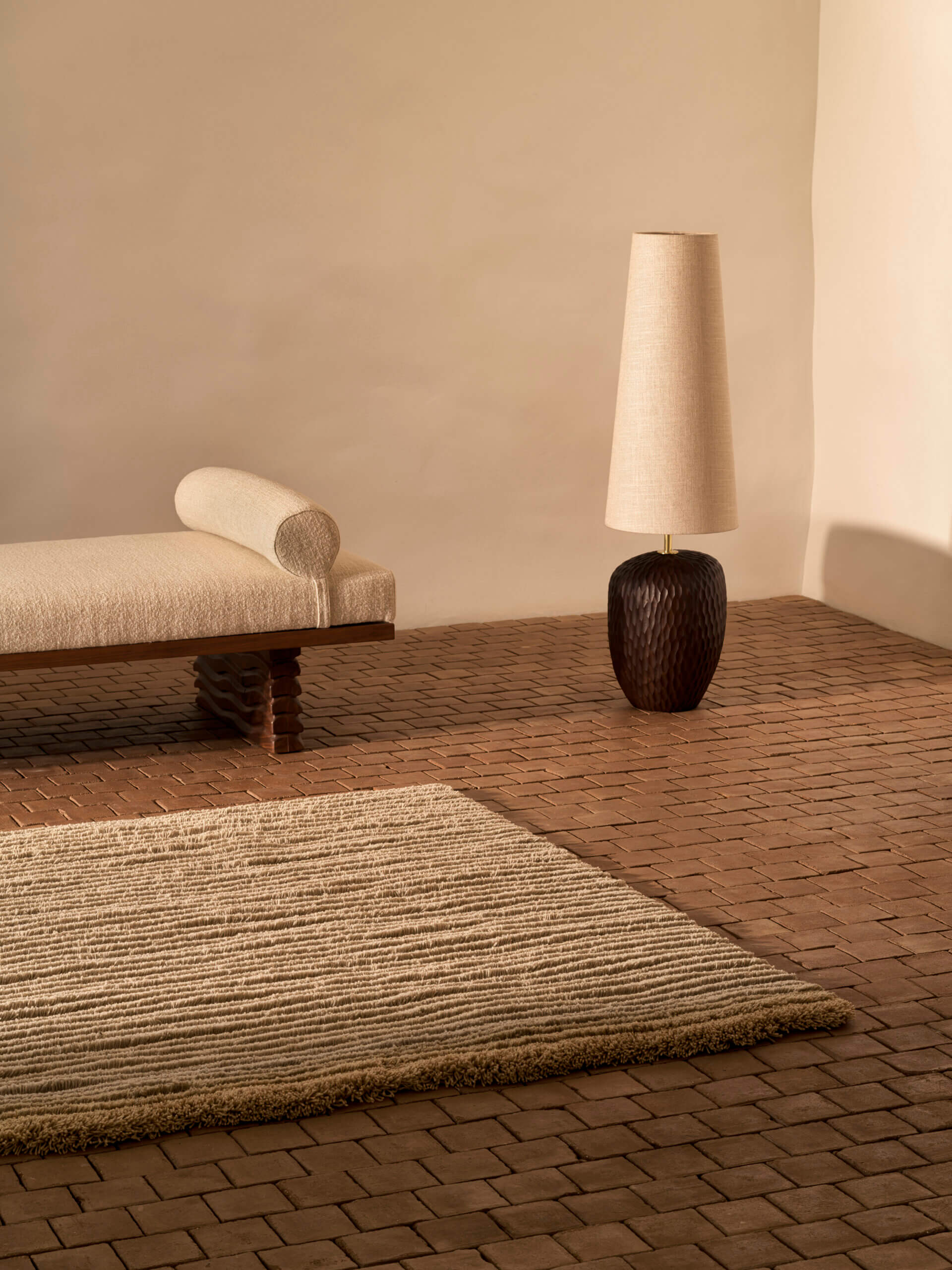
ALÉM TEJO Collection, Nisa (image courtesy of Ferreira de Sá)
Everything remains anchored in Silvalde. Design, prototyping, weaving, tufting, finishing. Around 90 percent of production is exported to more than 60 countries, yet every piece is conceived and produced in Portugal. This proximity between design and making allows control. It also allows dialogue. Architects and designers work directly with a team that understands constraint, ambition, and technical complexity.
“A company without an obsession for its product has no reason to exist,” says CEO Américo Pinheiro. Development cycles are long. Materials are tested. Repetition is never treated as automation. When a project requires fifty rugs, fifty rugs are made. Individually.
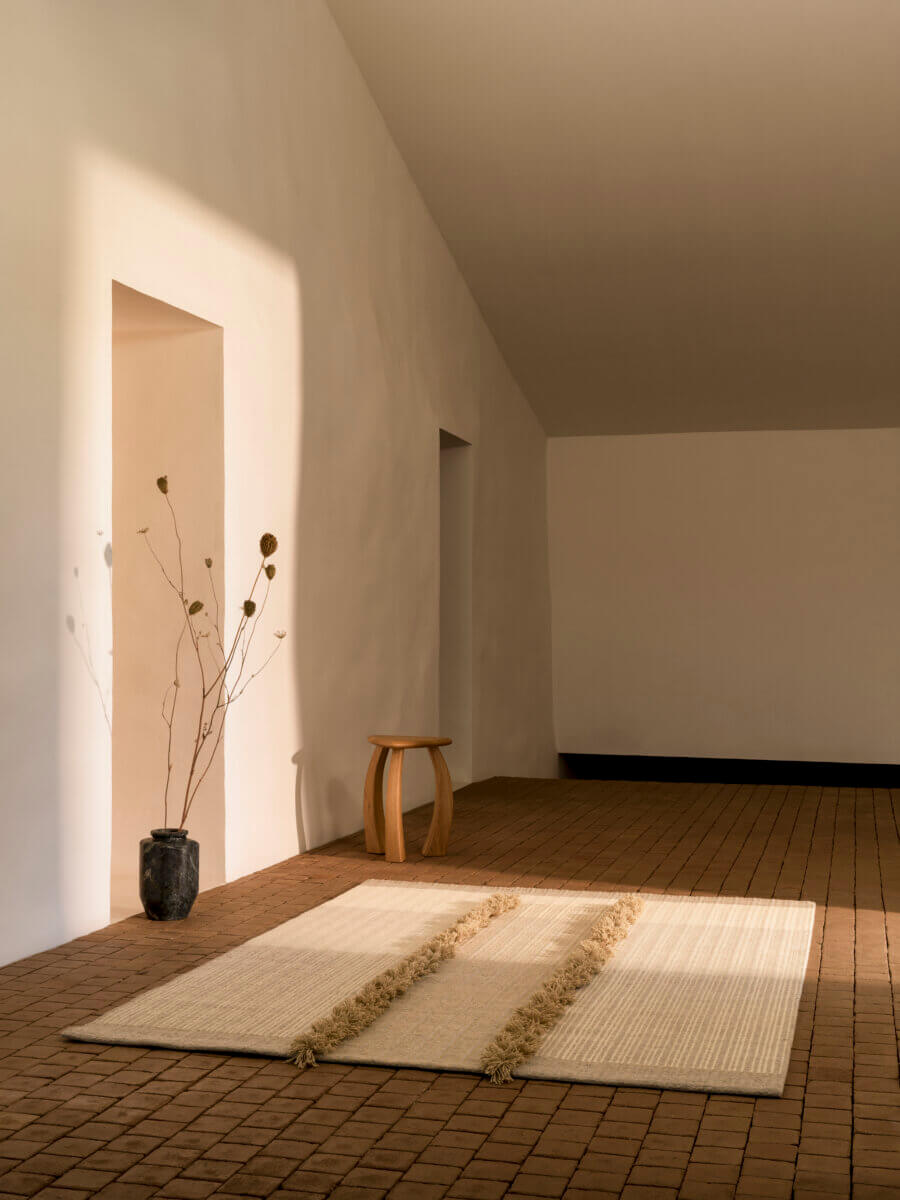
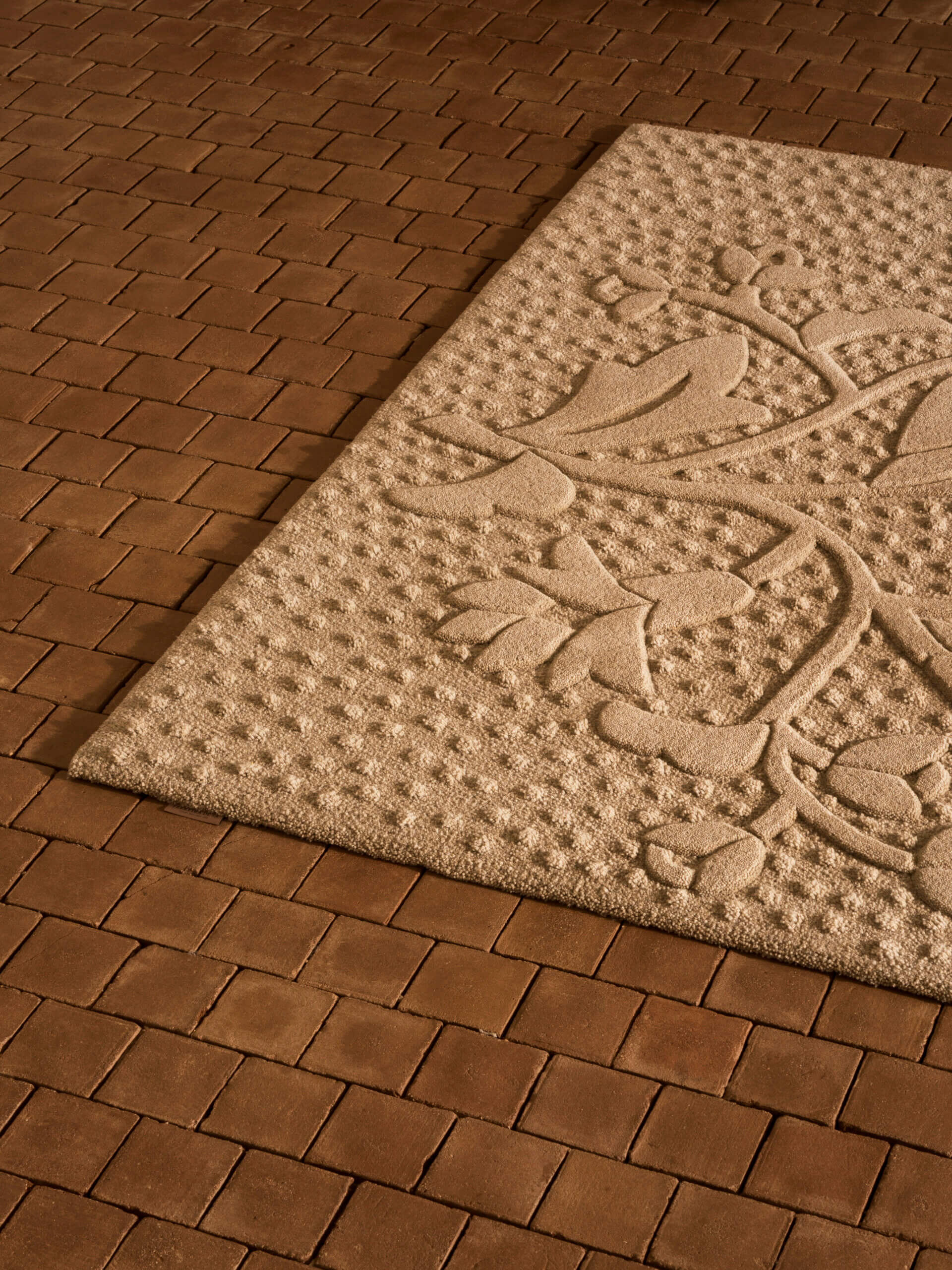
ALÉM TEJO Collection, Planura (image courtesy of Ferreira de Sá)
The ALÉM TEJO Collection clarified this position. Inspired by the Alentejo region in southern Portugal, the collection does not replicate landscape. It interprets it. Dry-stone walls become density. Limewashed façades become restraint. Cork bark becomes texture. Undyed natural wool becomes atmosphere.
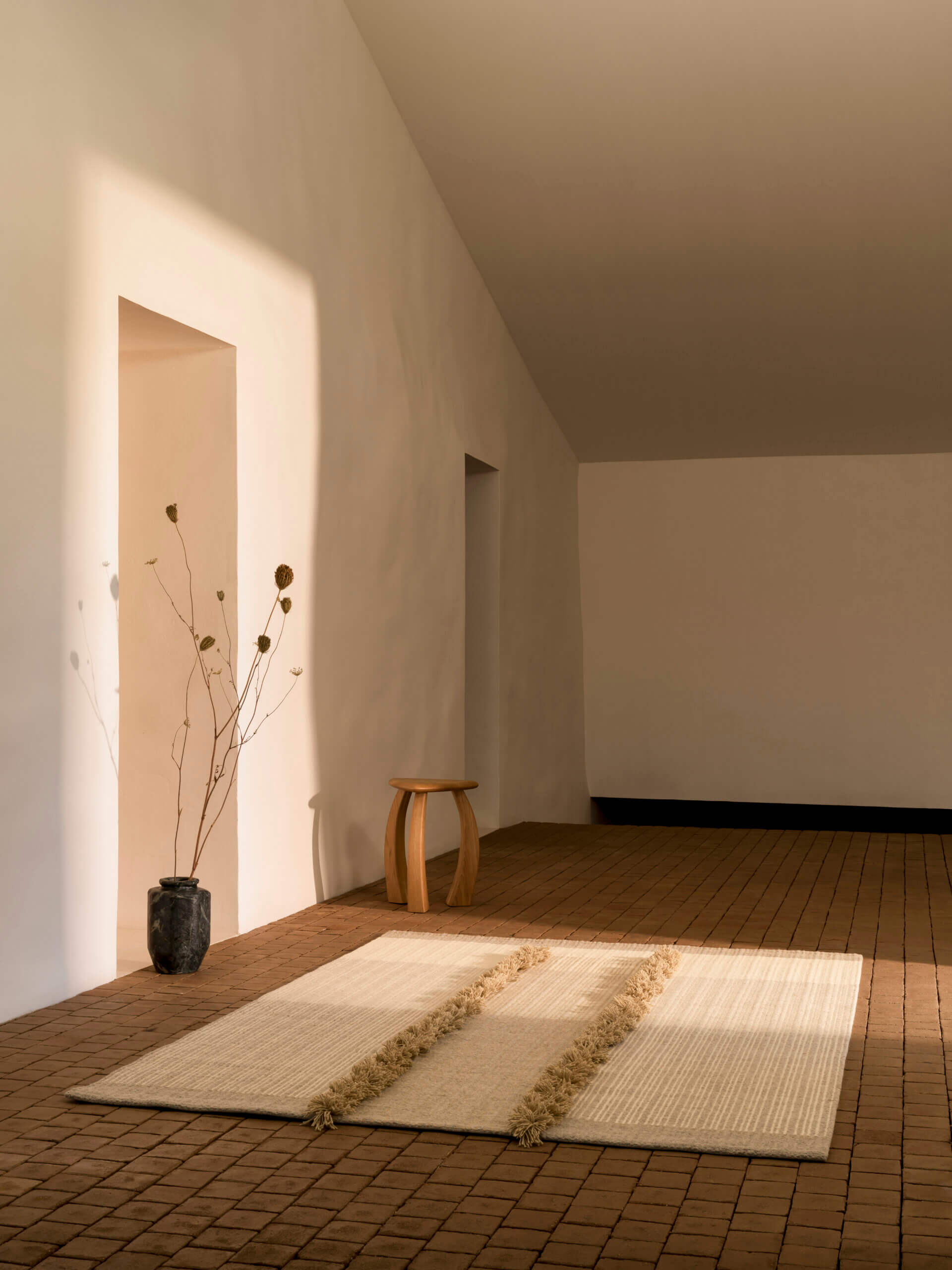
For this collection, the portuguese rug brand did not begin with a concept. It began with a place. ALÉM TEJO comprises 13 rugs, each with its own cadence, relief, and pause. The foundation is undyed natural wool used in its raw state, minimally processed, renewable, and biodegradable. The tones were not selected; they are those offered by the material itself: whites, irregular beiges, soft greys. Across the collection, Ferreira de Sá draws on its full range of techniques, using tufting, hand-knotting, hand-weaving, and flatweave to give each design its identity through construction.
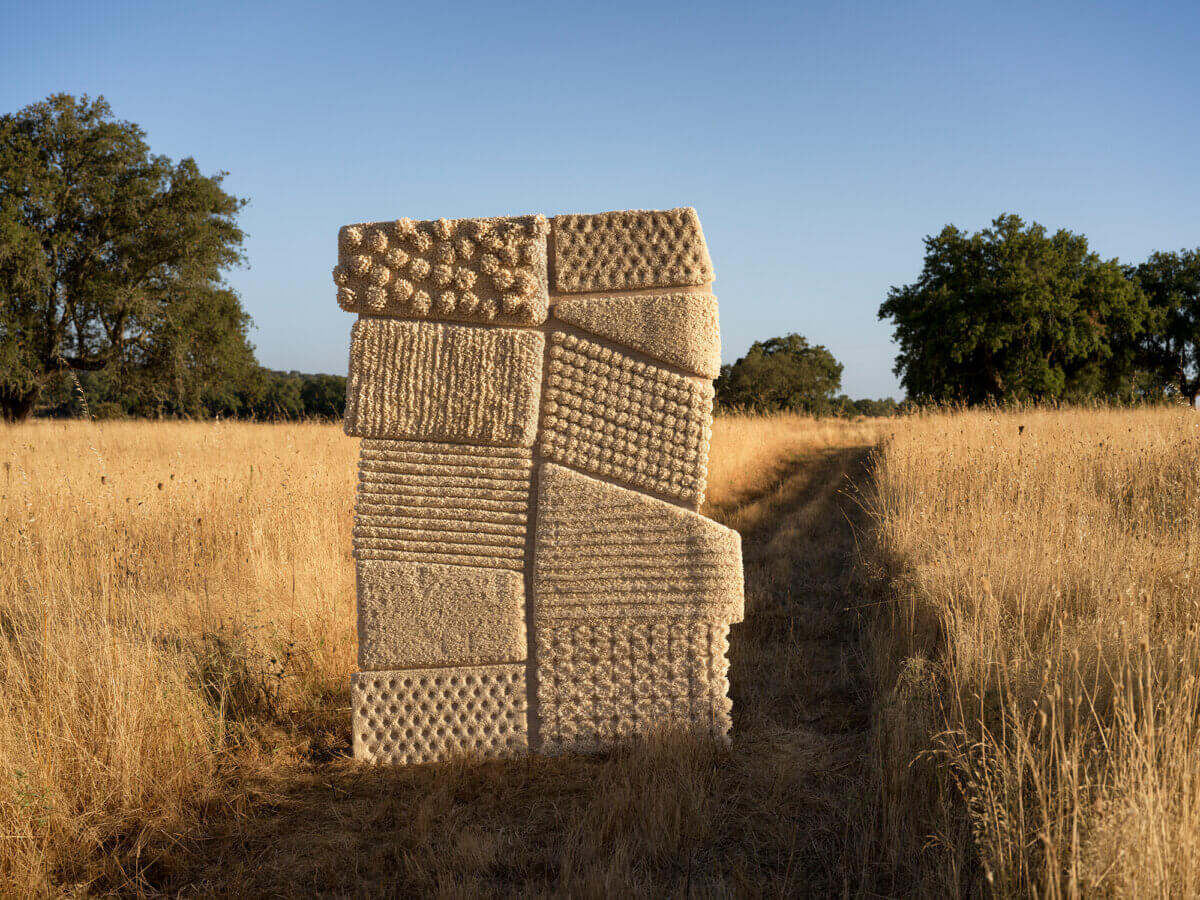
Image courtesy of Ferreira de Sá
ALÉM TEJO showed that regional identity can be translated into contemporary language without nostalgia. The references are embedded in construction. Nothing is applied for effect. When presented internationally, the collection resonated beyond geography because it spoke through proportion, surface, and material integrity.
Eighty years after its founding, Ferreira de Sá continues to work from the same town where its story began, guided by the same principles: innovation, craftsmanship, and creativity.
Since 2024, Ferreira de Sá has maintained a direct presence in the United States, with an office based in New York City.
Visit the Ferreira de Sá website >>>
Follow Ferreira de Sá on Instagram >>>
Ferreira de Sá is a sponsor of the Bespoke Salon at ICFF, learn more here.