The far reaches of the vast Arabian desert might not seem like the most obvious place for contemporary design to incubate. But from within the unassuming city of AlUla—a historically significant palm tree oasis deep in the northwestern expanse of Saudi Arabia—this misnomer vanishes like a mirage. An unflashy component of the expansive Vision 2030 government initiative—orienting the kingdom away from its sole dependence on oil—the Royal Commission for AlUla (RCU) platform comprises a wide range of ecological restoration, cultural preservation, and arts development projects. The latter, now increasingly, incorporates design-oriented programs, incentivizing both Saudi and international talents to engage with the unique locale in myriad forms of inventive and interdisciplinary exploration.
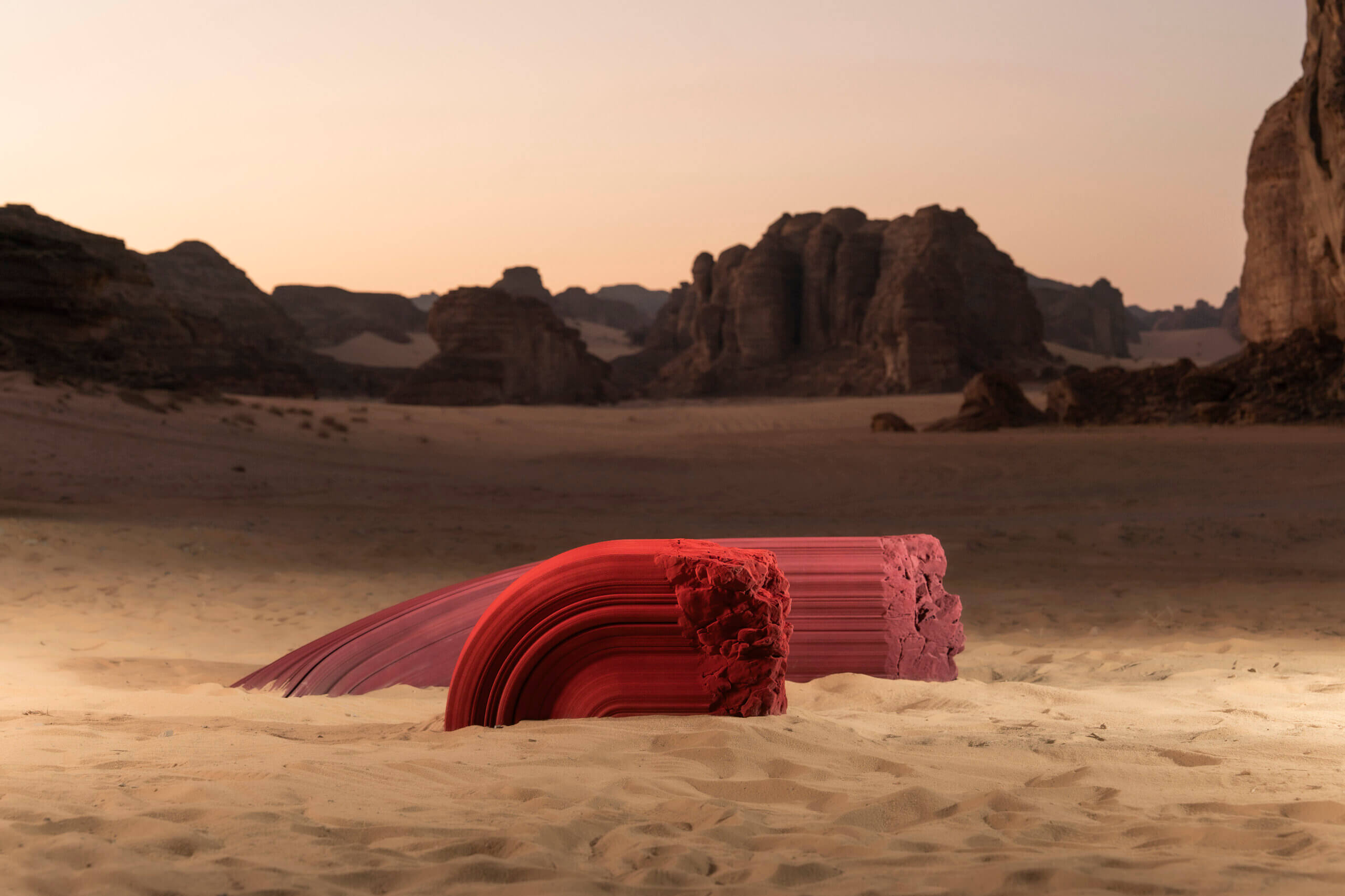
(Image above: The Curve & The Dot by Aseel Alamoudi | Image courtesy of Lorenzo Arrigoni)
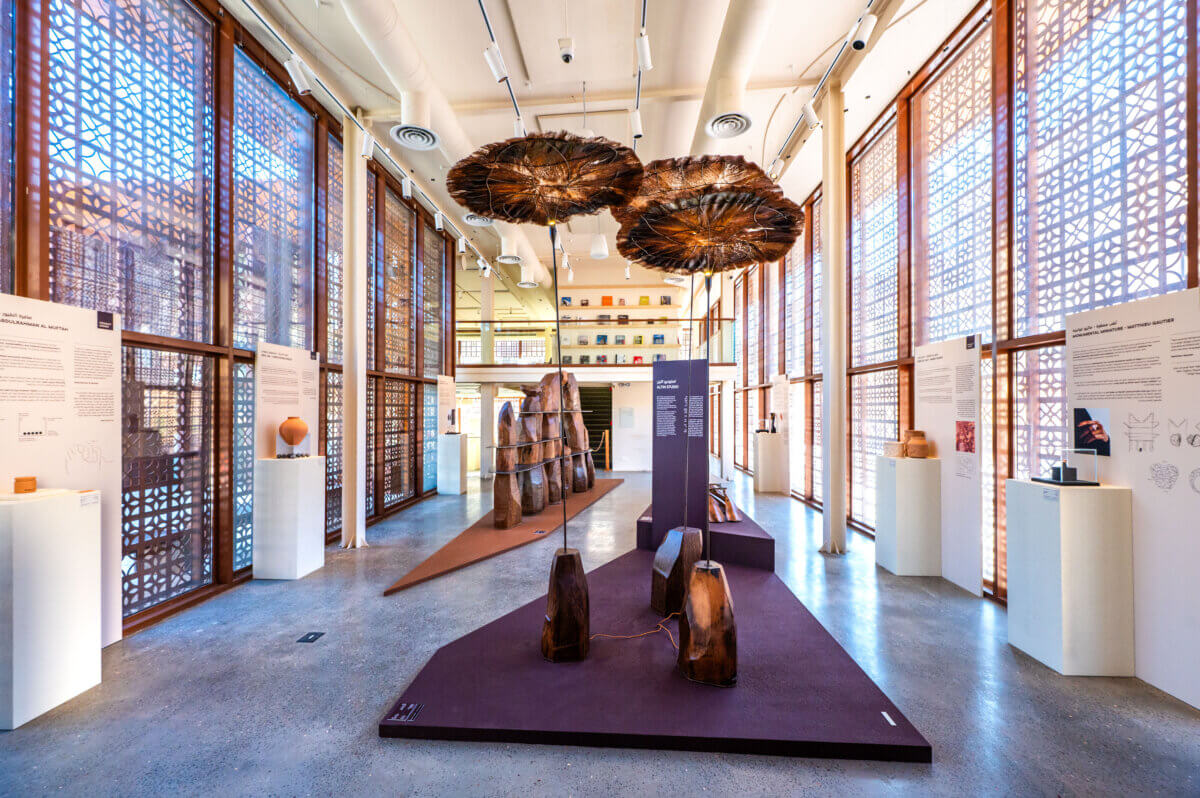
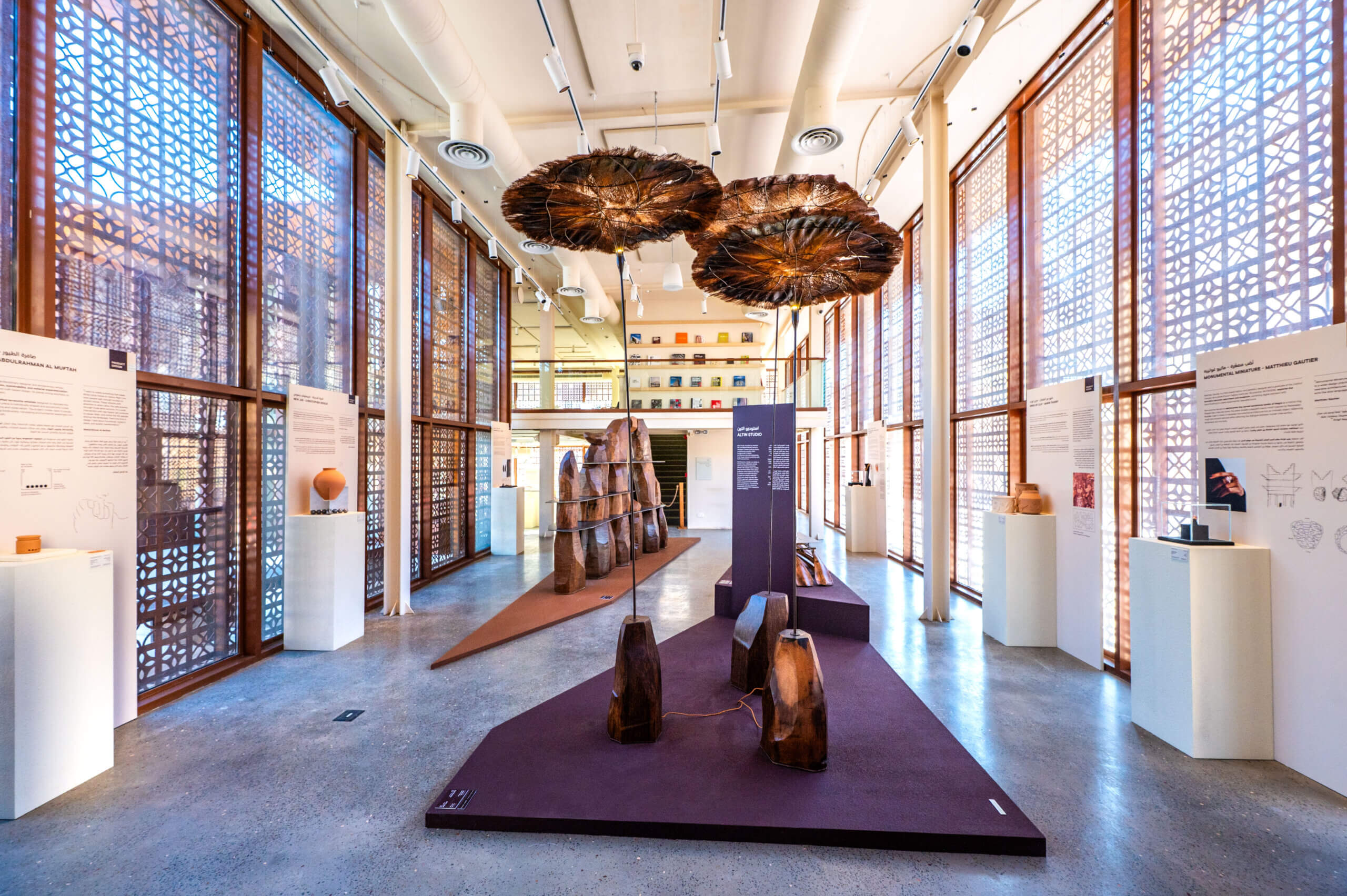
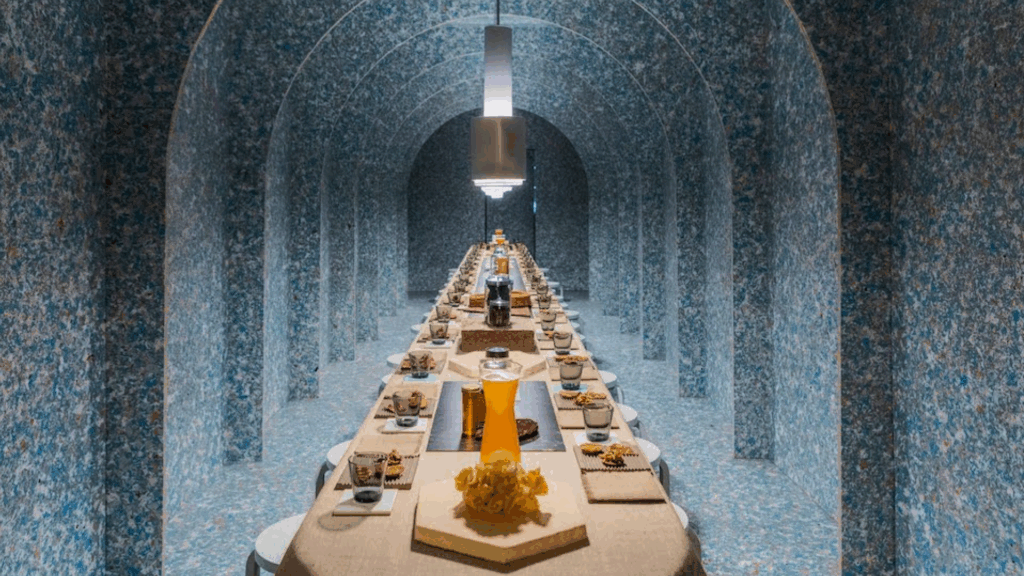
AlUla Design Space (Image courtesy of Lorenzo Arrigoni)
Unfolding as a residency program, designathon workshop series, and global awards program—the outcomes of which are revealed during the Alula Arts Festival (held this year from January 16 to February 14)—the overall endeavor proves that the discipline has validity in almost any context. Here, the domain’s expanding suite of interpretive and expressive tools has been implemented to re-enliven overlooked aspects of cultural heritage and in unexpected, compelling ways. And yet when more closely examined, the fundamentals of design have always been inherent to this place, the first UNESCO World Heritage site in the country.
“If one observes the over 2000-year old facades of the Hegra tombs just north of AlUla (erected by the Nabataean Kingdom, also behind Petra in neighboring Jordan)—carved details that could have been created yesterday—they can understand how design has always been part of the local DNA,” said Hamad Alhomiedan, RCU Director of Arts and Creative Industries. “We’ve now made it a more central feature of our project.”
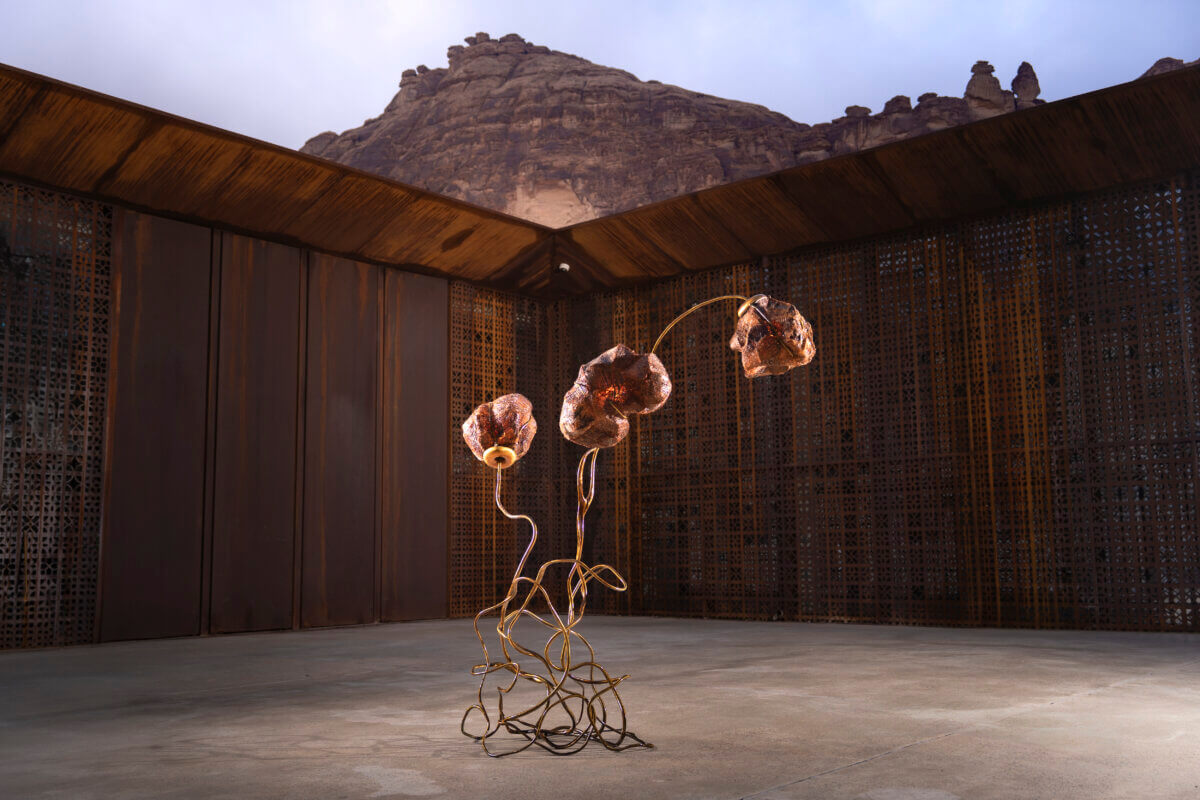
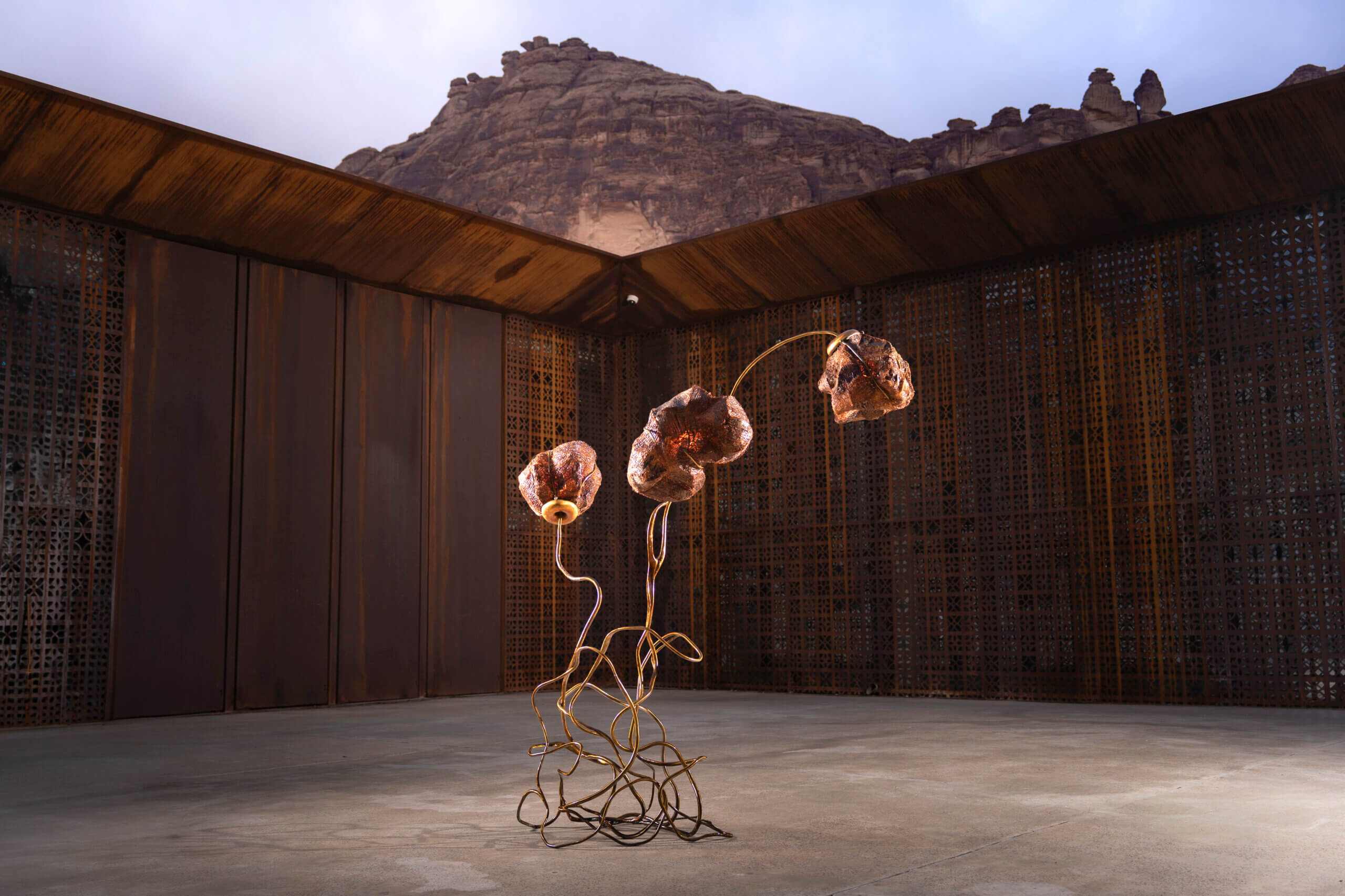
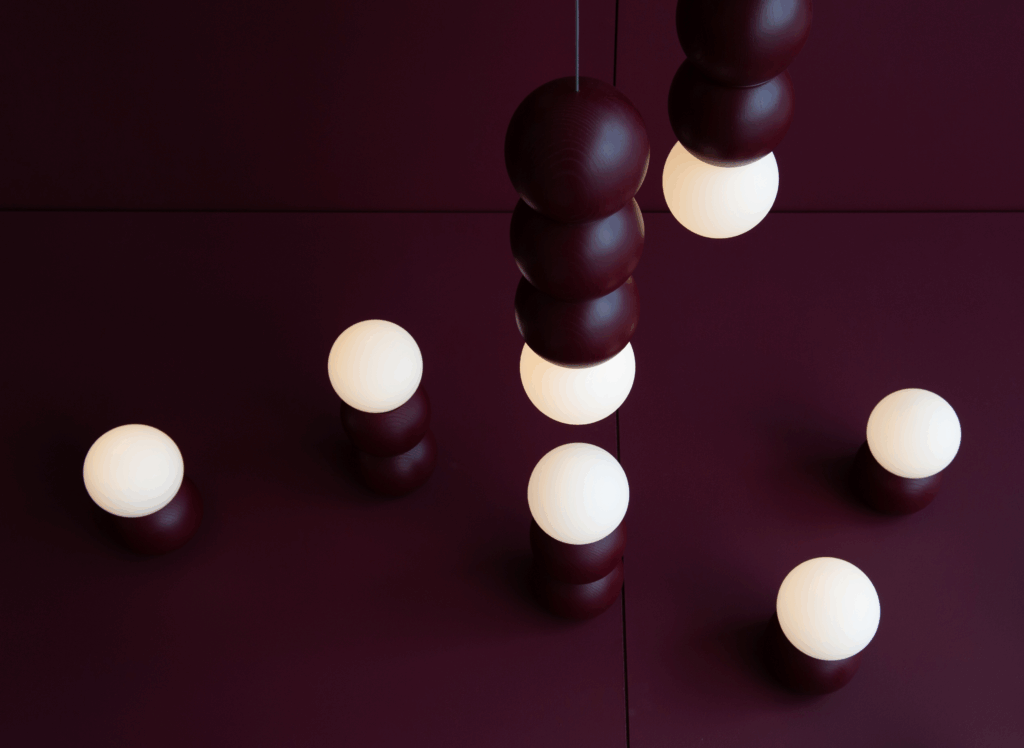
Woven by the Palm by Ori Orisun (Image courtesy of Lorenzo Arrigoni)
Perhaps the most intensive of the three previously mentioned initiatives was the 2025 AlUla Design Residency program. It saw five emerging to mid-career practices spend three months here. Each conducted various types of site-specific research—investigating natural resources and testing out new, unexpected applications for their use. Framed under the theme Material Witness—a red thread devised by noted culturemaker Dominique Petit-Frère—the five explorations were translated into tangible furniture concepts, public infrastructures, and material solutions; ones with the potential of real world applicability, especially in the immediate context.
“The idea was to fully engage with the realities that exist here, the many development projects that are underway in AlUla and wider Saudi Arabia,” she said, “instead of just creating objects for the sake of it. The idea was to work with the material landscape that already exists.”
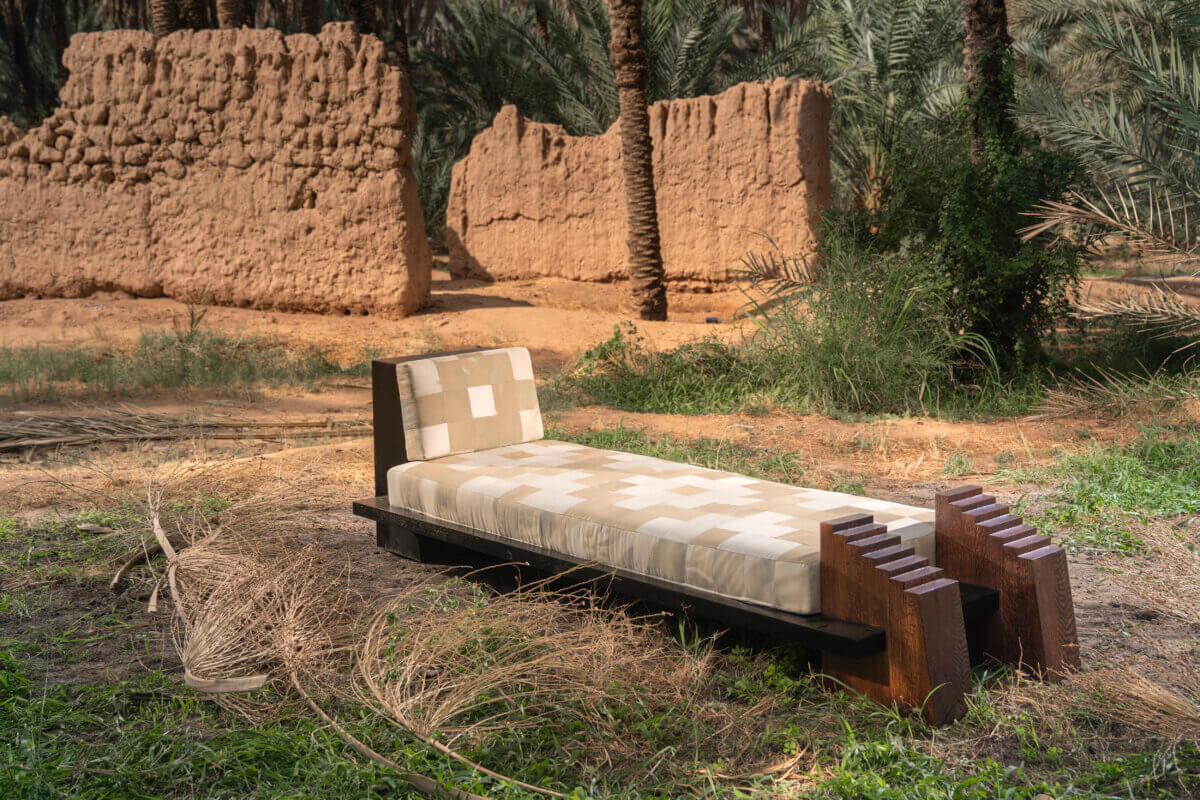
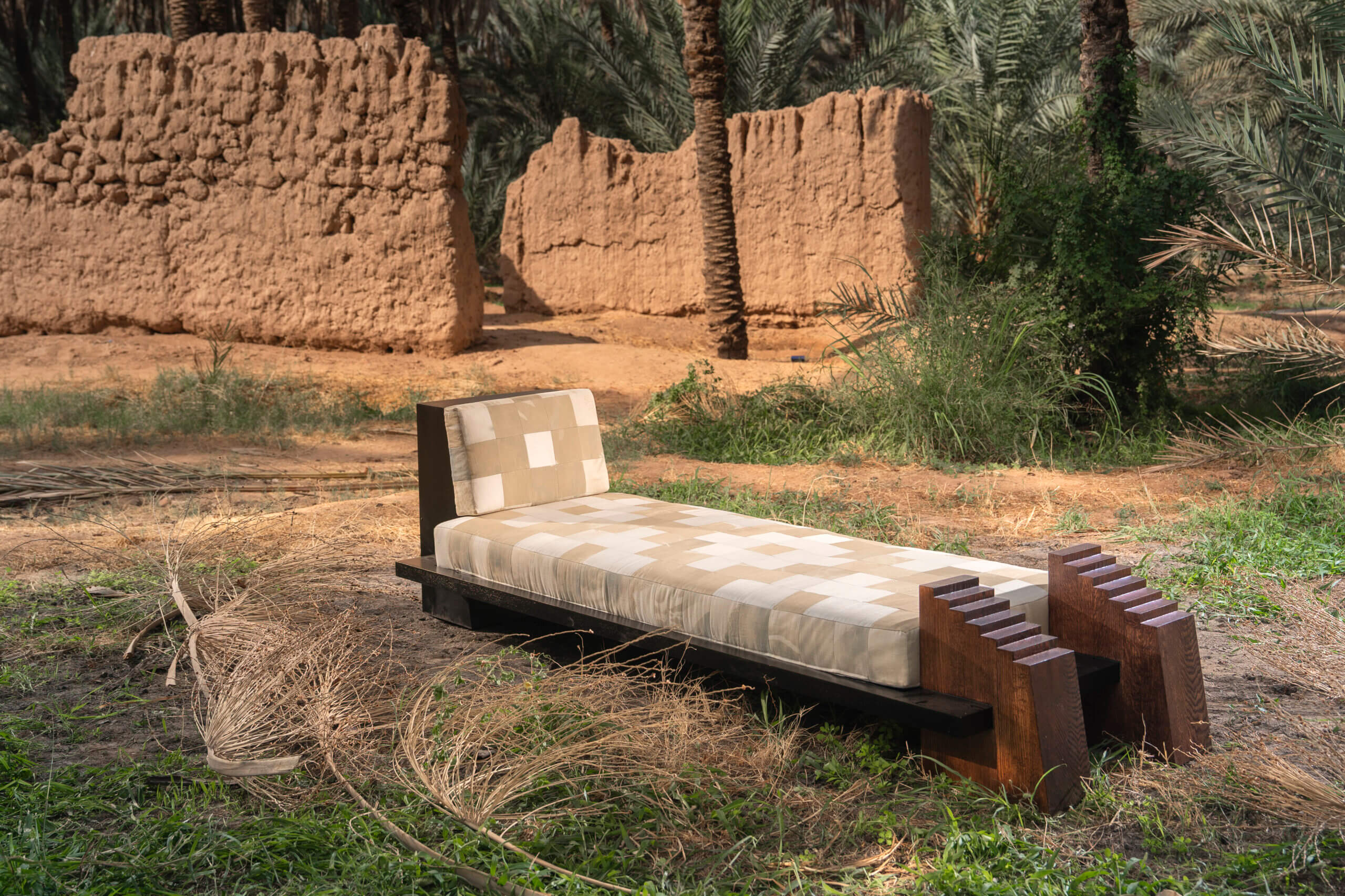
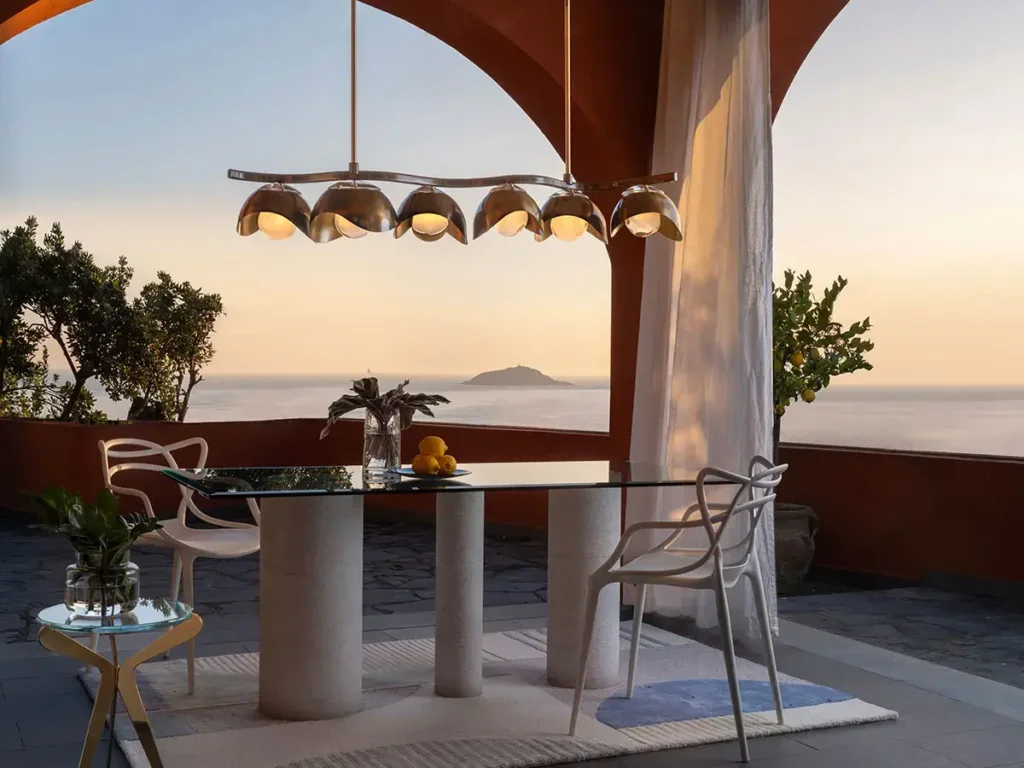
Lafiya by Paul Ledron (Image courtesy of Lorenzo Arrigoni)
Both Belgian talent Ori Orisun Merhav and Abidjan-based designer Paul Moustapha Ledron choose to harness the material properties of palm leaves; natural matter prevalent here and anchored by an age-old artisanal tradition with a deeply resourceful underpinning. The former combined it with the other well-entrenched technique of shellac to create biomorphic lighting and seating. The latter harnessed it as a type of paper—alongside black-dyed meranti and sandiyan wood; cyanotype textiles; brass; and ceramic—to compose a series of one-off furnishings intended to evoke, even impart, the meditative qualities of the oasis on its users.
Tunisian duo Altin Studio chose to work with palm wood; creating a layered, bent-frame coffee table that honors this element as a living archive of ecological evolution and human labor.
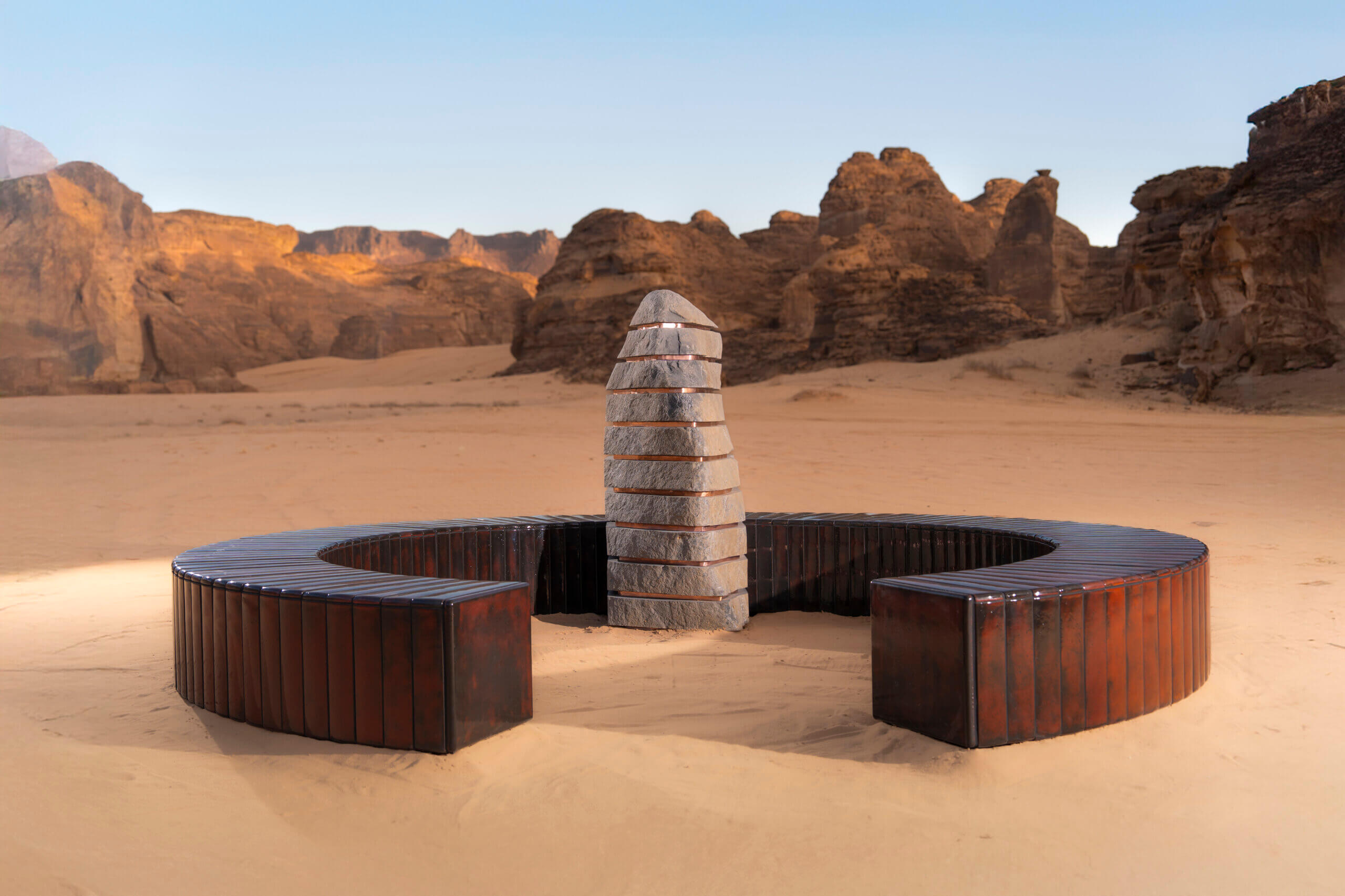
Both Riyadh-based Aseel Alamoudi and Amsterdam’s Studio ThusThat probed the macro dimensions of sand and hardened basalt in public furniture concepts with even grander potential. Alamoudi riffed on the idiosyncratic limestone cliff faces found here and created new abstract play equipment for children. She also imagined a massive, speculative play landscape—using the same 3D-printed compacted sand material—that could embed within the desert floor. Combining the slag byproduct of copper mining—a new industry currently emerging in the region—combined with the petrified basalt found atop the same cliffs, Studio ThusThat engineered a new facade tile, one that could lead new construction projects. The architectural element was presented during the AlUla Arts Festival and the finish of a semi-circular bench, reflecting the shape of ancient structures prevalent throughout the Arabian desert.
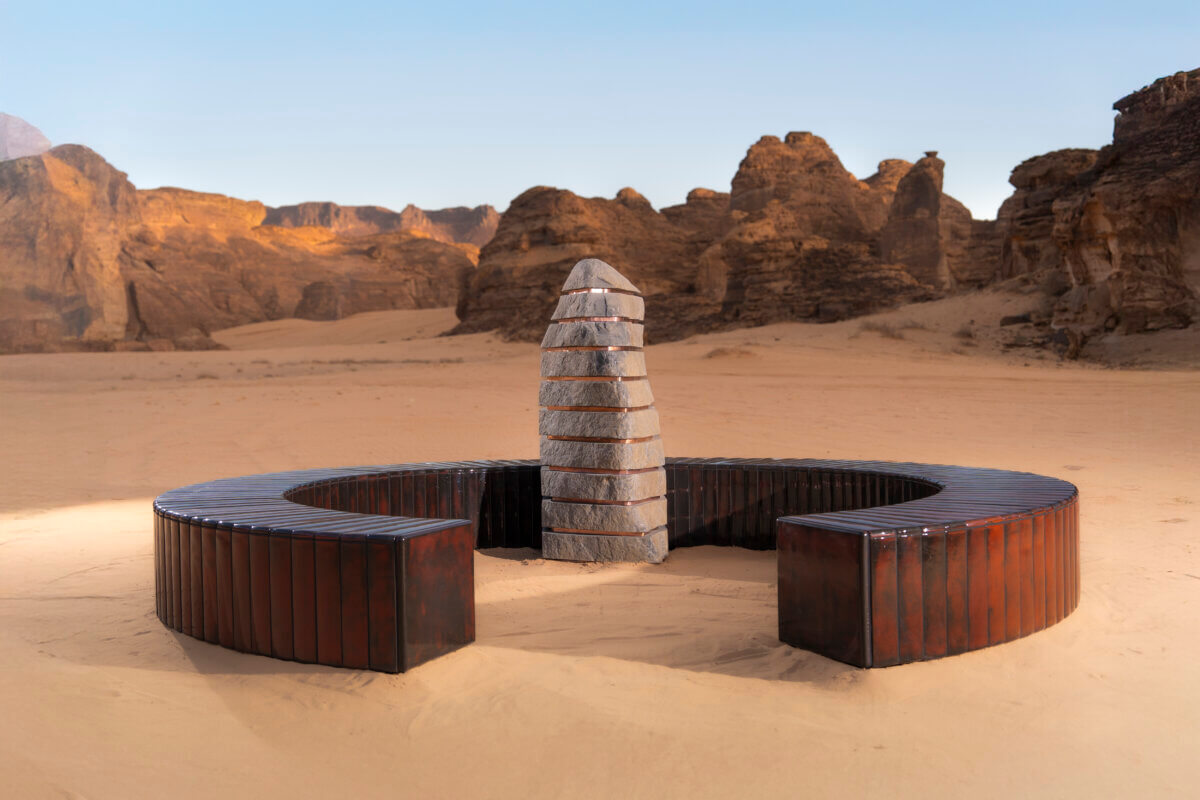
Harrat by Studio ThusThat (Image courtesy of Lorenzo Arrigoni)
Among the finalists of the concurrent AlUla Design Award program—representing a whopping 31 nations—two talents were conferred a monetary sum and the prestige. For the product category, Qatari talent Abdulrahman Al Muftah won with his handcrafted terracotta Bird Whistle concept. For the fashion category, French jewelry designer Matthieu Gautier grabbed top prize with his Monumental Miniature wearable objects. The forms distill the massing of the carved limestone Hegra tombs. Just like with the AlUla Design Residency program, the underlying but often overlooked architectural and ecological legacy of the historic desert oasis was the main inspiration for these projects.
Clearly, AlUla is a fruitful incubator for contemporary design, certainly a context to test a new type of site responsible methodology expressed in a wide range of object-based and structural typologies.
Follow ArtsAlUla on Instagram >>>