
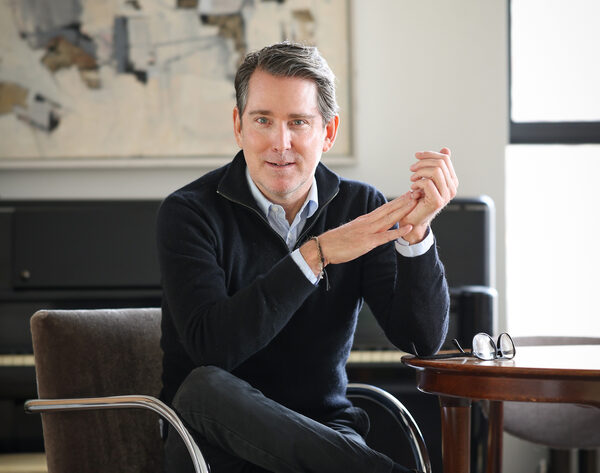
Andrew Franz
FounderAndrew Franz ArchitectAndrew Franz founded AFA with the idea that interiors and architecture should be integrated as one in order to curate a cohesive experience and narrative. His belief that design should evoke emotion while connecting to its natural environment is deeply rooted in his meticulous consideration of light, materiality, craft, and proportion. Andrew’s award-winning residential, cultural, and commercial
projects include the Fire Island House, the East End House, the Hill Office, and Tribeca Loft, each garnering multiple accolades for their innovative design approach. His work appears in Architectural Digest, Elle Décor, Interior Design, and The New York Times.
A native New Yorker, Andrew grew up in Brooklyn and spent his childhood summers in Maine and coastal New England. This combination of urban and rural environments influenced his appreciation for the juxtaposition of the built and natural environments and his preference for episodic spaces that tell a story. He attended Carnegie Mellon University and the Cite Universitaire in Paris and graduated with honors from the University of Wisconsin. Committed to excellence and sustainability, Andrew is a
member of The American Institute of Architects, and he holds accreditation as a LEED professional, reflecting his dedication to advancing design practices that positively impact people and the environment.
The Hospitality Effect: The Rise of Multidisciplinary Design
The boundaries between design disciplines are increasingly fluid. Strategies once associated with hospitality—storytelling, placemaking, and an emphas
…The boundaries between design disciplines are increasingly fluid. Strategies once associated with hospitality—storytelling, placemaking, and an emphasis on experience—are now shaping projects across sectors, from residential buildings and cultural in
…The boundaries between design disciplines are increasingly fluid. Strategies once associated with hospitality—storytelling, placemaking, and an emphasis on experience—are now shaping projects across sectors, from residential buildings and cultural institutions to sports venues and retail environments. This panel will explore what how collaboration across disciplines expands creative possibilities, and why the future of design lies in approaches t
…The boundaries between design disciplines are increasingly fluid. Strategies once associated with hospitality—storytelling, placemaking, and an emphasis on experience—are now shaping projects across sectors, from residential buildings and cultural institutions to sports venues and retail environments. This panel will explore what how collaboration across disciplines expands creative possibilities, and why the future of design lies in approaches that are hybrid, experiential, and connected to how people live, gather, and engage with space.
In Partnership with Hospitality Design Magazine
Show MoreClick the title to see all detailsShow More