The fifth edition of ICFF’s Emerging Designers Spotlight Online is here. We’re excited to feature the emerging talent discovered through ICFF’s global network, whose creative voices are shaping the future of contemporary design.
Presented in partnership with CLEVER, the series offers emerging designers a platform for sustained media exposure and industry visibility. In our fifth feature, we spotlight three practices united by a shared curiosity for materials and making. Whether reimagining traditional manufacturing techniques, developing new dialogues between digital tools and craft, or translating cultural heritage into contemporary forms, each designer approaches their work as an exploration of process, meaning, and innovation. Together, they demonstrate how the next generation of designers is expanding the possibilities of contemporary design while remaining deeply connected to material traditions.
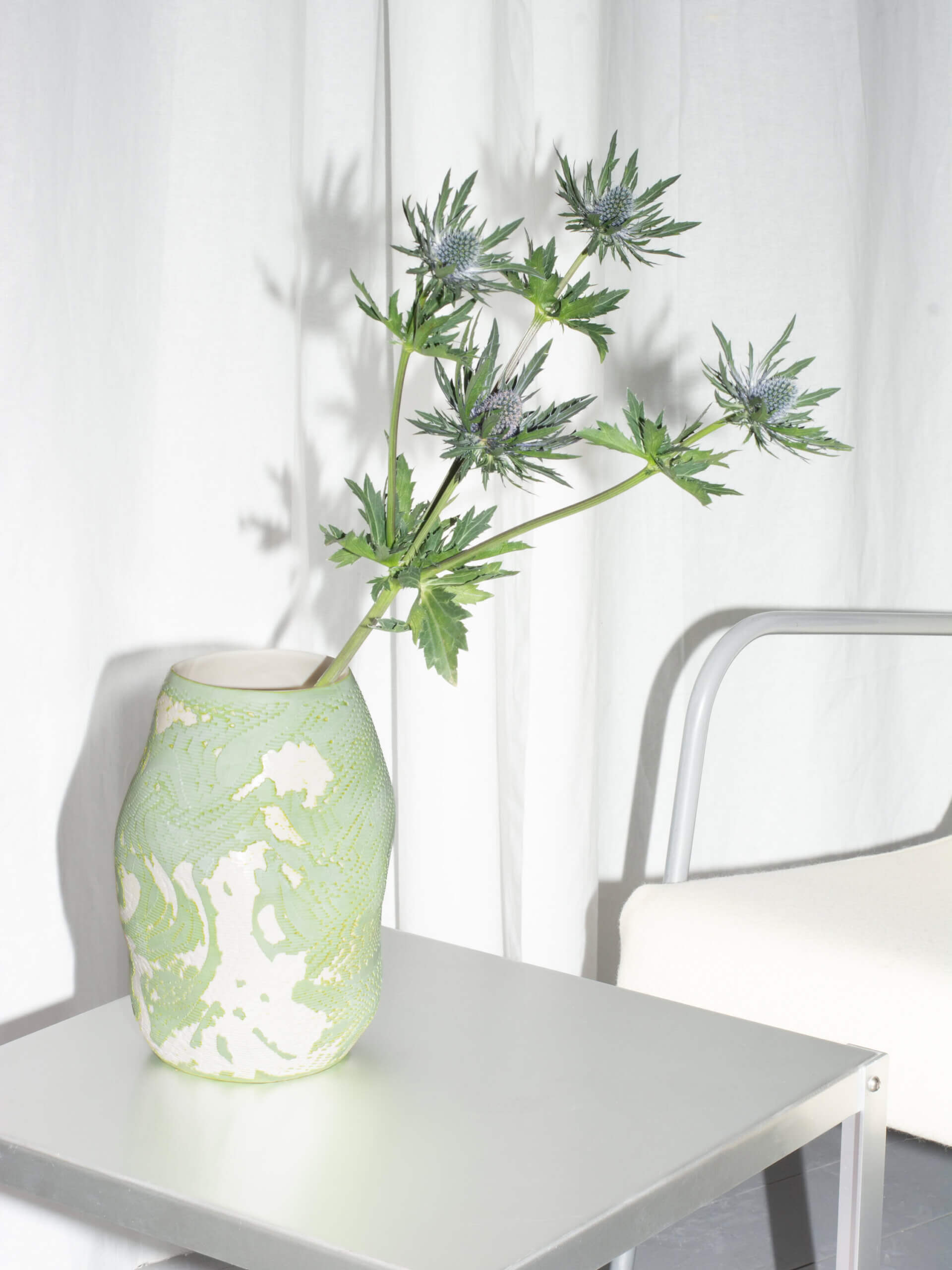
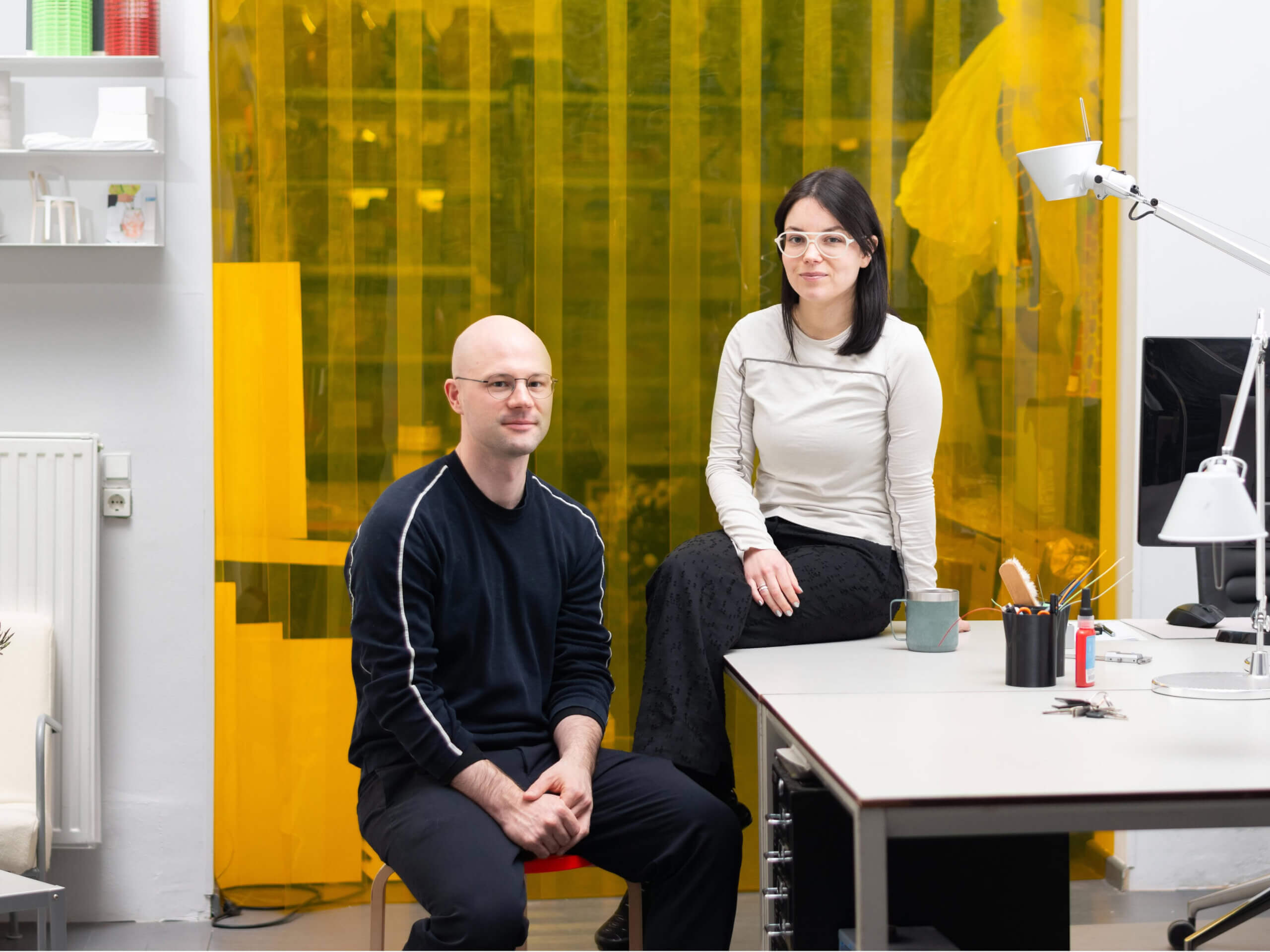
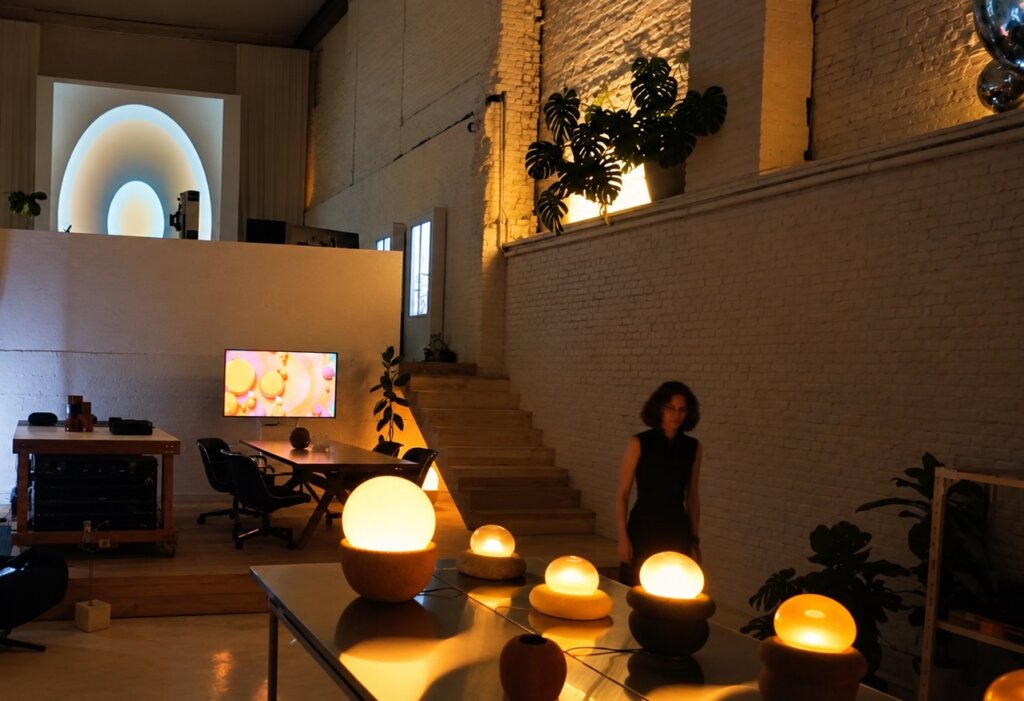
(Image above courtesy of JÜNGERKÜHN)
What inspires you as a young designer?
I’m driven by curiosity and by the desire to make things that didn’t exist before. My work explores the intersection of craft and industry, using materials and processes as tools to create objects that feel both familiar and unexpected.
What are you working on right now?
Right now, I’m working on furniture, ceramics, fragrances, and a few experimental objects. I’m especially interested in finding new ways to use traditional materials and manufacturing processes, creating pieces that feel contemporary while still carrying a sense of history. Most of my projects begin with a simple question: what happens if we use a familiar material or process in a completely different way?
What is a specific project you would like to share?
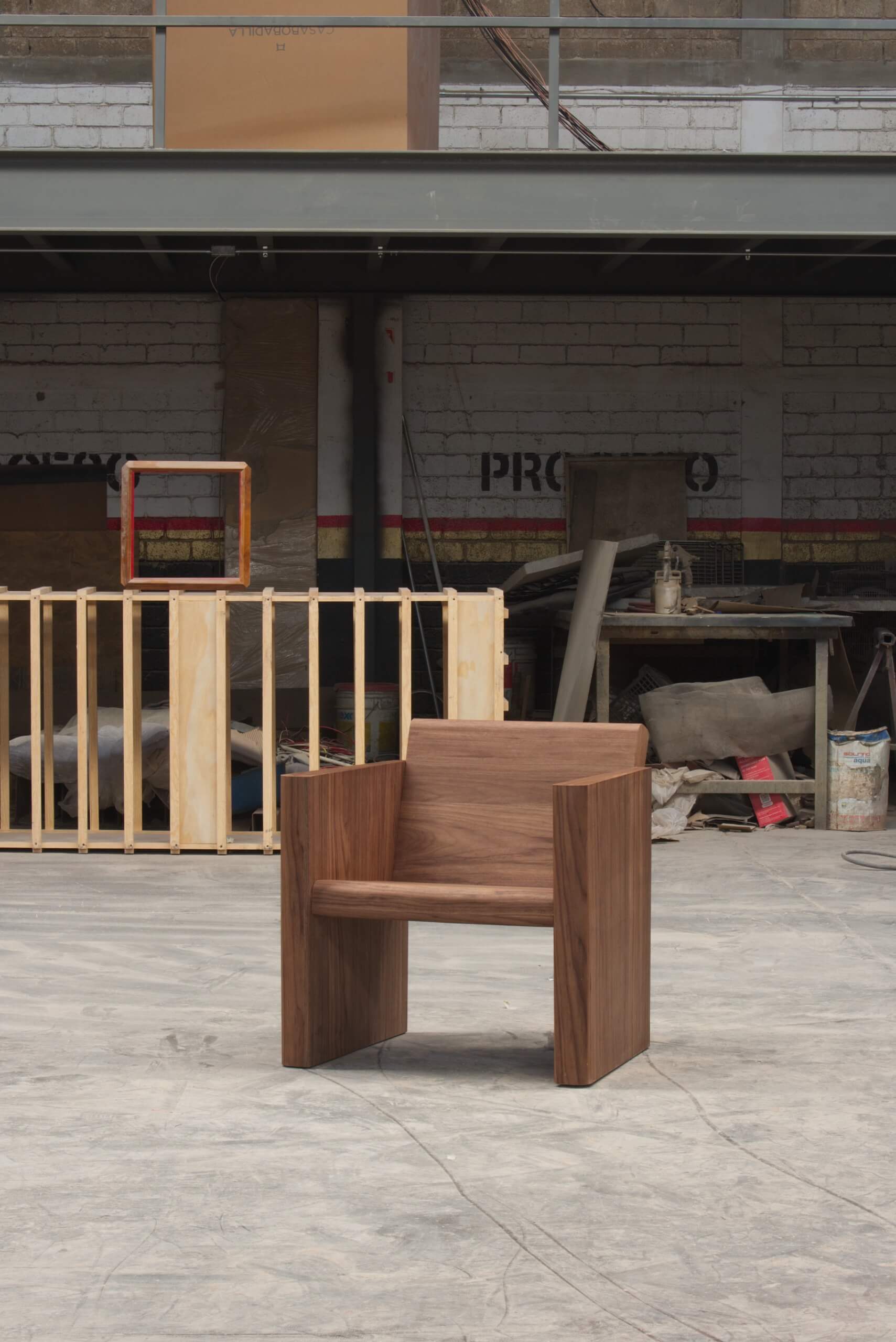
The project I would like to share is a collection developed in collaboration with Casa Bobadilla. It consists of a chair, a bench, and a credenza, all created from a single structural element: a vertical plane that is repeated and reorganized to generate different pieces. The collection is inspired by the wings of airplanes and by humanity’s long-standing fascination with flight. Through a combination of CNC machining and hand-finishing in walnut, the project explores how a simple module can evolve into a complete family of objects while maintaining a consistent language of balance, rhythm, and proportion.
What do you hope to contribute to the world?
I hope to contribute a sense of wonder. We live surrounded by objects, yet very few of them make us pause, question, or feel something. Through my work, I try to create objects and experiences that carry meaning, celebrate human ingenuity, and connect the past with the future. If I can inspire people to look more closely at the world around them, then I’ve done my job.
Discover more of Rodrigo Noriega’s work: Instagram.
What inspires you as young designers?
We are inspired by materials themselves. And we love physical things, handcrafted, industrially produced or in between. In a world that pulls increasingly towards screens and an online world, we feel very lucky to have this tangible component to our work. Even though we use a lot of digital tools and programs, our aim is to give more agency to the materials used and to allow them to be part of the design.
What are you working on right now?
Currently we are working on a new series of porcelain vessels. A lot of our work is quite experimental, so right now we are also thinking of new ways to apply our ideas to products and furniture.
What is a specific project you would like to share?
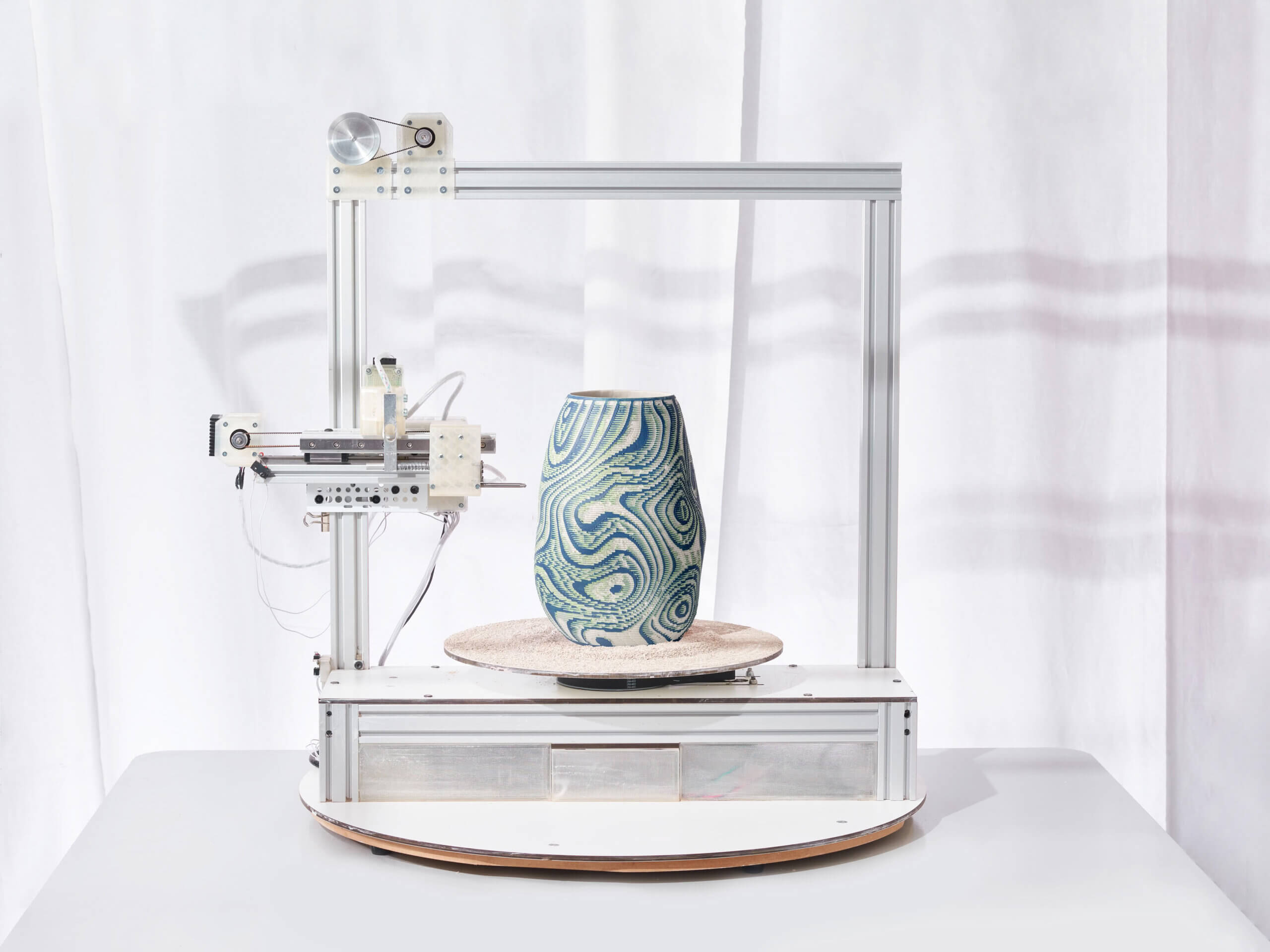
”Soft Touch’ is a ceramic project very dear to us as it illustrates our idea of merging digital with traditional crafting. As a case study, we custom build a machine that can feel an objects surface and react to it similar to how a craftsperson would. With this setup, we are exploring the translation of programmed commands into tangible material. The vases created are cast with multiple layers of color and then digitally engraved. We are especially interested in the overlapping of precise programmed patterns and unpredictable material behavior.
What do you hope to contribute to the world?
We hope to have some influence on how industry approaches manufacturing: While industrial production is a great achievement in itself, we also believe that we are at a point where striving for ever quicker and cheaper output cannot be the sole goal anymore. We need people to keep their things for longer, care for them and to value them accordingly. That’s why we design processes that allow (semi) automated production methods to produce unique and lively objects that feel a little bit like crafted ones. And we would love to see industry catching on! Our work sits alongside traditional crafts as a distinct practice, extending what automated production can do while preserving the values of variation and material sensitivity.
Discover more of Studio JÜNGERKÜHN’s work: Website.
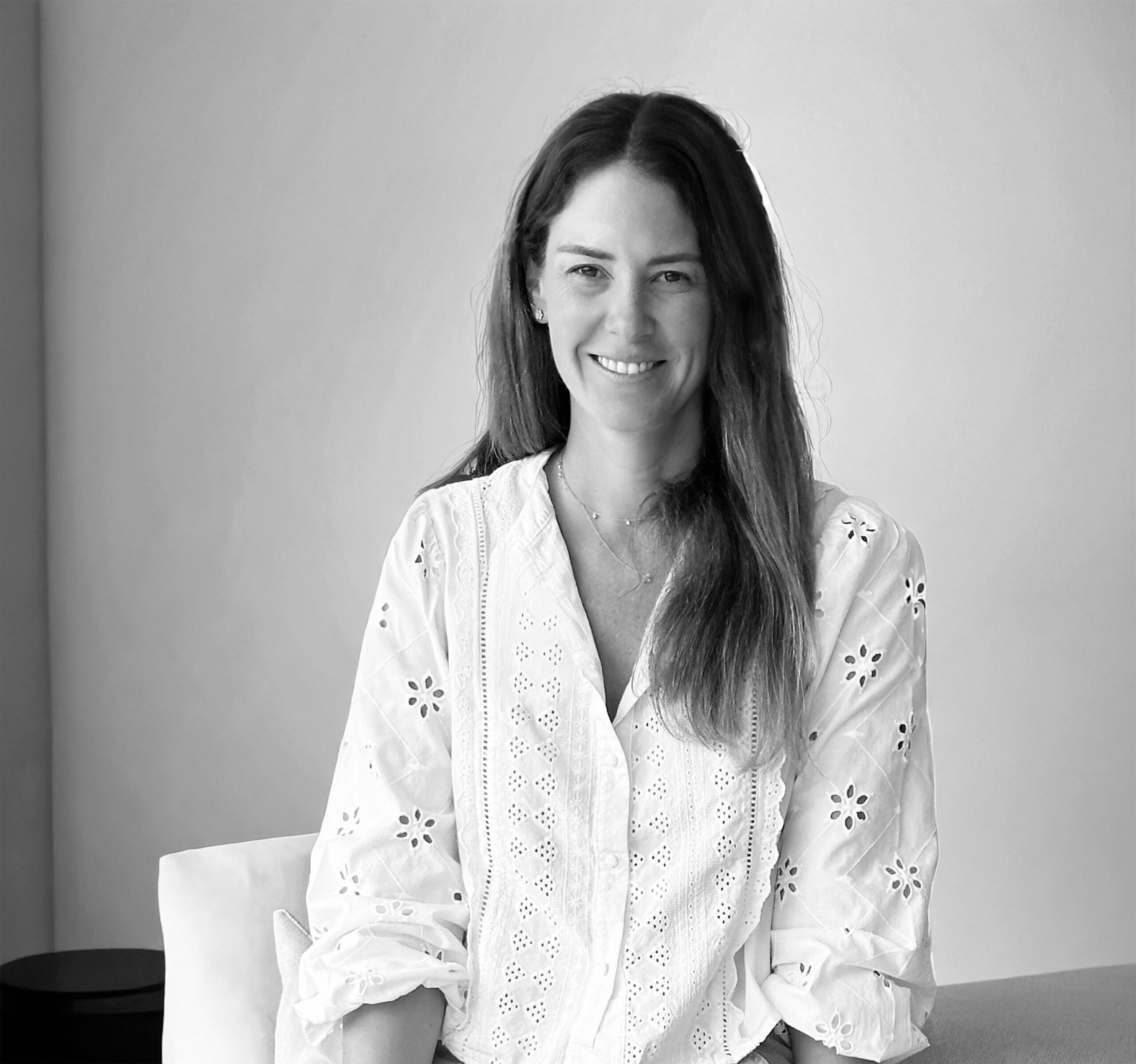
What inspires you as a young designer?
What drives me as a designer is the opportunity to reinterpret Peru’s rich material heritage through a contemporary lens. I am passionate about connecting traditional craftsmanship with modern design, creating pieces that showcase the beauty of natural materials while telling a story about place, culture, and identity. My goal is to share the richness of Peruvian materials and artisanship with a global audience. Through ILANZ, I aim to tell new stories about Peru—ones that celebrate its richness, creativity, and material heritage through thoughtful design.
What are you working on right now?
I am exploring opportunities to export my pieces into a global audience. Based on my experience at ICFF it made me rethink about what materials are possible and which are not.
What is a specific project you would like to share?
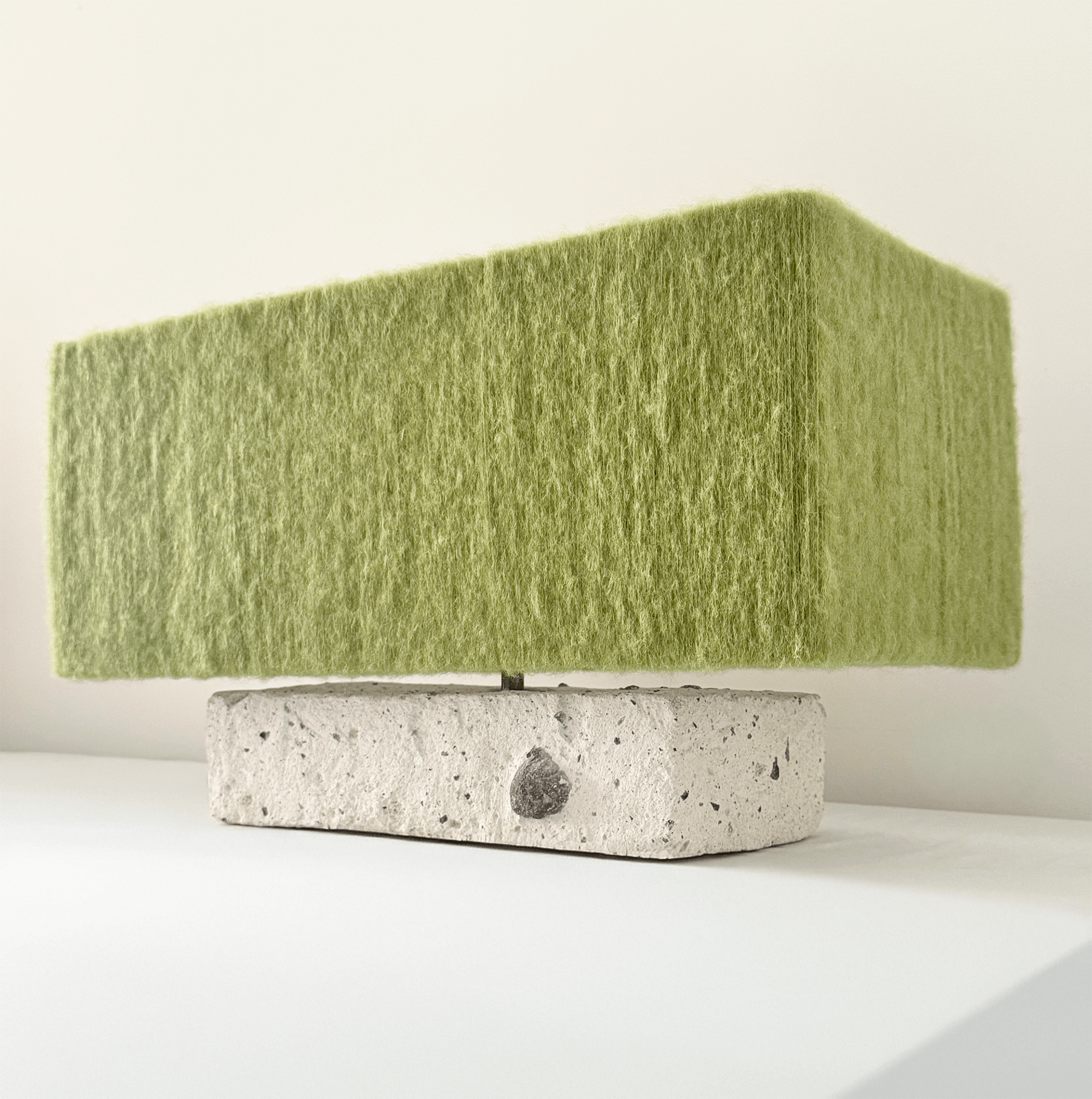
AWANA is a lighting collection that explores the act of interlacing stone, fiber, and light. Inspired by Peru’s rich material landscape, the collection combines hand-carved stone bases with woven natural fibers, bringing together materials that originate from different regions of the country. Through a contemporary design language, AWANA highlights the inherent beauty of texture, weight, and craftsmanship, creating sculptural pieces that balance solidity and softness. Each lamp reflects ILANZ’s commitment to reinterpreting Peru’s material heritage, connecting ancestral craft traditions with modern design while celebrating the relationship between material, place, and light. AWANA — The act of interlacing stone, fiber, and light.
What do you hope to contribute to the world?
I hope to create objects that people choose to live with for decades, not seasons. Natural materials carry a sense of permanence and authenticity that transcends trends, and I am drawn to their ability to gain character over time. Through my work, I want to promote a more thoughtful relationship with design—one that values longevity, craftsmanship, and connection over disposability and passing fads.
Discover more of ILANZ’ work: Instagram.