Regardless of whether it’s a one-off chair acquired at a gallery or a relatively inexpensive storage system picked up at Ikea, style seems to be outweighing the value of use these days. Borrowed from fine art, self expression is cropping up in gimmicky flourishes that can often impede the comfort, ergonomics, and efficiency of a furnishing.
For Wisconsin-based contract brand KI, this encroaching condition needs to be turned on its head. The equation should be re-formulated and the ever-relevant Modernist principle of form following function restored. But for the producer of school and workplace solutions, this isn’t so much about imposing the one-size-fits-all approach often associated with this movement. Rather, its human-centric design philosophy “centers-on” the practice of constantly re-assessing and re-calibrating established paradigms—furniture typologies—according to the changing needs of different users, regardless of if that’s one individual or a large group.
KI not only positions itself as a manufacturer but an educational platform; an open resource culling and imparting a wide range of best practices in spatial planning, market analysis, and even, the design of new products themselves. It’s for this reason that the brand’s sponsorship of this year’s ICFF WANTED Schools Workshop is such a good fit. Ahead of this year’s edition, Jason Lazarz—KI’s Architecture and Design Market Lead (National)—shares more on why.
(Top image courtesy of KI)
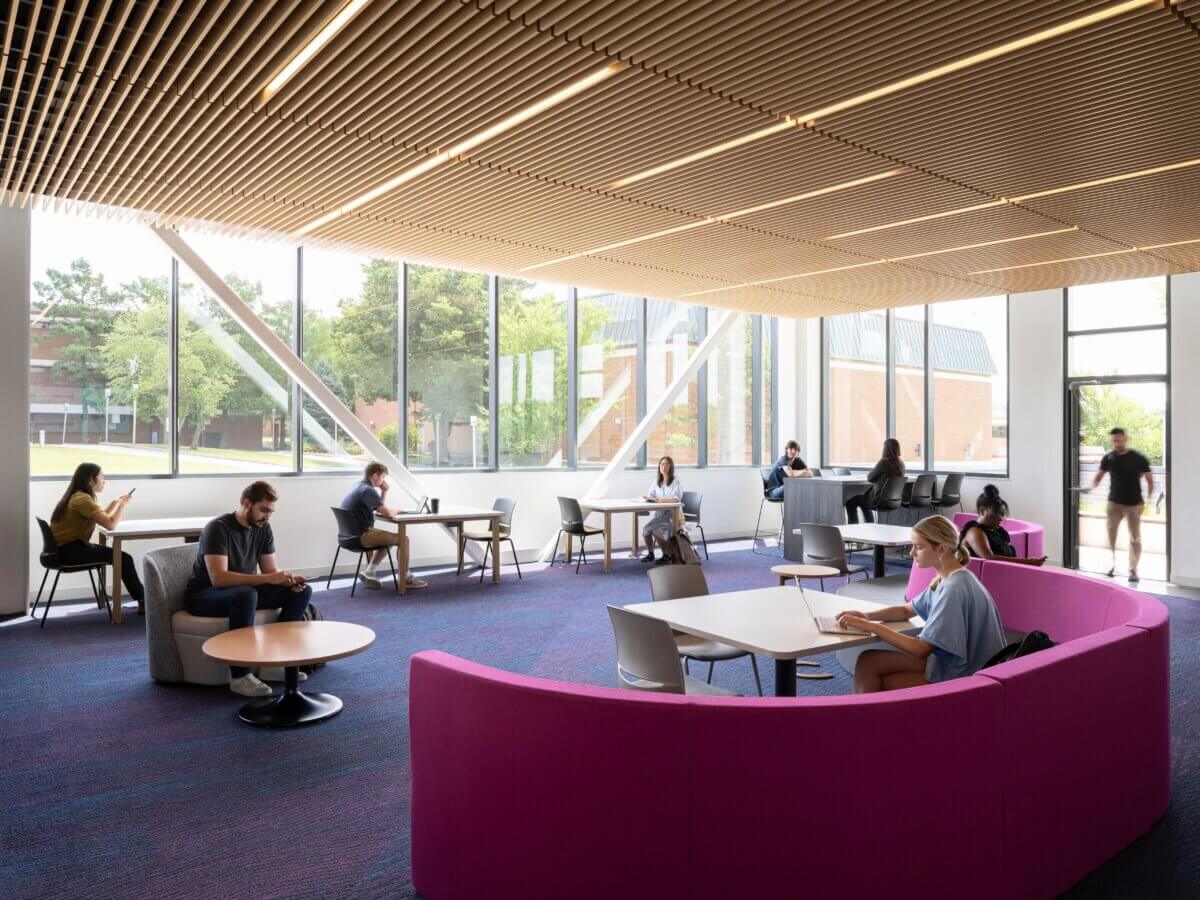
Sonrisa Lounge Furniture (Image courtesy of KI)
Why does it make sense for KI to be sponsoring this year’s ICFF WANTED Schools Workshop?
It makes sense for KI to sponsor this year’s ICFF WANTED Schools Workshop because creating thoughtful environments for learning, working, and collaborating has always been central to our mission. For decades, KI has furnished spaces where teams come together to solve problems and explore ideas, whether in schools or in the workplace. Supporting this workshop felt like a natural extension of that work. As we look for ways to champion the design community, especially emerging designers, we focus on opportunities where our involvement can be meaningful and where we can contribute real value to the conversation.
How is KI a unique player in the design of learning spaces, other types of collaborative environments, and furniture conducive to these typologies?
Our work begins with understanding human behavior and the ways people gather, focus, collaborate, and move through shared spaces. Rather than treating individual pieces in isolation, we view learning and collaborative environments as flexible systems that must evolve over time. This approach informs furniture designed to support a wide range of postures, activities, and interactions, while remaining intuitive and comfortable to use. The result is design that quietly supports people as their needs and behaviors change, without drawing attention to itself.
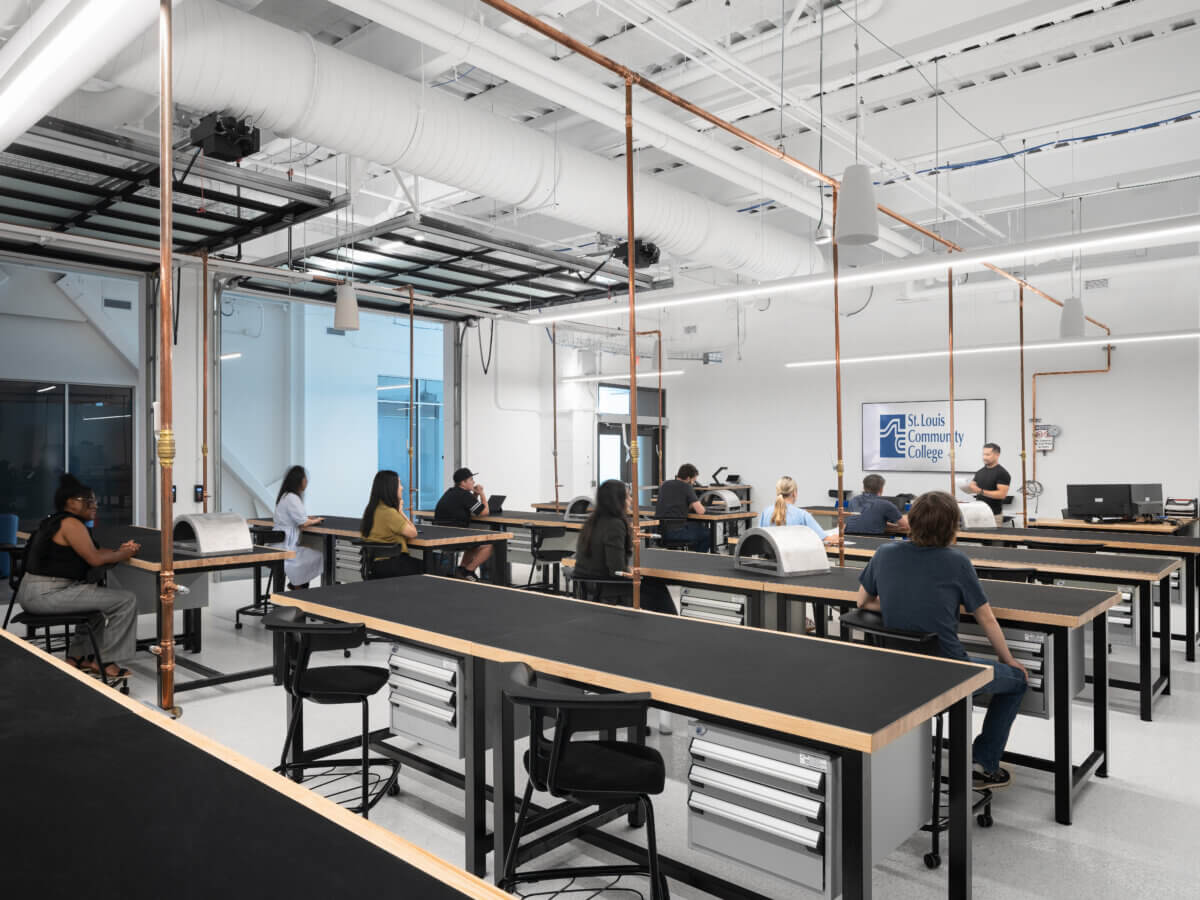
Ruckus Stools (Image courtesy of KI)
How does the brand’s philosophy of function over form resonate with the theme “Unseen Narratives,” considering sound, rhythm, data, technology, and emotion as key factors in the development of new user-centric design solutions?
Unseen narratives capture how our philosophy of function over form comes to life. Furniture is far more than what you see. Its value is found in how it supports you, adapts to you, and moves with you. Ergonomics, adjustability, and motion work quietly in the background, responding to the rhythms of everyday use. Inside a table or chair are mechanisms that often go unnoticed, yet they are essential to comfort, performance, and longevity. Even the emotional connection we feel, whether it is ease, focus, or a sense of wellbeing, comes from these unseen elements working together. In that way, our designs tell a story not through appearance alone, but through how they function, feel, and support the human experience.
What is the extent of KI’s involvement in shaping and facilitating this program?
KI is an active partner in the workshop. Our team will be on site throughout the show to support students and faculty, offering guidance and sharing perspective as their work evolves. I will also serve on the jury for the design challenge, taking part in the conversation and helping review ideas as they take shape. Our goal is not simply to sponsor the space, but to participate meaningfully in the conversations that influence how designers think about the environments of the future.
Visit KI’s Website >>>