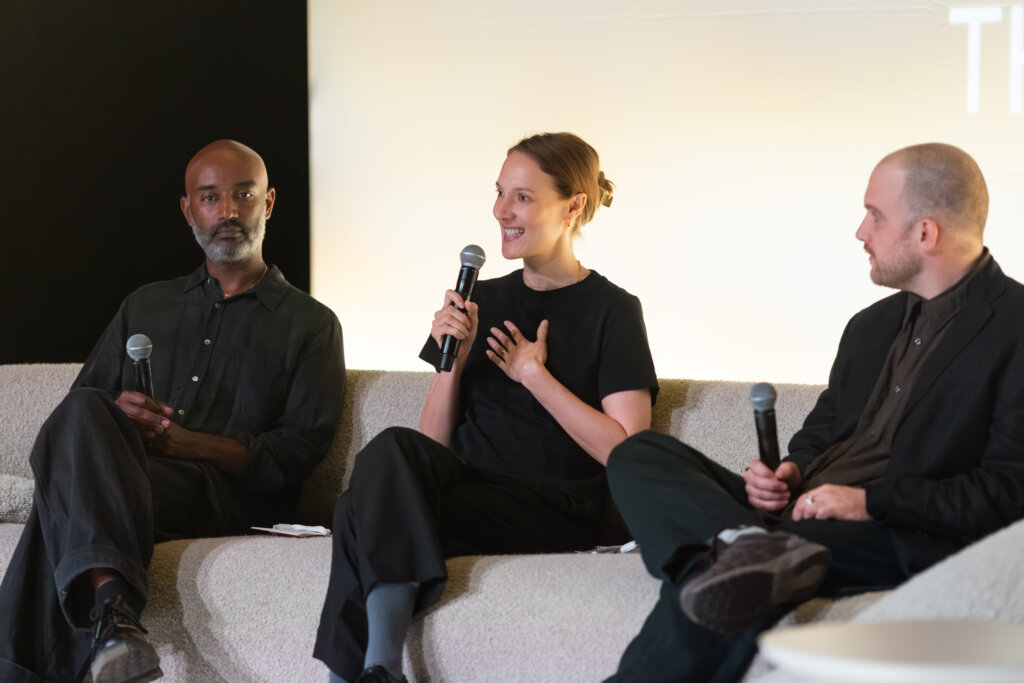
The second edition of ICFF’s Emerging Designers Spotlight Online is here. We’re excited to feature the emerging talent discovered through ICFF’s global network, whose creative voices are shaping the future of contemporary design.
Presented in partnership with CLEVER, this second feature highlights Lynn Lin Studio, Ridezign, and Muntanya Lab. These three emerging voices are united by sustainable thinking, material experimentation, and culturally attuned design, offering a forward-looking glimpse at the ideas shaping contemporary practice ahead of the series’ live culmination at ICFF in May 2026.
(Image above courtesy of Ridezign)
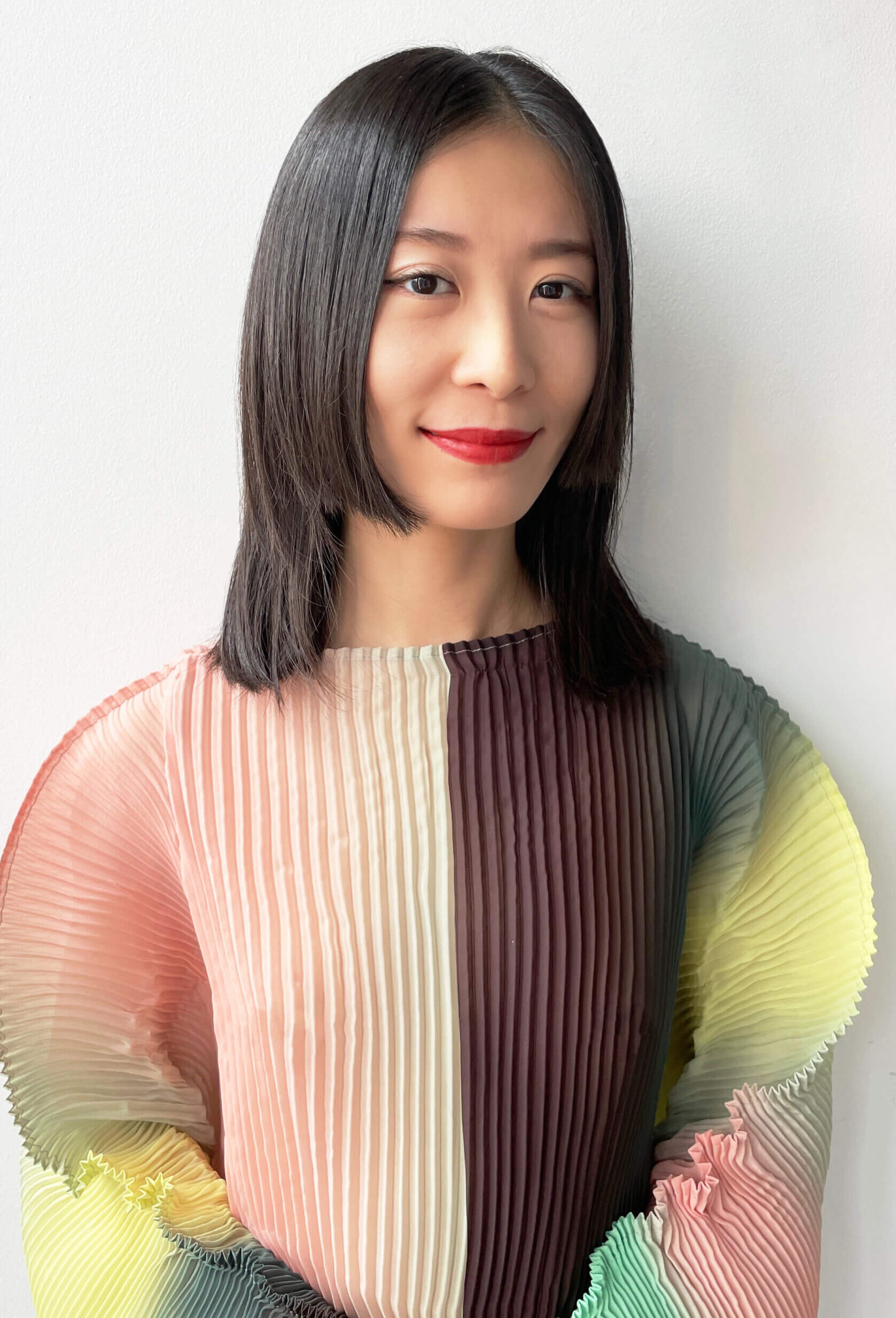
Chinese-Canadian designer Lynn Lin merges Eastern poetic sensibility with Western pragmatism to craft sustainable, user-centered pieces that turn everyday design into a thoughtful contemporary experience.
What inspires you as a young designer?
I draw deep inspiration from formal and technological solutions found in nature, and I envision the future of design as being driven by material and production innovation. Guided by a belief in the poetry of the everyday, I create function-informed forms and emotion-empowered experiences that quietly address soft problems, transforming daily interactions into moments of reflection and delight. My driving force as a designer is the alignment of concept and production through informative, authentic storytelling.
What are you working on right now?
I’m currently working on a piece inspired by my recent trip to Bali. Using Indonesian vernacular materials and traditional craftsmanship, I aim to pay homage to the vibrant yet soothing energy of the place and its culture, translating that experience into a form that others can resonate with. My key design methodology is to translate something abstract into a concrete object—only for it to evoke abstraction once again.
What is a specific project you would like to share?
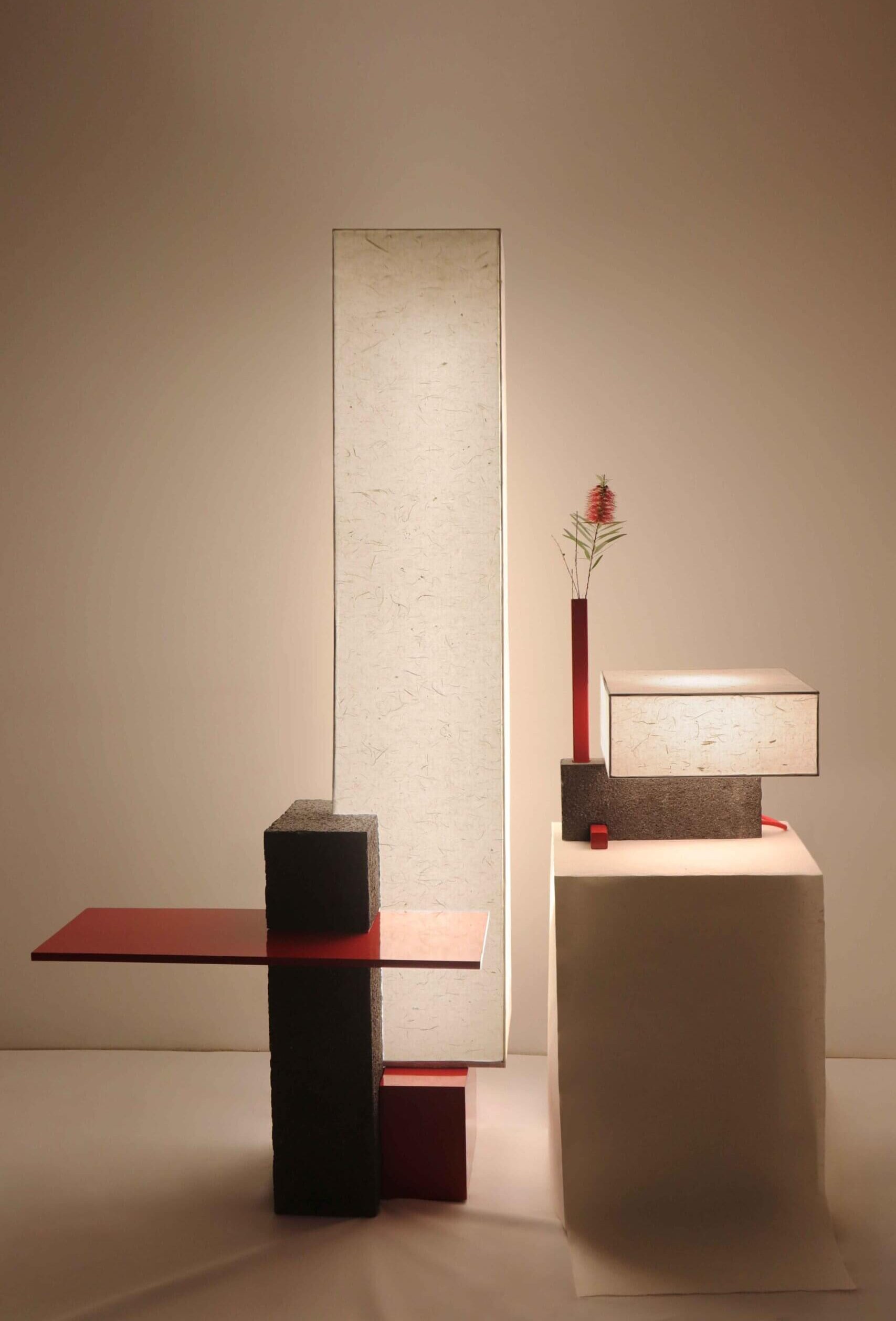
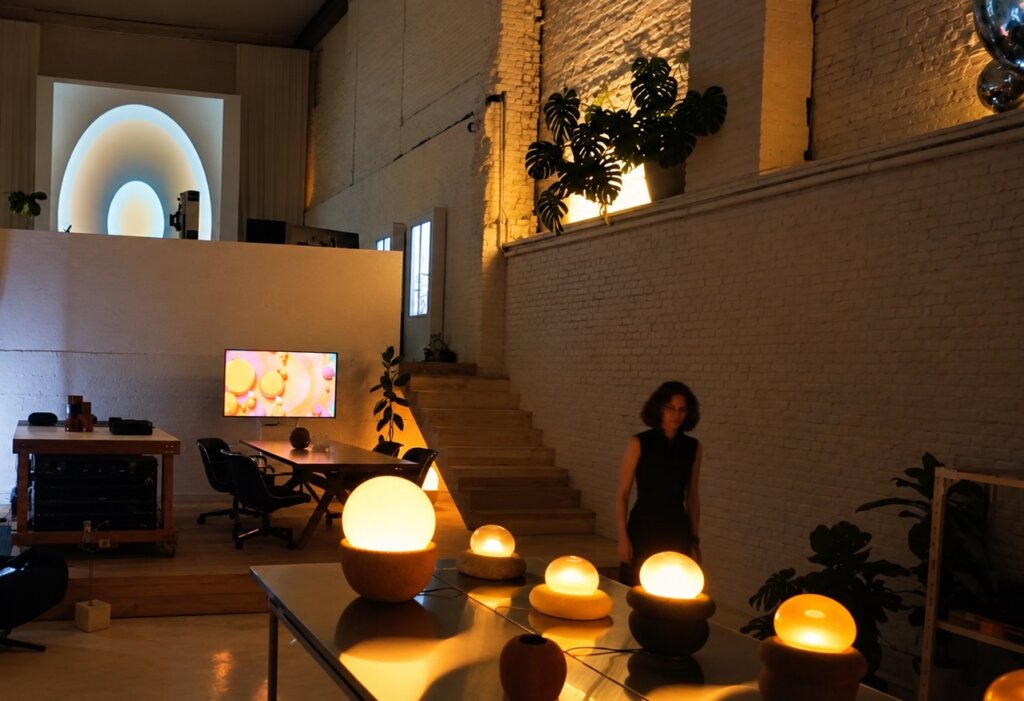
SOLL is a sculptural lighting series inspired by Mexican modernist architecture. It unites volcanic stone with hand-crafted mulberry paper shades and powder-coated crimson steel components. This unexpected material combination, paired with a bold geometric composition, challenges conventional approaches to lighting—balancing softness with solidity, movement with stillness, and tradition with modernity. Each piece in the series is conceived as multi-functional: the floor lamp integrates a side table, while the table lamp incorporates a small flower vase. These thoughtful additions reduce interior clutter and invite new interactions, allowing the lamps to shape space beyond illumination. Merging contemporary design with traditional craftsmanship, SOLL is both a celebration of Mexican culture and a reflection of the designer’s personal identity and life journey. My goal is to expand the lamps into a full furniture collection that forms a complete landscape of abstract material composition.
What do you hope to contribute to the world?
Through my creativity, I hope to contribute objects and systems that help people connect, investigate more, and live with greater intentions. I see objects as cultural portals and quiet entry points into values, histories, and ways of living that expand our horizons. I aim to create work that sparks curiosity rather than demands attention, inviting people to ask questions about how things are made, where they come from, and why they exist the way they do. Design for me is a way to translate knowledge into form, allowing everyday objects to act as beacons of knowledge and inspiration within daily life. I want my work to respect resources, labor, and context, and to hold up over time both functionally and emotionally. Ultimately, I hope my creativity supports a more conscious relationship between people and the object environment they live with—where design adds meaning, not noise.
Discover more of Lynn Lin Studio’s work: Instagram, Website.
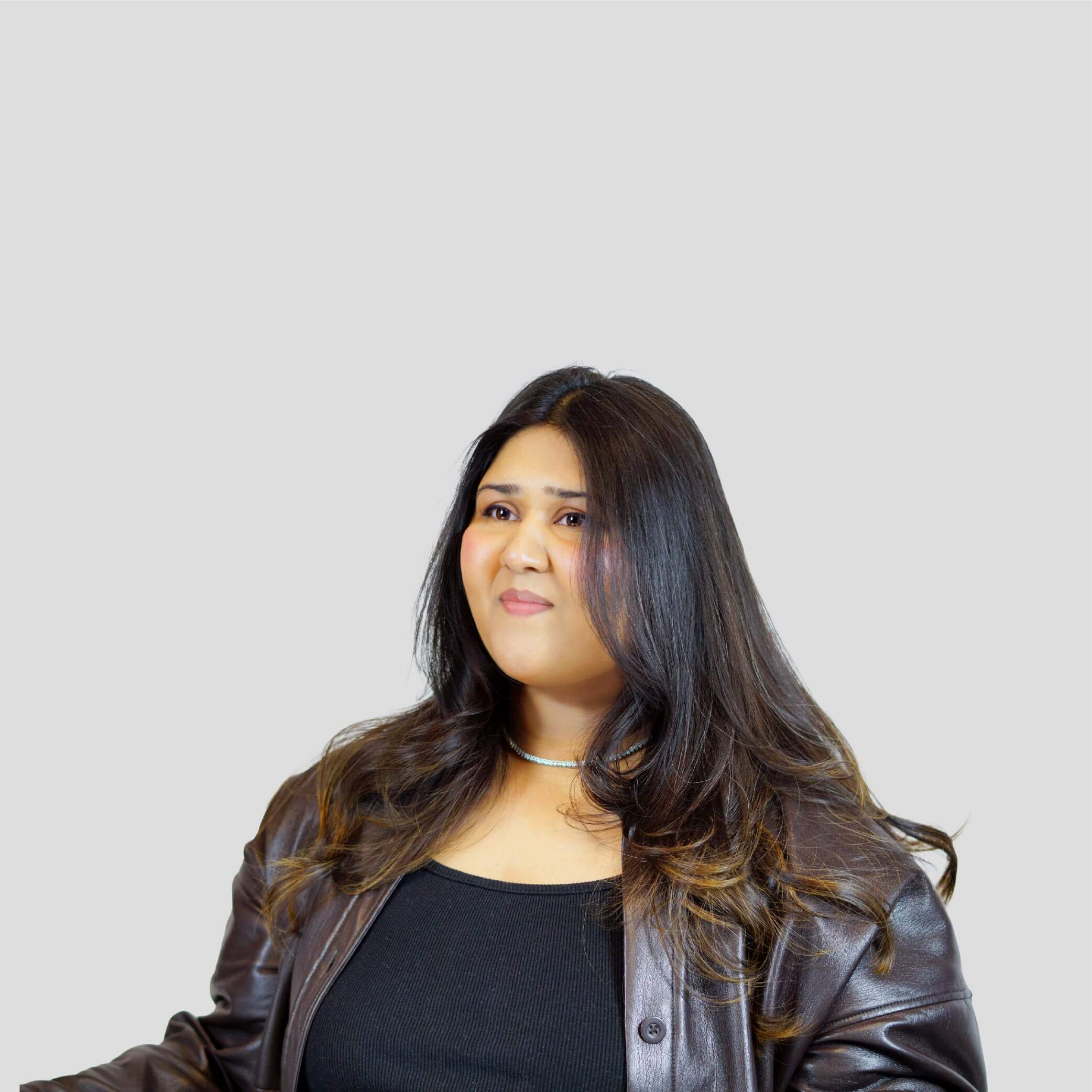
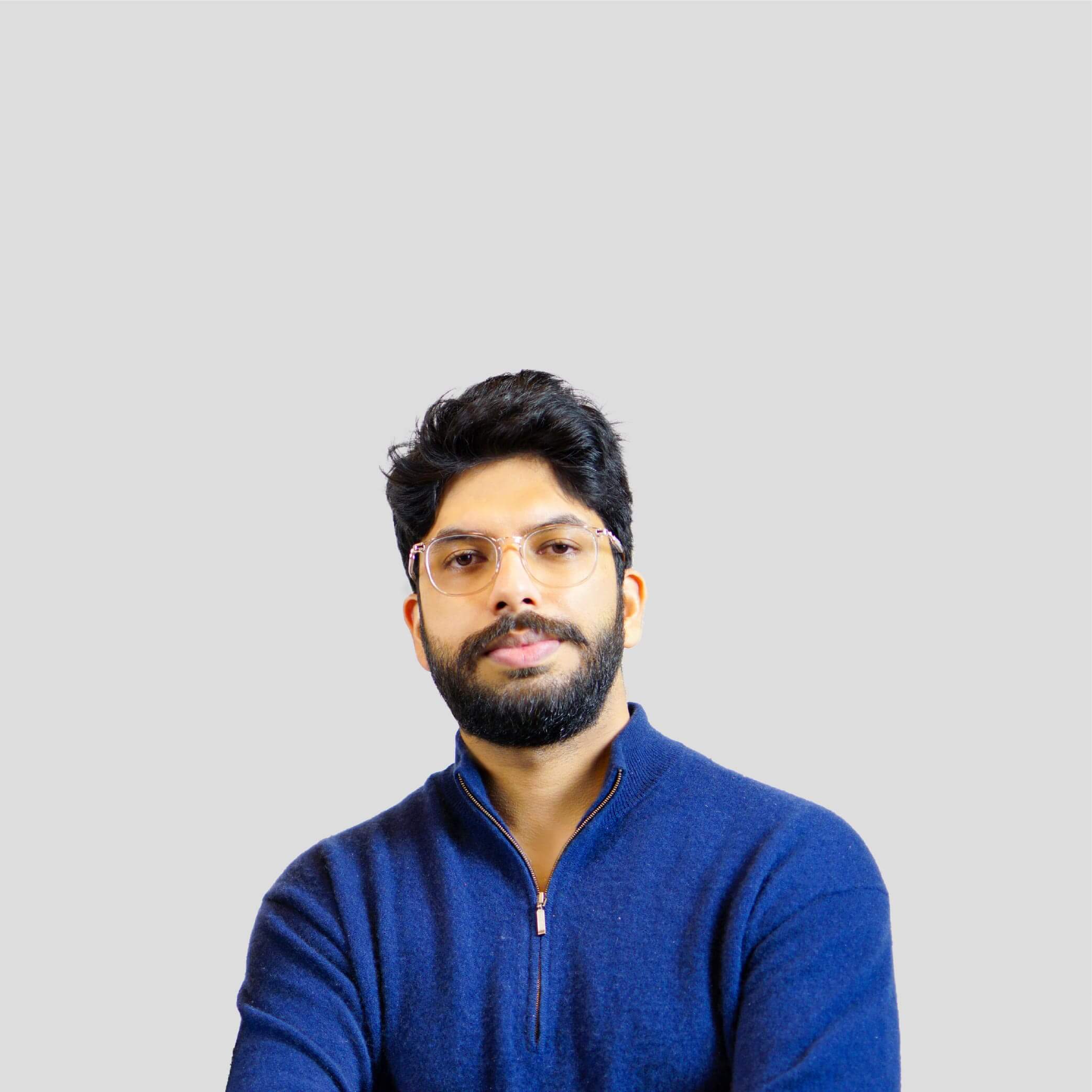
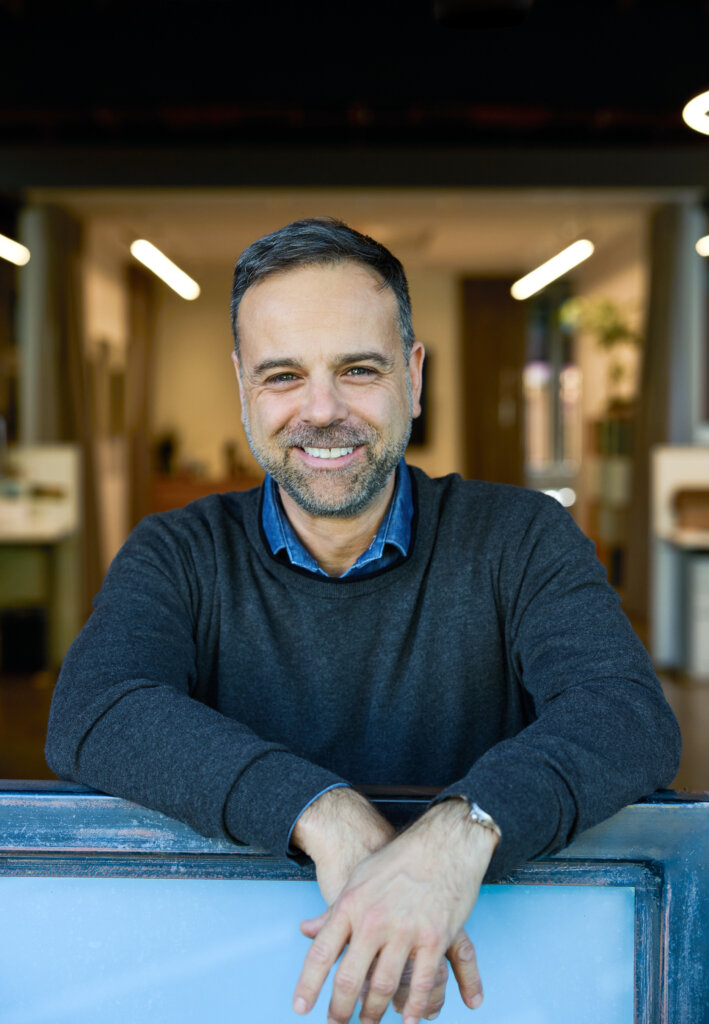
Ridezign, a Brooklyn-based studio founded by Ridima Jain and Manav Singla, reimagines plastics through sustainable innovation and artistic rigor, creating objects that elevate everyday materials into meaningful, enduring design experiences.
What inspires you as young designers?
We design because we are endlessly curious about the world — and because we inspire each other to stay that way. Our process is deeply collaborative and almost sacred to us. Every idea is built in dialogue: one of us starts a thought, the other bends it, challenges it, adds a layer, and suddenly something entirely new emerges — where 1 + 1 often feels like 3. The act of designing together — sketching, prototyping, questioning — is where the work truly comes alive. It’s about trust, curiosity, and the generosity of letting a concept become bigger than either of us individually. At the heart of our practice is the desire to create moments where people pause and notice something familiar in a new way. We are fascinated by that fleeting instant of recognition — when the ordinary becomes meaningful again. Rather than adding more to the world, we try to carefully remove what isn’t needed so that what remains can speak more clearly. We are deeply inspired by ancient architecture and early technologies, where beauty and usefulness were never separated. A structure was emotional because it worked, and it lasted because people cared about it. Today form and function are often seen as opposites, but for us they are inseparable. Emotional value is what allows an object to endure. That belief guides us in working with materials like plastic — materials often associated with disposability — and transforming them into objects people want to keep, live with, and return to every day.
What are you working on right now?
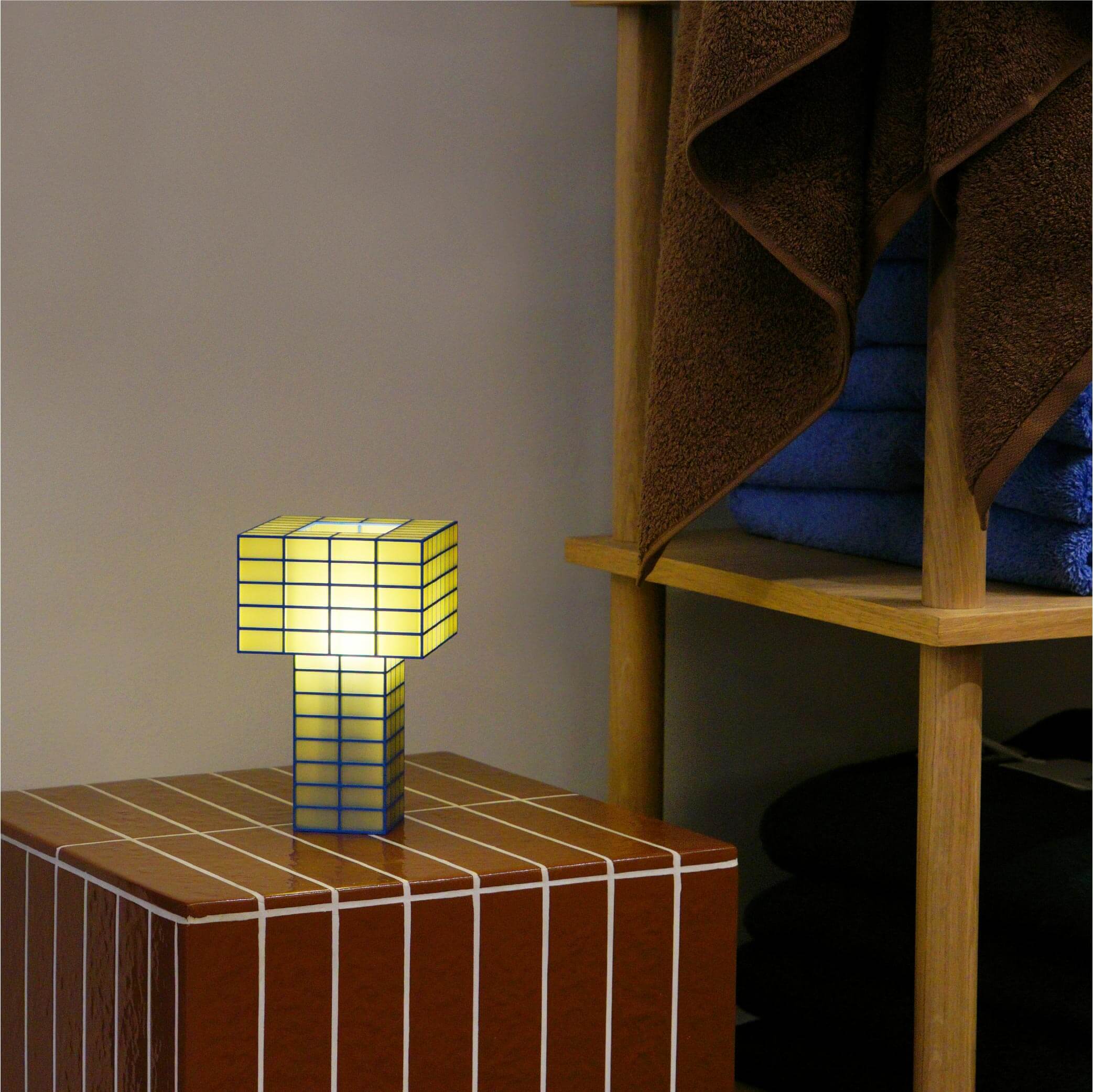
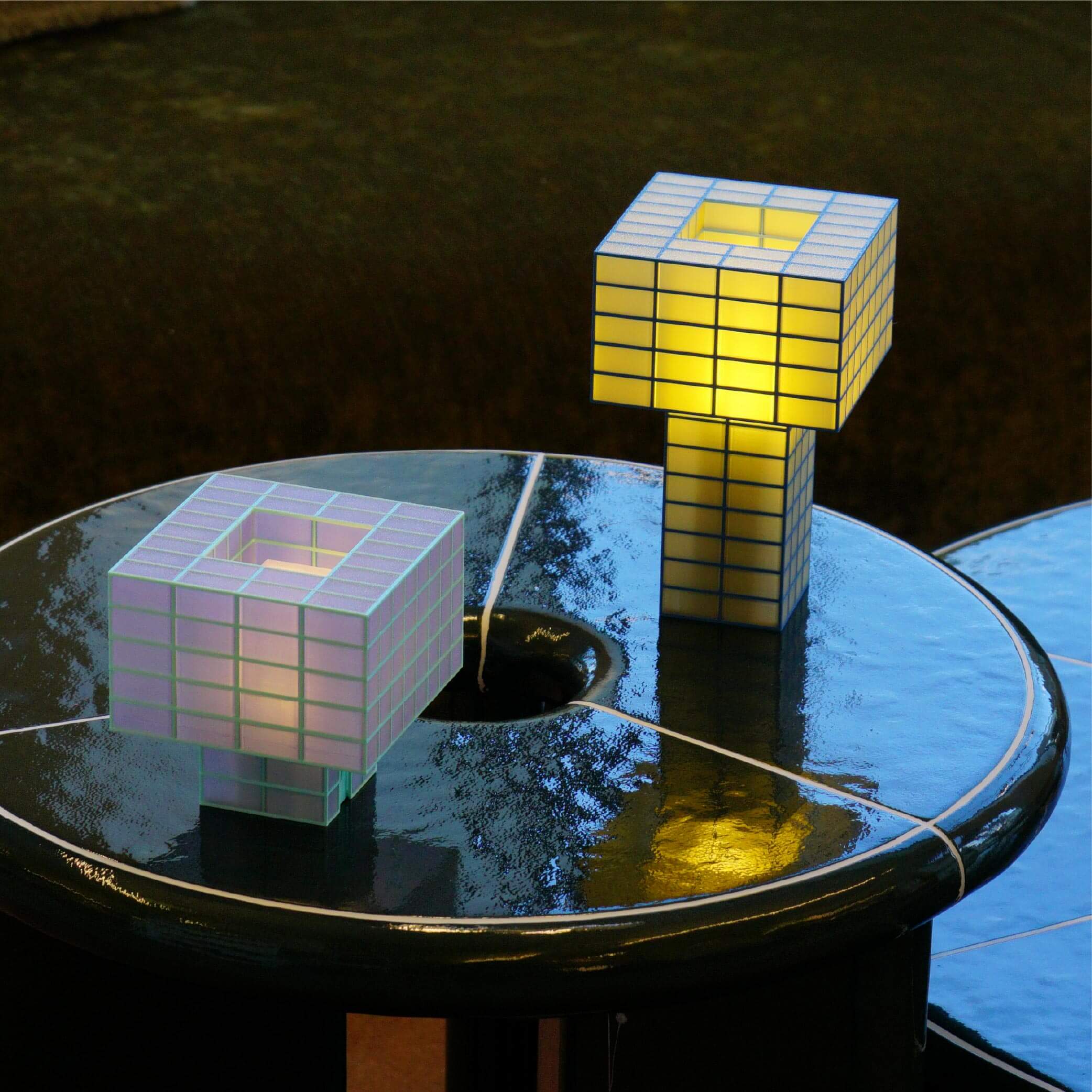
We are currently launching Phase Two of our debut collection, Tesser, and it feels like watching a small world slowly come into focus. The collection began with a simple fascination with the grid — something so fundamental to architecture, cities, and visual culture that it often disappears into the background. The proportions of the lamps follow the Fibonacci sequence, allowing quiet mathematical harmony to shape each piece. This next phase expands Tesser beyond lighting. We are introducing two rugs — a floor rug and a tapestry — that translate the layered geometry and color of the lamps into something tactile. We are also developing furniture pieces that extend the same geometric language into spatial form. Alongside this, we are working on a series of 3D-printed wearables that blur the boundary between objects for the home and objects for the body. Together, these pieces form an immersive environment — an invitation to step inside the logic of the collection.
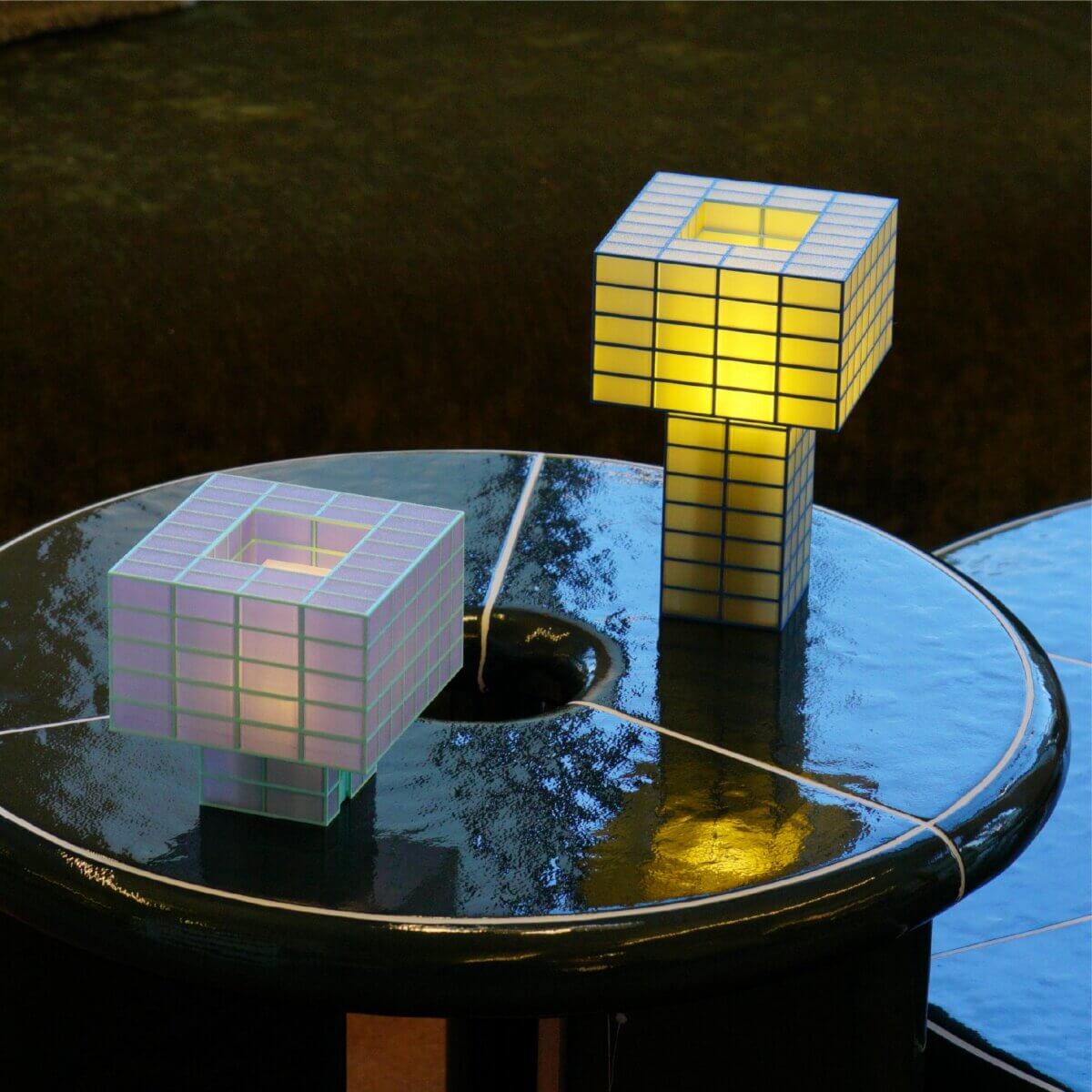
Tesser Lamps (Image courtesy of Ridezign)
What is a specific project you would like to share?
The project closest to us is the Tesser portable lamp series. They are inspired by walking through New York at night and catching glimpses of strangers’ lives through glowing windows stacked in endless grids. Each small square holds a story. We wanted to capture that feeling — the quiet poetry of light framed by structure. Each lamp is 3D-printed in bioplastic, then hand-finished and assembled in our Brooklyn studio. They are USB-C rechargeable and available in colorways inspired by the city — bodegas, laundromats, fruit stands, subway signs. The colors are unexpected for lighting, but they feel instinctively right, like New York itself. Our dream with this project is to let it grow beyond a lamp. We imagine Tesser becoming a language — something that can live across objects, interiors, public spaces, and even communities. We want to see these pieces travel into different homes, cultures, and contexts, collecting stories along the way. If one day someone looks at a grid of glowing windows in a new city and thinks of Tesser, we’ll know we’ve built something that truly belongs to the world.
What do you hope to contribute to the world?
Above all, we hope to offer moments of joy and gentleness in everyday life. We believe beautiful objects should feel accessible, not distant. In a city that can sometimes feel overwhelming, we want our work to help people feel a sense of belonging — to their space, to their story, to the place they call home. One of our favorite moments is watching children gravitate toward our booth at pop-ups. Their curiosity reminds us why we began this journey. If our work encourages even one person to follow their own creative path, we feel grateful. Alongside our studio practice, we remain involved in teaching across high school, undergraduate, and graduate levels, because for us, design is not just about making objects — it’s about learning how to see the world with care.
Discover more of Ridezign’s work: Instagram, Website.
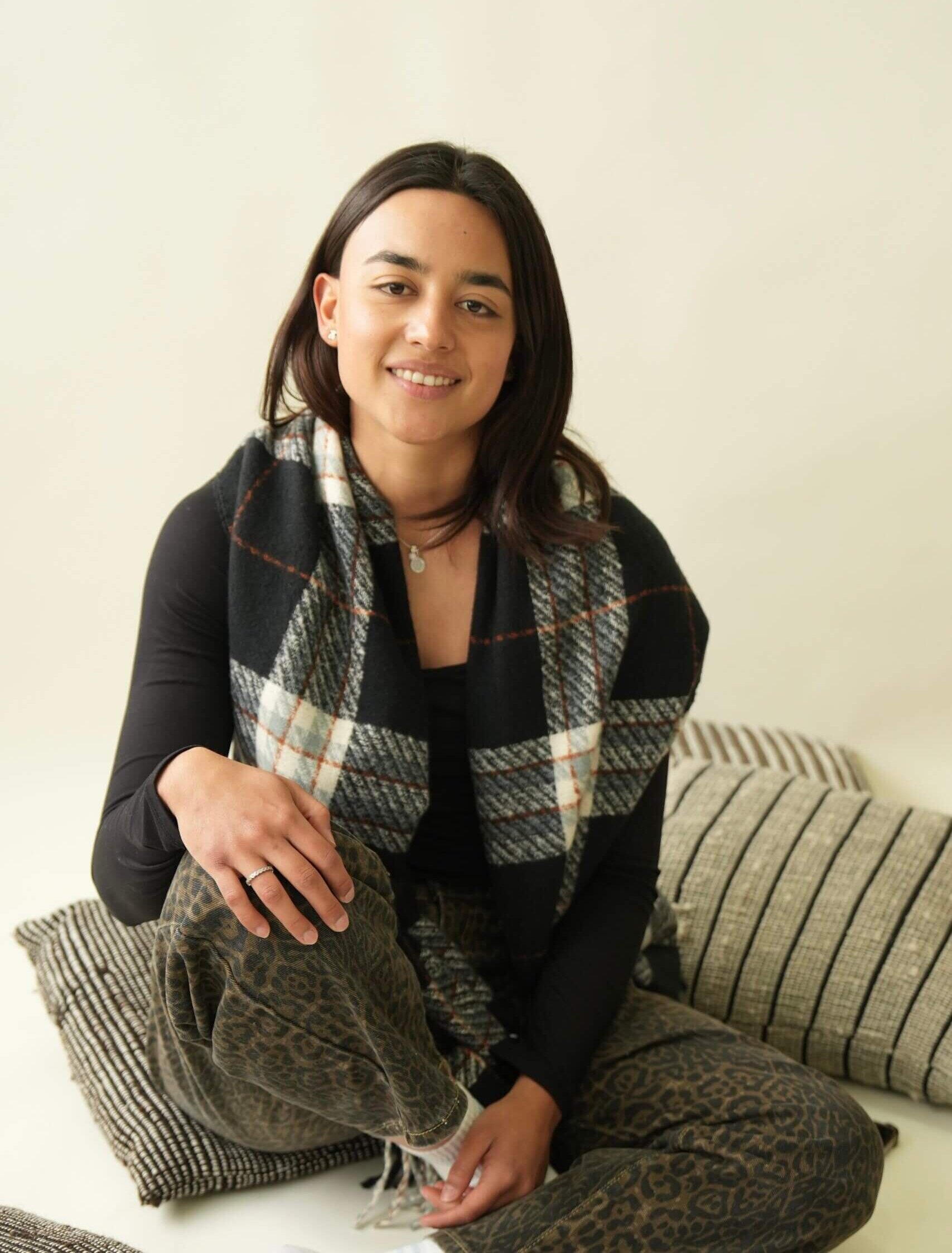
Mariajose Gayou of Muntanya Lab transforms discarded materials into nature-inspired circular designs, using experimentation and sustainability to challenge conventions and encourage more mindful living.
What inspires you as a young designer?
Nature and the understanding of systems how everything is interconnected. I am inspired by the relationship between sustainability, culture, and creativity, and by exploring how design can exist in balance with its environment rather than in opposition to it.
What are you working on right now?
I am currently working on lighting and decorative objects developed through both artisanal and industrial processes, always aiming for low-impact solutions. This includes material experimentation, such as a lamp made from cacao shells, where waste becomes a starting point rather than an afterthought.
What is a specific project you would like to share?
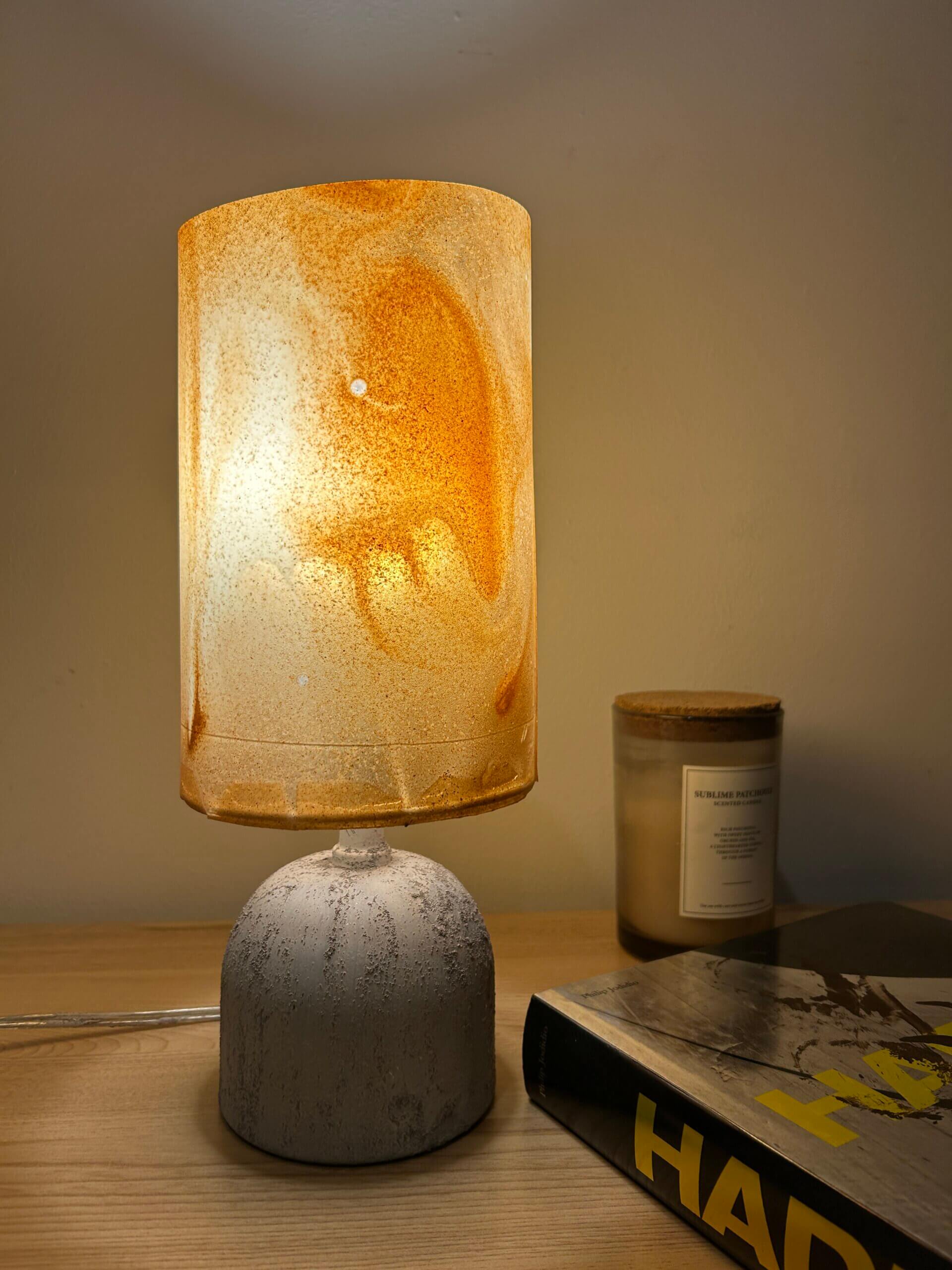
Material deconstruction. What if an object’s original purpose were not its only destiny? Lamps made from brick remnants. This project explores the creative reuse of discarded materials through a process of pulverization, mixing, and reconstruction. By transforming waste bricks into functional objects, it reduces the need for raw material extraction and lowers greenhouse gas emissions, while reintroducing manual and artisanal processes into a highly mechanized industry. The project promotes circularity and sustainable design systems, questioning conventional practices and proposing alternative ways of thinking. By reimagining materials, it demonstrates how design can become a driver of experimentation, change, and sustainability.
What do you hope to contribute to the world?
To inspire positive change by showing how design can shift mindsets. From any discipline or scale, people can reconsider habits and ways of thinking.
Discover more of Muntanya Lab’s work: Instagram.